Christmas Book by 12 Dec for a pre-Christmas install. Book now →

Tag: Brisbane Water Filters

  • What’s the Micron Level of your whole house water filter system
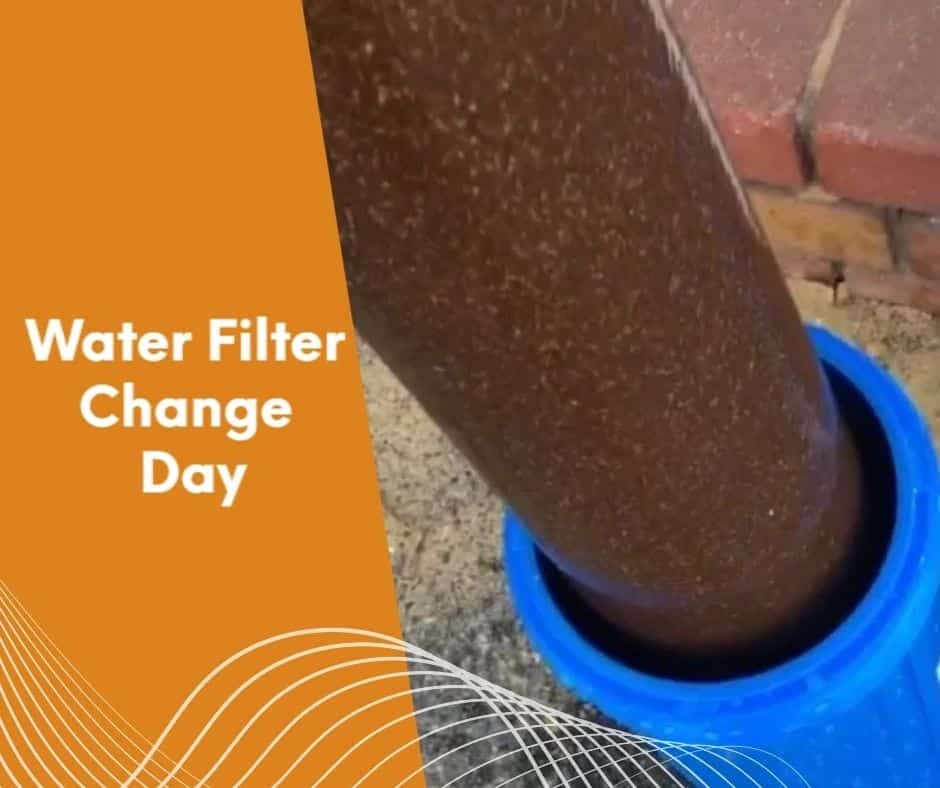
    What’s the Micron Level of your whole house water filter system

    What’s the Micron Level of your whole house water filter system

    What's the Micron Level of your whole house water filter system

    Home › Blog › What micron level means

    Hey everybody, James again from Jila Water, we’re talking about microns.
     
    We get a lot of questions from Brisbane homeowners that refer to microns. What is and why is it so crucial in water filtration systems? So today, we’re going to dive into that a little bit to help you understand what a micron is firstly and then explain what we mean by a unit of measure. So when we’re looking at getting rid of particulate in a water supply, for example, We go through a series of filter cartridges; these are sediment cartridges, typically that we’re doing dealing with particulate can have a specific size to it.

    For the full picture, the whole house water filter system guide sets out how the stages work together, and the Brisbane cost guide covers what an installed system involves.

     
    And depending upon the load of particulate in the water that you’re filtering, we might want to use a specific micron-rated filter so that we capture that stuff before it goes downstream. A sediment filter is kind of like your screen door at home. We want to get the airflow, but we don’t want the flies.
     
    So we have a mesh that stops the flies but allows the air to flow through. Well, a sediment filter works the same way except for the debris, and the particulate that we’re trying to get out is a lot smaller. So when we get below a level of 35 microns, that’s when we’re not going to be able to see it without a microscope to help us.
     
    So a filter that is rated to remove debris three at 25 or 20 or 10 microns, as you can imagine, that’s getting pretty small, and these filters are almost. Silent, except, they have a specific poor structure that allows the water to flow through but captures that particulate at that particular site. So the question is, what’s the best filter or what’s the best micron size filter for me?
     
    What, should I use? Well, that’s going to depend on your water supply. For example, suppose I’m treating well water. Typically, I’m going to expect some dirt and debris to come out of that. Well, water. Usually, we would start with maybe a 20 micron there, but the thing to always keep in mind with this type of filtration is every water supply every well is going to be doing.
     
    It’s going to be different, even on an invisible supply. Brisbane is a great example where that dirt and debris are super fine. Well, in Brisbane, we’re going to want to filter. That might even be down to one micron, like what’s found in the Jila Water whole house water filter systems, to capture all of that fine particulate. So there’s a little bit, it’s going to vary from place to place.
     
    Another consideration for a micron-rated filter will be, are you what you’re trying to get out of them? A lot of times, we’re, uh, protecting our household from cysts. Cysts are parasitic bacteria that can wreak havoc with you and make you very, very sick. Most local councils and water suppliers worked very hard to keep that out of your water supply.
     
    Cysts can get into the city’s water supply. So it’s good to have a whole house water filter system from the point of view. That is rated for cyst reduction and typically has a micron rating of one or less, but the filter should also be tested and certified for that SIS reduction. So a question comes up a lot about pressure drop. The pressure drop refers to what pressure is going into the filter versus how much pressure is coming out.
     
    The filter. And the difference is pressure drop. So anytime you’re going to flow water through some media, like, this blown metal filter or, or a resin bonded filter, as you can imagine, there’s going to be a level of restriction. So the water is going to have a little bit of restriction going through the filtration media.
     
    Now from a sediment filter standpoint, that pressure drop is how we determine it’s when it’s time to change the filter because it’s collected enough to breathe. So that pressure drop has increased out of the box. Typically there’s not a lot of pressure drop through these when that pressure drop gets bigger.
     
    That’s a good indication that we’ve collected enough dirt on the filter that it’s now becoming more and more restricted. And we’re losing pressure. Another thing to look for in terms of micron rating is the terms nominal and absolute. Most filters are going to be nominal, but you can buy them. The difference is nominal would be associated with the word about, so a nominally rated filter, uh, will have a plus or minus factor.
     
    It will allow a certain percentage of, let’s say it’s a five-micron filter. It’ll allow a portion of five-micron debris through an absolute filter that is over 95% efficient, which means it’s not going to let hardly any of that micron rating through. So very simply nominal is about and, the absolute is what it is when it comes to filtering ratings.
     
    So if you have an instance where you have to get a certain level of debris out of the water, you might want to look at an absolute filter over a nominally rated filter. Well, that’s all I’ve got on micron-rated filters fitted to all of our Jila Water Whole House Water Filtration Systems.
     
    So remember when fitting a whole house water filter system to your home ask the experts and get the right system and micron for your family’s needs.

    Related reading: carbon filters 101 for whole house systems and whether you need a water softener as well.

    Share this post
  • Carbon Filters 101 Found In Whole House Water Filtration Systems

    Carbon Filters 101 Found In Whole House Water Filtration Systems

    Carbon Filters 101 Found In Whole House Water Filtration Systems?

    Carbon Filters 101 Found In Whole House Water Filtration Systems

    Home › Blog › Carbon filters 101

    Have you ever wondered? What’s in the minor pitcher that makes your water tastes better? Have you ever wondered what’s in your shower filter to make the water feel better and smell better? Have you ever wondered what’s in the filter under the kitchen sink that gives that water, that wonderful clean taste?
     
    Well, it’s probably carbon. Carbon is the stuff that’s been around a long, long time that makes your water tastes perfect back in ancient Egyptian times. They figured out that carbon made the water tastes better. So there are places in the history books that talk about how they used it.
     
    Well, today, we use carbon in a variety of spaces, not just for water. It’s used to clean up the air. They put in your insoles to make your shoes smell better. And I’m, I’ve heard that some companies actually put it in your underwear to make well, you know, carbon is used everywhere because the advantage and the function of carbon are incredible for taking out tastes and odors from water, from the air, and many local councils use it in their treatment process.
     
    So how does carbon work? Carbon functions through a process called adsorption. That’s not what a sponge does. A sponge works through a process called absorption with a B. If I put the sponge in water, the water runs up into the pores of the sponge. But when I squeezed the spot. Well, water runs right back out.
     
    Well, that’s different from what carbon does. Carbon works, through a process called adsorption. And that is kind of like adhesive or it’s like Velcro. So when organics bond with the surface area of carbon, it sticks. I can squeeze it. I can twist it. It’s not coming off. And that’s how carbon is so good at getting rid of the things that cause taste and odor.
     
    So, where does carbon come from, I hear most of our clients ask. Carbon is derived from a variety of sources in the water filtration business primarily from coconut shells, wood, or from two minutes coal. We don’t use by two minutes coal quite as much these days because there have been arsenic trace elements of arsenic found in the mining process of bitumen coal.
     
    Coconut shell is, is widely used for a couple of reasons. It is a very renewable resource, and two, it lends itself very well to water filtration, and wood products. They’re used, but not quite as much in our business carbon filters come in various forms. They come in a granular form, which gives us the advantage of flow rate.
     
    A granular carbon filter has just like, it sounds granular carbon inside. The beauty of that is water can flow through that without a lot of resistance. What is a carbon block? And this one has a little more capacity than the granular because we’ve ground it down to a fine natural green of carbon, but because it’s in a block form, the water flow has some resistance.
     
    So the water flow is a little bit restricted as opposed to a granular one. But we gain a lot more surface area. So the capacity of a block is quite a bit higher than a granular filter in the same configuration. From there, we go to a radio flow carbon, which is kind of a mix between the two, typically a granular filter.
     
    The water has to flow all the way to the bottom and up through the media, inside the cartridge. And it flows out the top where a carbon block is. But water flows through the media all the way down. This is called radial flow. We’ll imagine if we can create a filter that combines the granular capacity and floor rate benefits of granular with the radio flow of a block.
     
    This gives us a lot more capacity than a typical granular, and it gives us a four-rate benefit. Now, this is only available in a Whole House Water Filtration System, but it has so many advantages over the standard configurations. So carbon one is the first ground that has a certain amount of surfaces.
     
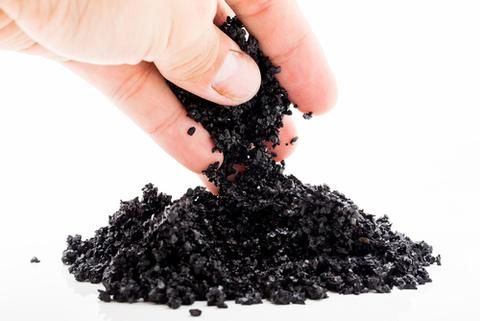
    And then, we go through an activation process by using heat or steam that opens up the pores of that carbon granule. One gram of activated carbon actually has 500 to a thousand square feet of surface area. That’s enormous. And the finer you grind the carbon, the more surface area is created.
     
    Particular capacity would be like the parking lot down at the mall, but it’s only got one floor. Now we’re going to add in the grind. Even finer, and we’re going to compress it into a block, we’ve just added about four floors to that parking structure and expanded the capacity. The interesting thing about carbon capacity, however, is it has only so many parking spots.
     
    So if like at Christmas time, when you go to the mall, and you drive around and around and around and never find a place to park, will you pull back out on the street and go on about your business? The same thing happens with cars. If, if all of the surface areas are exhausted, and there’s a car parked in every one of those spaces, the stuff you’re hoping to filter out will travel right on through.
     
    So it’s imperative with carbon capacity that you make sure you change the filters in your Jila Water Whole House Water Filtration System, or you change the media before it runs full of material. So, what is it that carbon can remove from water? Well, it’s a pretty big list. Carbon takes care of things that are organic in nature are things like volatile, organic compounds.
     
    The biggest one is chlorine. Carbon is used more widely for Cory reduction than anything else. Now, a lot of local councils have started to go to Cora mean for disinfection. Well, it takes a little bit more contact time with the carbon. Chloramines out of the core mean there is a chlorine ammonia compound. And it takes a long time with carbon to separate that so that they can get each independent element out.
     
    So we use a product called catalytic carbon and this carbon. Like a coating on it, that enhances the adsorption function. And it’s really good for getting out chloramines, but the list goes on for carbon filtration, volatile, organic compounds, a lot of chemical things that get put in the water from pesticides or herbicides fall into those lists.
     
    That carbon is a Filter media to get rid of those things. Now there are some things that carbon on its own will not get out. For example, Wed, it takes a little bit of a blended material blended in with the carbon to reduce, let, and will. As long as that formula is in there, they can be quite good at getting led out of the water.
    Uh, things like arsenic, not so much dissolved inorganic minerals. Not so much, those things saw a sail right through the carbon without any reduction whatsoever, but carbon on its own can do so much. It does a lot, but to get out certain other elements that fall into the mineral category, it needs a little help.
     
    And that comes in a, in a manner of a blend that goes in with the carbon. A carbon filter typically does not make a good sediment filter and sediment. It doesn’t have anything to do with taste Notre reduction. So if you have a sediment problem, you will also find our Whole House Water Filtration Systems uses a sediment filter to protect your carbon so that the carbon capacity can get used up the way it’s supposed to.
     
    Granular filters don’t act as good sediment filters either. Um, a whole house carbon up-flow carbon or a backwash and carbon is going to have about a mesh of 25 microns. It’ll capture some dirt and debris, but that’s not a good purpose. That’s not the best application for carbon. So, where do I use carb?
     
    It’s all over the place. Carbon is used in every reverse osmosis system we sell and also, of course, our Whole House Water Filtration System. Residential that is carbon is used in Whole House Water Filtration System. Carbon is used standalone in some of our client’s homes. There are a variety of places to use the carbon filter, uh, the refrigerator door or the refrigerator filter.
     
    So all over the place, we’re using carbon to filter drinking water., the little filter in the cheap pitcher you buy from Bunnings will also have carbon. When used in a system like reverse osmosis, or a Whole House Water Filtration System, it’s doing multiple things is getting rid of chemicals. It’s getting rid of chlorine to protect downstream like reverse osmosis is protected that.
     
    If the membrane sees chlorine, it’ll get destroyed. So the carbon plays a big, big role in that type of a system in a USF system, or Whole House Water Filtration System the carbon is doing a couple of things. It’s helping get rid of chlorine to protect the membrane. It’s also where lead gets reduced. As some of these systems are rated for led reduction.
     
    That carbon is doing that with the blend that, that additive. And then the ultrafiltration membrane, which is typically a tiny little hole of fiber, kind of like a microscopic noodle, that’s going to mechanically filter all of the dirt and debris that gets down to 0.02, five microns. So carbon is used with a conjunction in all kinds of different systems, almost across the board in Waterfield.
     
    The Carbon filters in our Whole House Water Filtration System are incredibly effective at the taste and odor reduction with additives. They can get involved with some other materials, some other minerals, or chemicals. But the question is, how often do I replace them? How long do they last? You should always replace them at least once a year. And here’s why the carbon with all of its parking places are collecting these organics.
     
    And over time as those parking places, Once they get occupied. There’s going to be a time when there’s no more place for an organic to set down, and it could possibly start to break pieces off that had been parked there for quite some time. And the end result of that is that you have water coming out of that filter.
    That’s actually worse than the water going. So it’s very important that carbon filters get replaced on an adequate basis and that an adequate basis is going to be based on several variables so please speak to our water techs about your Brisbane home needs.
     
    And that’s really the pro and con look at carbon filtration that’s found in our Whole House Water Filtration System. The pro is it does enormous, wonderful things to reduce tastes and odors. The con is if you don’t replace it adequately enough about every 12 months. So each application can present its own calculation on how long a filter should last.
     
    As always should you have any other questions or would like to have us come and test your home’s water, please book a free water test today from our website

    Related reading: whether you also need a water softener, six signs you need a water treatment system. For budgeting, see what a complete home filtration system costs in Brisbane.

    The whole house water filter system guide explains what each filtration stage does.

    Share this post
  • Hard Water, What is it, What Makes Hard Water, Hard Water?

    Hard Water, What is it, What Makes Hard Water, Hard Water?

    Hard Water, What is it, What Makes Hard Water, Hard Water?

    Hard Water, What is it, What Makes Hard Water, Hard Water?

    Home › Blog › What makes water hard

    Hey everybody. It’s James again from Jila Water, and today I would like to cover hard water, what it is, and what causes it. Hard water has a level of magnesium and calcium and minerals held within the water. And what makes it hard is that those minerals don’t like to be in solution. They want to come out of that solution and become hard minerals attached to things, and this is what becomes scale in and around your home.

    The whole house water filter system guide explains what each filtration stage does.

     
    It can also bond with soaps and detergents and create scum. So hard water is a problem. If you have it, you know, you got it.
     
    Hard water results from the natural process or the hydrologic cycle of water evaporating from our ocean and the ground, then turning into clouds and then raining back to the earth and the water that rains down through the soil and the rock into our underground aquifers. Since water is such an excellent solvent, it will erode things like the rock on the way to the aquifer and water drinking supply.
     
    A significant part of this country is very rich in magnesium and calcium. So that water molecule, when it gets into the aquifer and then up through the ground to our water supplies, whether it be a well or maybe into a surface water supply, that’s fed from an underground pool, we have hard water that’s loaded with these metals and minerals.
     
    The issue is magnesium and calcium are just some of the elements that don’t like being in the water, so they do what they can to escape. The magnesium and calcium want to switch back to the hard solid form and that’s why they bond to surfaces found around the home. They will create scale because it connects with the surfaces of the things that come in contact with most notably on your home’s shower. Or in the pot, when you boil water to cook eggs, for example, That white scum or see on the bottom of your pot are those hard minerals that have come out of the home’s water supply.
     
    Water is found predominantly in groundwater supplies. A lot of local councils use groundwater supplies for their water. Most Brisbane homeowners where their water comes from the ground surfaces water supplies like Summerset and Wivenhoe dams that are mostly fed by precipitation and rain.
     
    A relatively simple test can be done of your home’s water by us here at Jila Water to see how hard our home’s water is. We use test strips and different other methods so we can see just what want in your home’s water. Here at Jila Water, we will give you precisely how many grains per gallon of hardness you may have in your water supply.
     
    Beyond the nuisance aspect of hard water, there’s an actual cost to hard water. And it lines up basically with having to clean the effects of hard water off of shower doors off of your dishwasher, um, on your appliances, your glassware. And there’s also the cost of the wear and tear on your water-using appliances, specifically the hot water heater or the dishwasher; both of those appliances are heating water to do their job.
     
    The water heater, obviously that job is to heat water, and as the water heats up, the molecular activity speeds up, and that magnesium and calcium come out of the solution that much faster. And on an electric water heater that scale adheres to the heating elements, the efficiency of that water heater goes way down because now it has to heat through the scale.
     
    Heating elements are constantly accumulating these elements, a gas-fired heater, does the same thing, except now the scale is dropping to the bottom of the water heater. We’re half of the heat, the rock. Before it can heat the water in a, in a study done by the Patel Institute, they found out that a heater on soft water will last the entire 15 years expected life span without loss of any efficiency.
     
    And the dishwasher, the same result. The other thing they watched for was showerheads because that’s probably the most visual example of the effect of hard water. You see, as the water blows through the nozzle. That showerhead, those hardness minerals are coming out of solution very fast. And if you have, if your shower head looks white and filming, that means that your hardness is scaling the shower head up, and it won’t be long before it starts clogging some of those spray nozzles.
     
    And then you got an inefficient shower, head, and soft water. Spray through the showerhead without that scale appearing. So it’s a huge, huge, huge, problem with hard water. What’s the cost, studies show that 20% of every dollar you spend at the grocery store. If you live in hard water conditions, you’re spending on cleaning supplies to battle the effects of hard water, 20%.
     
    And you think about if you spend a hundred or a couple of hundred bucks a week on groceries. 20 to $40 of that money is being spent on cleaning supplies. Can you imagine putting that money back in your pocket with soft water,
     
    Another benefit that you’ll see is soft water. To your skin and your hair. When you’re dealing with hard water, those hard water minerals get into your pores, and they get into your hair. So you have to use moisturizers. You have to use conditioners for your hair. With soft water. You can elicit.
    The majority of that, the other thing that you run into is your laundry. That hard mineral gets into the fabric of your clothing, and it turns the colors dingy, and it also makes them hard. I mean, there’s actually a stiffness to the material because of hard water with software. Your colors stay vibrant, your clothes last longer and it, and towels, for example, are a pleasure to use.
     

    Not something that’s going to feel like sandpaper. Wow.

     
    We get questions sometimes that hard water is bad for you. Well, it’s not necessarily a health concern to drink hard water. However, some think of the heightened level of minerals. It is not good for you because humans don’t get their minerals from water. We get our minerals rather from plants, fruits, and vegetables.
     
    Water’s suitable for the lubrication of our organs. It’s good for the hydration of joints, but it’s not necessarily good to have lots of minerals in it. So what we find is that kidneys have to deal with it, and I’ve always commented. So I ask you should you get a filter for your home Or do you want to be the filter? Something to think about with heavy mineralization?
     
    No.
     
    What’s the best and easiest way to get rid of hard water in the home I hear you ask? What’s the best way to get Jila Water Whole House Water Filter system fitted to your home? That way we’re going to run water all your homes water through that. And the software has a 3-stage filtration inside. That’s going to grab the different hardness-causing minerals. Fitting a whole-house water filtration system from the team here at Jila Water will make a world of difference.
     
    Having a 4-stage Jila Water Whole House Water Filter System fitted truly it’s the best way to deal with hardness because we’re taking the hardness minerals out of the way.
     
    From this point of view, the Jila Water Whole House Water Filter System will take care of all the water you’re actually going to drink. Make ice or cook with it, and that’s going to reduce the sodium in the water.
     
    An alternative to ion exchange water softening is going to come under the category of scale inhibitors. There’s no such thing as a salt-free water softener. Again, that goes back to the efficiency of ion exchange, taking the mineral. Everything else is a scale inhibitor. And what they’re built to do is hold the hardness minerals in solution so that they don’t come out and create scale.
     
    You won’t see the same benefits of soft water with a scale inhibitor that you do with ion exchange. Water softener scale inhibitors work. They work as long as you’re. On a well water supply, guess where you find most of your hardness, and what they do is create tiny crystals around the hardness minerals.
     
    If there’s any iron or manganese in the water, it pretty much makes that media inert. It won’t do anything at that point. Well, that’s all I’ve got for hard water, be sure.
    If you’re in the Brisbane area and would like our team to come and test your home’s water, please click the link and book a FREE in-home water test today from the team here at Jila Water.

    Jila Water installs across South East Queensland, including Ipswich whole home water filtration. Related reading: a guide to hard water in your home, how chlorine dosing works.

    Share this post
  • Jila Water is Better Than Tap, Why Filtering Your Drinking Water

    Jila Water is Better Than Tap, Why Filtering Your Drinking Water

    Jila Water is Better Than Tap, Why Filtering Your Drinking Water

    Jila Water is Better Than Tap, Why Filtering Your Drinking Water

    Home › Blog › why filtering your drinking water is worth it

    Drinking water is essential to living a good life! It may be plain, colourless, and tasteless, but water is as necessary as any nutrient. Getting enough water every day can increase your energy and relieve fatigue, help you think more clearly, keep an average body temperature, and more!

    You can book a free home water assessment to get advice matched to your household and water source.

     
    Water is undoubtedly a crucial part of life—no other supplement or new health fad can replace it. You’re responsible for drinking as much water as often and as much as you can for your physical, mental, and emotional well-being. With proper hydration comes happiness and health!
     
    However, although drinking water is crucial to one’s overall well-being, it doesn’t mean that it doesn’t matter whatever kind of water you drink. When it comes to optimal hydration, you have to make sure that you’re not only drinking enough but also drinking the best water possible.
     

    Is Your Water Good For You?

     
    Water plays a vital role in flushing out toxins and carrying out many of the body’s chemical reactions. As an absolute necessity of life, drinking water gives the parts of your body their proper shape and fullness, such as your skin. However, when you drink the wrong type of water, it may do more harm to you than good!
     
    Many people do most of everything with tap water, such as cooking, bathing, and washing clothes. There’s no problem using tap water for these tasks, but drinking it is a whole separate matter—you can’t be too sure of the chemicals or hazardous pollutants contained in it.
     
    Water isn’t always clean, as it can contain dirt, chemicals, minerals, and other impurities that coils affect its taste and smell depending on where you source it from.
     
    The contaminants, particularly microscopic organisms, and bacteria, in impure water can cause adverse effects on your health!
     

    Filtering Clean, Quality Water

    If you want to ensure that you’re drinking clean water, we recommend using a home water filter system! Yes, you have the choice of buying bottled water that’s already filtered, but why spend so much money and plastic waste on something you can easily do at home?
     
    A whole-house filtration system removes unwanted impurities from water, such as hardness, odour, bacteria, sediment, and taste. As a result, you’ll have water that not only tastes good but is clean to drink!
     
    Some of the benefits of filtering your water include:

    Filtering Water Saves You Money

     
    When you stop spending your finances stocking on expensive bottled water, you could save a substantial amount of money! Installing a home water filter system instead of buying a lifetime’s supply of bottled water is a much more affordable alternative to tap water.
     

    Filtering Water Is Good For the Environment

     
    A filtration system doesn’t just save you money—you get to help the environment at the same time! Even if you purchase recyclable bottled water, they still leave a carbon footprint, but filtering your water yourself significantly reduces the total waste you produce.
     

    Filtering Water Improves Its Taste and Smell

     
    Most chemicals in tap water can give an unpleasant taste and a metallic smell, which is less than pleasant to drink. By filtering your tap water, you can remove the chlorine, weird odours, and other chemicals for the best drinking water.
     

    Conclusion

     
    The water you’re drinking isn’t as clean and good for you as you think. Don’t let tap water prevent you from attaining optimal health! By installing a filtration at home, you can improve your water quality so that you and your family will have the best drinking experience every time!
     
    Are you thinking of filtering your water at home? Then why not use one of the best whole house water filter systems in Australia?
     
    Our Jila Water filter system removes chlorine and other chemical tastes, odours plus dirt, and sediments making water cleaner, clearer, and safer for your whole house. Request a free water test today!

    Related reading: water and dental health, ten reasons to filter your water.

    Share this post
  • Facts About Filtered Water You Should Be Aware Of

    Facts About Filtered Water You Should Be Aware Of

    Facts About Filtered Water You Should Be Aware Of

    Whole House Water Filters

    Home › Blog › facts about filtered water

    To say that we need water is an understatement. Everything that has life depends on water. Just think about what you feel after a hot day, and you see a pitcher filled with cold water. You know you need it to replenish your body. 

    If you want every tap covered rather than one outlet, whole house water filtration treats the water where it enters the home.

    Water is indeed the biological medium on the planet, but now, because of the pollution, even water gets contaminated, and at times it even becomes unsafe to drink. For that reason, it is essential for your family’s health and safety that you ensure that you are drinking filtered water at all times. 

    In this post, Jila Water shares some interesting facts on filtered water that you might not know about:

    What You Can Find in Filtered Water Is as Important as What’s Removed From It

    No one can deny that your tap water contains a plethora of “nasties” that you simply don’t want anyone in the family to ingest. That said, tap water also has calcium, fluoride, magnesium, and sodium – all of which are necessary for your health. So, even if your water filtration can effectively remove those germs and other contaminants, it’s as crucial that the water filter still allows the good stuff to remain in your water. 

    Filtered Water Actually Tastes Better Than Tap Water

    That weird taste in your tap water is due to the presence of chlorine. Many do not know that it is chlorine that plays a significant role in ensuring that the water supply is clean. However, it’s also not good for your health – it also tastes awful! The best home water filter systems can effectively remove chlorine, so your drinking water tastes a whole lot better. 

    It’s Good for the Environment

    Are you still drinking bottled water? Can you imagine how many plastic bottles your family uses up in a year? That’s a huge contribution to the landfills and even the waterways that potentially harm precious marine life. 

    When you choose to use a water filter and swap your disposable plastic bottles for reusable ones, you are helping the environment recover from the damage that humans also caused. 

    They’re Good for Your Plants, Too

    You might not know it, but filtered water is not only good for drinking. Your plants can benefit from it, too. If you notice a thin, whitish crust on the soil’s surface, it may be caused by the harmful salts and minerals in your tap water. It could be the chlorine that is keeping your plants from growing properly. You can use filtered water to help your plants grow healthier. 

    Filtered Water and Purified Water Are Two Different Things

    Many people use the terms’ filtered water’ and ‘purified water’ interchangeably when they are, in fact, different. Purified water is stripped of all the salts and minerals found in water, including the good stuff that the body needs. 

    On the other hand, filtered water only removes harmful impurities and keeps all the stuff that is essential to your health. 

    Conclusion

    These are just some of the things that you might not know about filtered water. As you can see, there are indeed benefits to using home water filters. Not only will it remove contaminants from your water and improve its taste, but it will also ensure that the minerals you need from your drinking water remain. On top of that, it can help improve your plants’ health and ensure that you’re doing your part in helping the environment. 

    If you are considering getting home water filters in Brisbane for you and your family, Jila Water offers you a cost-effective solution. As an industry leader in home water filtration, Jila Water can ensure that your family has access to clean water that’s good for your health!

    Related reading: six drinking water myths debunked, four myths about drinking water.

    Share this post