Tag: Water filers

  • Carbon Filters 101 Found In Whole House Water Filtration Systems

    Carbon Filters 101 Found In Whole House Water Filtration Systems

    Carbon Filters 101 Found In Whole House Water Filtration Systems?

    Carbon Filters 101 Found In Whole House Water Filtration Systems
    Have you ever wondered? What’s in the minor pitcher that makes your water tastes better? Have you ever wondered what’s in your shower filter to make the water feel better and smell better? Have you ever wondered what’s in the filter under the kitchen sink that gives that water, that wonderful clean taste?
     
    Well, it’s probably carbon. Carbon is the stuff that’s been around a long, long time that makes your water tastes perfect back in ancient Egyptian times. They figured out that carbon made the water tastes better. So there are places in the history books that talk about how they used it.
     
    Well, today, we use carbon in a variety of spaces, not just for water. It’s used to clean up the air. They put in your insoles to make your shoes smell better. And I’m, I’ve heard that some companies actually put it in your underwear to make well, you know, carbon is used everywhere because the advantage and the function of carbon are incredible for taking out tastes and odors from water, from the air, and many local councils use it in their treatment process.
     
    So how does carbon work? Carbon functions through a process called adsorption. That’s not what a sponge does. A sponge works through a process called absorption with a B. If I put the sponge in water, the water runs up into the pores of the sponge. But when I squeezed the spot. Well, water runs right back out.
     
    Well, that’s different from what carbon does. Carbon works, through a process called adsorption. And that is kind of like adhesive or it’s like Velcro. So when organics bond with the surface area of carbon, it sticks. I can squeeze it. I can twist it. It’s not coming off. And that’s how carbon is so good at getting rid of the things that cause taste and odor.
     
    So, where does carbon come from, I hear most of our clients ask. Carbon is derived from a variety of sources in the water filtration business primarily from coconut shells, wood, or from two minutes coal. We don’t use by two minutes coal quite as much these days because there have been arsenic trace elements of arsenic found in the mining process of bitumen coal.
     
    Coconut shell is, is widely used for a couple of reasons. It is a very renewable resource, and two, it lends itself very well to water filtration, and wood products. They’re used, but not quite as much in our business carbon filters come in various forms. They come in a granular form, which gives us the advantage of flow rate.
     
    A granular carbon filter has just like, it sounds granular carbon inside. The beauty of that is water can flow through that without a lot of resistance. What is a carbon block? And this one has a little more capacity than the granular because we’ve ground it down to a fine natural green of carbon, but because it’s in a block form, the water flow has some resistance.
     
    So the water flow is a little bit restricted as opposed to a granular one. But we gain a lot more surface area. So the capacity of a block is quite a bit higher than a granular filter in the same configuration. From there, we go to a radio flow carbon, which is kind of a mix between the two, typically a granular filter.
     
    The water has to flow all the way to the bottom and up through the media, inside the cartridge. And it flows out the top where a carbon block is. But water flows through the media all the way down. This is called radial flow. We’ll imagine if we can create a filter that combines the granular capacity and floor rate benefits of granular with the radio flow of a block.
     
    This gives us a lot more capacity than a typical granular, and it gives us a four-rate benefit. Now, this is only available in a Whole House Water Filtration System, but it has so many advantages over the standard configurations. So carbon one is the first ground that has a certain amount of surfaces.
     
    And then, we go through an activation process by using heat or steam that opens up the pores of that carbon granule. One gram of activated carbon actually has 500 to a thousand square feet of surface area. That’s enormous. And the finer you grind the carbon, the more surface area is created.
     
    Particular capacity would be like the parking lot down at the mall, but it’s only got one floor. Now we’re going to add in the grind. Even finer, and we’re going to compress it into a block, we’ve just added about four floors to that parking structure and expanded the capacity. The interesting thing about carbon capacity, however, is it has only so many parking spots.
     
    So if like at Christmas time, when you go to the mall, and you drive around and around and around and never find a place to park, will you pull back out on the street and go on about your business? The same thing happens with cars. If, if all of the surface areas are exhausted, and there’s a car parked in every one of those spaces, the stuff you’re hoping to filter out will travel right on through.
     
    So it’s imperative with carbon capacity that you make sure you change the filters in your Jila Water Whole House Water Filtration System, or you change the media before it runs full of material. So, what is it that carbon can remove from water? Well, it’s a pretty big list. Carbon takes care of things that are organic in nature are things like volatile, organic compounds.
     
    The biggest one is chlorine. Carbon is used more widely for Cory reduction than anything else. Now, a lot of local councils have started to go to Cora mean for disinfection. Well, it takes a little bit more contact time with the carbon. Chloramines out of the core mean there is a chlorine ammonia compound. And it takes a long time with carbon to separate that so that they can get each independent element out.
     
    So we use a product called catalytic carbon and this carbon. Like a coating on it, that enhances the adsorption function. And it’s really good for getting out chloramines, but the list goes on for carbon filtration, volatile, organic compounds, a lot of chemical things that get put in the water from pesticides or herbicides fall into those lists.
     
    That carbon is a Filter media to get rid of those things. Now there are some things that carbon on its own will not get out. For example, Wed, it takes a little bit of a blended material blended in with the carbon to reduce, let, and will. As long as that formula is in there, they can be quite good at getting led out of the water.
    Uh, things like arsenic, not so much dissolved inorganic minerals. Not so much, those things saw a sail right through the carbon without any reduction whatsoever, but carbon on its own can do so much. It does a lot, but to get out certain other elements that fall into the mineral category, it needs a little help.
     
    And that comes in a, in a manner of a blend that goes in with the carbon. A carbon filter typically does not make a good sediment filter and sediment. It doesn’t have anything to do with taste Notre reduction. So if you have a sediment problem, you will also find our Whole House Water Filtration Systems uses a sediment filter to protect your carbon so that the carbon capacity can get used up the way it’s supposed to.
     
    Granular filters don’t act as good sediment filters either. Um, a whole house carbon up-flow carbon or a backwash and carbon is going to have about a mesh of 25 microns. It’ll capture some dirt and debris, but that’s not a good purpose. That’s not the best application for carbon. So, where do I use carb?
     
    It’s all over the place. Carbon is used in every reverse osmosis system we sell and also, of course, our Whole House Water Filtration System. Residential that is carbon is used in Whole House Water Filtration System. Carbon is used standalone in some of our client’s homes. There are a variety of places to use the carbon filter, uh, the refrigerator door or the refrigerator filter.
     
    So all over the place, we’re using carbon to filter drinking water., the little filter in the cheap pitcher you buy from Bunnings will also have carbon. When used in a system like reverse osmosis, or a Whole House Water Filtration System, it’s doing multiple things is getting rid of chemicals. It’s getting rid of chlorine to protect downstream like reverse osmosis is protected that.
     
    If the membrane sees chlorine, it’ll get destroyed. So the carbon plays a big, big role in that type of a system in a USF system, or Whole House Water Filtration System the carbon is doing a couple of things. It’s helping get rid of chlorine to protect the membrane. It’s also where lead gets reduced. As some of these systems are rated for led reduction.
     
    That carbon is doing that with the blend that, that additive. And then the ultrafiltration membrane, which is typically a tiny little hole of fiber, kind of like a microscopic noodle, that’s going to mechanically filter all of the dirt and debris that gets down to 0.02, five microns. So carbon is used with a conjunction in all kinds of different systems, almost across the board in Waterfield.
     
    The Carbon filters in our Whole House Water Filtration System are incredibly effective at the taste and odor reduction with additives. They can get involved with some other materials, some other minerals, or chemicals. But the question is, how often do I replace them? How long do they last? You should always replace them at least once a year. And here’s why the carbon with all of its parking places are collecting these organics.
     
    And over time as those parking places, Once they get occupied. There’s going to be a time when there’s no more place for an organic to set down, and it could possibly start to break pieces off that had been parked there for quite some time. And the end result of that is that you have water coming out of that filter.
    That’s actually worse than the water going. So it’s very important that carbon filters get replaced on an adequate basis and that an adequate basis is going to be based on several variables so please speak to our water techs about your Brisbane home needs.
     
    And that’s really the pro and con look at carbon filtration that’s found in our Whole House Water Filtration System. The pro is it does enormous, wonderful things to reduce tastes and odors. The con is if you don’t replace it adequately enough about every 12 months. So each application can present its own calculation on how long a filter should last.
     
    As always should you have any other questions or would like to have us come and test your home’s water, please book a free water test today from our website
    Share this post
  • Hard Water, What is it, What Makes Hard Water, Hard Water?

    Hard Water, What is it, What Makes Hard Water, Hard Water?

    Hard Water, What is it, What Makes Hard Water, Hard Water?

    Hard Water, What is it, What Makes Hard Water, Hard Water?
    Hey everybody. It’s James again from Jila Water, and today I would like to cover hard water, what it is, and what causes it. Hard water has a level of magnesium and calcium and minerals held within the water. And what makes it hard is that those minerals don’t like to be in solution. They want to come out of that solution and become hard minerals attached to things, and this is what becomes scale in and around your home.
     
    It can also bond with soaps and detergents and create scum. So hard water is a problem. If you have it, you know, you got it.
     
    Hard water results from the natural process or the hydrologic cycle of water evaporating from our ocean and the ground, then turning into clouds and then raining back to the earth and the water that rains down through the soil and the rock into our underground aquifers. Since water is such an excellent solvent, it will erode things like the rock on the way to the aquifer and water drinking supply.
     
    A significant part of this country is very rich in magnesium and calcium. So that water molecule, when it gets into the aquifer and then up through the ground to our water supplies, whether it be a well or maybe into a surface water supply, that’s fed from an underground pool, we have hard water that’s loaded with these metals and minerals.
     
    The issue is magnesium and calcium are just some of the elements that don’t like being in the water, so they do what they can to escape. The magnesium and calcium want to switch back to the hard solid form and that’s why they bond to surfaces found around the home. They will create scale because it connects with the surfaces of the things that come in contact with most notably on your home’s shower. Or in the pot, when you boil water to cook eggs, for example, That white scum or see on the bottom of your pot are those hard minerals that have come out of the home’s water supply.
     
    Water is found predominantly in groundwater supplies. A lot of local councils use groundwater supplies for their water. Most Brisbane homeowners where their water comes from the ground surfaces water supplies like Summerset and Wivenhoe dams that are mostly fed by precipitation and rain.
     
    A relatively simple test can be done of your home’s water by us here at Jila Water to see how hard our home’s water is. We use test strips and different other methods so we can see just what want in your home’s water. Here at Jila Water, we will give you precisely how many grains per gallon of hardness you may have in your water supply.
     
    Beyond the nuisance aspect of hard water, there’s an actual cost to hard water. And it lines up basically with having to clean the effects of hard water off of shower doors off of your dishwasher, um, on your appliances, your glassware. And there’s also the cost of the wear and tear on your water-using appliances, specifically the hot water heater or the dishwasher; both of those appliances are heating water to do their job.
     
    The water heater, obviously that job is to heat water, and as the water heats up, the molecular activity speeds up, and that magnesium and calcium come out of the solution that much faster. And on an electric water heater that scale adheres to the heating elements, the efficiency of that water heater goes way down because now it has to heat through the scale.
     
    Heating elements are constantly accumulating these elements, a gas-fired heater, does the same thing, except now the scale is dropping to the bottom of the water heater. We’re half of the heat, the rock. Before it can heat the water in a, in a study done by the Patel Institute, they found out that a heater on soft water will last the entire 15 years expected life span without loss of any efficiency.
     
    And the dishwasher, the same result. The other thing they watched for was showerheads because that’s probably the most visual example of the effect of hard water. You see, as the water blows through the nozzle. That showerhead, those hardness minerals are coming out of solution very fast. And if you have, if your shower head looks white and filming, that means that your hardness is scaling the shower head up, and it won’t be long before it starts clogging some of those spray nozzles.
     
    And then you got an inefficient shower, head, and soft water. Spray through the showerhead without that scale appearing. So it’s a huge, huge, huge, problem with hard water. What’s the cost, studies show that 20% of every dollar you spend at the grocery store. If you live in hard water conditions, you’re spending on cleaning supplies to battle the effects of hard water, 20%.
     
    And you think about if you spend a hundred or a couple of hundred bucks a week on groceries. 20 to $40 of that money is being spent on cleaning supplies. Can you imagine putting that money back in your pocket with soft water,
     
    Another benefit that you’ll see is soft water. To your skin and your hair. When you’re dealing with hard water, those hard water minerals get into your pores, and they get into your hair. So you have to use moisturizers. You have to use conditioners for your hair. With soft water. You can elicit.
    The majority of that, the other thing that you run into is your laundry. That hard mineral gets into the fabric of your clothing, and it turns the colors dingy, and it also makes them hard. I mean, there’s actually a stiffness to the material because of hard water with software. Your colors stay vibrant, your clothes last longer and it, and towels, for example, are a pleasure to use.
     

    Not something that’s going to feel like sandpaper. Wow.

     
    We get questions sometimes that hard water is bad for you. Well, it’s not necessarily a health concern to drink hard water. However, some think of the heightened level of minerals. It is not good for you because humans don’t get their minerals from water. We get our minerals rather from plants, fruits, and vegetables.
     
    Water’s suitable for the lubrication of our organs. It’s good for the hydration of joints, but it’s not necessarily good to have lots of minerals in it. So what we find is that kidneys have to deal with it, and I’ve always commented. So I ask you should you get a filter for your home Or do you want to be the filter? Something to think about with heavy mineralization?
     
    No.
     
    What’s the best and easiest way to get rid of hard water in the home I hear you ask? What’s the best way to get Jila Water Whole House Water Filter system fitted to your home? That way we’re going to run water all your homes water through that. And the software has a 3-stage filtration inside. That’s going to grab the different hardness-causing minerals. Fitting a whole-house water filtration system from the team here at Jila Water will make a world of difference.
     
    Having a 4-stage Jila Water Whole House Water Filter System fitted truly it’s the best way to deal with hardness because we’re taking the hardness minerals out of the way.
     
    From this point of view, the Jila Water Whole House Water Filter System will take care of all the water you’re actually going to drink. Make ice or cook with it, and that’s going to reduce the sodium in the water.
     
    An alternative to ion exchange water softening is going to come under the category of scale inhibitors. There’s no such thing as a salt-free water softener. Again, that goes back to the efficiency of ion exchange, taking the mineral. Everything else is a scale inhibitor. And what they’re built to do is hold the hardness minerals in solution so that they don’t come out and create scale.
     
    You won’t see the same benefits of soft water with a scale inhibitor that you do with ion exchange. Water softener scale inhibitors work. They work as long as you’re. On a well water supply, guess where you find most of your hardness, and what they do is create tiny crystals around the hardness minerals.
     
    If there’s any iron or manganese in the water, it pretty much makes that media inert. It won’t do anything at that point. Well, that’s all I’ve got for hard water, be sure.
    If you’re in the Brisbane area and would like our team to come and test your home’s water, please click the link and book a FREE in-home water test today from the team here at Jila Water.
    Share this post
  • Chlorine dosing, What is it, and is it in our water?

    Chlorine dosing, What is it, and is it in our water?

    Chlorine dosing, What is it, and is it in our water?

    Chlorine dosing, What is it, and is it in our water?

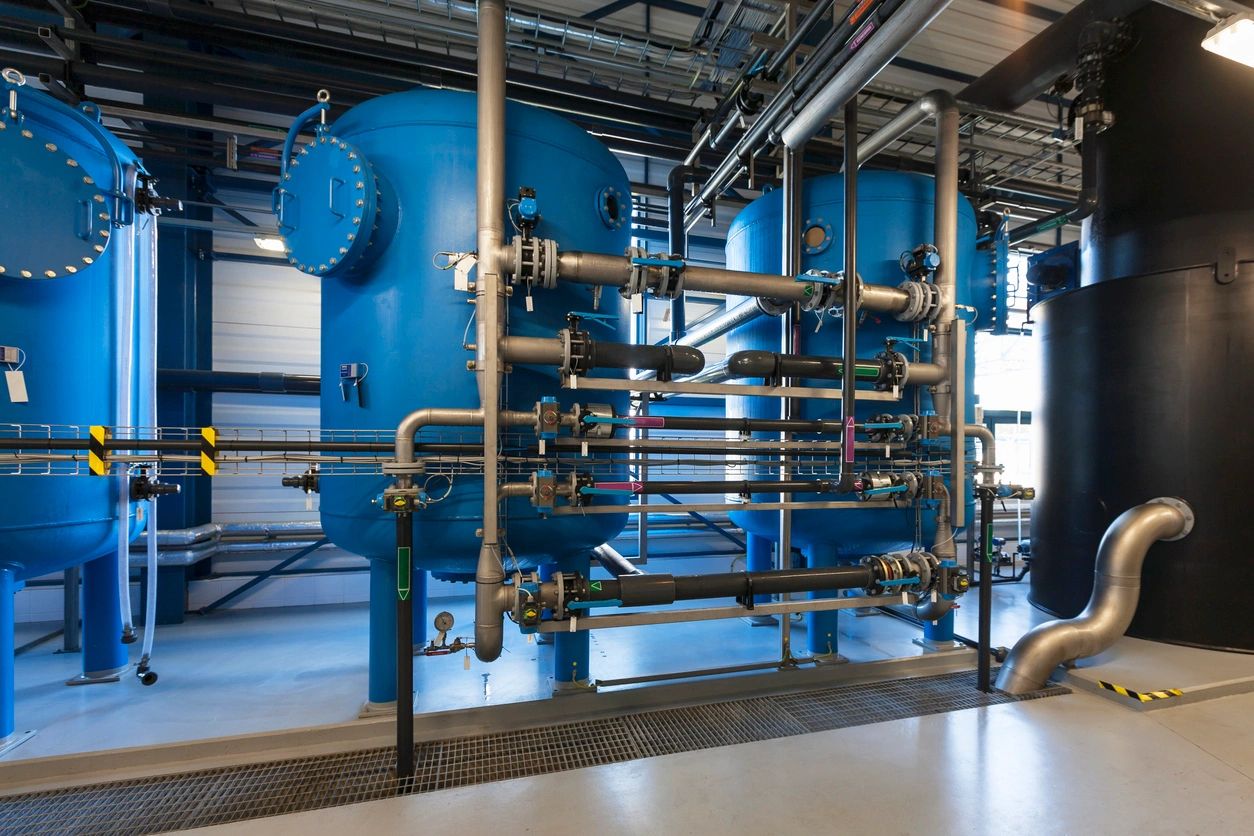
    Chlorine dosing is intended to establish free chlorine residual in a water distribution system.

    A free chlorine residual is effective against most bacteria (including Legionella), harmless to humans (when within guideline values), and can be used in hot, warm, and cold water distribution systems.
     

    Important

     
    Important Chlorine dosing introduces new risks into your water distribution system and should be carefully considered prior to any installation and/or operation.
     
    Chlorine is a powerful oxidizing agent and concentrated chlorine solutions should be handled and used with appropriate containment by competent personnel with suitable personal protective equipment.
     
    Installation of chlorine dosing equipment should be undertaken by a qualified and competent professional, such as a water treatment specialist.
     
    Chlorine and free chlorine residual
     
    Chlorine and free chlorine residual Chlorine is a disinfectant commonly used by water utilities.
    Free chlorine residuals of between 0.5‒2.0 mg/L provide effective continuous disinfection in water distribution systems.
    Facilities that receive water from a registered drinking water service provider should ideally receive free chlorine residual of between 0.2-0.5 mg/L in their water supply.
     
    However, the drinking water service provider is not required to maintain a minimum free chlorine residual within the water supply and factors such as pipe length and chlorine demand mean that the actual concentration of free residual chlorine may be less than 0.2 mg/L when the water reaches your facility.
    It is reactive and not particularly penetrative, which may result in the re-colonization of your water distribution system with Legionella when the residual falls below an active concentration.
     
    Chlorine is usually dosed as a concentrated solution of sodium hypochlorite which, when dissolved in water, forms hypochlorous acid.
     
    Hypochlorous acid is the active disinfectant form of chlorine often described as ‘free’ or ‘active’ chlorine.
    An important component of chlorine dosing is maintaining a pH of 7.5 which ensures effective disinfection.
     
    Selection of dosing point(s) into a water distribution supply will require consideration of your water distribution system and should be undertaken by an individual who has a sound knowledge of the facility’s water distribution system and/or a specialized and qualified professional, such as a licensed plumber or hydraulic engineer.
     
    Measuring and recording chlorine levels Should be recorded in accordance with your water risk management plan and include details of where, when, the concentration of chlorine, by whom, and any additional comments.
     
    Free and total chlorine levels can be measured with test strips or more accurately with a photometer but if you have any doubts please get in contact with us here at Jila Water on our website www.JilaWater.com.au or email us at in**@***********om.au or call 1300 30 10 37.
     
    Chloraminated water supply The Mt Crosby Water Treatment Plant in South East Queensland supplies a large proportion of the drinking water used in Brisbane and Ipswich.

    Chloraminated water supply

    What is chloramination?

    Chloramination is an alternative means of providing a residual disinfectant that is used in some parts of Brisbane and elsewhere. A small quantity of ammonia is added to chlorine after the disinfection process to form a long-lasting disinfectant called monochloramine.
     
    Unlike most other Queensland drinking water supplies, Mt Crosby water is chloraminated, rather than chlorinated.
    This means that some SEQ drinking water retailers are exclusively supplying chloraminated drinking water, some supply only chlorinated water while some supply chloraminated water for part of the year and chlorinated water at other times.
     
    If your facility is in SEQ, it is highly recommended you ask your drinking water service provider, which type of disinfectant is provided in your drinking water supply because this will affect any proposed chlorine dosing to be undertaken.
     
    Chlorine concentrations in a drinking water supply should not exceed the Australian Drinking Water Guideline (ADWG) value of 5 mg/L.
    If chlorine dosing increases the free chlorine residual level above 5 mg/L, the water distribution system must be flushed before it can be returned to use as a drinking water supply.
     
    Caution Chlorine becomes less soluble with increasing water temperature.
    Chlorine disinfection is compromised by ultra-violet (UV) disinfection.
    Chlorine is corrosive at concentrations above 5 mg/L (corrosiveness increases incrementally with the concentration of chlorine dosed) and at pH below 7.0.
    It may cause damage to components of the water distribution system and should therefore be closely monitored.
     
    So we know that was some heavy going and there were lots to take in, but basically what we think here at Jila Water with the unknown levels of what may be found in your water is better to be safe and have your water filter at your own home.
     
    Having a Jila Water tech come out and check your home for suitability and run you through our 4 stages Whole House Water Filter system you can know what’s in your water and what your families drinking.
     
    Contact us today via our website www.jilawater.com.au or email us at in**@***********om.au or call 1300 30 10 37
     
    For more information and greater detail check out the Queensland Health website.
     
    Are you thinking of filtering your water at home? Then why not use one of the best whole-house water filter systems in Australia? Our Jila Water filter system removes chlorine and other chemical tastes, odours plus dirt, and sediments making water cleaner, clearer, and safer for your whole house. Request a free water test today!
    Share this post
  • Do Water Filters Help Protect You From the Coronavirus

    Do Water Filters Help Protect You From the Coronavirus

    Do Water Filters Help Protect You From the Coronavirus

    Do Water Filters Help Protect You From the Coronavirus
    In these times of uncertainty, many people are looking for different ways to protect themselves from the threat of disease and of course COVID-19.
     
    One of these ways includes water filters, and fitting whole house home water filtration systems, and a common question surrounding them is whether or not they help prevent sickness.
     
    The short answer is that yes, there are some systems such as ozonation, ultraviolet or reverse osmosis that can treat water for multiple contaminants, such as viruses and bacteria.
     
    Portable and more affordable water filters such as jugs, and bottles are generally not effective in removing viruses from water, as the filter would need to have a pore size of 0.01 micrometres to catch these harmful elements. This is why we recommend fitting a whole home water filtration system fitted by our team here a JIla Water.
     
    Many standard filters do not meet this requirement, which would mean that any virus might still pass through.
    However, having a whole house home water filtration system fitted by our team here a Jila Water has the benefit of producing healthier drinking water for you and your family.
     
    As we all know, one of the best ways for you to keep your body in prime condition to fight off disease is through proper hydration.
     
    In addition to this, using an alkaline water filter specifically to treat your water comes with a variety of health benefits.
    Coronavirus in the Water Supply Again, coronavirus has not been found to have infected any of our water supplies.
     
    The CDC confirms that there is no evidence to suggest otherwise and that the transmission of the disease is still primarily through close physical contact with an infected person.
     
    However, if you’d like to stay on the safe side, we suggest carrying your own personal supply of filtered water just to be certain.
     
    Whenever you have to travel outside of your home, ensure that you bring your own source of clean drinking water and avoid sharing it with other people.
     
    This will minimize any chances of spreading the infection.
    Simply pour your water into your flask after it’s been filtered by your home’s whole-house water filtration system fitted by our team here a JIla Water.
      
    If you’d like to purchase or hear more about our whole house home water filtration system options please contact us here at JIla Water one of our water techs will be in contact or you can visit our website today by clicking on the following link.
     
     
    We sell a wide range of products to customers in Australia, and we’d be happy to help you guarantee your own health as well as that of your family.
     
    For more information about the Jila Water whole house water filter and our water filter system for your home please get in contact with our office. Anytime.
     
    So remember if you need a water filter system for your home or a home water filtration system Jila Water is where you go for whole-house water filter systems.
    Share this post