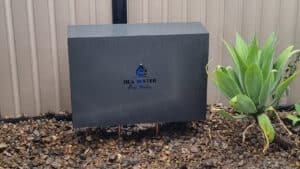

Water testing • contaminants • filtration advice
The importance of water testing and identifying contaminants in your home’s water.
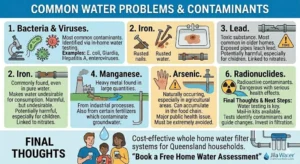
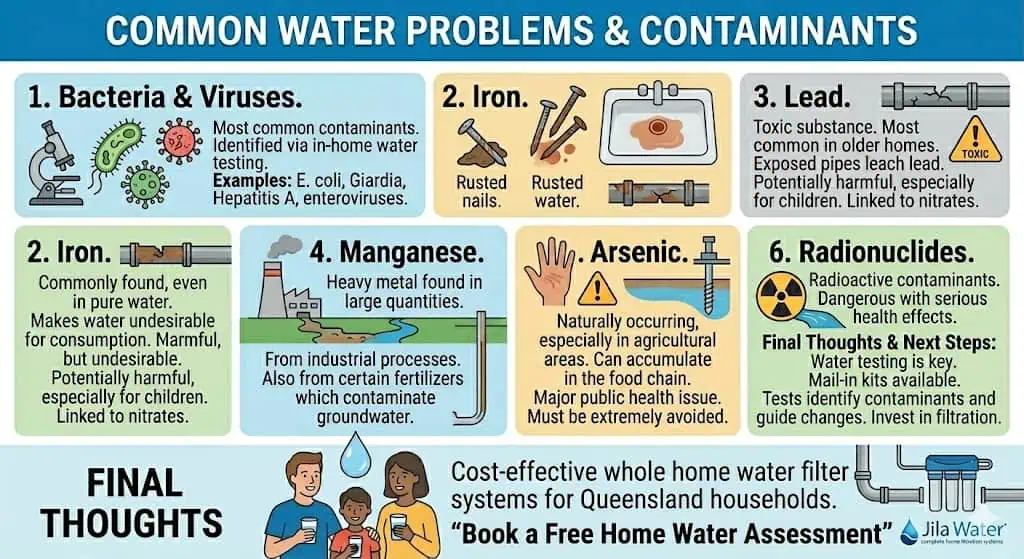
Water can look clear and still carry taste, odour, sediment, hardness, metals or source-specific issues. A proper water assessment helps you understand what is happening before choosing the right filtration system for your home.
Quick answer: water testing matters because different water problems need different solutions. Chlorine taste, earthy odours, sediment, staining, hardness, metallic taste, bacteria risk in tanks, bore minerals and emerging contaminants are not all treated the same way. Testing and inspection help identify what is likely present, what needs proper lab confirmation, and which filtration setup is appropriate for the home.
Clear water does not always mean clean-feeling water.
In South East Queensland, most town water is professionally treated and monitored before it reaches the network. But homeowners may still notice chlorine taste, sediment after rain or mains work, scale on fixtures, metallic taste from plumbing, or different issues from tank and bore water.
That is why the best filtration conversation starts with your water source and your actual symptoms. A family on Brisbane mains water usually needs a different approach from a home on tank water, bore water or a mixed supply.
What a home water assessment may investigate.
Every home is different. These are the common water quality clues Jila Water looks at when helping Brisbane and SEQ homeowners understand their water.
Sediment & cloudiness
Fine particles, pipe disturbance, tank debris or post-rain events can affect the look and feel of water. Sediment filtration is often the first protection stage in a whole home system.
Chlorine or chemical taste
Disinfection is part of keeping town water safe through the network, but many households dislike the taste, odour and shower feel of chlorinated water.
Hardness, scale & minerals
Minerals can contribute to scale, marks on glass, appliance buildup and a harsher feel. Conditioning media may be recommended depending on the home’s water profile.
Metallic taste or staining
Iron, manganese, copper or older plumbing can affect taste, colour and staining. The right next step depends on whether the issue is supply, household plumbing, tank or bore related.
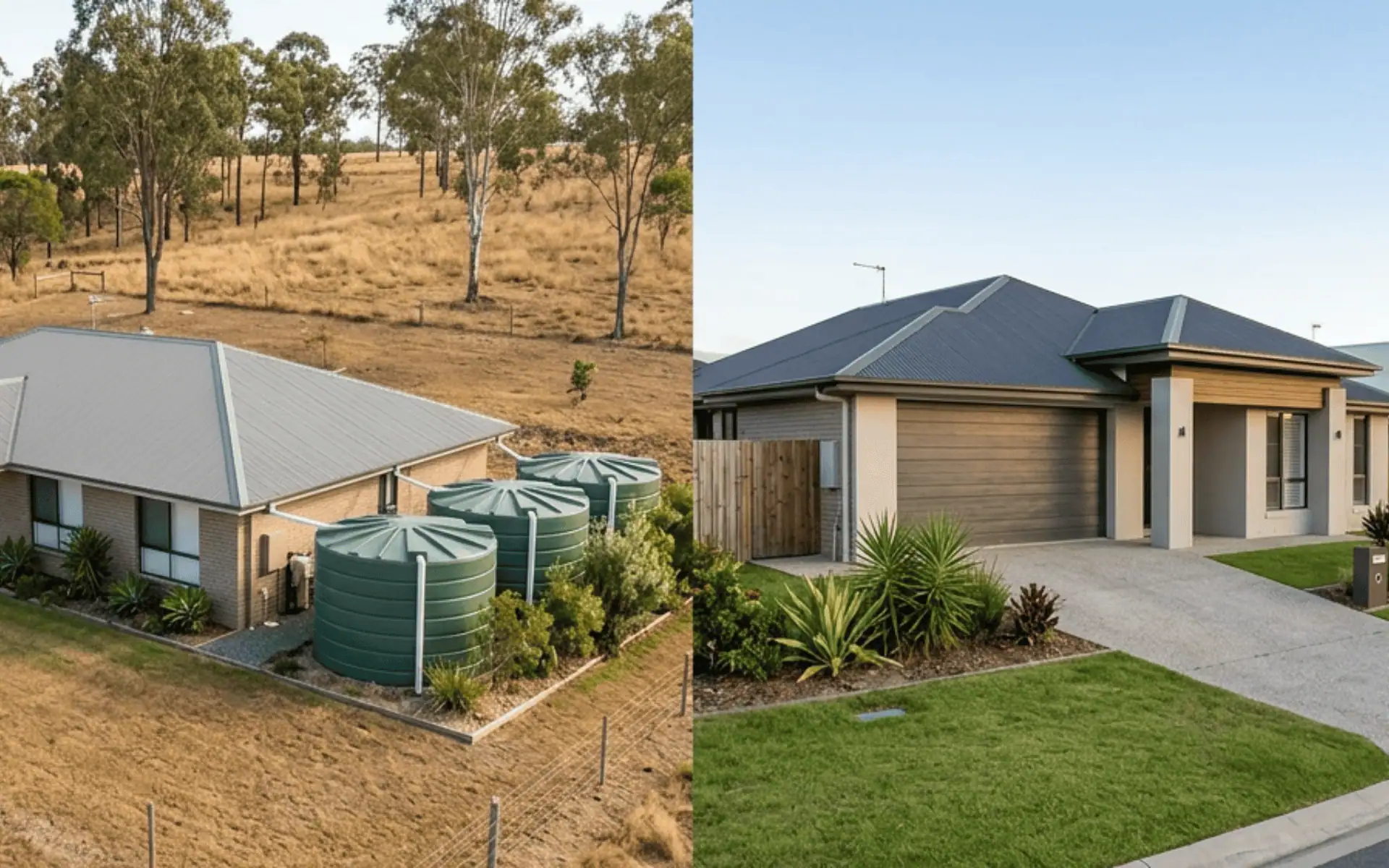
Town water, tank water and bore water need different questions.
A “one size fits all” filter recommendation is where many homeowners waste money. The water source should guide the testing and filtration plan.
| Water source | Common things to check | Why it matters | Typical Jila Water direction |
|---|---|---|---|
| Town / mains water | Chlorine or chloramine taste, sediment, hardness, pH, scale, metallic taste, local supply changes and household plumbing. | The water may meet drinking water standards but still feel, smell or taste unpleasant at home. | Whole home sediment, conditioning and carbon filtration tailored to the household and local water profile. |
| Rainwater tanks | Sediment, roof debris, tannins, odour, microbial indicators, pH and UV suitability. | Tank water quality changes with roof condition, gutters, first flush devices, animals, heat and rain events. | Sediment filtration, carbon filtration and often UV sterilisation where microbial protection is needed. |
| Bore water | Iron, manganese, hardness, staining, salinity, pH, minerals and source-specific contaminants. | Bore water can vary dramatically even between nearby properties and usually needs source-specific testing. | Custom filtration design after reviewing bore results and household use requirements. |
| Mixed supply | Separate testing for each source and how the home switches or blends water. | A filter that suits one water source may not suit the other. | Tailored system design based on the plumbing layout and water source priority. |
The goal is not to sell the biggest filter. The goal is to understand the water first, then design the right system for the home.
Important safety note
A free home assessment is not the same as a certified laboratory health test. If you suspect contamination, illness, bacteria, chemicals, a water advisory issue, or a private supply risk, contact your water provider, local council, Queensland Health or a NATA-accredited laboratory for formal testing advice. Jila Water can help you understand symptoms and filtration options, but health-critical contamination should be properly confirmed.
A better way to choose a water filter.
Instead of guessing from a product list, Jila Water works backwards from your home, your water source and your symptoms.
Start with the home and water source
We look at whether the home is on mains, tank, bore or mixed supply, then consider the number of bathrooms, household size, flow needs and where the system can be installed.
Document the symptoms
We ask what you notice: chlorine smell, earthy taste, metallic taste, staining, scale, dry skin and hair, sediment, cloudy water, tank odour or bore water marks.
Check whether lab testing is needed
For tank, bore, suspected bacterial or health-critical concerns, proper laboratory testing may be recommended before a final system is selected.
Match the filtration stages
Only after the water picture is clearer do we recommend the right combination of sediment filtration, conditioning media, carbon filtration, UV, or a custom design.
What can water testing identify?
The right test depends on the water source and the concern. Some checks are simple field indicators, while others require laboratory analysis.
Aesthetic indicators
Taste, smell, colour, sediment, cloudiness, hardness, staining and scale are often the first reasons homeowners book an assessment. They affect daily comfort and confidence even when the water is not necessarily unsafe.
Chemical indicators
Depending on the supply, testing may look at pH, chlorine residual, metals, minerals, PFAS-related concerns, salinity, hardness or source-specific chemicals.
Microbial indicators
For tanks, bores and private supplies, microbial testing is often the most important question. E. coli and other indicators require correct sampling and laboratory handling.
Why testing often points to complete home filtration.
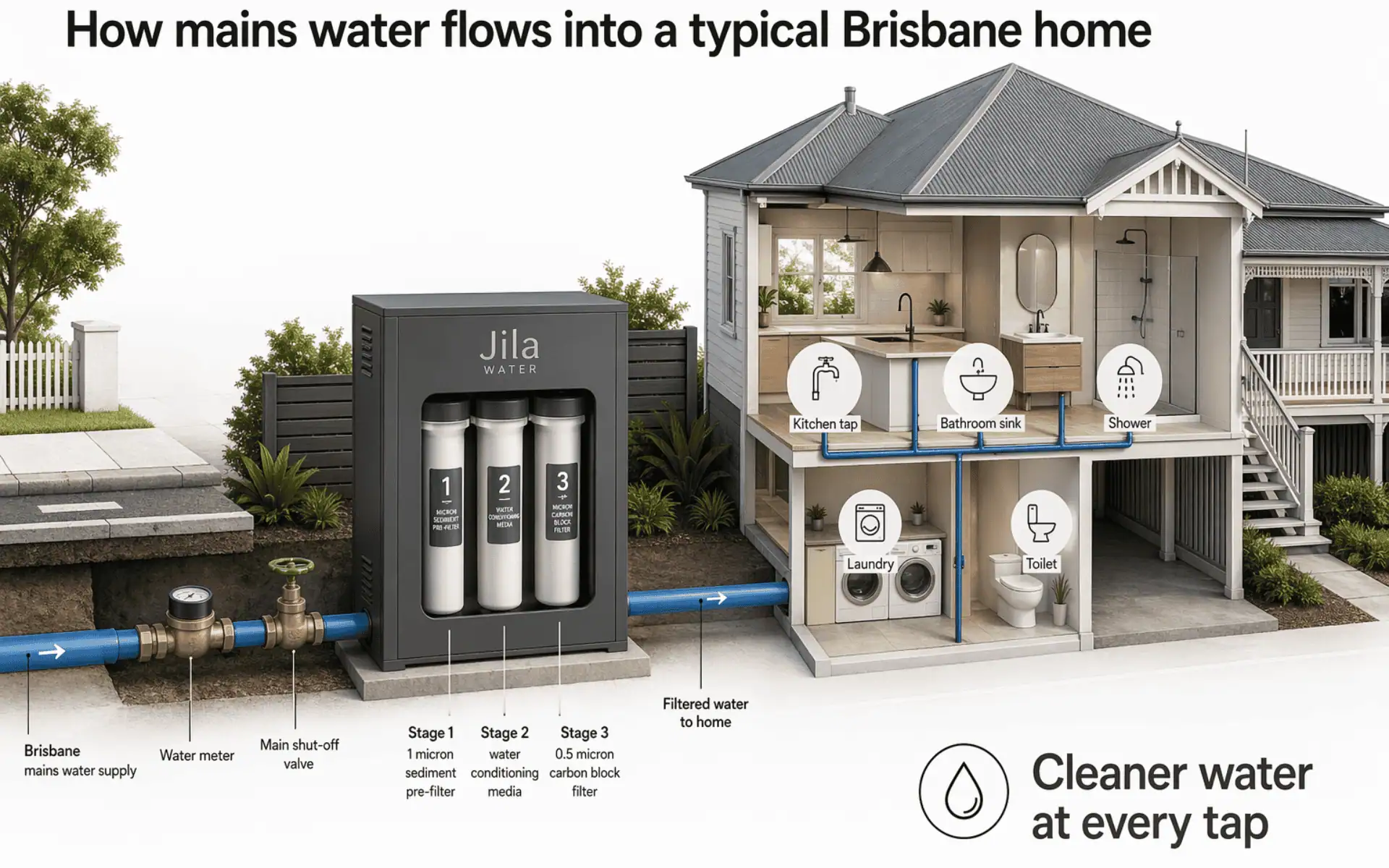
If the problem affects more than one tap, a single under-sink filter may not solve the whole-home issue. A point-of-entry system treats the incoming supply before it moves through the home.
This is why Jila Water focuses on complete home filtration for many Brisbane and SEQ families. The aim is cleaner, better-feeling water at every tap — not just one drinking water outlet.
Water testing questions Brisbane homeowners ask.
Do I need to test Brisbane town water?
Not every home needs a full laboratory test. Brisbane and SEQ town water is monitored by the relevant water providers, but a home assessment can still be useful if you notice chlorine taste, sediment, scale, odour, metallic taste or issues that seem specific to your property.
Is a home water assessment the same as a laboratory test?
No. A home water assessment helps identify likely issues, water source, symptoms and filtration needs. Health-critical concerns such as bacteria, chemicals, illness, private supply risk or contamination should be confirmed through an appropriate accredited laboratory or water authority process.
What should tank water be tested for?
Tank water may need checks for sediment, colour, odour, pH, microbial indicators such as E. coli, roof or gutter contamination, and whether UV treatment is appropriate. The right test depends on how the tank is used and whether the water is used for drinking.
What causes metallic taste in tap water?
Metallic taste may come from trace metals, corrosion, internal plumbing, older fixtures or source-specific minerals. If it appears suddenly or affects only one tap, the cause may be different from a whole-house issue.
Can filtration remove every contaminant?
No single filter removes every possible contaminant. The right system depends on what is in the water, the water source, flow requirements and the household’s priorities. That is why testing and assessment should come before system selection.
When should I contact my water provider?
Contact your water provider if you are on town water and there is sudden discolouration, strong odour, suspected contamination, a local advisory, illness concern, burst main issue or a change affecting multiple properties. For private supplies, the owner is generally responsible for managing water quality.
Want a clearer answer on your home’s water?
Book a free Jila Water home water assessment. We’ll look at your water source, what you’re noticing, your home layout and the best filtration pathway for your family.
Written for Jila Water by James Grady
James works with Brisbane and SEQ homeowners to understand local water concerns and choose complete home filtration systems that suit the home, water source and household priorities.
Jila Water Knowledge Hub
Complete Home Filtration, Hard Water, and How a Water Softener Works
Hard water does more than leave marks on taps. It can affect shower comfort, create scale across the home, and leave homeowners guessing about what is really going on in their water. This guide breaks down how a water softener works, how to start testing your water properly, and why complete home filtration is often the smarter whole-home solution.
No pressure. No guesswork. Just clearer advice on what suits your home, your water, and the result you actually want.
Complete Home Filtration, Hard Water Testing, and How a Water Softener Works
If your shower screen always looks marked, your hot water system keeps copping scale, or your skin feels dry after every shower, there is a good chance hard water is part of the story. This guide breaks down how to start testing my water, what testing for hard water should actually involve, how a water softener works, and why complete home filtration is often the smarter long-term move for Australian homes.
Start with a proper home water assessment. A real recommendation comes from understanding the property, the household, and the actual water issues rather than guessing from a single number or a random pen meter.
What is hard water?
Hard water is water with elevated levels of dissolved minerals, mainly calcium and magnesium. In the home, that usually shows up as scale buildup, cloudy glassware, residue on taps and shower screens, and water that feels less pleasant to live with day to day.
The problem is not just appearance. Hard water can slowly affect fixtures, hot water systems, pipes and appliances over time. That is why more homeowners are starting to look beyond a single tap filter and toward a more complete solution.
| What you notice | What it often points to |
|---|---|
| White marks on shower glass and taps | Scale and mineral residue building up from regular water use |
| Cloudy glasses from the dishwasher | Mineral spotting and poor rinse performance |
| Dry skin or dull hair after showering | Water quality issues affecting daily shower comfort |
| Kettle or heating element scaling up fast | Hardness stressing hot water fixtures and appliances |
| Soap that struggles to lather properly | Higher mineral load interfering with washing performance |
Signs your home may have hard water
Most homeowners do not begin their search with the phrase “ion exchange resin”. They start with frustration. They are sick of cleaning the same shower glass, replacing fixtures too early, or feeling like the water never quite feels right.
Bathroom signs
White crusty deposits on taps, stubborn shower screen spotting, and residue around bathrooms are often some of the first visible clues.
Appliance signs
Scale on kettle elements, reduced efficiency in hot water systems, and ongoing mineral buildup can all point to hardness issues through the home.
Daily living signs
Skin that feels tight after showering, hair that feels dull, and laundry that feels stiff are common reasons families begin testing their water.
Most homes do not need more guesswork. They need the right test and the right system design.
That is why the strongest path is usually to start with a free home water assessment, then match the home to the right complete home filtration setup based on real use, real symptoms and the result the family actually wants.
Testing my water: how to start checking for hard water properly
If you have ever typed testing my water into Google, you are not alone. The issue is that a lot of people get a number from the wrong tool and assume they now understand their water. That is where confusion starts.
The strongest approach is to treat testing for hard water as its own step. You are not just looking for a random reading. You are trying to find out whether hardness is really present, how serious it is, and whether the home needs a water softener, broader filtration, or both.
1. The simple soap test
Fill a clean bottle with tap water, add a few drops of pure liquid soap and shake. Soft water usually produces stronger, longer-lasting bubbles. Hard water tends to produce less lather and more cloudy residue. It is basic, but it can be a helpful first clue.
2. Hardness test strips
One of the easiest at-home ways of testing for hard water is to use hardness strips. They are a quick screening tool and can help identify whether you are likely dealing with a low, moderate or high hardness issue.
3. Drop-count hardness kits
If the number matters, a proper hardness-specific test kit is a better move. This is stronger than relying on a generic conductivity or TDS pen and gives you a more useful picture when you are choosing treatment.
4. Professional home assessment
The most valuable option is an in-home assessment that looks at symptoms, source water, household demand and the most suitable treatment approach. This is where a premium system recommendation becomes far more accurate.
Important: if you are checking the performance of a new system, test from a cold softened line rather than a mixed shower outlet. The closer the sample point is to the actual treated line, the more useful the result will be.
How a water softener works
A water softener is designed to reduce the minerals that cause hardness, mainly calcium and magnesium. The most common method is ion exchange.
Inside the softener is a resin bed charged with sodium ions. As hard water passes through the resin, the calcium and magnesium in the water swap places with the sodium. The result is water that is much less scale-forming as it moves through the home.
Step 1
Hard water enters the system carrying calcium and magnesium that contribute to scale.
Step 2
The resin media captures the hardness minerals and exchanges them for sodium ions.
Step 3
Softer water leaves the system and moves through showers, taps, appliances and the rest of the home with reduced scale potential.
That is the simple version of how a water softener works: it removes the minerals responsible for hard-water behaviour, helping reduce scale and improve the overall water experience throughout the property.
Why a water softener alone is not always enough
A softener can be excellent at dealing with hardness, but hardness is not the only issue homeowners care about. Many homes also want help with sediment, chlorine taste and odour, shower comfort, and cleaner water at every tap. That is where complete home filtration becomes the stronger long-term story.
Complete home filtration is about more than one symptom. It is about protecting the home more broadly and improving the way the water is experienced throughout the day.
Basic water softener
Focuses mainly on hardness and scale-related mineral issues.
- Good for calcium and magnesium reduction
- Helps reduce scale on fixtures and appliances
- Does not automatically solve every whole-home water concern
Complete home filtration
Takes a broader whole-home approach to how water is used and experienced.
- Can address sediment before it reaches the home
- Can include hardness treatment where needed
- Can improve chlorine taste and odour issues
- Supports a better water experience in bathrooms, showers, kitchen and laundry
If you want to see how Jila positions this kind of upgrade, explore the main complete home water filtration system page or browse more education on the Jila Water blog.
The big mistake people make: TDS is not the same as hardness
This is one of the most useful trust-building points you can put in front of a homeowner.
Someone says, “I tested my water and got 324.” The immediate question should be: 324 of what?
If that number came from a generic TDS pen, it does not automatically tell you how much calcium is present and it does not prove whether a water softener is working properly. A softener can reduce hardness while TDS still looks similar because the chemistry of the water has changed rather than all dissolved solids simply disappearing.
Put simply: a TDS number is not a hardness diagnosis. If you want to know whether you have hard water, use a proper hardness-specific method or book a professional assessment.
Who benefits most from complete home filtration?
Homeowners usually get the most value from complete home filtration when they are trying to fix more than one issue at once.
Families dealing with scale
If taps, glassware, bathrooms and hot water systems are constantly showing mineral buildup, a system that includes hardness treatment can make a major difference.
Homes wanting better shower water
Many households are less worried about drinking water alone and more interested in what they shower in every day. That is where whole-home thinking becomes more valuable.
Homeowners wanting a premium upgrade
The strongest systems do not feel like a cheap afterthought strapped to the wall. They feel like a considered home improvement with proper support and professional installation.
Find out what is actually happening in your water before you buy anything.
Book a free home water assessment, get clarity on the problems you are trying to solve, and let Jila Water recommend the right complete home filtration path for your home.
No obligation. No pressure. Just a clearer path to better water at every tap.
Frequently asked questions
What is hard water?
Hard water is water containing elevated levels of dissolved minerals, mainly calcium and magnesium. In the home, it often shows up as scale buildup, residue on fixtures, cloudy glassware and a rougher day-to-day water feel.
How does a water softener work?
A water softener usually works through ion exchange. Calcium and magnesium swap places with sodium on a resin bed, reducing the scale-forming minerals moving through the home.
How do I start testing my water for hard water?
You can start with a simple soap test, hardness strips, or a hardness-specific drop-count kit. For a more reliable recommendation, a professional in-home water assessment is the strongest move.
Does a TDS pen tell me if I have hard water?
Not properly. TDS and hardness are not the same thing. A TDS reading can be useful for general water discussion, but it is not the right standalone test for diagnosing hard water.
Is a water softener the same as complete home filtration?
No. A water softener focuses on hardness. Complete home filtration is broader and can include sediment filtration, hardness treatment and improved taste and odour control across the home.
What is the best next step if I think my home has hard water?
Start by booking a free home water assessment. You can also learn more about Jila Water on the About page or browse additional guides in the blog.
Take The Next Step
Want help working out whether you need a water softener, complete home filtration, or both?
The best decision starts with the right test. Jila Water helps homeowners look at the bigger picture — not just a random meter reading, but what the water is doing across showers, appliances, fixtures, plumbing, and daily life.
The Importance of Water Testing & Identifying Contaminants
Water testing helps Brisbane and SEQ homeowners understand what may…
Read MorePFAS In Brisbane Water: What Homeowners Need to Know in 2026
Concerned about PFAS in Brisbane water? This practical 2026 guide…
Read MoreHome Filtration System Brisbane: Costs, Options & What To Buy 2026 | Jila Water
BRISBANE & SEQ HOME FILTRATION GUIDE Home Filtration System Brisbane:…
Read MoreComplete home filtration Brisbane | Better Water at Every Tap
complete home Water filtration Brisbane Premium complete home filtration for…
Read More
PFAS In Brisbane Water: What Homeowners Need to Know in 2026
PFAS in Brisbane water: what homeowners need to know about complete home filtration in 2026
A calm, practical guide to PFAS, local water quality and why more Brisbane families are looking at complete home filtration to improve confidence in the water used across the whole home.
This page is designed to help homeowners separate headlines from practical decisions and understand when a premium whole-home system makes sense beyond a single tap filter.
Why this topic matters
PFAS has become a bigger conversation, but the smartest response is still a calm one
PFAS stands for per- and polyfluoroalkyl substances a group of persistent synthetic chemicals that have become a major public water-quality talking point in Australia. They are often called “forever chemicals” because they can persist in the environment for a long time. That persistence is exactly why the topic gets attention and why national guidance has tightened.
For Brisbane and South East Queensland homeowners, the key point is this: PFAS is a valid issue to understand, but it should not push you into fear-based decisions. Good filtration decisions come from understanding your local water, your actual household pain points, and the difference between a single drinking-water fix and properly designed complete home filtration.
The local context
Is Brisbane water safe to drink?
According to Seqwater, South East Queensland drinking water is safe to drink and meets the updated Australian Drinking Water Guidelines for PFAS. That matters, because good advice should begin with the public facts, not with manufactured urgency.
At the same time, many families do not look into filtration only because water is officially “unsafe”. They do it because they want to improve the overall quality of the water coming into the home every day especially the water used for showering, washing, drinking, cooking and protecting fixtures and appliances over time.
What the public advice says
SEQ water remains within current national PFAS guideline values, and the local supply is actively monitored.
What homeowners experience
Pool-like shower smell, dry skin and hair, sediment after storms, rust, scale and wanting more confidence in the water used throughout the property.
What changed
Why the PFAS conversation feels louder in 2026
Public concern increased after updated national guidance in 2025 and renewed media attention in 2026, including Australian research that looked at fertility and embryo effects in mice exposed to trace PFAS via drinking water. That research matters because it adds to the body of concern around long-term exposure. It does not mean a premium filtration company should start making sweeping health claims about ordinary tap water.
For Jila Water, the better position is the more credible one: explain the issue clearly, acknowledge the official guidance, and help homeowners decide whether reducing exposure and improving day-to-day water quality across the whole home is worth doing for their household.
Visual guide
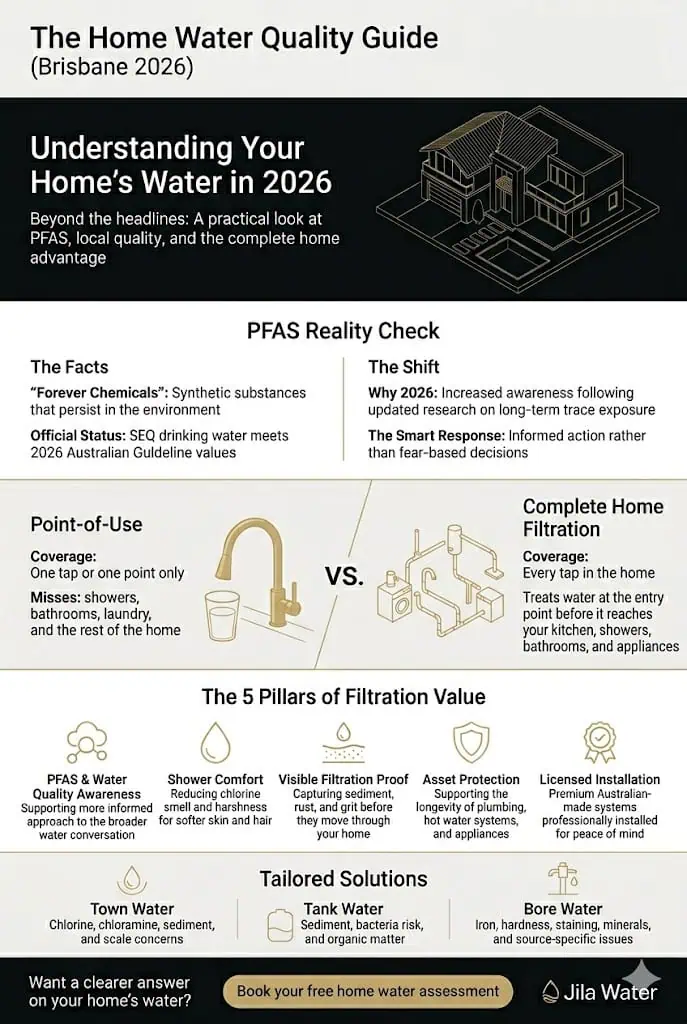
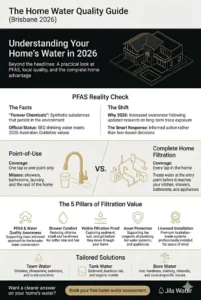
A simple Brisbane home water quality guide before you compare filter types
Before looking at specific system types, it helps to step back and understand the broader picture. PFAS is part of the conversation, but so are chlorine or chloramines, sediment, shower comfort, scale and the difference between treating one tap and treating the whole home.
For many homes, the real decision is not about chasing one headline. It is about choosing a complete home filtration strategy that improves confidence, comfort and everyday water quality across the property.
The real buying decision
Complete home filtration is not the same as a jug filter or under-sink filter
Most Australians begin by looking at a smaller point-of-use filter. That makes sense as a first step, but it only treats water at one outlet. A complete home filtration system treats the water where it enters the property, which means the benefits flow across the kitchen, showers, bathrooms, laundry and the rest of the home.
That difference matters because many of the most frustrating water complaints in Brisbane do not show up only at the kitchen sink. They show up in the shower, around tapware, on glass, in the laundry, and in the way the whole home feels day to day.
To make the bigger picture easier to understand, here is a simple guide to how PFAS concerns, local water quality, and complete home filtration fit together for Brisbane homeowners.
For many homes, the real decision is not just about one contaminant. It is about choosing a practical whole-home approach that improves water quality, comfort and confidence at every tap.
| Feature | Jug or under-sink filter | Complete home filtration |
|---|---|---|
| Drinking water improvement | Yes, but only at one outlet. | Yes, while also improving the rest of the home water experience. |
| Shower water | No meaningful whole-home impact. | Yes — the system treats water before it reaches showers and bathrooms. |
| Every tap coverage | No. | Yes — kitchen, bathrooms, laundry and the rest of the home. |
| Chlorine smell support | Only where the small filter is fitted. | Broad property-wide benefit when the system is properly specified. |
| Plumbing and appliance support | No. | Yes — a whole-home approach supports fixtures, wet areas and connected appliances. |
| Best fit | Small, single-point improvement. | Homeowners wanting a premium all-home result rather than a partial fix. |
What to say honestly
Can a whole-home system remove PFAS?
This is where straight answers matter. Not every home filtration setup is designed specifically for PFAS reduction, and not every cartridge media performs the same way. Performance depends on the exact chemistry involved, the media used, the contact time, the system design and the conditions of the water itself.
That is why premium advice should never overclaim. The smarter homeowner question is usually broader: what do I want this system to improve across my whole home? For many Brisbane households, the answer includes chlorine or chloramines, sediment, rust, scale support, better shower comfort and cleaner water across every tap.
Visible proof still matters
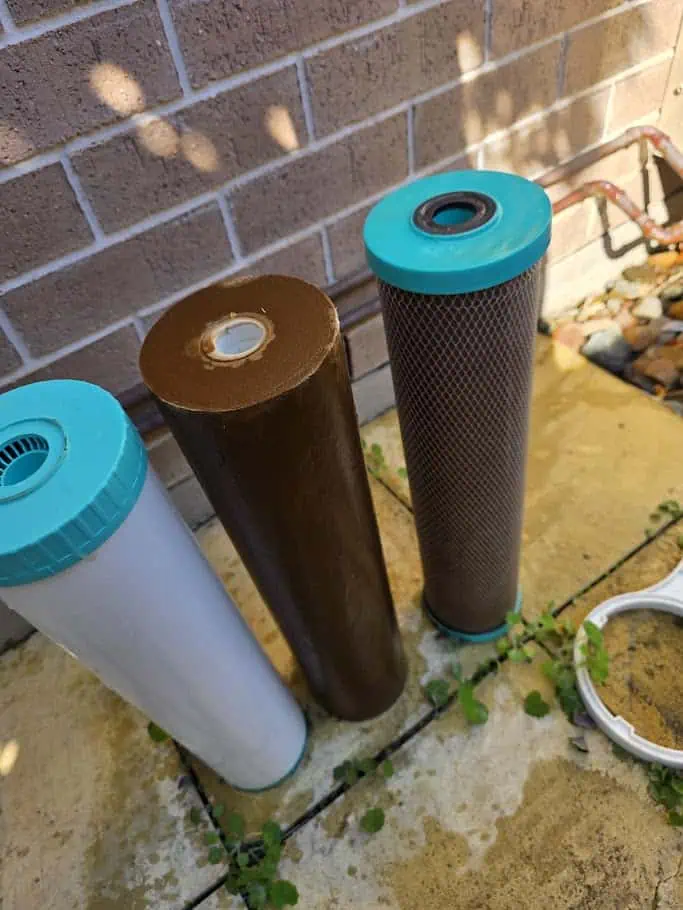
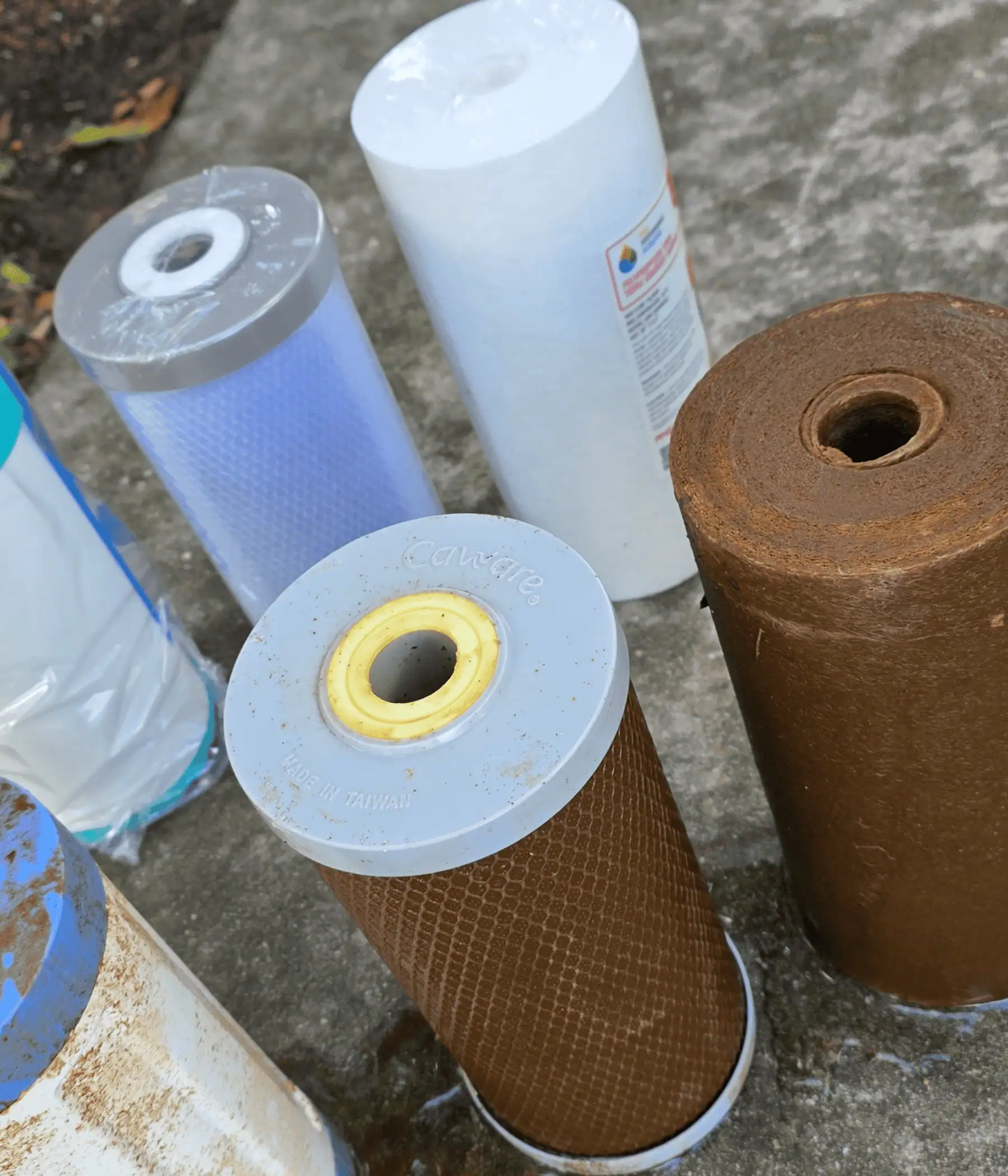
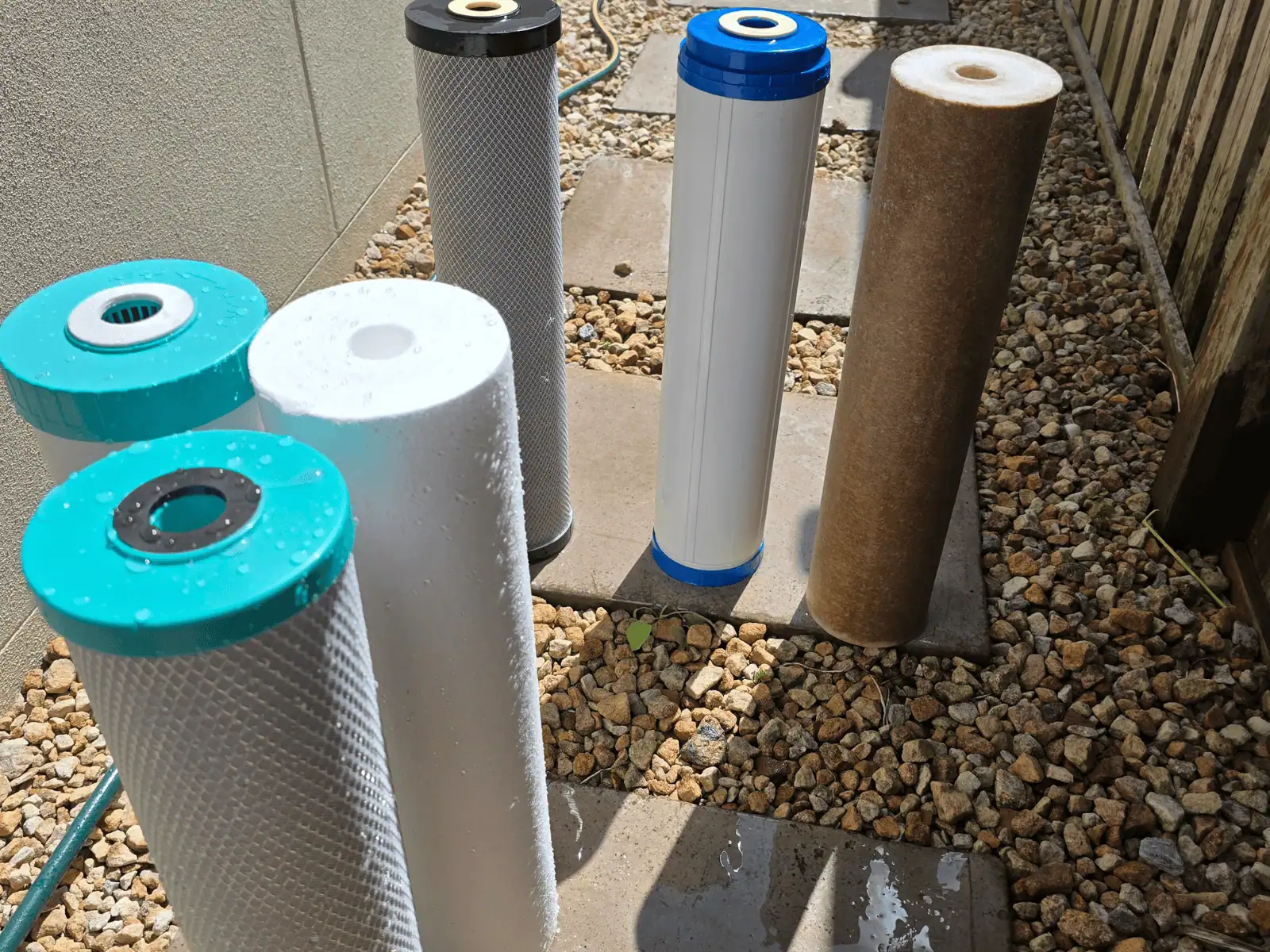
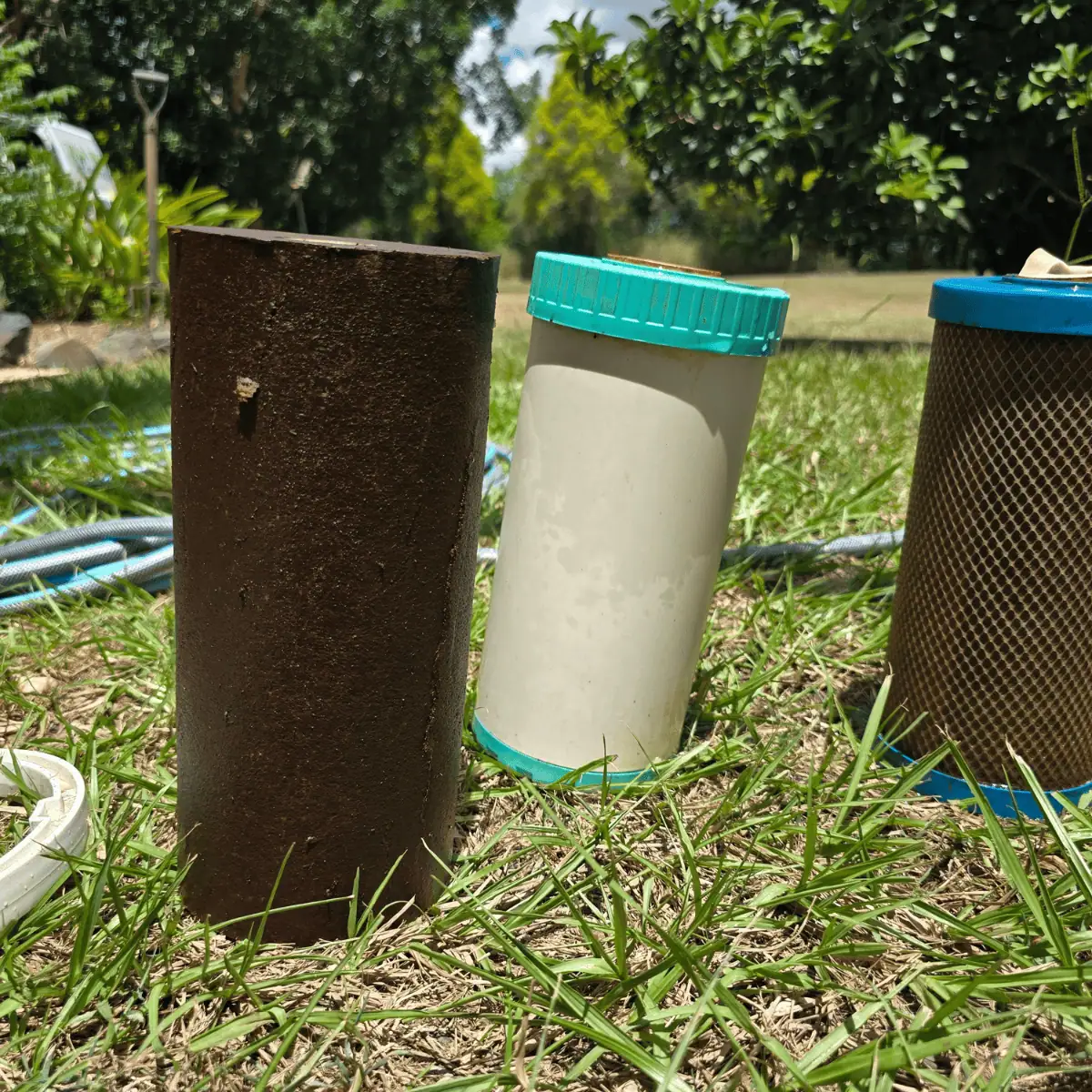
One of the strongest ownership benefits of complete home filtration is that homeowners can often see what is being trapped over time. Dirty sediment filters make the value easier to understand because the proof is not theoretical it is sitting in the spent cartridge instead of continuing through the home.
That is one reason premium whole-home systems often feel more tangible than a generic specification sheet alone.
Why homeowners still move forward
Why complete home filtration still makes sense for many Brisbane and SEQ homes
Better water at every tap
Not just drinking water. Showers, bathrooms, laundry and the rest of the home all benefit when the system is placed at the entry point.
Better shower comfort
Many families first notice the difference in chlorine smell, general harshness, and the way their skin and hair feel after showering.
Support for fittings and appliances
Sediment, rust and scale can affect more than comfort. They can also affect the long-term cleanliness and wear of wet areas and appliances.
Premium installation and finish
A whole-home system is a major upgrade. It should look considered on the wall and be installed properly by licensed plumbers.
Better fit for premium homes
Homeowners investing in their property usually want a solution that feels intentional, serviceable and built to last.
Confidence, not guesswork
The value is not only in what a system removes. It is also in the peace of mind that comes from understanding your water and treating it properly.
Different homes, different water
Town water, tank water and bore water do not need the same filtration strategy
Brisbane and SEQ mains water
Most metro households are focused on chlorine or chloramines, sediment, rust, scale and improving the feel of the water used every day throughout the home.
Tank water homes
Tank systems often need a different priority list, including sediment, organic matter, bacteria risk and seasonal variability from roof runoff and storage conditions.
Bore water properties
Bore water can present more complex chemistry, including minerals, metals, hardness, smell, staining and source-specific treatment needs.
What this means for buying
The best system is not simply the cheapest one online. It is the system matched to your water source, flow demand, household size and what you actually want to improve.
Buying guide
What to look for in a premium complete home filtration system in 2026
- Australian-made or Australian-assembled quality. This is not a throwaway purchase. Materials, presentation, serviceability and support all matter.
- Multi-stage treatment built for real household use. A premium system should do more than one job and suit real water conditions.
- Proper high-flow design. The right system should be sized for family living so performance feels strong across normal daily use.
- Licensed installation. Correct fit-off, clean placement and long-term reliability matter just as much as the cartridge list.
- Clear support after installation. Annual filter changes, reminders and direct local support make ownership easier and more premium.
Frequently asked questions
Answers to the last few questions before you book
Is PFAS in Brisbane water a reason to panic?
No. The better response is to stay informed, understand the official guidance, and make practical decisions about the water quality you want throughout your home.
Does showering expose me to PFAS in a meaningful way?
Current Australian guidance has said PFAS exposure through showering and bathing is considered negligible. For most homeowners, the stronger shower-related reason to filter is chlorine-related smell and general shower comfort.
Is a jug filter the same as complete home filtration?
No. A jug or under-sink filter improves one point of use. Complete home filtration treats water at the point it enters the home so the benefits extend across the whole property.
Do all homes need the same system?
No. Town water, tank water and bore water often require different treatment priorities. Household size and flow demand matter too.
What is the biggest benefit of complete home filtration?
For many homeowners, it is confidence: better water at every tap, a more comfortable shower experience, visible proof through used filters, and a professionally installed system matched to the home.
Free home water assessment
Get clear advice on what is worth filtering in your home and what is not
If you want straightforward guidance on your water source, household size and whether complete home filtration is the right fit, book a free home water assessment with Jila Water. No pressure. No generic script. Just a better path to filtered water at every tap.
Suggested internal links
Keep building authority across the site
Home Filtration System Brisbane: Costs, Options & What To Buy 2026 | Jila Water
Home Filtration System Brisbane: what it costs, what to buy, and what actually suits your home
By James Grady · Updated 23 April 2026
If you are researching a home filtration system in Brisbane, the biggest mistake is treating every filter as if it solves the same problem. It does not.
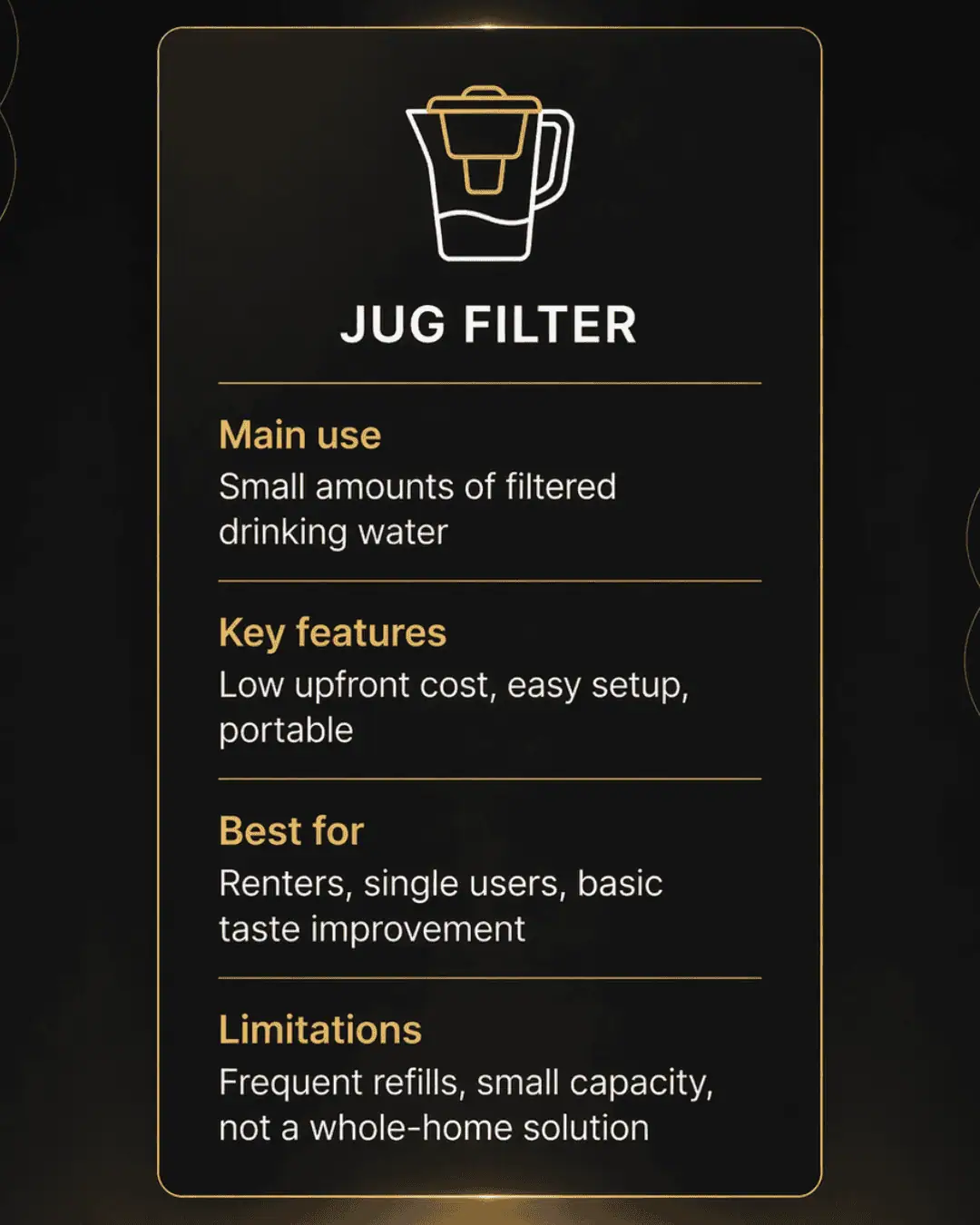
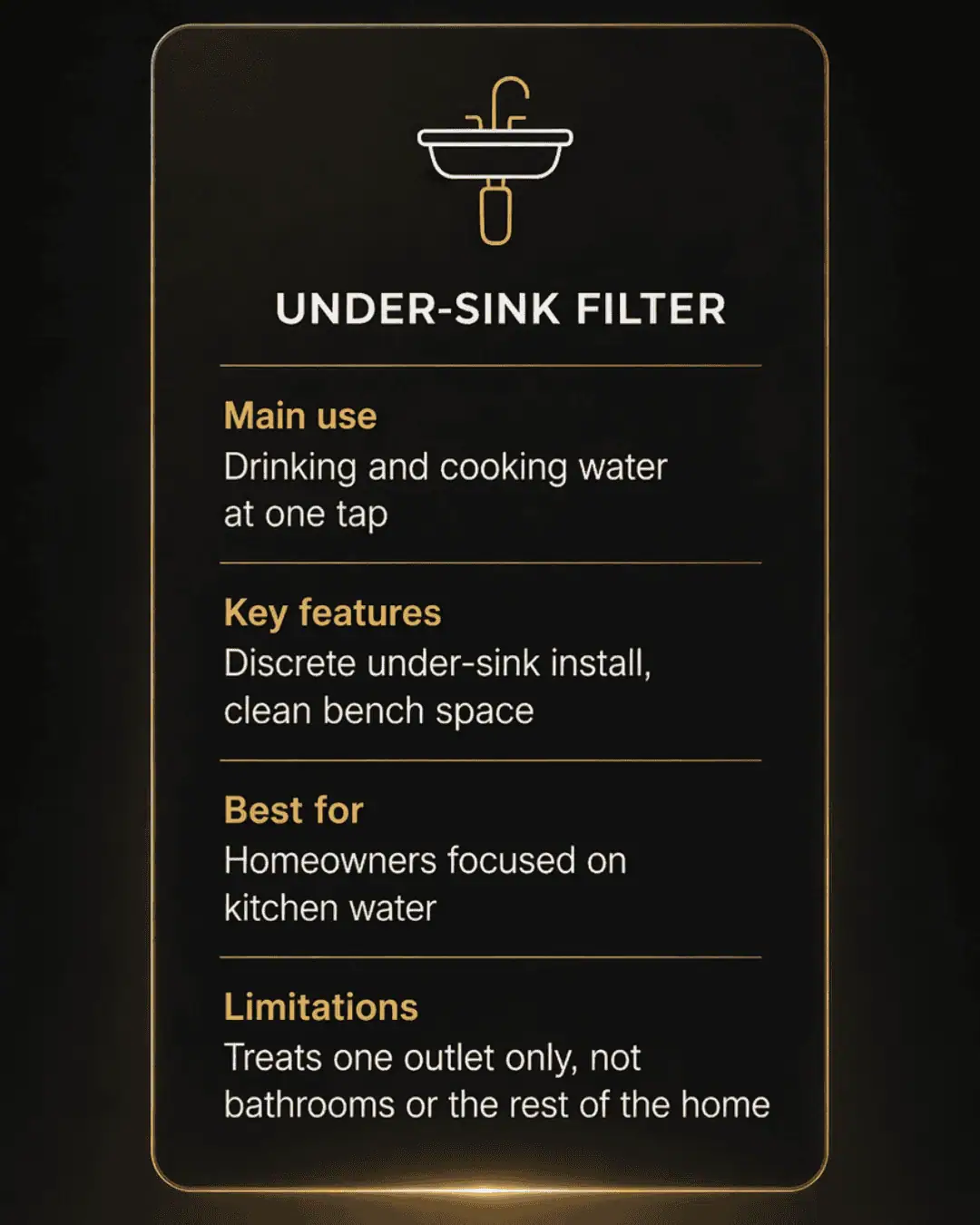
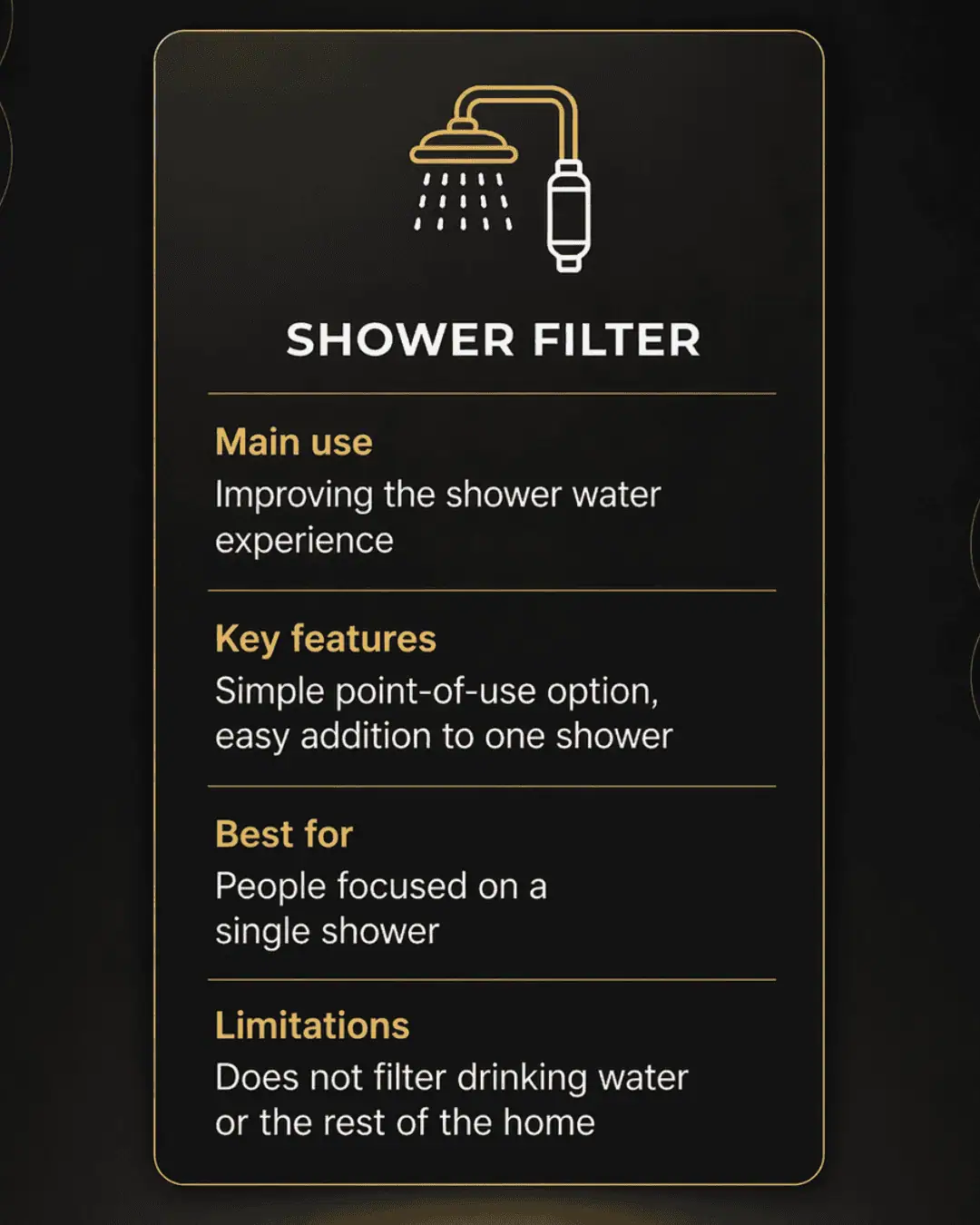
A jug filter, an under-sink filter, a shower filter, and a complete home filtration system all do very different jobs. The right choice depends on your water source, what is bothering you about the water, how much of the home you want covered, and whether you want a quick fix or a long-term upgrade.
For many Brisbane and South East Queensland homeowners, the real goal is simple: better water at every tap, with a system that suits the home properly and is installed the right way.
Professionally installed complete home filtration built for Brisbane homes.
What is a home filtration system?
That is why the term gets confusing.
When people search for “home filtration”, they may be looking for:
- a jug filter for drinking water
- an on-tap or under-sink filter for the kitchen
- a shower filter for one bathroom
- a whole home water filtration system for the entire property
- a tailored setup for tank water or bore water
At Jila Water, the practical distinction is simple: a single-outlet filter improves one point of use, while complete home filtration treats the home itself.
If you want filtered water across showers, bathrooms, kitchen, laundry and the rest of the house, it usually makes more sense to compare complete home filtration for Brisbane homes rather than point-of-use products alone.
Filtered water at every tap is a different outcome from filtering one sink
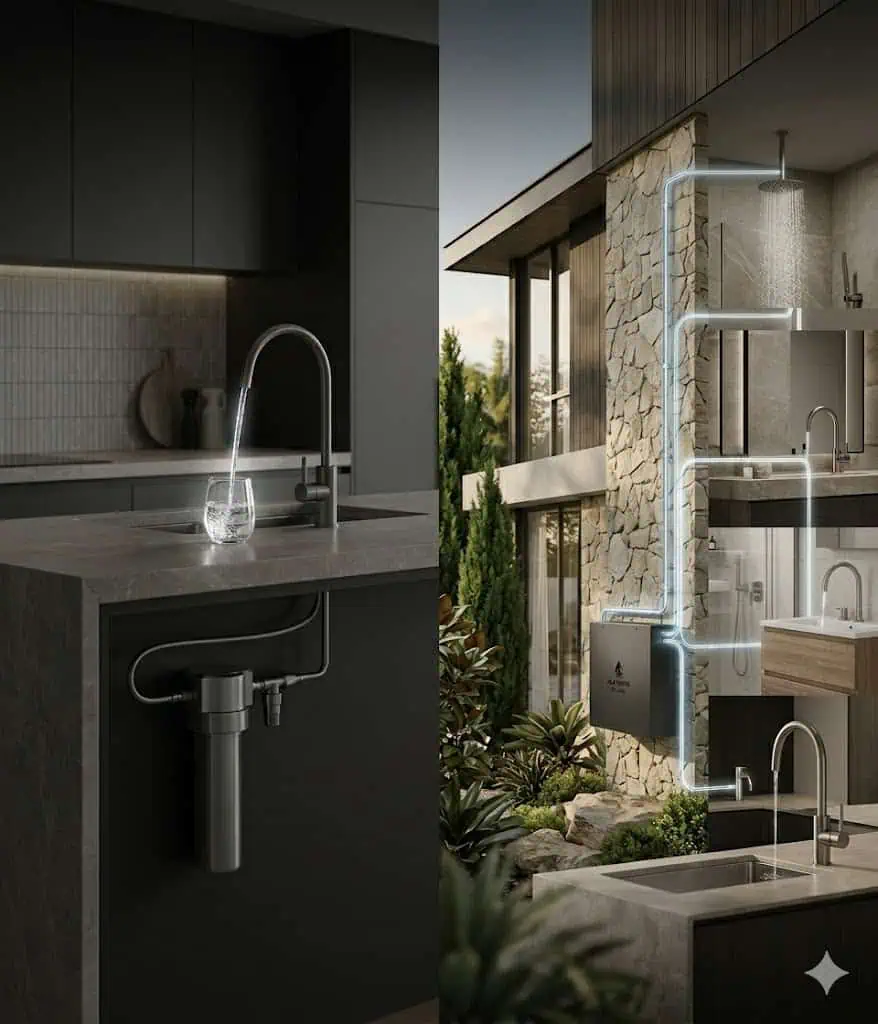
Whole-home filtration is not just about drinking water. It is about the everyday water experience across showers, bathrooms, kitchen, laundry and the rest of the home.
Whole-home filtration is about the full water experience, not just one tap.
Why Brisbane homeowners look into home filtration
In Brisbane and South East Queensland, homeowners often start looking into filtration when they notice things such as:
- chlorine smell or a chemical note in the shower or kitchen
- water that feels harsher on skin or hair
- sediment or rust after plumbing works or in older properties
- scale build-up on taps, screens and glass
- spotted glassware
- wanting a better everyday water experience across the whole house
This is not just a drinking-water question. It is often a whole-home living question.
What type of home filtration system suits your home?
For Brisbane and SEQ homeowners, the difference between a jug filter, under-sink filter, shower filter, and whole home system is not just price. It is about how much of the home you want covered.
Not all home filtration systems solve the same problem
A lot of confusion disappears once you compare each option by what it actually treats: one outlet, one shower, or the whole property.
Not all home filtration systems solve the same problem.
Home filtration system Brisbane: mains water, tank water and bore water are not the same
Brisbane and SEQ mains water
For most Brisbane homes on mains water, the conversation is usually about practical improvements such as taste, odour, shower feel, sediment, nuisance scale, and day-to-day comfort.
If you want the primary source material, see the Seqwater water quality report, the Seqwater taste and odour guidance, and the Australian Drinking Water Guidelines.
Tank water
Tank water is a different category entirely. Tank-water filtration often needs more than a standard town-water setup, which is why a tailored recommendation matters.
Queensland Health’s roof-harvested rainwater fact sheet is a useful reference for homeowners comparing town water and tank water properties.
Bore water
Bore water varies dramatically from property to property. It can involve sediment, minerals, staining, odour and other issues that are too site-specific to guess from a website page alone.
For bore water, an assessment-first approach is not just helpful. It is usually essential.
Useful external references
Water source changes everything
A home on Brisbane mains water usually needs a different approach from a tank water property or rural home using bore water.
Tank water properties usually need a different filtration approach from town water homes.
Home filtration vs under-sink vs Bunnings systems
| Option | Best for | Upfront cost | Covers whole home? | Typical fit |
|---|---|---|---|---|
| Jug filter | Basic drinking water | Low | No | Renters, light use |
| On-tap filter | One tap | Low to moderate | No | Simple kitchen use |
| Under-sink filter | Kitchen drinking/cooking water | Moderate | No | Households focused on one outlet |
| Shower filter | One shower | Low to moderate | No | One-bathroom concern |
| DIY whole-house unit | Basic entry whole-home coverage | Moderate | Sometimes | Budget-led buyers comfortable with compromise |
| Premium complete home filtration | Better water at every tap | Higher | Yes | Homeowners wanting a long-term whole-home upgrade |
The real difference is not whether a box says “whole house”.
The real difference is whether the system is matched to your water source, sized to your home and flow needs, installed correctly, easy to service, and built to suit the property rather than bolted on as an afterthought.
If your goal is larger than the kitchen sink, you should be comparing what a whole home water filter system actually does rather than judging every filter category as if they are interchangeable.
For homeowners researching entry-level alternatives, Bunnings’ water filtration range is a useful reference point for jug, under-sink and DIY options.
How much does a home filtration system cost in Brisbane?
The wide range exists because “home filtration system” covers very different products.
- Jug filters: low-cost entry point
- Under-sink systems: usually a few hundred dollars plus any plumbing
- DIY whole-house kits: usually lower upfront than premium installed systems, but often with more compromise
- Premium whole-home systems: higher upfront cost because they are a larger home upgrade, not a kitchen accessory
For homeowners comparing premium full-home options, you can also read Jila’s guide on complete home filtration cost in Brisbane.
What usually changes the price?
- house size
- number of bathrooms
- flow rate requirements
- mains water vs tank water vs bore water
- installation access and plumbing complexity
- enclosure and finish expectations
- whether the system is a basic entry setup or a premium tailored install
What drives cost is not just the filter itself
Coverage, flow, water source, install complexity, serviceability and finish all matter. A proper whole-home setup is a different category from a small retail filter.
Real filter change proof helps make the need for filtration easier to understand.
Want a clearer answer without guessing?
The most useful next step is to book a free home water assessment so the recommendation can be matched to your home, water source and household needs.
Are home filtration system reviews worth trusting?
A five-star review for a jug filter and a five-star review for a full-home installation do not tell you the same thing.
When reviewing options, look for comments that mention:
- the type of property
- the water issue being solved
- whether the review is about one tap or the whole home
- installation quality
- after-sales support
- filter replacement and servicing experience
- whether the customer talks about real day-to-day improvements
For a premium whole-home system, the most useful reviews are the ones that describe the ownership experience, not just the purchase.
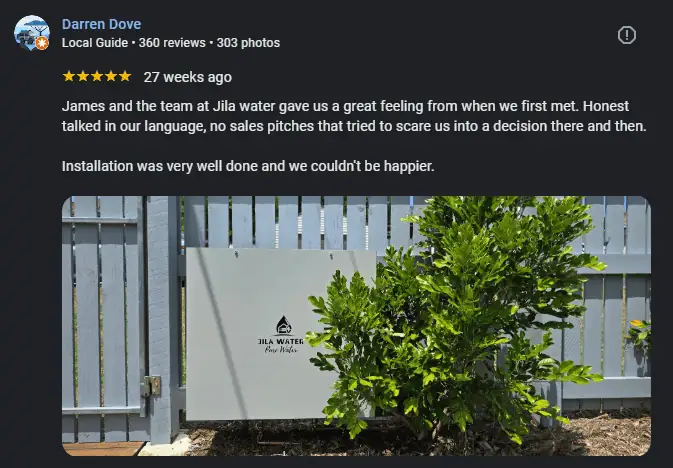
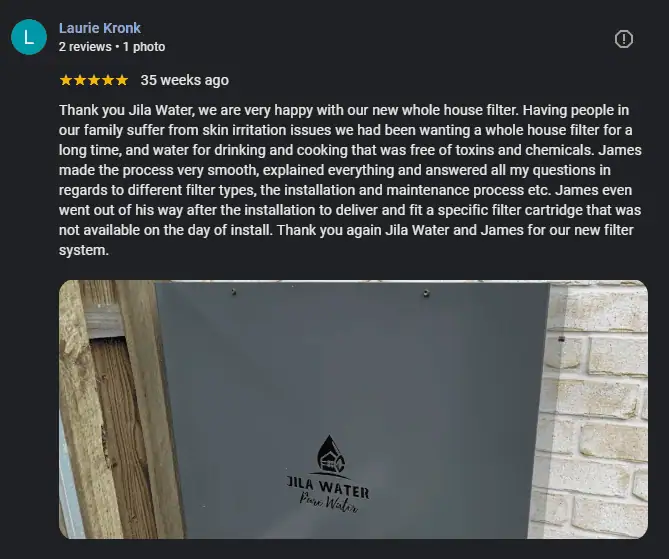
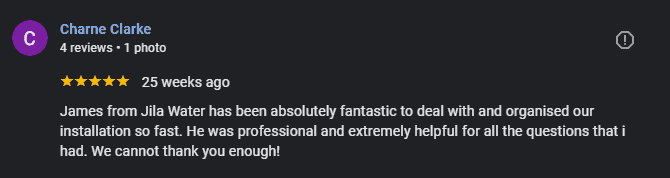
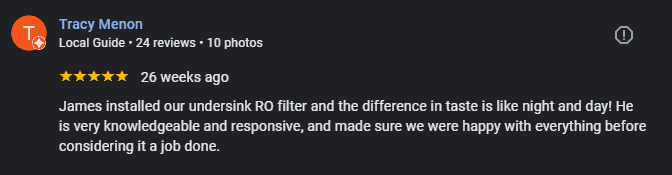
Real customer feedback
Real review screenshots help homeowners see the ownership experience behind a complete home filtration installation.
Verified Google review screenshot
Darren Dove
Verified Google review screenshot
Laurie Kronk
Verified Google review screenshot
Charne Clarke
Verified Google review screenshot
Tracey MenonIs a home filtration system from Bunnings enough?
A Bunnings or DIY system may be enough if:
- you only want one tap filtered
- you are renting
- you want the lowest upfront spend
- you want a temporary or entry-level solution
- you are comfortable handling the trade-offs
It may not be enough if:
- you want better water at every tap
- you care about showers and bathroom water, not just the sink
- your property uses tank or bore water
- you want a tailored, better-looking, professionally installed setup
- you want one considered solution instead of several smaller add-ons
What should Brisbane homeowners look for in a complete home filtration system?
- suitable for your actual water source
- sized for your home and bathrooms
- clear explanation of what it is designed to address
- professional installation by a licensed plumber
- sensible replacement and servicing pathway
- quality presentation on the property
- practical advice rather than one-size-fits-all claims
For Brisbane and SEQ homes, it also helps when the supplier understands local conditions, local water expectations, and the difference between a cosmetic retail filter and a serious whole-home upgrade.
A whole-home system should suit the home
For many homeowners, especially in well-finished Brisbane homes, the look of the install matters too. It should feel like a considered upgrade, not an afterthought.
A whole-home system should suit the home, not look like an afterthought.
When under-sink filtration is enough, and when whole-home filtration makes more sense
Under-sink may be enough if:
- you only care about drinking and cooking water
- you want a lower upfront spend
- you live in a rental or temporary home
- you do not mind leaving showers and the rest of the home untreated
Whole-home filtration usually makes more sense if:
- you want filtered water at every tap
- you want the bathrooms and showers improved too
- you are building, renovating or upgrading your home properly
- you want one system instead of several separate products
- you want a more complete long-term solution
If your concern is larger than the kitchen sink, it usually points toward whether whole home water filtration is worth it in Brisbane rather than a small point-of-use filter.
A practical recommendation for Brisbane homeowners
If your goal is only nicer drinking water at one tap, an under-sink system may be all you need.
If your goal is better water across the home, including showers, bathrooms, kitchen and laundry, you should be comparing proper complete home filtration options instead of trying to stitch together a result from smaller retail products.
And if your home uses tank water or bore water, avoid guessing. Get the water source and property setup assessed properly first.
Helpful sources behind this guide
This guide is written to help Brisbane and South East Queensland homeowners make practical decisions, but it also points to primary references where they genuinely help.
- Seqwater water quality report for current bulk water reporting in South East Queensland
- Seqwater taste and odour information for mains water taste and smell context
- Australian Drinking Water Guidelines for the national framework used across Australia
- Queensland Health roof-harvested rainwater guidance for tank water context
Book a free home water assessment
The right home filtration system is not the cheapest box with the widest claims. It is the setup that suits your home, your water and how you actually live.
Jila Water’s approach is built around tailored recommendations, licensed plumber installation, premium finish, and better water at every tap for Brisbane and SEQ homes.
Frequently asked questions
What is the difference between home filtration and whole home water filtration?
Home filtration can mean anything from a jug filter to a full-property system. Whole home water filtration treats water for the house more broadly, rather than just one outlet such as the kitchen sink.
How much does a home filtration system cost in Brisbane?
It depends on the type of system. Small point-of-use options are much cheaper, while premium professionally installed complete home filtration systems are a larger home upgrade and sit in a much higher price bracket.
Is an under-sink filter enough for most homes?
It can be enough if your only priority is drinking and cooking water from one tap. It is usually not enough if you also want better shower water, bathroom water, laundry water and whole-home coverage.
Are Bunnings water filters the same as a complete home filtration system?
No. Most retail filtration products are aimed at one outlet or small-scale use. A complete home filtration system is a larger whole-property solution designed to treat water more broadly across the home.
Do Brisbane homes use chlorine or chloramine in the water supply?
Brisbane and SEQ homeowners commonly look into filtration because of taste, odour and shower comfort concerns linked to treated mains water. That is one of the main reasons complete home filtration is often considered.
Do tank water homes need a different filtration setup?
Usually yes. Tank water properties often need a different treatment approach from standard mains water homes, which is why a tailored recommendation matters.
What is the best next step before buying a home filtration system?
Start with a free home water assessment so the recommendation can be matched to your water source, home size, concerns and property setup.
Want better water at every tap?
Book a free home water assessment and get tailored advice for your home and water source.
Book Now
Complete home filtration Brisbane | Better Water at Every Tap
Premium complete home filtration for better water at every tap.
If you are researching whole home water filtration or complete home filtration, you are usually trying to solve a much bigger problem than drinking water alone. You want cleaner, better-feeling water through the kitchen, showers, bathrooms and laundry not just one tap.
Jila Water helps Brisbane and South East Queensland homeowners upgrade the water they live in every day with premium Australian-made systems, tailored recommendations, and licensed plumber installation.
- Better water at every tap not just the kitchen sink.
- Designed for Brisbane and SEQ conditions with premium triple-stage filtration.
- Ideal for homeowners chasing better shower comfort, taste, odour and cleaner-looking water across the home.
- Professionally installed by licensed plumbers with honest, assessment-first recommendations.
What is complete home filtration?
complete home filtration means filtering water for the whole property rather than only one outlet. It is the same broad idea many homeowners call whole home water filtration or a whole house water filter.
Instead of treating just the kitchen tap, the system is installed where water enters the home so it can support showers, bathrooms, laundry, appliances and everyday water use right across the property.
- Better water at every tap, not just one point of use.
- A stronger solution for homeowners focused on the full household experience.
- A premium upgrade for Brisbane homes wanting more than a small DIY filter.
Want to see Jila’s main system overview first? Visit the complete home filtration system page here.
Why complete home filtration is different from under-sink, jug and shower filters.
Point-of-use filters can help one tap. complete home filtration is for homeowners wanting a better water experience across the entire property from the kitchen to the shower to the laundry.
The practical difference
Most homeowners start researching whole-home systems because their frustrations happen outside the kitchen. The chlorine smell in the shower. The feel of the water on skin and hair. The way the bathroom presents. The scale on fixtures. The inconvenience of stacking multiple little filters around the house.
- Jug filters focus on drinking water only.
- Under-sink filters improve one outlet.
- Shower filters only target one shower point.
- complete home filtration is the property-wide solution.
For a broader buyer’s guide, read Best Whole House Water Filters Brisbane 2026.
| Feature | Jug / Under-Sink / Shower Filter | complete home filtration |
|---|---|---|
| Water treated | One tap or one outlet only | Supports the whole property including kitchen, showers, bathrooms and laundry |
| Best for | Small single-point improvements | Homeowners wanting a full-house water upgrade |
| Shower experience | Limited unless each shower is treated separately | Much stronger whole-home outcome because the system is designed around every tap |
| Appliance and bathroom benefit | Usually none or very limited | Much more relevant for bathrooms, laundry and household water use |
| Overall convenience | Multiple small filters, different replacement cycles | One premium, tailored system for the home |
| Fit for premium homes | Basic entry-level solution | A cleaner, more considered upgrade designed to suit modern homes |
Why whole home water filtration matters more when you think about how water is actually used.
For many Brisbane and South East Queensland homeowners, the decision is not about fear. It is about improving daily life shower comfort, taste, odour, visible sediment, scale and the way water feels throughout the home. For official local context, see Seqwater’s bulk water quality reporting and the Australian Drinking Water Guidelines.
If your concern is what happens in showers, bathrooms and laundry as well as the kitchen, a complete home filtration system is the more logical solution.
The water your family lives in every day matters. That includes showering, bathing, washing, cooking and everyday use right across the property.
Mains water, tank water and other property setups are not the same. That is why Jila Water leads with a recommendation-first assessment, not a one-size-fits-all pitch.
Real-world proof makes complete home filtration feel tangible, premium and trustworthy.
One of the strongest parts of a true whole-home upgrade is that the value does not stay theoretical. Quality installation, cleaner presentation, and real replacement filter proof help homeowners see exactly why the system matters.
Clean vs dirty filter proof
A premium before-and-after comparison helps show homeowners the difference between a fresh filter and one that has already done months of real work.
Real proof from local homes
Dirty filter proof gives this page more authority because it connects the system to real South Brisbane and wider SEQ water conditions homeowners can immediately relate to.
Installation quality matters
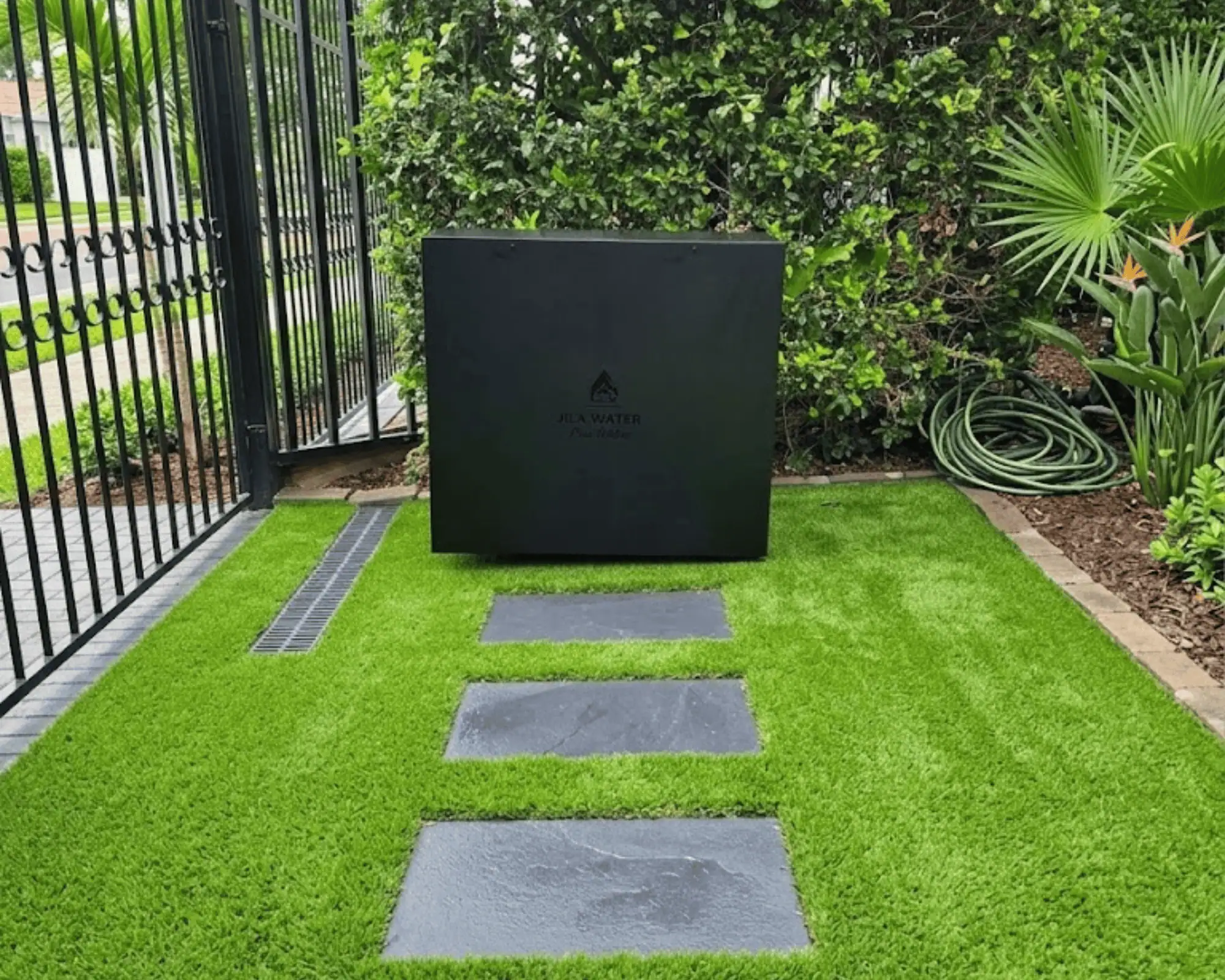
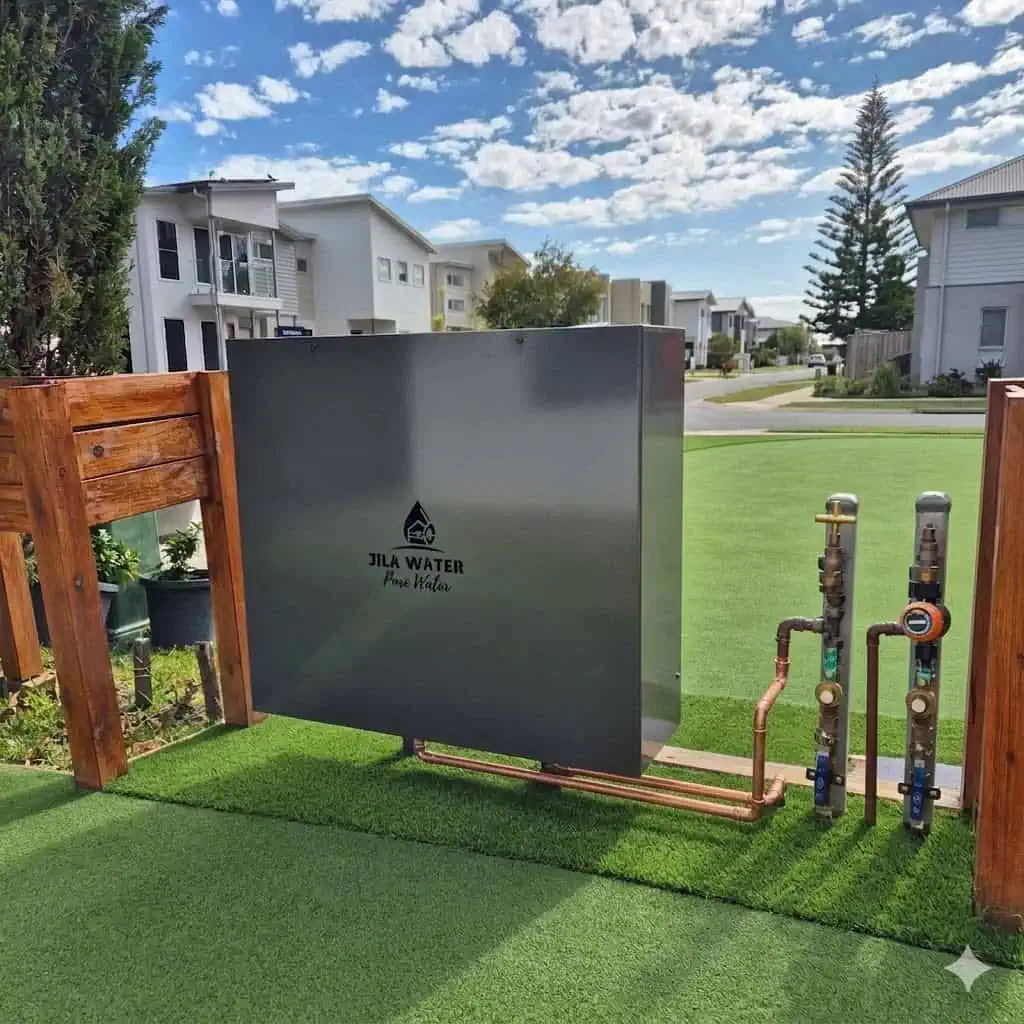
A premium system should not just perform well. It should also look properly installed, considered, and built to suit the home.
Premium finish for modern homes
A whole-home system should look like a genuine home upgrade not a generic add-on hidden because it does not suit the property.
Built around Brisbane homes
The strongest pages do not look generic. They feel local, premium and clearly aligned to the type of home and homeowner Jila Water is built for.
Long-term ownership made simple
A premium result is not just the day of install. It is also how easy the system is to service, maintain and keep performing over time.
What to look for in a complete home filtration system
The best system is not the cheapest one and not always the biggest one. It is the one that fits your home, water source, household size and the result you actually want. If you are on tank water, rural water, or other non-standard supply, Queensland Health’s drinking water guidance is a strong reference point alongside tailored on-site advice.
- Water source: mains water, tank water and rural setups can need different advice.
- Household size: the right flow and system capacity matters.
- Goals: shower comfort, taste, odour, sediment, scale or an all-round premium upgrade.
- Installation quality: a proper whole-home system should be professionally installed and built to last.
- Ownership experience: servicing, support and easy replacement matter too.
If hard water and scale are part of the conversation, read complete home filtration & water softener.
If you are still comparing budgets and options, read our complete home filtration system cost in Brisbane guide.
Not sure whether you need a kitchen filter or a true whole-home system?
That is exactly why Jila Water leads with a free home water assessment. The goal is not to force a product. It is to understand your property, your water and what you actually want to improve, then recommend the right fit.
Clear advice tailored to the home, not a generic one-size-fits-all pitch.
Work out whether a whole-home system actually makes sense for your property before committing.
Recommendations built around local homeowner needs and practical day-to-day outcomes.
Frequently asked questions about complete home filtration
Use these FAQs on-page and in Rank Math or your schema setup. Keep the wording matched exactly if you add FAQ schema.
What is the difference between whole home water filtration and complete home filtration?
Is complete home filtration better than an under-sink filter?
Why do Brisbane homeowners choose whole home water filtration?
Does every Brisbane home need the same whole-home system?
Can complete home filtration help with showers and bathrooms too?
What is the best next step if I am comparing options?
Better water at every tap starts with the right whole-home solution.
complete home filtration is not about guessing, overbuying or trying to patch together multiple little filters around the house. It is about choosing the right premium system for your property, your water and the daily result you want. Book your free home water assessment with Jila Water or call James on 0401 743 868 for honest, tailored advice.
The Importance of Water Testing & Identifying Contaminants
Water testing helps Brisbane and SEQ homeowners understand what may…
Read MorePFAS In Brisbane Water: What Homeowners Need to Know in 2026
Concerned about PFAS in Brisbane water? This practical 2026 guide…
Read MoreHome Filtration System Brisbane: Costs, Options & What To Buy 2026 | Jila Water
BRISBANE & SEQ HOME FILTRATION GUIDE Home Filtration System Brisbane:…
Read MoreComplete home filtration Brisbane | Better Water at Every Tap
complete home Water filtration Brisbane Premium complete home filtration for…
Read More
Whole House Water Filter Installation Guide for Australian Homes: Small Filters, Servicing, and What to Know Before You Buy
Thinking about installing a whole house water filter? This guide helps Australian homeowners compare small filters vs complete home filtration, understand servicing, and know what to check before investing in a system designed to improve water at every tap.
Quick answer: is a whole house water filter worth it?
A small water filter for home can be a smart first step if you only care about drinking water from one tap. But if you want filtered water across the kitchen, showers, bathrooms, laundry and the rest of the home, a whole house water filter installation is the more complete option.
That is the real difference between point-of-use filtration and complete home filtration: one improves a single outlet, while the other is designed to improve the water you actually live in every day.
For many homeowners, the question is not whether water is “compliant”. It is whether the water at home tastes, smells and feels as good as it should across the whole property.
Not sure whether you need a small filter or a full-home system?
Start with a free home water assessment and get practical guidance on the right setup for your home, water source and goals.
Whole house water filters vs small water filters for home
Many homeowners begin with a cheaper option first. The better question is not just what costs less today — it is what actually solves the problem you want fixed.
Treats one outlet only
Best for drinking water from a single tap, under-sink point, or benchtop setup.
Improves water across the whole home
Better for homeowners who want a premium whole-home water experience across kitchen, shower, bathroom and laundry.
One outlet versus every outlet — the difference between point-of-use filtration and complete home filtration.
Best for one tap or drinking water only
Jug filters, benchtop units and under-sink systems can be useful when you rent, want a lower upfront spend, or only care about water for drinking and cooking.
- Useful entry point for one specific outlet
- Lower upfront cost
- Often enough for renters or temporary setups
- Does not improve showers, bathrooms, laundry or whole-home water use
Best for a better whole-home water experience
A whole house water filter is installed where water enters the property so it can help improve the water delivered throughout the home.
- Filtered water at every tap
- Better fit for showers, bathrooms and laundry
- Can support a more comfortable everyday water experience
- Better suited to owner-occupiers wanting a premium long-term solution
The simplest way to decide
If your pain point is only taste at one kitchen tap, a smaller filter may be enough for now.
If the frustration includes shower smell, water feel, sediment, scale or wanting cleaner water across the house, complete home filtration usually makes far more sense.
What whole house water filter installation actually involves
A proper whole house water filter installation is more than adding a filter box outside the house. It should be matched to your home, your household size, your water source and the result you actually want.
South East Queensland bulk water is publicly monitored and reported each month, and you can view Seqwater’s monthly water quality reporting for South East Queensland if you want to understand the broader context around local drinking water quality before comparing in-home filtration options.
Assess the home and water type
Town water, tank water and private supplies can all need different treatment approaches. Good recommendations start with the right assessment.
Choose the right size and setup
The system should match your household demand and how you actually use water day to day.
Select the best install location
Placement affects access, protection, future serviceability and how the finished system looks on the home.
Install neatly and professionally
A premium system should look intentional — not like a cheap afterthought strapped to the wall.
Allow for future servicing
Good installation is not just about day one. It also makes filter changes and inspections easier later on.
Explain the ownership path clearly
You should understand what the system does, what it does not do, and what the servicing schedule is likely to look like.
Can you install a whole house water filter yourself?
Many homeowners search for installing a whole house water filter because DIY seems cheaper at first. But whole-home systems affect the incoming water supply to the property, and poor installation can lead to awkward placement, messy presentation, harder servicing and a less premium outcome.
In Queensland, most regulated plumbing and drainage work must be carried out by a licensed contractor, and you can read the QBCC home owner’s guide to plumbing matters if you want to see how Queensland frames licensed plumbing responsibilities around residential work.
Why professional installation usually makes more sense
- Better system sizing and placement
- Cleaner pipework and overall presentation
- Easier access for servicing later
- Less guesswork around the upgrade
- A more premium finished result for the home
Why real install photos matter
Comparison graphics help explain the idea, but real installed photos help homeowners trust the execution. This is the kind of proof that shows whether a system will actually look premium once it is on the wall and connected to the home.
For Jila Water, installation quality is part of the product — not an afterthought once the sale is made.
Home water filtration system service: what it really includes
Buying the system is only one part of the story. Good home water filtration system service is what helps protect performance, convenience and confidence over time.
Some people notice chlorine or chloramine taste and odour in treated water even when the supply is compliant, and you can read the NHMRC Australian Drinking Water Guidelines on taste and odour for more context on how disinfectants can affect the way water tastes and smells.
Filter replacement
Cartridges need changing at the right interval based on your water source, household usage and sediment load.
System inspection
A proper service should check housings, seals, fittings and overall system condition, not just swap a cartridge and leave.
Clear next-step advice
You should know what was done, what to expect next, and how to keep the system performing properly.
Why serviceability matters before you buy
A system that is difficult to reach, awkward to open or poorly placed becomes frustrating to own. That is why installation and servicing should always be considered together.
For Jila Water, the ownership path should feel cleaner and more premium from first enquiry through to replacement filters and long-term support.
Why dirty filter proof matters
One of the strongest trust signals in complete home filtration is visible proof. When homeowners can see what replacement filters have captured over time, the value of proper servicing becomes far easier to understand.
This kind of proof does not replace water testing or good advice, but it does help make the benefit of ongoing filtration feel real and immediate.
Want filtered water at more than one tap?
See why Jila Water focuses on complete home filtration rather than one-tap fixes and generic plastic setups.
Brisbane and SEQ water context: what homeowners should know
Town water in South East Queensland is treated and monitored, but for homeowners the more practical question is often whether the water at home tastes, smells and feels as good as it should across the full property.
If your property relies on tank water or a private supply, it is worth understanding that treatment needs can be different, and Queensland homeowners can read Queensland Health’s roof harvested rainwater guidance for a plain-English overview of maintenance, storage and household use considerations.
Many homeowners want help with chlorine smell, taste, shower comfort, sediment and the general feel of water around the home.
Tank water can need a different treatment strategy depending on storage, maintenance and how the water is being used.
These properties often need a more tailored approach depending on water quality, sediment and overall treatment goals.
The right solution depends on the actual water source and the property setup — not just whichever product is cheapest online.
What to check before choosing a whole house water filter
Ask these six questions first
- What am I actually trying to improve — taste, smell, sediment, scale, shower comfort or all of the above?
- Do I want filtered water at one point or throughout the home?
- Is the system sized correctly for the household?
- Will the installed result look neat and premium?
- How easy will future servicing be?
- Is the setup right for my actual water source?
Who a whole-home system usually suits best
This kind of upgrade is usually the best fit for owner-occupiers, families, premium renovations, and homeowners who want cleaner water across the home rather than patching together smaller fixes.
If you only want filtered drinking water at one outlet, a small water filter may still be the right option for now. Good advice should help you choose well, not push the same answer on everyone.
Explore more from Jila Water
Use these links to move naturally into the next page, whether you are ready to compare systems, read FAQs, or speak with the team directly.
Whole house water filter installation FAQs
What is a whole house water filter installation?
A whole house water filter installation connects a filtration system to the main incoming water line so water can be treated before it reaches the kitchen, bathrooms, showers, laundry and the rest of the home.
Is installing a whole house water filter worth it in Australia?
It can be worth it when you want more than filtered drinking water at one tap. For many Australian homeowners, the value is in improving the overall water experience across the whole home.
What is the difference between a small water filter for home and a whole house filter?
A small filter usually treats water at one point, such as a jug, benchtop unit or under-sink outlet. A whole-house system treats water as it enters the home so multiple outlets can benefit.
How often does a home water filtration system need service?
Service intervals depend on water source, household usage, sediment load and the filter stages installed. A good service plan should match the actual system and the local conditions.
Can a whole house filter work for tank water or private water supplies?
Sometimes, but not always on its own. Tank water and private supplies can need a more tailored treatment approach depending on water quality, storage and intended use.
Where should I go next if I am still deciding?
The best next step is usually to book a free home water assessment, compare the whole-home options, or speak with Jila Water directly about your property and what you want to improve.
Get advice matched to your home before you buy
Whether you are comparing a small water filter for home or planning a full whole house water filter installation, the smartest next move is a tailored recommendation based on your home, water source and goals.
The Importance of Water Testing & Identifying Contaminants
Water testing helps Brisbane and SEQ homeowners understand what may be affecting their tap, tank or bore water before choosing a filtration system. This guide explains common contaminants, water quality warning signs, and when to book a free Jila Water home water assessment.
PFAS In Brisbane Water: What Homeowners Need to Know in 2026
Concerned about PFAS in Brisbane water? This practical 2026 guide explains what homeowners need to know, what current Australian advice means, and where complete home filtration fits.
Home Filtration System Brisbane: Costs, Options & What To Buy 2026 | Jila Water
BRISBANE & SEQ HOME FILTRATION GUIDE Home Filtration System Brisbane: what it costs, what to buy, and what actually suits your home By James Grady
Complete home filtration Brisbane | Better Water at Every Tap
complete home Water filtration Brisbane Premium complete home filtration for better water at every tap. If you are researching whole home water filtration or complete
Whole House Water Filter Installation Guide for Australian Homes: Small Filters, Servicing, and What to Know Before You Buy
Whole House Water Filter Installation Guide Whole House Water Filter Installation Guide for Australian Homes: Small Filters, Servicing, and What to Know Before You Buy
Whole Home Water Filtration in 2026: Is It Worth It for Brisbane Homes?
Brisbane & SEQ Home Water Guide Whole Home Water Filtration in 2026: Is It Worth It for Brisbane and Queensland Homes? Whole home water filtration
How Much Does a complete home filtration system cost in Brisbane 2026?
Brisbane Pricing Guide 2026 How Much Does a complete home water filtration System Cost in Brisbane 2026? One of the most common questions we hear

Best Whole House Water Filters in Brisbane 2026 – Buyer’s Guide
Best Whole House Water Filters in Brisbane 2026 – Buyer's Guide | Jila Water Jila Water Premium whole home filtration for Brisbane & SEQ Australian-designed
Whole Home Water Filtration in 2026: Is It Worth It for Brisbane Homes?
Whole Home Water Filtration in 2026: Is It Worth It for Brisbane and Queensland Homes?
Whole home water filtration Brisbane homeowners are researching in 2026 is not about panic or telling families their mains water is automatically unsafe. It is about upgrading the quality, feel, presentation and consistency of the water flowing through the entire home. For Brisbane and Queensland households dealing with chlorine smell, dull shower feel, sediment, scale or simply wanting a more premium water experience, a properly designed complete-home system can make a real everyday difference.
Premium whole home water filtration lifestyle image for Brisbane and Queensland homes by Jila Water.
A simple visual guide to how whole home water filtration works and when it is worth it for Brisbane and Queensland homes.
Why whole home water filtration Brisbane homeowners are considering more seriously in 2026
A lot of homeowners first look into filtration because of one obvious frustration: the smell of chlorine, scale building up on fixtures, or water that just does not feel as nice in the shower as they want it to. In 2026, the conversation has become sharper. Homeowners are not only asking whether their water meets the minimum standard. They are asking whether it feels right to live with every day.
That is where a complete-home approach stands apart. Instead of filtering one tap and leaving the rest of the home untouched, a whole home water filtration Brisbane families choose is designed to help improve water quality from the point it enters the property. That can mean a more consistent experience across showers, baths, kitchen taps, laundry, appliances and plumbing.
For Jila Water, this is the real point of the upgrade. Not fear-based marketing. Not generic boxes. Just a more considered water solution for Australian homes that want cleaner water at every tap and a better ownership experience overall.
Jila Water approach: start with a proper assessment, match the system to the home, and install a premium complete-home setup designed for local conditions. You can start with a free home water assessment here.
What whole home water filtration actually means
Whole home water filtration, also called whole house filtration or point-of-entry filtration, treats water as it enters your home rather than at a single outlet. That means the water used in your showers, your hot water system, your bathrooms, your laundry and your kitchen can all benefit from the same central system.
That is a very different goal from a jug filter or an under-sink drinking water unit. Those options can be useful when the only goal is improving one tap. A complete-home system is for homeowners who want a more consistent water experience across the entire property.
Whole home coverage
Supports water quality throughout the house instead of only one outlet.
One central system
Cleaner, simpler and easier to manage than stacking separate filters in different rooms.
Premium outcome
Designed for homeowners who want better water feel, better presentation and stronger long-term convenience.
Want a premium full-home solution instead of a one-tap patch?
Explore the Jila Water Complete Home Water System to see how a properly designed setup can help support showers, laundry, plumbing and kitchen use from one central point.
The real reasons Brisbane and Queensland homeowners consider it
In most homes, the decision does not start with abstract chemistry. It starts with a lived experience. Maybe the shower leaves skin and hair feeling dry. Maybe there is a chlorine smell when a hot tap first turns on. Maybe the glass around the bathroom never seems to stay clear for long. Maybe the kettle, fixtures or hot water system are wearing the signs of scale and mineral nuisance build-up.
These are exactly the kinds of everyday complaints that make whole home water filtration Brisbane homeowners worth exploring. A complete-home setup is usually most attractive when homeowners want help with one or more of the following:
Chlorine smell and taste
Especially when the goal is less “pool smell” in showers and less interference with the way water tastes or smells around the home.
Better shower feel
One of the biggest reasons homeowners move beyond under-sink filters is wanting a better experience in the bathroom, not just the kitchen.
Sediment and older plumbing concerns
Older homes can experience visible debris, rust-related particles or general water presentation issues that benefit from proper pre-filtration.
Scale and appliance protection
When nuisance hardness is affecting fixtures, hot water systems or other household equipment, the right setup can help support better long-term performance.
For Jila Water customers, this is often the shift from “our water is technically fine” to “we want the whole home to feel better.” That is a much more honest and useful way to frame the value of whole home water filtration in Brisbane in 2026.
How a premium Jila-style complete-home system works
A premium complete-home system is not one single magic cartridge. It is a staged approach, with each step designed to do a specific job. The exact media and sizing should always be matched to the home, the local water profile and the homeowner’s priorities.
Sediment barrier stage
Helps capture dirt, grit, rust and visible particles before they travel deeper into the home’s plumbing and fixtures.
Hardness or conditioning stage
Tailored depending on the water goals and the property, especially where nuisance scale or mineral-related performance issues are part of the problem.
Carbon filtration stage
Typically used to help reduce chlorine-related taste and odour concerns and improve the overall feel and presentation of household water.
Specialist media when needed
Added when a home needs a more tailored treatment approach based on the water source, the property or the desired outcome.
Optional UV for suitable applications
Relevant for some rainwater or source-water scenarios where extra microbial confidence is part of the design brief.
Professional installation
A premium system is not just about media. It is also about how neatly, safely and confidently the system is installed and supported over time.
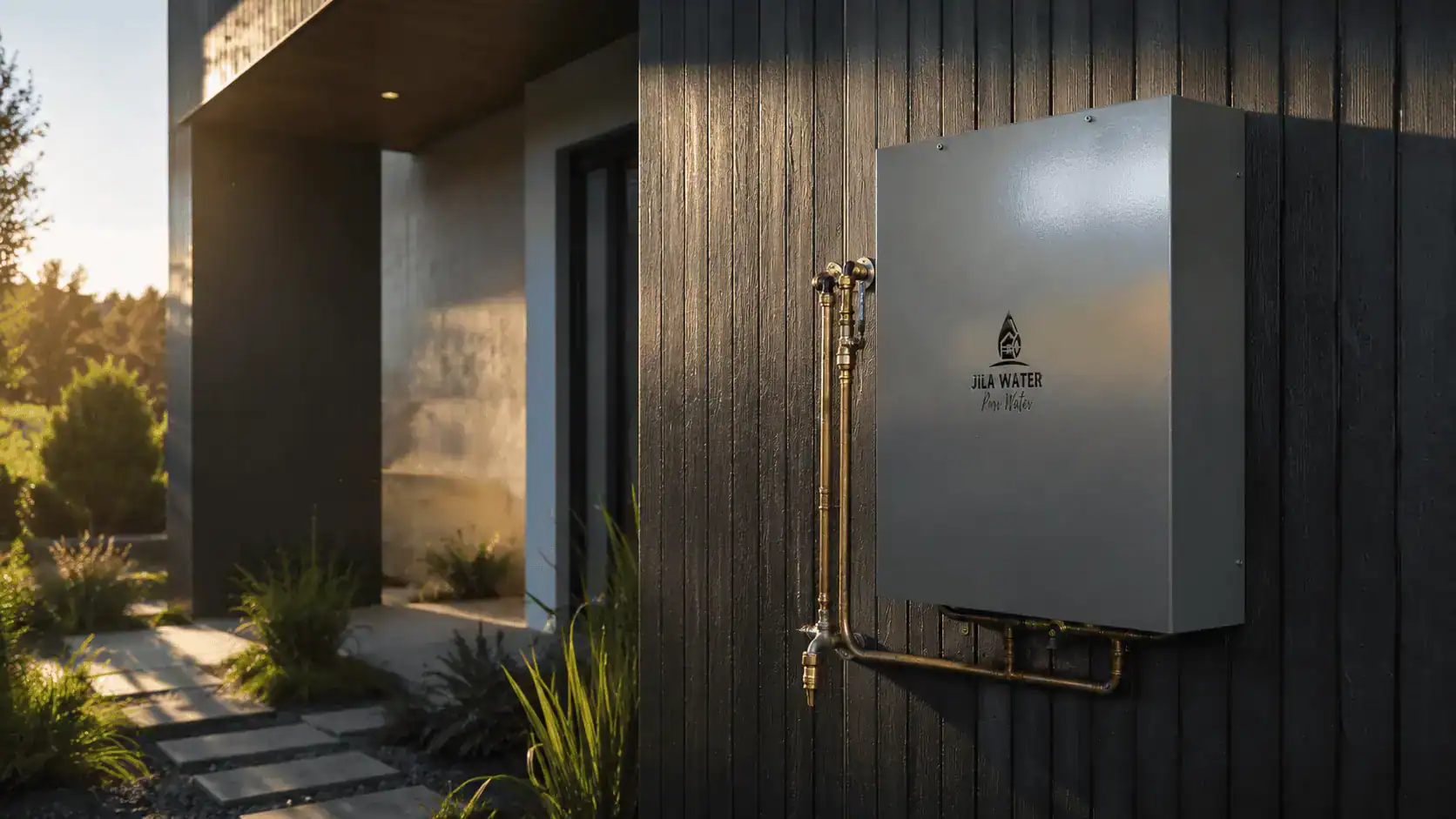
A professionally installed Jila Water complete home filtration system designed for Brisbane and Queensland homes.
Whole home filtration vs under-sink and other point-of-use options
Under-sink systems, jug filters and shower filters can all have their place. The problem is that they solve only a slice of the issue. If your only goal is improving drinking water at one kitchen tap, an under-sink filter can be a perfectly reasonable choice.
But most families do not experience their water in one place. They experience it through showers, laundry, cleaning, bathing children, hot water systems, bathroom basins and appliances. That is why so many homeowners eventually realise that single-point filters do not actually address the full reason they were looking into filtration in the first place.
| Option | What it covers | Best for | Limitations |
|---|---|---|---|
| Jug filter | One batch of drinking water at a time | Entry-level drinking water improvement | Does not help showers, plumbing, laundry or appliances |
| Under-sink filter | Usually one kitchen outlet | People only focused on drinking water | Leaves the rest of the home untreated |
| Shower filter | One shower line | People targeting one bathroom only | Partial fix, not a complete-home solution |
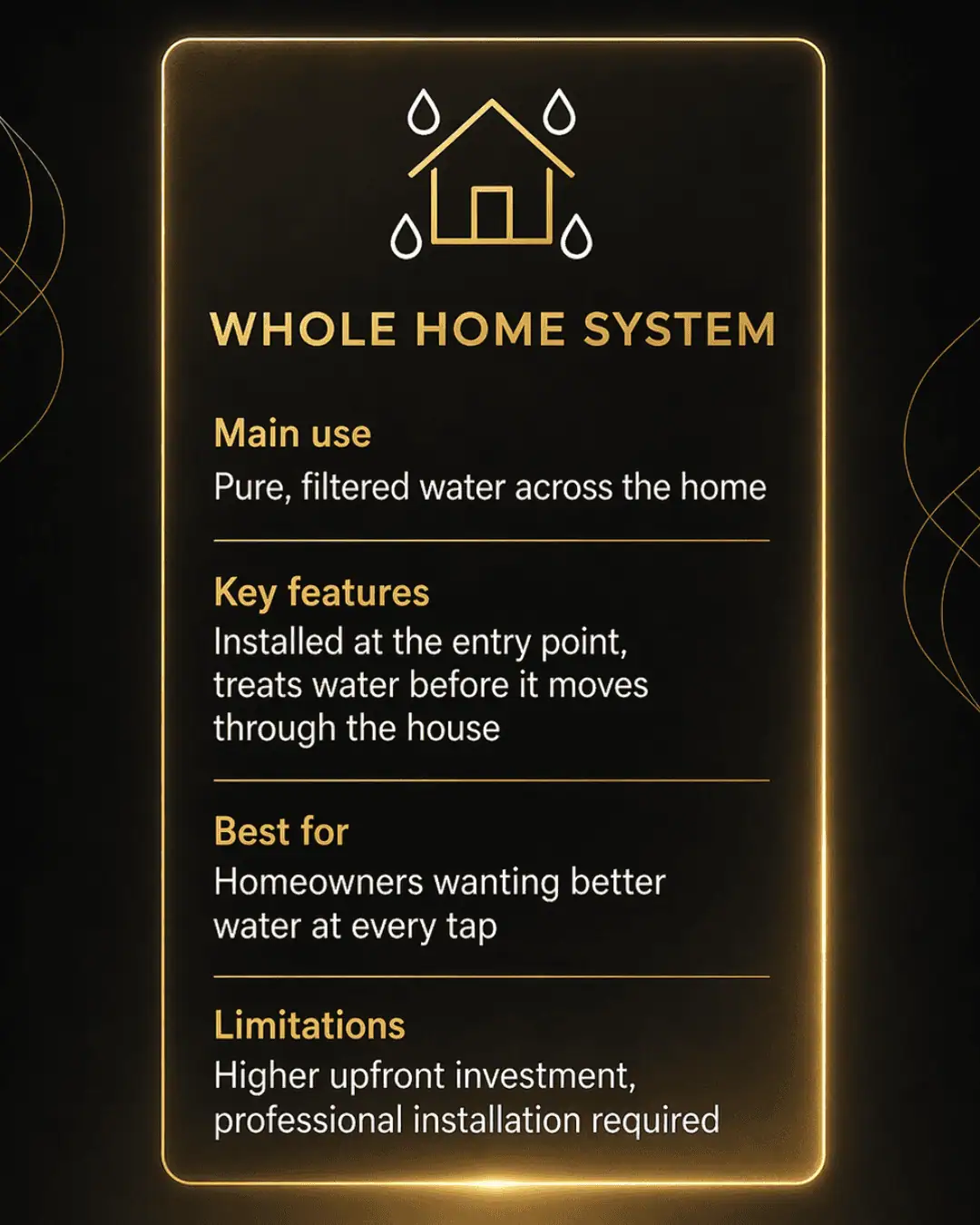
| Whole home filtration | Water entering the property | Homeowners wanting a full-home upgrade | Higher upfront investment, needs proper system matching |
Only filtering one tap can leave most of your daily water untouched
If your real goal is better water across showers, laundry, fixtures and appliances, a complete-home system is usually the stronger long-term move.
What whole home filtration does not do
This is one of the most important parts of the article because it builds trust. Whole home filtration should not be sold as a cure-all. It does not mean every Australian home has a dangerous water problem. It does not automatically make sense for every property. And it should never replace proper testing, proper diagnosis or honest advice.
A stronger and more credible message is this: whole home water filtration Brisbane families invest in is often worth it when the goal is improving comfort, consistency, water presentation and plumbing support across the home. That is a far better fit for both customer trust and long-term SEO than making sweeping fear-based claims.
What it can help with
Chlorine-related smell and taste concerns, sediment, nuisance scale, better shower experience, and stronger whole-home convenience.
What it should not be framed as
A one-size-fits-all miracle or a blanket statement that all mains water is unsafe. Good systems work best when the advice is tailored.
Is whole home water filtration worth it for Brisbane homes in 2026?
For the right homeowner, yes. Not because it is the cheapest way to filter water, but because it solves more than one daily frustration at once. If you care about the feel of your showers, the smell of your water, the presentation of your fixtures, reducing nuisance sediment, and protecting more than just one tap, then a complete-home setup is often the most logical option.
The strongest candidates are usually homeowners who notice chlorine smell, live in an older property, see scale or sediment around the home, or simply want a cleaner, more premium full-home setup. The weaker candidates are usually renters, people only focused on one drinking tap, or households where the issue is extremely isolated to a single outlet.
The smartest next step is not guessing. It is getting the property assessed and matching the right system to the home, the source water and the result you want.
A real-world comparison showing what a whole home water filter can capture over time in a Brisbane home.
Best next move: if you want to know whether complete home filtration is actually worth it for your property, start with a free home water assessment. That is the fastest way to move from general research to a tailored recommendation.
Official guidance and helpful external resources
Strong water content should not rely only on brand claims. It should also point homeowners to credible public resources. For Brisbane and Queensland homeowners, the strongest background reading includes Seqwater’s information on taste and odour, Queensland Health guidance on drinking water, and the Australian Drinking Water Guidelines published by NHMRC.
Adding authoritative external context helps homeowners research more confidently and also strengthens the page as a more useful Brisbane-focused resource rather than a purely promotional article.
Why homeowners choose Jila Water
Jila Water is built around a premium whole-home approach, not generic off-the-shelf imports pushed onto every house the same way. The focus is on better water at every tap, a stronger-looking installation, cleaner ownership experience and tailored advice for Brisbane and Queensland homes.
Tailored system matching
Matched to the property, water goals and home size instead of treating every job like a copy-and-paste install.
Premium complete-home focus
Designed around full-home filtration and ownership confidence, not just one filtered outlet.
Brisbane-based experience
Built for local homeowners wanting a more refined, premium and transparent water solution.
Frequently asked questions
Is Brisbane tap water safe to drink?
Yes, Brisbane and South East Queensland mains water is regulated and treated. The reason many homeowners still explore filtration is not necessarily safety panic. It is because they want help with chlorine smell, water feel, sediment, scale or a more premium water experience throughout the home.
Is whole home filtration better than an under-sink filter?
It is broader, not automatically better for every person. Under-sink filtration is useful when the goal is improving one drinking tap. Whole home filtration is the better fit when the goal is improving water across showers, laundry, fixtures, plumbing and appliances as well.
What does a complete-home system usually help with most?
For many households, the main benefits are less chlorine smell, better overall shower feel, improved water presentation, sediment control and support against nuisance scale-related issues across the home.
Does every home need whole home water filtration?
No. The best approach is to assess the property, the water source and what you actually want to improve. Some homes only need a single-point solution. Others will get much more value from a proper complete-home setup.
How do I know which Jila Water system is right for my home?
The easiest next step is to book a free home water assessment. That allows the home, water goals and system size to be matched more accurately before moving ahead.
Ready to see whether whole home filtration is worth it for your home?
Book your free home water assessment and let Jila Water help you work out the right complete-home solution for your property, water goals and household needs.
The Importance of Water Testing & Identifying Contaminants
Water testing helps Brisbane and SEQ homeowners understand what may…
Read MorePFAS In Brisbane Water: What Homeowners Need to Know in 2026
Concerned about PFAS in Brisbane water? This practical 2026 guide…
Read MoreHome Filtration System Brisbane: Costs, Options & What To Buy 2026 | Jila Water
BRISBANE & SEQ HOME FILTRATION GUIDE Home Filtration System Brisbane:…
Read MoreComplete home filtration Brisbane | Better Water at Every Tap
complete home Water filtration Brisbane Premium complete home filtration for…
Read More