Turn the correct valves so water is not feeding through the system while you are opening the housings.
How to Replace Whole House Water Filter Cartridges
A simple homeowner guide to isolating the system, releasing pressure, changing cartridges in the right order and knowing when your filter setup needs professional attention.
The short answer
To replace whole house water filter cartridges on a Jila Water system, first remove the front cover, then isolate the inlet and outlet valves, release pressure, remove each housing, swap the cartridges in the correct order, flush the system, check carefully for leaks and refit the cover.
In most cartridge-style whole-home systems, the process is simple when the system has been installed correctly with isolation valves, pressure relief and accessible housings. For most homeowners, the job takes around 15–30 minutes.
- Remove the six Allen key bolts and lift off the Jila Water cover.
- Turn off water and release pressure safely.
- Unscrew housings and remove cartridges.
- Clean housings, check O-rings and refit.
- Turn water on slowly, flush, check for leaks and refit the cover.
Important: Always follow the instructions for your specific system. Whole-house water filtration systems can vary, and cartridge order matters. If the housings are stuck, the valves do not isolate, or the system leaks, stop before forcing anything.
Before you start
Things to know before you get started.
Before you remove any housing or touch a cartridge, make sure you understand the valve positions, how to release pressure and which replacement cartridges go back into each stage.
This is the part that prevents most problems. A careful five-minute check before you begin can help avoid leaks, stuck housings, incorrect cartridge order and unnecessary stress.
Check these four things first
- You know which valves isolate the water going into and out of the system.
- You have released pressure before trying to unscrew a filter housing.
- You have the correct replacement cartridges for each stage.
- You have a bucket, towel, housing wrench and clean work area ready.
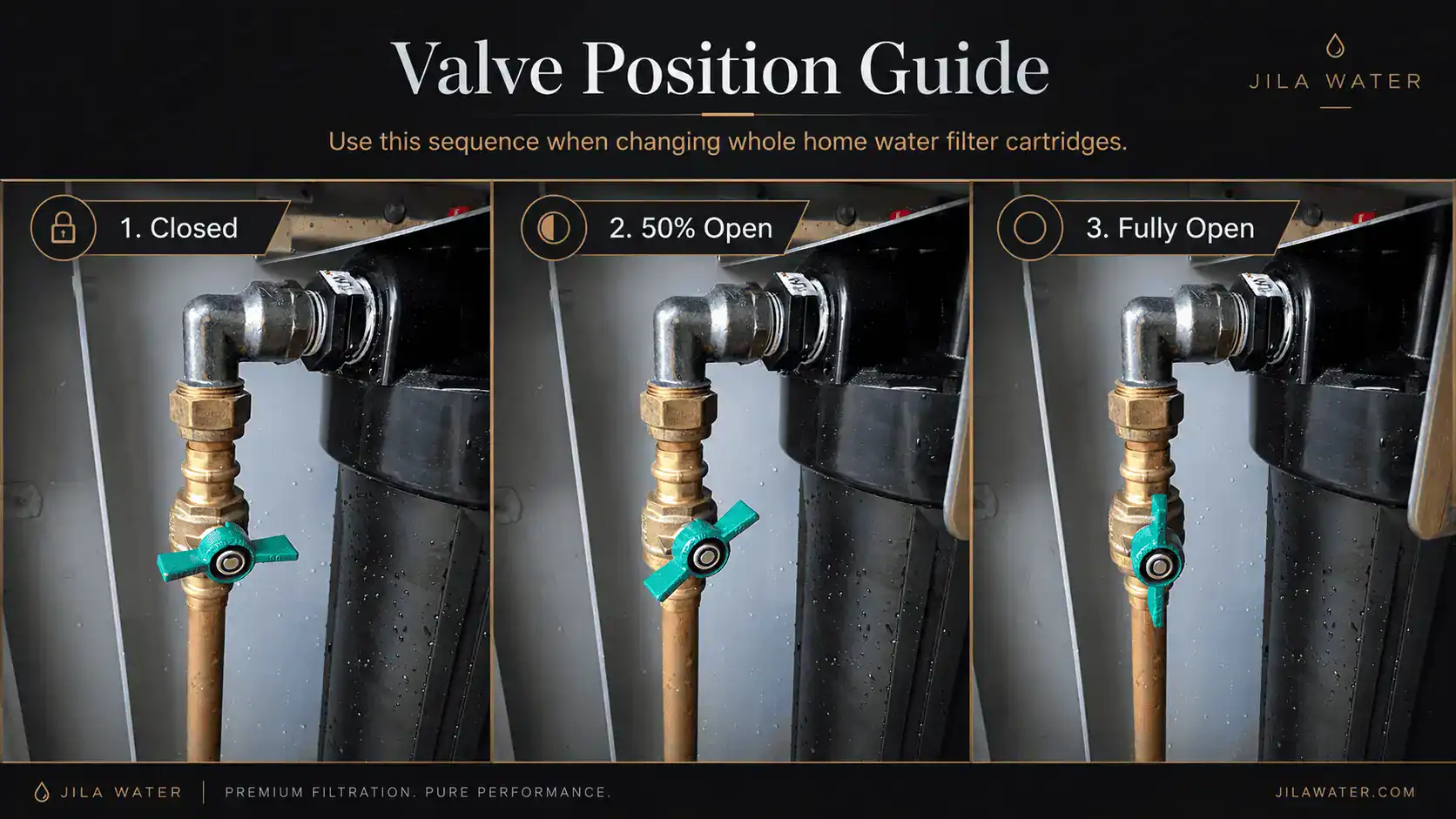
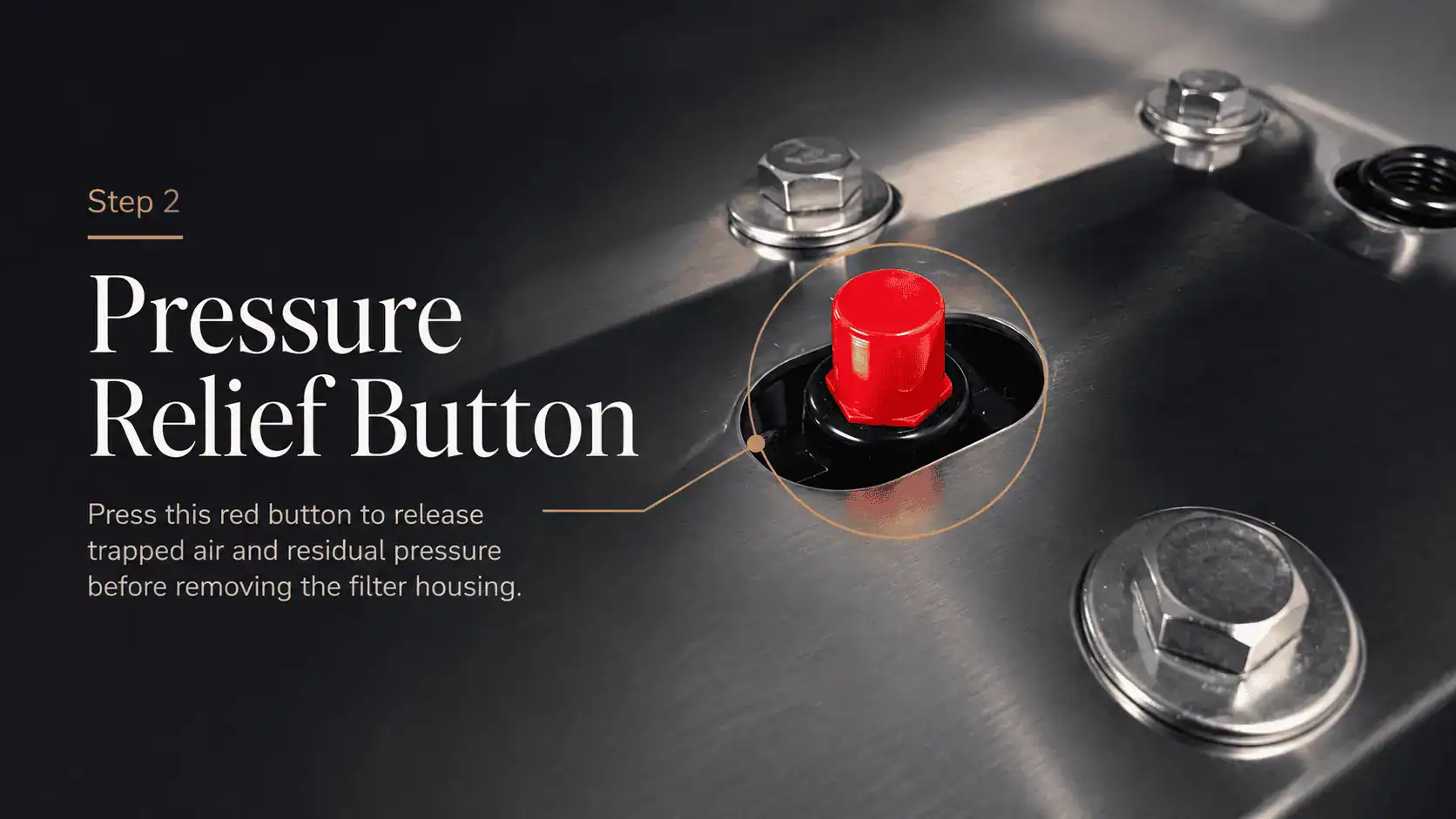
Open a nearby tap and use the system’s pressure-release point before loosening the housings.
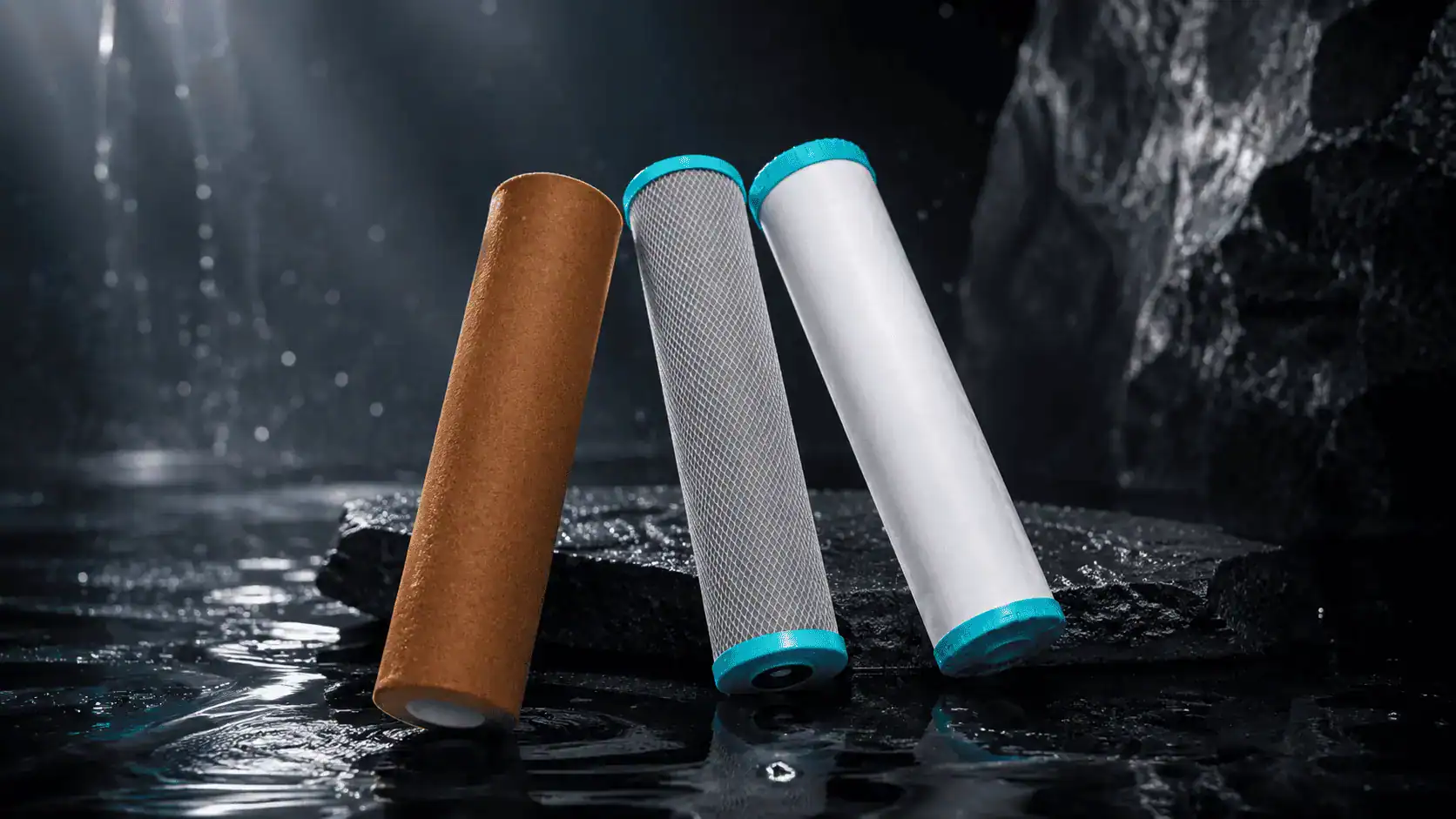
Stage order matters. Sediment, conditioning media and carbon filtration each do a different job.
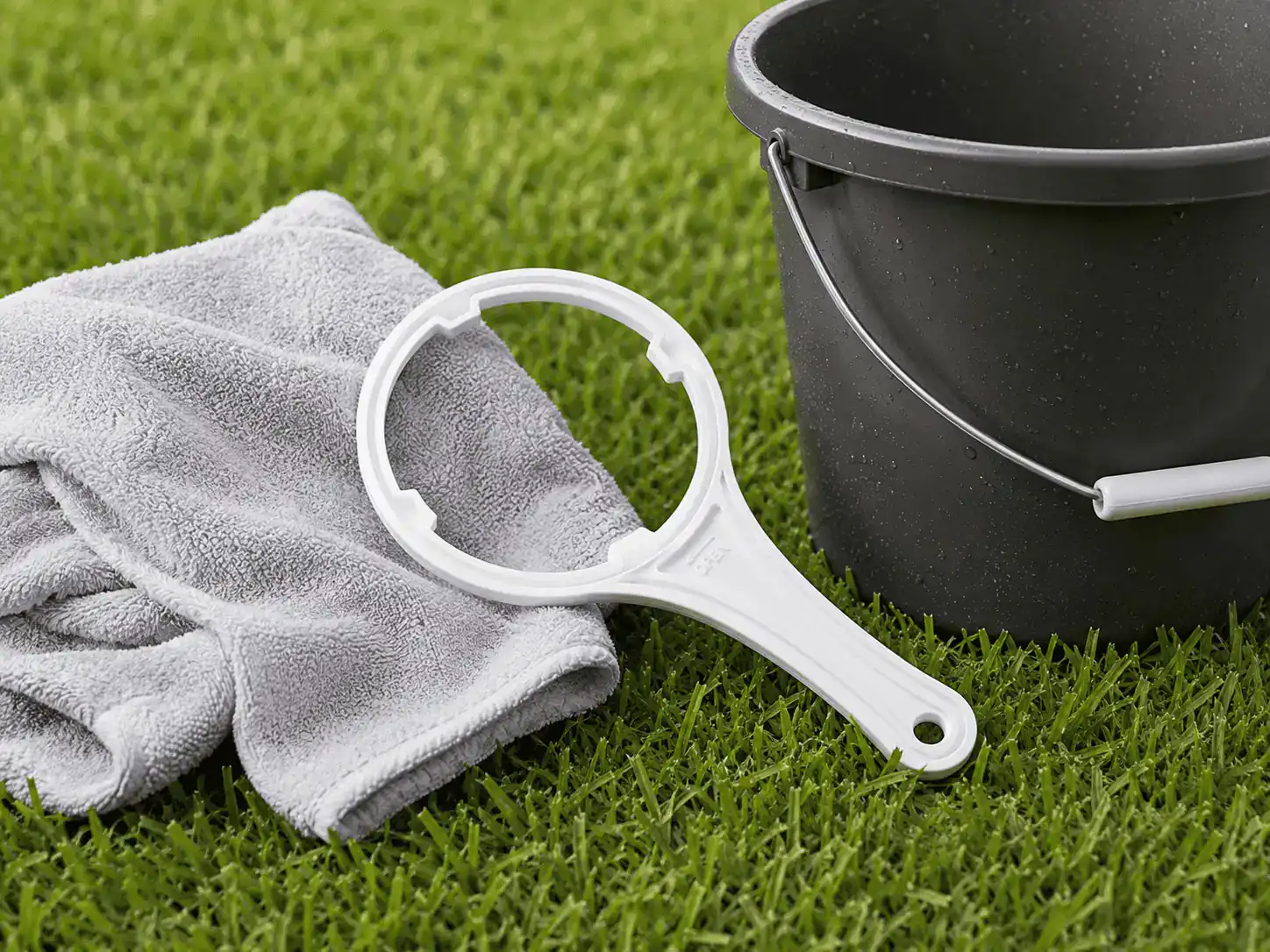
Tools needed to replace whole house water filter cartridges
- Replacement cartridges suited to your exact system
- Filter housing wrench
- Bucket and old towel
- Clean cloth or sponge
- Food-grade silicone O-ring lubricant
- Replacement O-rings, if needed
- Permanent marker or service sticker
- Phone camera to photograph cartridge order before removal
Step-by-step guide
How to replace whole house water filter cartridges.
Work slowly and in order. The goal is not just to replace the cartridges, but to avoid leaks, protect the O-rings and make sure the system is flushed correctly before normal use.
1
Remove the Jila Water system cover
Before accessing the filter housings, locate the six Allen key bolts that hold the Jila Water whole-home filtration system cover in place: two on the left side, two on the right side and two across the top.
Remove the six bolts carefully and place them somewhere safe so they are not lost during the cartridge change. Once the bolts are removed, lift the cover away and set it down on a clean, protected surface.
This step gives you clear access to the filter housings, valves and pressure-release point without forcing the cover or working around the enclosure.
2
Turn off the water to the filtration system
Close the inlet valve feeding water into the filtration system. On many whole-home systems, this valve is located before the first filter housing.
If your system has both inlet and outlet valves, close both. This helps isolate the system and reduce the amount of water that drains back when the housings are removed.
Use the valve position and pressure-release guide above before you begin. Open a nearby tap inside the home to help release pressure from the line, then use the system pressure-release point if fitted. Do not try to remove the housings while the system is still pressurised.
3
Place a bucket under the housings
Even after pressure is released, each housing will still hold water. Place a bucket underneath and keep a towel nearby.
If your system is outside, the bucket still helps keep the job cleaner and avoids splashing dirty filter water onto walls, paving or the home.
4
Unscrew the first filter housing
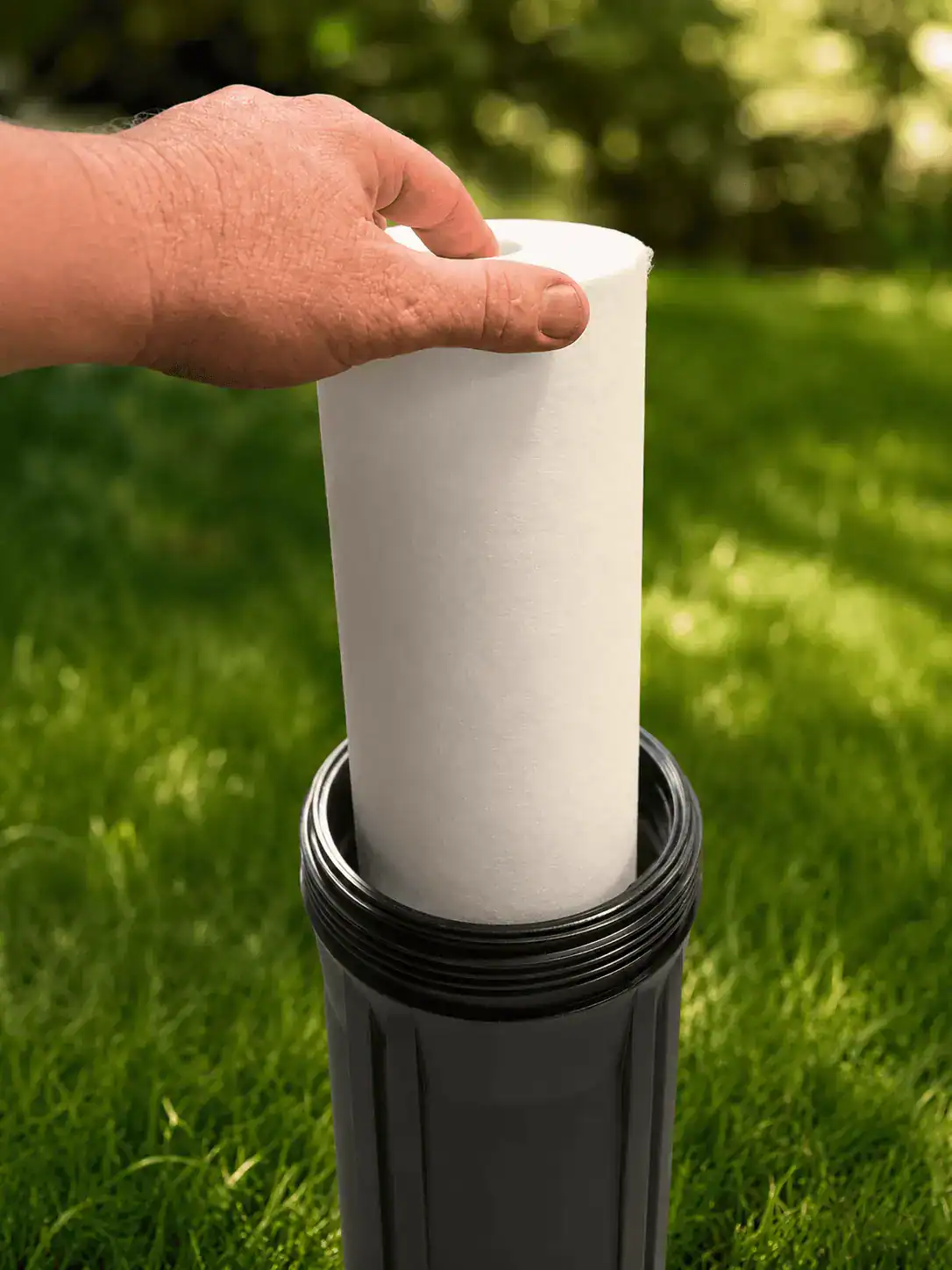
Use the housing wrench to loosen the first housing. Once it breaks free, you can usually continue turning it by hand. Lower it carefully because it will be full of water.
Remove the old cartridge and place it aside. If it is heavily discoloured, clogged or slimy, take a photo. This can help you compare future filter life and understand what the system has been catching.
5
Clean the housings
Empty the water from each housing into the bucket. Rinse each housing with clean water and use a soft cloth or sponge to remove sediment, grit or residue from the bottom and sides.
Do not use harsh chemicals, abrasive pads or anything that could damage the housing. Scratches, cracks or debris around the seal area can cause leaks.
6
Inspect the O-rings
The O-ring sits near the top of the housing and creates the seal when the housing is screwed back into the filter head.
Check for cracks, flattening, stretching, grit, twisting or hardening. If the O-ring is damaged, replace it. If it looks healthy, apply a light smear of food-grade silicone lubricant before reinstalling it.
The O-ring should sit flat in its groove. If it is pinched, twisted or sitting proud, the housing may leak once pressure returns.
7
Insert the new cartridges in the correct order
Remove the packaging from the new cartridges and install each one into the correct housing. Cartridge order matters because each stage has a different job.
Helps capture sand, silt, dirt, rust and visible particles before they reach later stages.
Supports the broader water-treatment goal depending on the system design.
Helps reduce chlorine-related taste and odour and improve the water experience through the home.
Make sure each cartridge is centred properly inside its housing before tightening the housing back onto the filter head.
8
Refit the housings
Screw each housing back on by hand first. Once the housing is seated, use the wrench only to snug it up.
Do not over-tighten. The O-ring creates the seal. Over-tightening can deform the O-ring, make future cartridge changes harder and increase the chance of leaks.
9
Turn the water back on slowly
Slowly open the inlet valve. Do not snap the valve fully open straight away. Let the housings fill gradually.
Check around each housing as the system fills. Look for drips, weeping or water forming near the top of the housing. If you see a leak, turn the water off, release pressure again and check the O-ring before tightening further.
10
Flush the system and check for leaks
Once the system is full and there are no obvious leaks, flush water through the system. New carbon cartridges can release fine carbon dust at first, which may make water look grey, dark or slightly cloudy for a short time.
Flush until the water runs clear, then check the top and base of each housing, the inlet and outlet connections, the isolation valves and any threaded joins nearby.
Check again after 10–15 minutes of normal pressure. If everything is dry, write the replacement date on the housing or add a reminder in your calendar.
11
Refit the Jila Water cover
Once the system has been flushed, checked and confirmed dry, refit the Jila Water cover in reverse order. Position the cover neatly over the system and line up the six Allen key bolt points.
Reinstall the two bolts on the left, the two bolts on the right and the two bolts across the top. Tighten them evenly so the cover sits square, secure and cleanly finished.
The final cover refit is part of the premium Jila Water finish. The system should be protected, tidy and ready for normal whole-home use.
Timing matters
How often should whole house water filter cartridges be replaced?
Most whole-house cartridge systems need replacement every 6–12 months, but the right interval depends on the system, cartridge size, household demand, water source and how much water the home uses.
A smaller household may get longer between cartridge changes. A larger family, multiple bathrooms, frequent showers, irrigation use or high sediment load can shorten cartridge life.
Signs your cartridges may need replacing
- Drop in water pressure
- Reduced shower flow
- Chlorine smell returning
- Tap water taste changing
- Visible discolouration in clear housings
- Sediment buildup
- Cloudy water
- The filter looks heavily loaded
Avoid the common traps
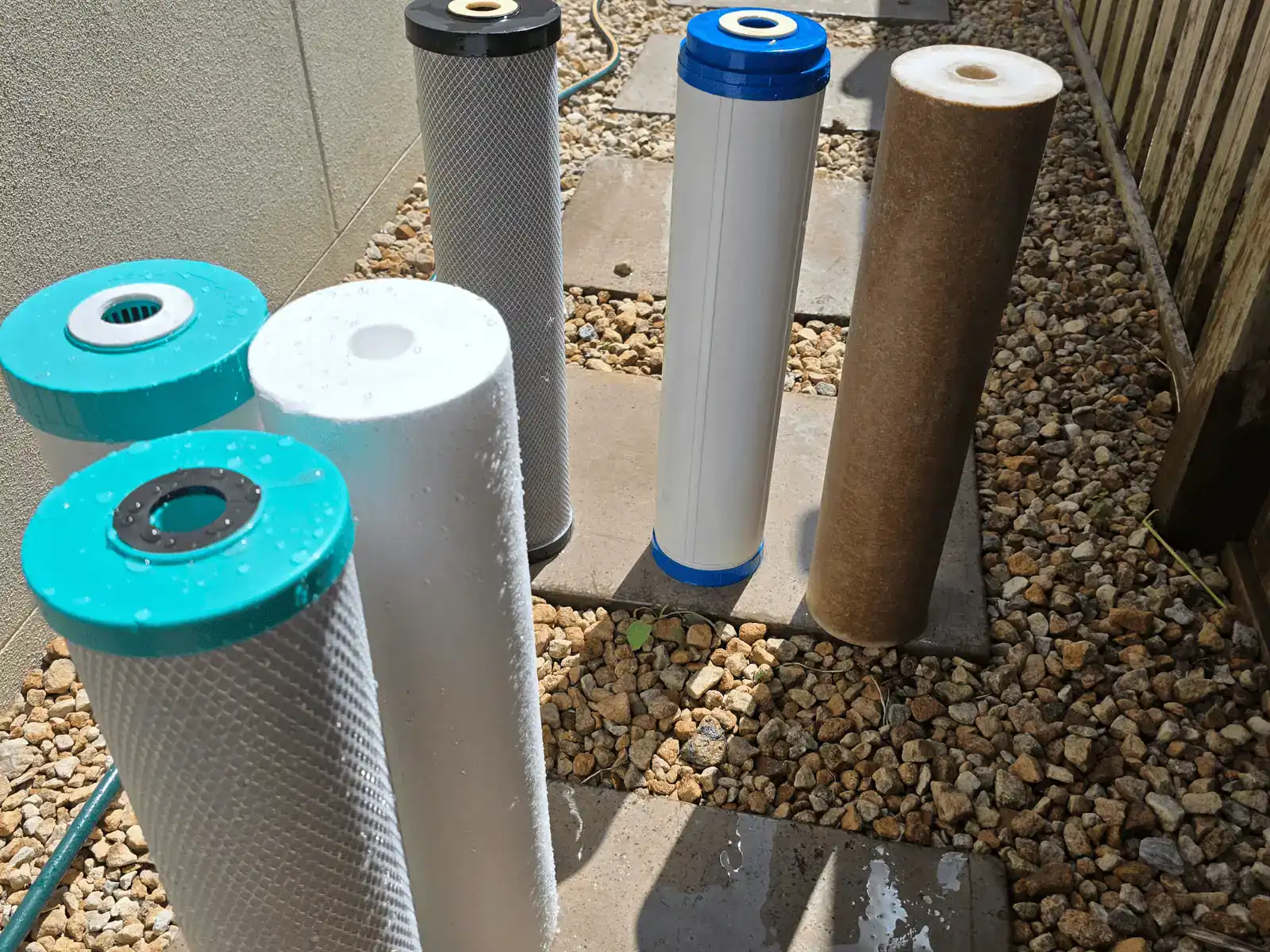
Common mistakes to avoid when replacing whole house filter cartridges.
A sediment filter usually goes before finer or more specialised media. Mixing stages up can reduce flow and shorten cartridge life.
Trying to open a pressurised housing can be difficult and unsafe. Always isolate and release pressure first.
Tighter does not always mean safer. The O-ring creates the seal, not brute force.
A dirty, dry, twisted or damaged O-ring is one of the most common reasons a housing leaks after a cartridge change.
New carbon cartridges need flushing. Skipping this can leave fine carbon dust in the water temporarily.
In a multi-stage system, each cartridge has a job. Replacing the full set is usually cleaner, simpler and easier to track.
DIY or get help?
Should you replace the cartridges yourself or book a service?
If your system was installed correctly and you are comfortable with basic maintenance, cartridge replacement can often be done yourself.
But if the system is leaking, stuck, difficult to isolate or you are unsure about cartridge order, it is better to stop before forcing anything.
DIY may be suitable if:
- You have the correct cartridges.
- The system is easy to access.
- Isolation valves work properly.
- Housings open smoothly.
- You understand the cartridge order.
- You are comfortable checking for leaks.
Book help if:
- The housings are stuck.
- The system is leaking.
- You cannot identify the cartridges.
- The O-rings are damaged.
- The valves do not isolate properly.
- You want the system checked professionally.
Performance and ownership
A whole-house water filter is only as good as the cartridges inside it.
When cartridges become loaded, water flow can drop, pressure can feel weaker and the system may no longer perform as intended. Sediment cartridges can clog. Carbon stages can become exhausted. Conditioning media can lose effectiveness over time.
Changing cartridges on schedule helps maintain flow, taste, odour reduction and the overall water experience throughout the home.
A good system should be easy to service, easy to understand and sized correctly for your home’s actual water demand.
Thinking bigger?
Replacing cartridges is the perfect time to ask whether your current system is actually right for your home.
Many homeowners start with a basic whole-house filter because they want a quick fix. But over time, the better question becomes: is this system sized properly, easy to service, and doing enough for the whole home?
Ask yourself:
- Is the system easy to service?
- Are the cartridges lasting as long as expected?
- Has water pressure dropped?
- Does chlorine smell return early?
- Are you filtering the whole home or only one tap?
- Is the system sized for your household?
The Jila Water approach
Whole-home filtration that looks as good as it performs.
Jila Water systems are designed for Brisbane and South East Queensland homeowners who want a properly sized, professionally installed whole-home filtration system not a generic plastic filter box added as an afterthought. A premium whole-home system should feel like a genuine home upgrade.
A better whole-home system should be:
- Matched to the home and household size.
- Sized for the property’s water demand.
- Designed with sensible filtration stages.
- Installed neatly and professionally.
- Easy to access when cartridges need replacing.
- Finished in a way that suits the property.
Choose the right size
Residence 10 vs Estate 20.
Jila Residence 10
Designed for smaller Brisbane and South East Queensland homes, townhouses, 1–2 bathroom properties and lower-demand households that want a premium whole-home filtration option in a smaller footprint.
- Suited to 1–2 bathroom homes.
- Great for townhouses and compact spaces.
- Ideal for moderate water usage.
Jila Estate 20
Designed for larger homes, bigger families and higher water demand across showers, kitchen, bathrooms, laundry and everyday water use.
- Suited to 3+ bathroom homes.
- Built for higher water demand.
- Ideal for premium homes where finish matters.
FAQs
Whole house water filter cartridge replacement questions.
How long does it take to replace whole house water filter cartridges?
Most cartridge changes take around 15–30 minutes when the system is easy to access, the housings open properly and the correct replacement cartridges are ready.
Do I need a plumber to replace whole house water filter cartridges?
Not always. Many cartridge-style systems can be serviced by the homeowner if they have isolation valves, the correct wrench and clear instructions. If the system is leaking, stuck, damaged or difficult to isolate, it is better to get professional help.
How do I know which cartridge goes where?
Check your system manual, cartridge labels or previous service records. If you are unsure, take photos before removing the old cartridges or contact the system provider. Cartridge order matters.
Why did my water turn grey or black after replacing the cartridges?
New carbon cartridges can release fine carbon particles during the first flush. Flush the system until the water runs clear before drinking or cooking with it.
Why is my water pressure lower after changing cartridges?
Possible causes include trapped air, a cartridge not seated correctly, a blocked new cartridge, valves not fully reopened, or the wrong cartridge type being installed.
Should I replace all cartridges at the same time?
For most multi-stage whole-home systems, replacing the full cartridge set at the recommended service interval is the simplest way to maintain consistent performance.
How often should Jila Water cartridges be replaced?
Replacement timing depends on the system, water use, household size, water source and local conditions. A free home assessment or service record helps confirm the right replacement schedule for your home.
Can a whole-home system improve shower water?
Yes. A properly installed whole-home filtration system treats water before it moves through key household outlets, which can include showers, bathrooms, kitchen, laundry and other major taps.
Ready to make water better at every tap?
Get a Jila Water recommendation matched to your home, not a generic filter box.
Tell us what you are noticing taste, smell, shower feel, pressure, cartridge life or full-home water concerns and we’ll help point you toward the right whole-home filtration setup.