Why Tap Water Tastes Like Dirt, Metal Or Chlorine
Brisbane & SEQ water taste guide

Why does my tap water taste like dirt, metal or chlorine?

If your tap water tastes earthy, metallic, chemical, salty or just “off”, the first job is not to panic. The smart move is to work out whether it is a temporary supply issue, a plumbing issue, a hot-water issue, or a whole-home water-quality concern.

Direct answer

In Brisbane and South East Queensland, a dirt or earthy taste is often linked to natural taste-and-odour compounds such as geosmin or MIB, a metallic taste can point to metals, corrosion, sediment or household plumbing, and a pool-like chlorine taste usually relates to disinfectant residuals used to keep treated water safe through the network. If the change is sudden, strong, coloured, gritty, or only happening from one tap, investigate it before assuming a filter is the answer.

Installed across Brisbane & SEQ Premium whole-home systems Assessment first, no guesswork
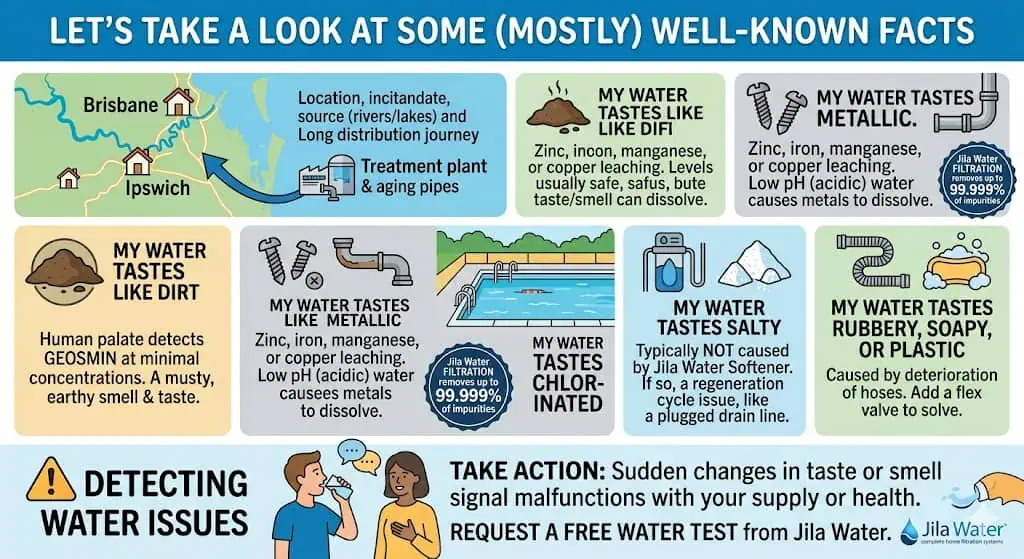
Infographic explaining why Brisbane tap water can taste like dirt, metal, chlorine, salty or rubbery
Common taste clues can help you work out whether the issue is likely from the water supply, household plumbing, hot water, or a whole-home filtration concern.
Quick diagnosis

What the taste usually means.

Taste is not a perfect water test, but it is a useful clue. Use this table to narrow down what may be going on before you decide whether you need your water provider, a plumber, or a filtration assessment.

Taste or smell
Likely cause
What to check first
Filtration angle
Dirt, earthy, grassy or musty
Natural compounds such as geosmin or MIB, often more noticeable after warm weather, rain and algae activity in raw water sources.
Ask neighbours, check local water authority updates, chill a glass of water and compare several taps.
Correctly specified carbon filtration can help improve taste and odour, especially across the whole home.
Metallic, bitter or coppery
Iron, manganese, copper, zinc, older pipework, hot-water systems, corrosion, or sediment disturbed in the network.
Compare hot and cold water, test more than one tap, check for brown water or particles, and note whether it started suddenly.
Sediment and conditioning stages may help, but strong or sudden metallic taste should be investigated first.
Chlorine, chemical or pool-like
Residual disinfectant such as chlorine or chloramine, which is used to keep treated water protected through the network.
Check whether it is stronger in hot water or showers and whether the smell is present across multiple outlets.
A properly sized carbon stage is commonly used to reduce chlorine or chloramine taste and odour.
Salty or brackish
Source-water minerals, softened water issues, regeneration faults, or local source variation depending on property type.
Check whether you have a softener, bore water, tank water, or a system with a brine/regeneration cycle.
This needs source-specific advice. Do not assume a standard carbon filter will solve it.
Rubbery, plastic or soapy
Flexible hoses, new plumbing, appliance lines, seals, fittings, or stagnant water in a fixture.
Check if it is isolated to one tap, a fridge line, a mixer, a bathroom basin or a recently changed fitting.
Often a plumbing or fixture issue first, not a whole-home filtration issue.
Brown, gritty or dirty-looking
Sediment, rust, mains works, old pipework, tank debris, or disturbed particles.
Do not ignore visible particles. Check if multiple taps are affected and contact the relevant provider if sudden.
Sediment pre-filtration is one of the strongest whole-home use cases when particles are ongoing.
Local water context

Brisbane water can be safe and still taste unpleasant.

That is the honest position. Water can meet drinking-water requirements while still having a taste, smell or feel that homeowners do not love in the kitchen, shower, bathroom or laundry.

Seqwater explains that earthy or grassy taste and odour can occur when naturally occurring compounds such as MIB increase after conditions like heavy rain and hot weather, while still stating the water is safe to drink. Urban Utilities also points to geosmin and MIB as common causes of earthy taste and odour. The Australian Drinking Water Guidelines note that taste and odour are major factors in how people judge water quality and acceptability.

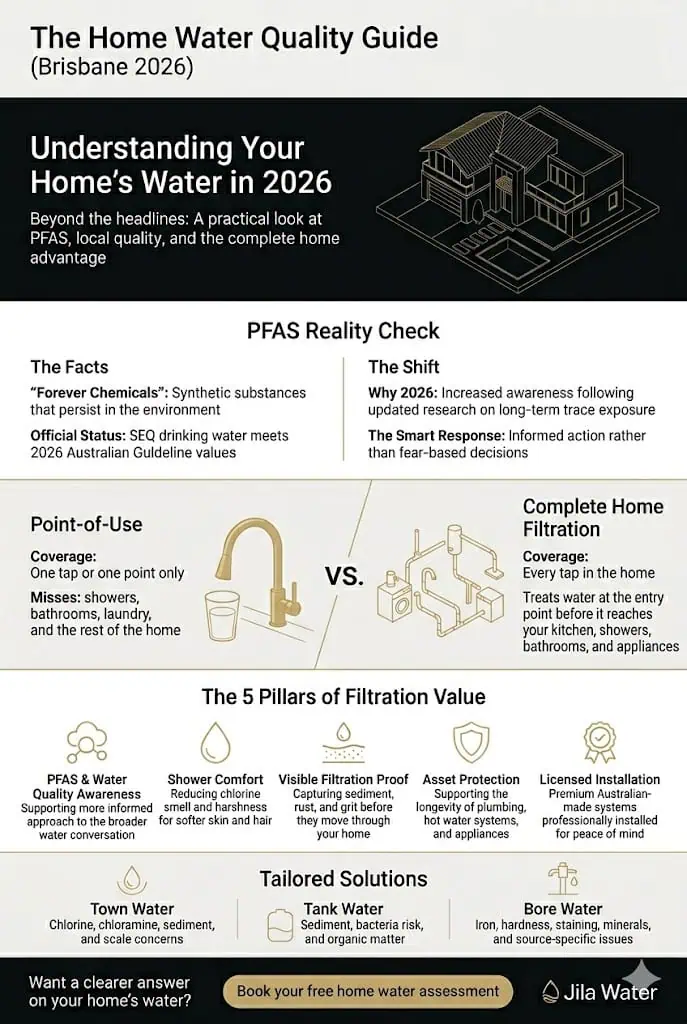
Jila Water Brisbane home water quality guide explaining complete home filtration and water quality concerns
A simple visual way to explain why many homeowners move from one tap filters to complete home filtration.
When to take action

Do not ignore sudden changes.

Ongoing taste and odour issues are often aesthetic. Sudden, severe or isolated changes need a different mindset.

Contact your water provider or a licensed plumber if:
  • The taste or smell changes suddenly and strongly.
  • The water is brown, cloudy, gritty or has visible particles.
  • Only one tap is affected, especially after plumbing work or a fixture change.
  • Hot water smells or tastes different from cold water.
  • Anyone feels unwell and suspects the water could be involved.
Good first checks

Before you spend money, compare the pattern.

  • Test the kitchen, bathroom, laundry and outdoor tap.
  • Compare hot water and cold water separately.
  • Ask a nearby neighbour whether they notice the same issue.
  • Check local authority updates for taste, odour, mains work or outages.
  • Take a clear photo if you see particles, staining or discolouration.

This article is general water-quality education for Australian homeowners. It is not medical advice and it should not be used to diagnose illness. For public supply issues, contact your water provider. For private tank or bore water concerns, testing and source-specific treatment advice matter.

The main tastes explained

Why each taste happens.

Most homeowners start with a single question: “Why does my water taste bad?” The answer depends on which taste you are noticing and where in the home it appears.

Earthy or dirt taste

Usually a taste-and-odour compound issue.

Earthy or grassy water is commonly associated with natural compounds such as geosmin or MIB. These can become more noticeable after heat, rain and algae activity in raw water sources. It can be unpleasant, but it does not automatically mean the water is unsafe.

Metallic taste

Often plumbing, metals or disturbed sediment.

Metallic water can be linked to iron, manganese, copper, zinc, older pipes, corrosion, hot-water systems or disturbed sediment. If the taste is new, strong or comes with colour, do not treat it as a normal taste issue until it has been checked.

Chlorine or chemical taste

Often disinfectant residuals.

Chlorine and chloramine help protect treated water as it moves through the network. The downside is that sensitive noses can pick up a chemical note, especially in hot showers. This is one of the most common reasons families ask about whole-home filtration.

Salty taste

Not always caused by a softener.

Salty or brackish water can come from minerals, source-water conditions, bore water, softener regeneration problems or system faults. It needs a source-specific conversation rather than a one-size-fits-all filter.

Plastic, rubber or soapy taste

Often fixture or appliance related.

This can come from new flexible hoses, fridge lines, seals, mixers, appliance connections or stagnant water in a fitting. If only one outlet has the problem, start with that outlet before looking at the whole home.

Sediment, rust or dirty water

Visible proof should be taken seriously.

If you can see particles, brown water or gritty residue, take note of where and when it happens. Sediment filtration can be highly useful, but sudden dirty water should be reported or checked before being treated as a normal filtration problem.

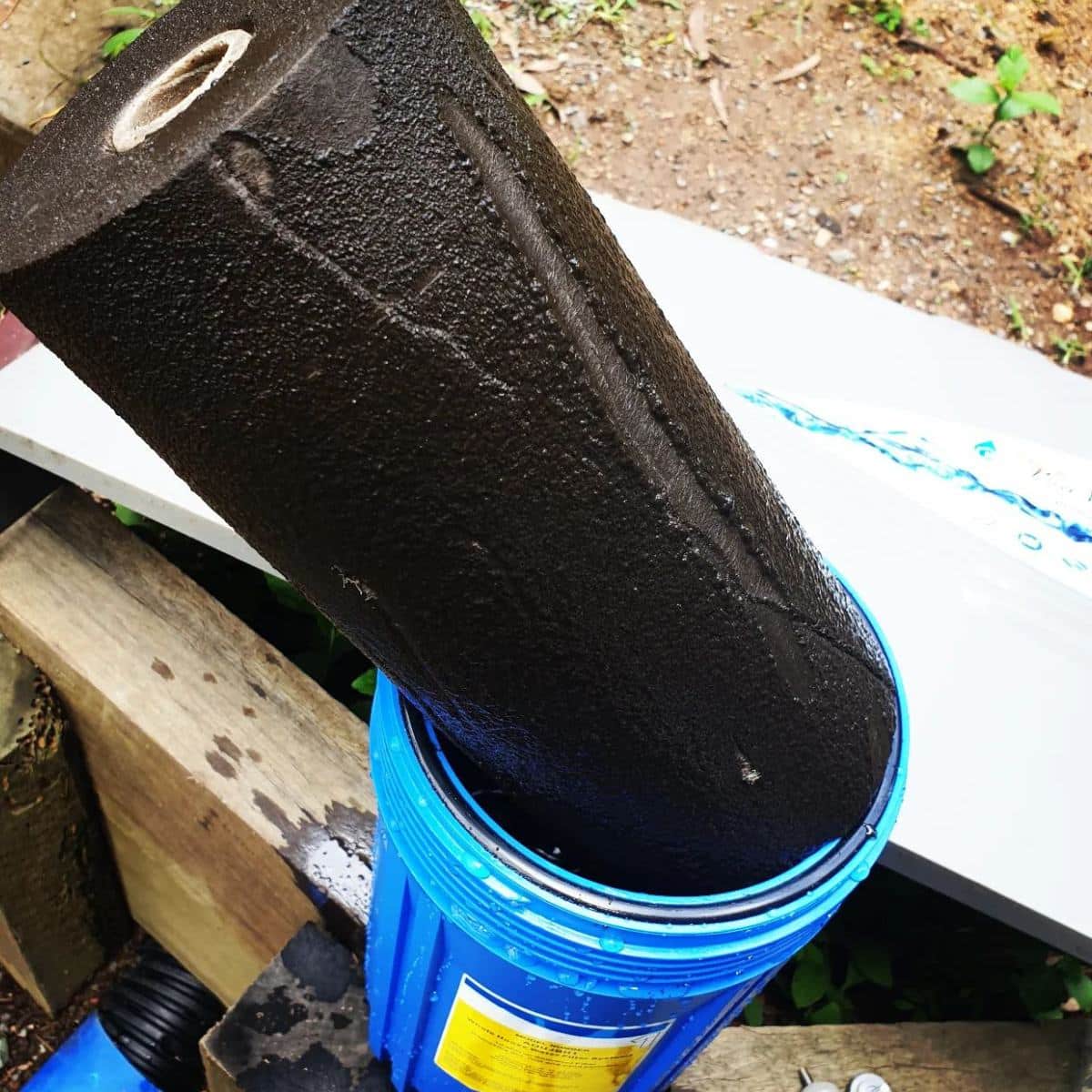
Used water filter cartridge showing heavy sediment and buildup caught before moving through the home
Real filter proof is powerful because it turns a hidden water issue into something homeowners can actually see.
Whole-home logic

If the problem is across the home, do not fix only one tap.

A jug, fridge filter or under-sink system can be useful for drinking water at one outlet. But it will not change the water in your shower, bathroom, laundry, hot water system or other household taps.

Single-tap filters

Best when you only care about one drinking-water outlet and do not need shower, bathroom or laundry water improved.

Complete home filtration

Best when the concern is taste, odour, sediment, shower comfort or general water quality across the property.

  • A sediment stage helps catch dirt, rust and particles before they keep moving through the home.
  • A properly specified carbon stage can help reduce chlorine or chloramine taste and odour.
  • Conditioning media may help with scale-related concerns depending on the water and the system design.
  • Tank, bore and mains water should not be treated as the same problem.
Homeowner checklist

How to narrow it down in five minutes.

These simple checks make your enquiry more useful and help separate supply, plumbing and whole-home filtration issues.

Check more than one tap

If the same taste appears in the kitchen, bathroom and laundry, it is more likely to be a whole-home or supply issue.

Compare hot and cold water

If only the hot water tastes or smells strange, the hot water system, pipework or appliance side may be involved.

Look for colour or particles

Brown, gritty or particle-heavy water should be taken more seriously, especially if it appears suddenly.

Ask a nearby neighbour

If neighbours notice the same taste, there may be a local network or supply event rather than a problem inside your home.

Book a proper assessment

If the issue is ongoing and you want a better daily water experience, an assessment can check the water and match the system properly.

Best next step

Get your water checked before you guess.

Jila Water can help you understand what may be affecting your water and whether a premium whole-home filtration system makes sense for your home. No generic script. No pressure. Just clear advice for your water source, household and goals.

1

We listen to the issue

Dirt taste, metallic taste, chlorine smell, shower comfort, sediment or a full-home upgrade.

2

We check the water and property

Water source, plumbing layout, system location, home size and what you want improved.

3

We recommend the right fit

A system matched to the home, not an undersized one-size-fits-all filter.

FAQ

Tap water taste questions.

Clear answers for homeowners comparing taste, odour and whole-home filtration options.

Why does my tap water taste like dirt?

An earthy, grassy or dirt-like taste is often linked to naturally occurring taste and odour compounds such as geosmin or MIB. In South East Queensland these can become more noticeable after hot weather and rain, even when the water is still considered safe to drink by the water authority.

Why does my tap water taste metallic?

A metallic taste can come from iron, manganese, copper, zinc, older plumbing, corrosion, hot water systems, or sediment disturbed in the network or household pipes. If it appears suddenly, is strong, or comes with brown water or particles, contact your water provider or a licensed plumber.

Why does my tap water taste like chlorine?

A pool-like, chemical or chlorine taste usually relates to disinfectant residuals used to keep treated water safe through the network. Some people are more sensitive to chlorine or chloramine taste and odour than others, especially in hot water or showers.

Is strange tasting tap water always unsafe?

No. Taste and odour issues can be aesthetic, and public water can still meet drinking-water guidelines. However, sudden changes, strong discolouration, visible particles, illness, or one-tap-only issues should be investigated.

Will a jug filter or under-sink filter fix water that tastes bad across the whole home?

A jug or under-sink filter only treats one point of use. If the taste, odour or chemical smell is noticeable in showers, bathrooms, laundry and multiple taps, a properly specified whole-home system is usually a better fit.

Can whole-home filtration help with dirt, metal and chlorine taste?

A properly designed whole-home system can help reduce sediment, chlorine or chloramine taste and odour, and broader water-quality issues depending on the water source and cartridge media selected. The right design should be matched to the home, flow demand and water conditions.

What should I do first if my water tastes different?

Check multiple taps, compare hot and cold water, ask neighbours if they notice the same issue, and look for colour or particles. For sudden or severe changes, contact your water provider. For ongoing taste, smell or shower comfort concerns, book a free Jila Water home water assessment.

Water tastes off?
Book a free assessment.
Book now