Category: Whole House Water Filter

Jila Water Brisbane & South East Queensland

Whole House Water Filtration for the Whole Home

Explore Jila Water articles, guides and insights covering whole home water filtration,
complete home water filtration systems, water filter installation, replacement filters,
Brisbane water quality, chlorine, sediment, scale, taste, odour and healthier water from every tap.

✓ Brisbane-based specialists
✓ Installed by licensed plumbers
✓ Premium whole-home systems

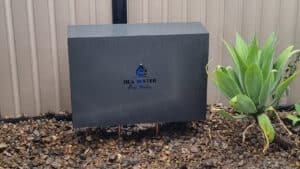
Jila Water premium whole home water filtration system installed at a Brisbane home

Premium Jila Water whole home filtration system installed for a Brisbane homeowner.

Whole Home Water Filtration, Explained Simply

Jila Water helps Brisbane and South East Queensland homeowners understand what is really
coming through their taps and how a professionally installed whole home water filtration system can improve water throughout the kitchen, bathrooms, showers, laundry, and outdoor taps.

This category brings together practical guides on water filtration systems, filter replacement,
chlorine reduction, sediment protection, water quality testing, system sizing and what to look
for when choosing a complete home water filtration system in Queensland.

  • Jila Water is Better Than Tap, Why Filtering Your Drinking Water

    Jila Water is Better Than Tap, Why Filtering Your Drinking Water

    Jila Water is Better Than Tap, Why Filtering Your Drinking Water

    Jila Water is Better Than Tap, Why Filtering Your Drinking Water
    Drinking water is essential to living a good life! It may be plain, colourless, and tasteless, but water is as necessary as any nutrient. Getting enough water every day can increase your energy and relieve fatigue, help you think more clearly, keep an average body temperature, and more!
     
    Water is undoubtedly a crucial part of life—no other supplement or new health fad can replace it. You’re responsible for drinking as much water as often and as much as you can for your physical, mental, and emotional well-being. With proper hydration comes happiness and health!
     
    However, although drinking water is crucial to one’s overall well-being, it doesn’t mean that it doesn’t matter whatever kind of water you drink. When it comes to optimal hydration, you have to make sure that you’re not only drinking enough but also drinking the best water possible.
     

    Is Your Water Good For You?

     
    Water plays a vital role in flushing out toxins and carrying out many of the body’s chemical reactions. As an absolute necessity of life, drinking water gives the parts of your body their proper shape and fullness, such as your skin. However, when you drink the wrong type of water, it may do more harm to you than good!
     
    Many people do most of everything with tap water, such as cooking, bathing, and washing clothes. There’s no problem using tap water for these tasks, but drinking it is a whole separate matter—you can’t be too sure of the chemicals or hazardous pollutants contained in it.
     
    Water isn’t always clean, as it can contain dirt, chemicals, minerals, and other impurities that coils affect its taste and smell depending on where you source it from.
     
    The contaminants, particularly microscopic organisms, and bacteria, in impure water can cause adverse effects on your health!
     

    Filtering Clean, Quality Water

    If you want to ensure that you’re drinking clean water, we recommend using a home water filter system! Yes, you have the choice of buying bottled water that’s already filtered, but why spend so much money and plastic waste on something you can easily do at home?
     
    A whole-house filtration system removes unwanted impurities from water, such as hardness, odour, bacteria, sediment, and taste. As a result, you’ll have water that not only tastes good but is clean to drink!
     
    Some of the benefits of filtering your water include:

    Filtering Water Saves You Money

     
    When you stop spending your finances stocking on expensive bottled water, you could save a substantial amount of money! Installing a home water filter system instead of buying a lifetime’s supply of bottled water is a much more affordable alternative to tap water.
     

    Filtering Water Is Good For the Environment

     
    A filtration system doesn’t just save you money—you get to help the environment at the same time! Even if you purchase recyclable bottled water, they still leave a carbon footprint, but filtering your water yourself significantly reduces the total waste you produce.
     

    Filtering Water Improves Its Taste and Smell

     
    Most chemicals in tap water can give an unpleasant taste and a metallic smell, which is less than pleasant to drink. By filtering your tap water, you can remove the chlorine, weird odours, and other chemicals for the best drinking water.
     

    Conclusion

     
    The water you’re drinking isn’t as clean and good for you as you think. Don’t let tap water prevent you from attaining optimal health! By installing a filtration at home, you can improve your water quality so that you and your family will have the best drinking experience every time!
     
    Are you thinking of filtering your water at home? Then why not use one of the best whole house water filter systems in Australia?
     
    Our Jila Water filter system removes chlorine and other chemical tastes, odours plus dirt, and sediments making water cleaner, clearer, and safer for your whole house. Request a free water test today!
    Share this post
  • Chlorine dosing, What is it, and is it in our water?

    Chlorine dosing, What is it, and is it in our water?

    Chlorine dosing, What is it, and is it in our water?

    Chlorine dosing, What is it, and is it in our water?

    Chlorine dosing is intended to establish free chlorine residual in a water distribution system.

    A free chlorine residual is effective against most bacteria (including Legionella), harmless to humans (when within guideline values), and can be used in hot, warm, and cold water distribution systems.
     

    Important

     
    Important Chlorine dosing introduces new risks into your water distribution system and should be carefully considered prior to any installation and/or operation.
     
    Chlorine is a powerful oxidizing agent and concentrated chlorine solutions should be handled and used with appropriate containment by competent personnel with suitable personal protective equipment.
     
    Installation of chlorine dosing equipment should be undertaken by a qualified and competent professional, such as a water treatment specialist.
     
    Chlorine and free chlorine residual
     
    Chlorine and free chlorine residual Chlorine is a disinfectant commonly used by water utilities.
    Free chlorine residuals of between 0.5‒2.0 mg/L provide effective continuous disinfection in water distribution systems.
    Facilities that receive water from a registered drinking water service provider should ideally receive free chlorine residual of between 0.2-0.5 mg/L in their water supply.
     
    However, the drinking water service provider is not required to maintain a minimum free chlorine residual within the water supply and factors such as pipe length and chlorine demand mean that the actual concentration of free residual chlorine may be less than 0.2 mg/L when the water reaches your facility.
    It is reactive and not particularly penetrative, which may result in the re-colonization of your water distribution system with Legionella when the residual falls below an active concentration.
     
    Chlorine is usually dosed as a concentrated solution of sodium hypochlorite which, when dissolved in water, forms hypochlorous acid.
     
    Hypochlorous acid is the active disinfectant form of chlorine often described as ‘free’ or ‘active’ chlorine.
    An important component of chlorine dosing is maintaining a pH of 7.5 which ensures effective disinfection.
     
    Selection of dosing point(s) into a water distribution supply will require consideration of your water distribution system and should be undertaken by an individual who has a sound knowledge of the facility’s water distribution system and/or a specialized and qualified professional, such as a licensed plumber or hydraulic engineer.
     
    Measuring and recording chlorine levels Should be recorded in accordance with your water risk management plan and include details of where, when, the concentration of chlorine, by whom, and any additional comments.
     
    Free and total chlorine levels can be measured with test strips or more accurately with a photometer but if you have any doubts please get in contact with us here at Jila Water on our website www.JilaWater.com.au or email us at in**@***********om.au or call 1300 30 10 37.
     
    Chloraminated water supply The Mt Crosby Water Treatment Plant in South East Queensland supplies a large proportion of the drinking water used in Brisbane and Ipswich.

    Chloraminated water supply

    What is chloramination?

    Chloramination is an alternative means of providing a residual disinfectant that is used in some parts of Brisbane and elsewhere. A small quantity of ammonia is added to chlorine after the disinfection process to form a long-lasting disinfectant called monochloramine.
     
    Unlike most other Queensland drinking water supplies, Mt Crosby water is chloraminated, rather than chlorinated.
    This means that some SEQ drinking water retailers are exclusively supplying chloraminated drinking water, some supply only chlorinated water while some supply chloraminated water for part of the year and chlorinated water at other times.
     
    If your facility is in SEQ, it is highly recommended you ask your drinking water service provider, which type of disinfectant is provided in your drinking water supply because this will affect any proposed chlorine dosing to be undertaken.
     
    Chlorine concentrations in a drinking water supply should not exceed the Australian Drinking Water Guideline (ADWG) value of 5 mg/L.
    If chlorine dosing increases the free chlorine residual level above 5 mg/L, the water distribution system must be flushed before it can be returned to use as a drinking water supply.
     
    Caution Chlorine becomes less soluble with increasing water temperature.
    Chlorine disinfection is compromised by ultra-violet (UV) disinfection.
    Chlorine is corrosive at concentrations above 5 mg/L (corrosiveness increases incrementally with the concentration of chlorine dosed) and at pH below 7.0.
    It may cause damage to components of the water distribution system and should therefore be closely monitored.
     
    So we know that was some heavy going and there were lots to take in, but basically what we think here at Jila Water with the unknown levels of what may be found in your water is better to be safe and have your water filter at your own home.
     
    Having a Jila Water tech come out and check your home for suitability and run you through our 4 stages Whole House Water Filter system you can know what’s in your water and what your families drinking.
     
    Contact us today via our website www.jilawater.com.au or email us at in**@***********om.au or call 1300 30 10 37
     
    For more information and greater detail check out the Queensland Health website.
     
    Are you thinking of filtering your water at home? Then why not use one of the best whole-house water filter systems in Australia? Our Jila Water filter system removes chlorine and other chemical tastes, odours plus dirt, and sediments making water cleaner, clearer, and safer for your whole house. Request a free water test today!
    Share this post
  • The Benefits of Cooking with Filtered Water

    The Benefits of Cooking with Filtered Water

    The Benefits of Cooking with Filtered Water

    The Benefits of Cooking with Filtered Water

    The Benefits of Cooking with Filtered Water

    Drinking water in the Brisbane usually is free of most pathogenic microorganisms that cause serious illnesses, such as typhoid, dysentery and cholera.
     
    While water chlorination eliminates most waterborne contaminants, problems remain.
     
    Disinfected but unfiltered water can contain large amounts of chlorine and related by products that negatively affect health, as well as the taste of the water.
    If unfiltered water is used in cooking, those chemicals also affect the taste of foods and drinks we consume.
     
    Some of the advantages of cooking with filtered water include: Better tasting coffee and tea More appetizing food – chlorinated water can cause cooking water to taste odd, which can affect food, such as pasta.
     

    Chlorine also can affect food color.

     
    Tastier homemade bread – chlorine can affect yeast, which is a particular problem in sourdough recipes.
     
    Cleaner fruits and vegetables – washing produce in filtered water prevents contamination with chlorine and related by products.
     
    Consider a Jila Water Whole House Water Filter System an affordable and effective solution to ensure drinking water is purer and with less chlorine for cooking is a Jila Water Whole House Water Filter System.
     
    This water tastes great, is great for cooking and makes hair and skin soft.
     
    Our Whole House Water Filter Systems feature leading 4-stage water filtration technology: a 5-Micron Pre-Filter System that removes particulates down to five microns in size.
     
    They also feature Granular Activated Carbon Medias (GAC) that removes virtually all traces of chlorine and contaminants from drinking water.
     
    It also is extremely cost effective, requiring minimal maintenance.
     
    For purer and cleaner water for cooking, you should choose to contact us here at Jila Water and look into your options and see if the Jila Water Whole House Water Filter System could work for you and your family.
     
    www.JilaWater.com.au or Call: 1300 30 10 37
     
    #water #cooking #clean #watercolor #cleaneating #eatclean #waterfall #homecooking #cookingathome #cleanskincare #cleanwater #cleansingwater #cleancooking #cleanwaterforall #waterwise #cooking_illife
     
    Are you thinking of filtering your water at home? Then why not use one of the best whole house water filter systems in Australia? Our Jila Water filter system removes chlorine and other chemical tastes, odours plus dirt, sediments making water cleaner, clearer, and safer for your whole house. Request a free water test today!
    Share this post
  • Do Water Filters Help Protect You From the Coronavirus

    Do Water Filters Help Protect You From the Coronavirus

    Do Water Filters Help Protect You From the Coronavirus

    Do Water Filters Help Protect You From the Coronavirus
    In these times of uncertainty, many people are looking for different ways to protect themselves from the threat of disease and of course COVID-19.
     
    One of these ways includes water filters, and fitting whole house home water filtration systems, and a common question surrounding them is whether or not they help prevent sickness.
     
    The short answer is that yes, there are some systems such as ozonation, ultraviolet or reverse osmosis that can treat water for multiple contaminants, such as viruses and bacteria.
     
    Portable and more affordable water filters such as jugs, and bottles are generally not effective in removing viruses from water, as the filter would need to have a pore size of 0.01 micrometres to catch these harmful elements. This is why we recommend fitting a whole home water filtration system fitted by our team here a JIla Water.
     
    Many standard filters do not meet this requirement, which would mean that any virus might still pass through.
    However, having a whole house home water filtration system fitted by our team here a Jila Water has the benefit of producing healthier drinking water for you and your family.
     
    As we all know, one of the best ways for you to keep your body in prime condition to fight off disease is through proper hydration.
     
    In addition to this, using an alkaline water filter specifically to treat your water comes with a variety of health benefits.
    Coronavirus in the Water Supply Again, coronavirus has not been found to have infected any of our water supplies.
     
    The CDC confirms that there is no evidence to suggest otherwise and that the transmission of the disease is still primarily through close physical contact with an infected person.
     
    However, if you’d like to stay on the safe side, we suggest carrying your own personal supply of filtered water just to be certain.
     
    Whenever you have to travel outside of your home, ensure that you bring your own source of clean drinking water and avoid sharing it with other people.
     
    This will minimize any chances of spreading the infection.
    Simply pour your water into your flask after it’s been filtered by your home’s whole-house water filtration system fitted by our team here a JIla Water.
      
    If you’d like to purchase or hear more about our whole house home water filtration system options please contact us here at JIla Water one of our water techs will be in contact or you can visit our website today by clicking on the following link.
     
     
    We sell a wide range of products to customers in Australia, and we’d be happy to help you guarantee your own health as well as that of your family.
     
    For more information about the Jila Water whole house water filter and our water filter system for your home please get in contact with our office. Anytime.
     
    So remember if you need a water filter system for your home or a home water filtration system Jila Water is where you go for whole-house water filter systems.
    Share this post
  • 5 Reasons Why Drinking Plenty of Water Is Good for You

    5 Reasons Why Drinking Plenty of Water Is Good for You

    5 Reasons Why Drinking Plenty of Water Is Good for You

    5 Reasons Why Drinking Plenty of Water Is Good for You

    5 Reasons Why Drinking Plenty of Water Is Good for You 

    The human body is approximately made up of around 60% water, give or take. The Earth itself is around 71% water. There must be a reason, right? Well, it just shows that life on Earth practically started and was sustained due to the presence of water, which is why we all need constant hydration because our lives literally depend on it. Water is an essential nutrient that our body needs for optimal health and fitness. If you’re not familiar with the benefits of drinking plenty of water, here are some of them:
     

    1. It’s Good for Your Mind

     
    Water or lack of it actually influences your brain’s functions. Even mild levels of dehydration can interfere with your mood and functioning, especially in young children and older loved ones. If it’s a particularly hot day, there’s a greater risk of having a heat stroke, which is again connected to your brain. Without proper hydration, your concentration, alertness, and even short-term memory are all affected.
     

    2. Water Assists in Digestion

     
    Insufficient fluid intake can affect your digestion and contribute to constipation. To keep things moving at a regular and comfortable pace in terms of your digestion, you should drink plenty of water. Any soluble fiber that you consume will effectively bind to the water that you intake. This increases stool bulk and softens your stool, making it easier for you to eliminate waste.
     
    Suppose you’re dehydrated and there aren’t enough fluids in your body to aid digestion. The body has no choice but to pull water from your stool, which is what causes constipation.
     

    3. It Can Keep Your Kidneys Healthy

     
    Your kidneys play a central role in controlling water balance and blood pressure as well as expelling waste from the body. By drinking more water, you are supporting those processes and ensuring normal kidney function. You may notice you pee a lot when you drink plenty of water. That’s because your kidney expels more toxins with it. Boosting your water intake also helps prevent the buildup of minerals that can cause kidney stones.
     

    4. Water Aids in Weight Loss

     
    Some studies suggest that increasing your water may help in the weight loss process, especially when consumed instead of other high-calorie beverages. While calorie-sweetened beverages have always had a bad rep of adding on weight, replacing it with water apparently does the opposite. Drinking a glass of water before a meal has been shown to decrease appetite, aid digestion, and boost metabolism.
     

    5. It Helps Energize Your Muscles

     
    Cells require a sensitive balance of fluids and electrolytes. Without it, those cells tend to shrivel up, which results in muscle fatigue. When your muscle cells don’t have adequate amounts of fluids, they don’t work as well, and your physical performance suffers. That’s actually the science behind hydrating while exercising. During exercise, you should start drinking fluids early to maintain that balance of fluids & drink them at regular intervals to replace fluids lost by sweating.
     

    Conclusion

     
    Water is life. For that reason alone, everyone should be drinking water all the time. While that’s not always the case, especially if you’ve built a habit of drinking other fluids, you should still strive to drink water regularly and reap the benefits.
     
    Jila Water offers affordable water filter systems designed for whole-house or industrial and commercial applications. If you want to stay healthy and make sure your water is safe for drinking and free from contamination, our water filtration systems are your best choice. Contact us today to book your free home water test!
    Share this post
  • Why do you need to filter your home’s water

    Why do you need to filter your home’s water

    Why do you need to filter your home’s water?

    Why do you need to filter your home's water

    Today we’re going to talk about a very important topic, which is the water you and your family drink. You know, none of us can last more than a few days without water because we’ll die of dehydration. So it really is a crucial topic. Each and every one of us needs a high-quality water supply.

    So what are the options? Okay. Ideally, your best option to get the highest quality water you can possibly achieve is really from getting it from a mountain spring. Now, fortunately, there are resources. You can do this. And typically many of these mountain Springs, there’s no charge to get them. All you have to do.

    There is going to these Springs, even non-mountain Springs, at a sea level would be fine, too. Not quite as good as the mountain rapids. They’re there. There’s a resource. Find a spring.com that you can go to, and you can find a local spring. And that would be the best. Now, of course, there’s some time, effort, and energy involved, but if you can do that, it’s certainly what I would reckon.

    And next down the line is well water. And, typically, there’s not going to be any fluoride, and there have far fewer contaminants involved.

    Then optimize it. But I would say 99% of people viewing this are getting their water supply from the local council’s water supply, and that is loaded with problems. And that’s what I want to discuss. Now, typically, in a local council’s water supply, you’re going to find things I would say 99% of those water supplies are fluoridated, at least in Australia.

    And there is a challenge. If you don’t believe it’s a challenge, please look at my website, but it is a significant issue. And it’s very, particularly problematic because it’s very difficult to remove even with the best water filter systems. It’s really almost impossible to get a hundred percent of it out.

    But then, you know, the average person in this country is taking 13 drugs a year. And what do you think happens to those drugs? Well, when you swallow them, they’re excluded in your urine or your stool. So they wind up in the water supply. What about not taking and you throw them in the bin? They typically wind up eventually in the water supply too.

    So these drugs are in the water and they’re typically not removed from traditional water filtration systems. And then the distribution systems the water comes from the water filter plant to your home. And then from there, your taps through pipes and the pipes can be made of a variety of different materials, which can also add to the problem.

    But of course, the most common, additive, and concern in, a water system, water supply would be chlorine, and chlorine, of course, is added to improve and decrease the likelihood that you’re going to get sick. So thankfully most Western countries, the issue is virtually eliminated all those types of problems, but it does.

    So at a cost, and the cost is that the chlorine, it’s not normal. It’s going not only going to kill bad pathogens that have been found in water but also kill your own gut infections. But even more importantly, this is the real. Chlorine can combine with organic material in the water and in your body to form what’s called a disinfection byproduct or a DPB for short and the most common ones would be trihalomethanes or indoor scenic acids.

    So these are dangerous because they increase their about 10,000 times more dangerous than chlorine with respect to increasing cancers and causing other complications and problems. So this is definitely something you do not want in your water. So I think it’s pretty clearly established that if you have a local water supply, and most likely, even if you have been in a well water system, you really do need a filter, and you’re going to benefit from a filter.

    And I think the key point here is that any filter I want to emphasize any filter is better than no filter, no matter what it is, because if you don’t have a filter, you become the. So, what are the other options? Well, clearly, either bottled water or filtered water and I believe bottled water. Really.

    Isn’t a good long-term option if you’re at a conference or you’re at a seminar for a week? It’s probably not a bad idea, but on a regular basis, it’s not a good idea for a number of reasons. There are large, significant environmental reasons because you actually have to pay for the fuel to transport water.

    And it’s very heavy, of course, 3 kg liters from point a to point B, where you’re going to be consuming it. But then it’s also how you’re storing it. That you’re storing it in a container. Typically plastic glass, of course, is better, but that’s not typically available. And plastics ideally would want to get a BPA for in Thali free one.

    But even if they are BPA and valley, There are other chemicals in there. You don’t know what idea, any idea what the consequences of chronic exposure to what’s going to be it because there are so many things we don’t know about health and plastics we know are not natural or healthy and the ink there’s going to be an increasing amount of these toxins.

    Components in the water the longer you store them or, the hotter temperature you store them. So these plastics do leaps. So you have to be really careful and don’t put them in the sun either. That’s another factor. So, that’s one big issue. But another issue is actually, you know, who’s looking at these water supplies, and it’s important to know that most local councils’ water supplies are regulated by the EPA, the environmental protection agency in the United States, and they’re relatively stringent standards.

    Bottled water is regulated by the FDA. EPA has nothing to do with it. And the only requirement is to be as good as tap water. And so it’s potentially problematic, and I would definitely discourage it. There’s a lot of potential for fraud in this area and deception and. People advertise or companies advertise.

    It is mineral water when or bottles or spring water when it really isn’t. So there’s a lot of very fricking fusion. So occasionally, it’s a good idea, but I would definitely encourage you to stay away from bottled water. If you’re going to use it, certainly the five-liter ones that are delivered to your home make the most sense, but you know, the small, pint or quart containers on a regular basis just as, is not a good, good long-term strategy.

    So what types of filtration systems are there? Okay. , they’re broadly based on three different types of PR. One of the ones is distilled water. I think most people recognize that’s not really an ideal form. I’m not a big fan of distilled water for a variety of reasons. And I’ve actually written articles on that D structures.

    The water is devoid of minerals and has other complications. And I would review my previous articles on that if you’re interested. And then, of course, the one that’s really not a water filter system is alkaline water. And I’ve also addressed this in a previous article, and it’s. Actually, that’s a process.

    It’s not a filtration system. It’s a process to supply water. And I’m not a big fan of alkaline water, as are most of the experts that I’ve interviewed for a variety of reasons. And, I just think that there are better ways to do that. And personally, I would not use it. Um, so, but that leads us to two primary ways, which is the reverse osmosis system and a carbon-based system in our systems is something that I have used in my home personally for the last 15 years or so.

    And it’s a really high-quality process that will remove most of the fluoride. Certainly not all of it. And most of the decisions. Byproducts of DPPs and, and the volatile organic compounds and most, all the contaminants that would be that you’d be concerned about that I mentioned previously, the problem with it is, and there are some problems is that it removes many of the beneficial minerals.

    So it becomes relatively. , hungry for these and it can cause complications. So it’s easily solved. And I’d say by putting, putting a healthy mineral back in, and typically I use Himalayan salt about a quarter teaspoon per litre and just stir that in really well. And then I actually put the water in the refrigerator prior to use because that getting it down to 39 degrees, there have been some studies that suggested that restructures the water.

    And that is one of the other side effects of our systems that it will destroy. And there’s a beneficial structure, too. It’s high-quality water, and that’s something you want to integrate into that. So, that really leads us to carbon filters, and carbon filters, um, are really a phenomenal solution for most people to consider.

    And really, one of the ways that you can discriminate, and identify high-quality filters is by looking at the certification process. And for those of you who aren’t familiar with it. There’s an index. Third-party, the objective agency called NSF really establishes these criteria and levels of quality of water that you can easily look for.

    Then what type of filter do you get? If you’re going to use a carbon filter? Well, there have been basically three different types of systems. One is going to address your whole house. Like this system here. One, that’s a point of view that you’d typically put on your kitchen tap, and another is in your shower.

    And we’ll talk about each of these, first of all, the whole house. Now, 99% of people are so using local councils’ water systems. And if you, if you’re one of those who fall into that group, then there’s an important point to consider that you probably don’t realize. I didn’t realize until I started looking at this more carefully that the chlorine that’s in the water supply and the disinfection products are all volatile.

    That means they evaporated. And just as you can, one of the tricks that you can use, like if you’re in a war in a restaurant and you don’t want to pay for bottled water for a number of reasons, why. Say let’s just have the regular tablet, but just let that tablet sit for a half-hour and the chlorine and the disinfection byproducts will volatilize.

    Well, just like that’s going to volatilize in that glass of water in the restaurant, it’s also going to volatilize in your toilet. And if you’ve got a few toilets in your house, it’s a significant volume of water, especially if you’re flushing them regularly, that’s going to evaporate these dangers. Gas is in your home.

    So your indoor air quality will actually decrease quite substantially. And that’s actually one of the benefits. If you’re on a local council’s water system or using one of these systems your indoor air quality improves because you’re not vaporizing chlorine and disinfection byproducts into your home.

    So if, for some reason, you don’t have that, remember again, any filter is better than none. If you don’t have one, that’s fine. Just make sure, even in the winter that you’re opening up your windows, preferably windows, on each side of the house. So you get cross ventilation for about five to 10 minutes a day.

    Exhaust those gases from your home, because it’s not good for you or your family to be breeding those gases, but you can eliminate that by using one of these. Now, if you have a local council’s water supply, then this system works great. If you’re on well water, like my, like me, then you’re going to have to have one customized.

    You actually have to have your water tested to see exactly what’s in your specific water. So a specific solution can be designed for your water supply. Now, interestingly, what I didn’t realize is that one of these whole house water filters can actually substitute for a water softener. I’ve actually eliminated my own water software now and just use this exclusively, which is phenomenal.

    And it really cuts down on the, maintenance and the headaches, because a system like this really for the most. Every few months or so just has to have the pre-filter changed. , and, and it’s a relatively easy thing to do. You just, just remove that cartridge, put a new cartridge in, and that’s it.

    And those are relatively inexpensive and the whole cost per litre. Admittedly, you’re not gonna be drinking most of all the water that’s coming through here. Cause it’s going through your toilet, and you’re washing your clothes with your showering, but it’s only 0.003. Per litre as pretty inexpensive water because these media filters will actually last about 300,000 liters of water.

    And if you live in a big house, it’s important to know that you actually may need two of these, because if how’s any bigger than about 3,200 square feet or about three and a half baths, bathrooms will, require additional units because the water pressure tends to go down. As you have a lot of water use.

    So the water will filter the water just fine. It’s just that you may notice a difference in dropping your water pressure. So that’s an important point to consider. Definitely. Something that, you know, these are relatively inexpensive. I mean, there’s some reverse osmosis. Whole house systems may cost three to $5,000.

    And, clearly, I would strongly discourage you from using something like that unless you have the special pipes, because most of the time, then if you have the wrong. Plumbing in your system and you use a reverse that’s mostly could cause tremendous damage. You have to be really careful with those.

    So that brings us to the next point and actually some type of system that you’d want to use in conjunction with this as a point of view because this system is too—installed where the water comes into your home. So then you still have the pipes that, that, the distribution center within your own home, that pipes lead from this to your actual point of view, whether it’s your kitchen or your bathroom.

    So the water coming out of there could be contaminated by the pipes in your home. So that’s why it’s probably a good idea to have a point-of-use filter. And so those are, can be over the counter or under the counter. And again, you want to look at the same points I mentioned earlier with the NSF certification.

    I want to make sure it has, another point to consider. Yeah, most, of the higher-quality units are going to have two stages. , and you want, in other words, two containers or the media filter because it’s really difficult. If not close to impossible to get a high-quality filtration process going, there’s only one container.

    That’s sort of a big clue as to if, if, if you’re looking at a high-quality system. So, some of the ones, the ones I recommended actually using my own home are actually listed below here. So you can read that for more information. But then lastly, probably one of the most important points is, is the shower filter.

    And, you know, if you only could buy one filter only you use one filter in your home. Probably the most important one is going to be roughly one of them, one of the least expensive ones. And that’s a shower filter and saying why I’m not drinking my shower water. Well, the reality is you are, and that for most people to understand that when you ha, when you bathe in the shower, You’re actually volatilizing many of these compounds, like the chlorine and the disinfection byproducts at a higher rate, because typically it’s a hot shower and then your skin is actually absorbing this so that if you take a shower for about 10 minutes or so that you’re absorbing the equivalent of drinking one liter of the same way.

    So it’s a significant issue because most people take showers longer than 10 minutes, or certainly, if you’re taking a bath, you have a similar issue. So, if you could use a shower filter for your bath, many people have the shower and the bath connected. So you just fill up your bathroom instead of bathing in that.

    So it’s a simple, simple process. So remember. Going to need a high-quality source of water on a regular basis is really an essential, crucial component of your long-term health plan. Because if you’re, you know, you can get away with something once in a while, occasionally, but on a regular basis. If you’re, if you’re making a mistake in this and you’re inputting it into your system or your family system, these real, relatively toxic chemicals over the long-term, there’s going to be health consequences.

    There’s no question about it. So remember the key principles here? Is it any? Any filter is better than no filter. And if you don’t have a filter, the filter is so pleasing for you and your family’s sake. Make sure you have a filter, a high-quality filter that you and your family can take control of your health.

    With all that said, we think it’s best to have one of our Jila Water Techs come and test your home’s water supply here in Brisbane and give you a tailored solution to your water issues and questions.

    Check out jilawater.com.au for more information.
    Share this post