Category: Whole House Water Filter

Jila Water Brisbane & South East Queensland

Whole House Water Filtration for the Whole Home

Explore Jila Water articles, guides and insights covering whole home water filtration,
complete home water filtration systems, water filter installation, replacement filters,
Brisbane water quality, chlorine, sediment, scale, taste, odour and healthier water from every tap.

✓ Brisbane-based specialists
✓ Installed by licensed plumbers
✓ Premium whole-home systems

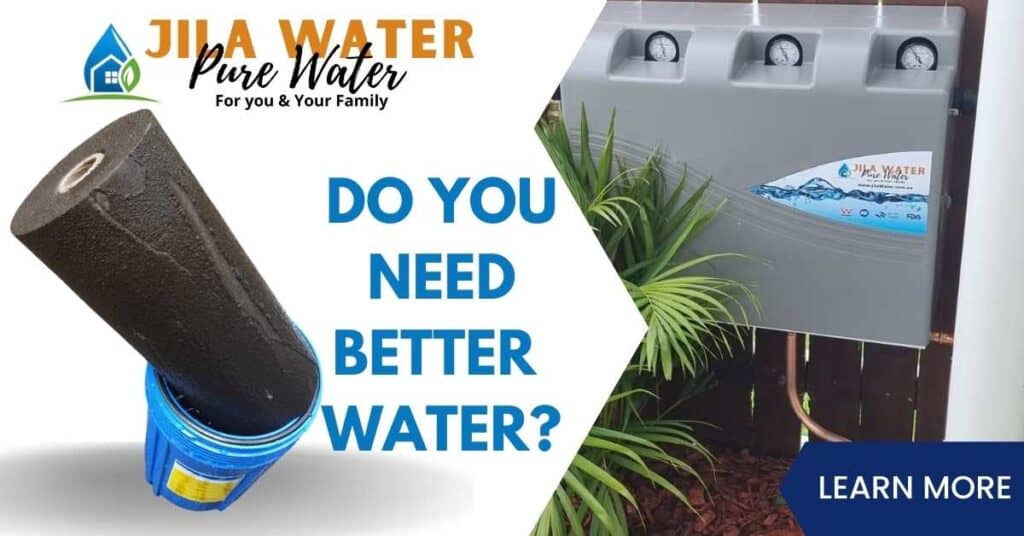
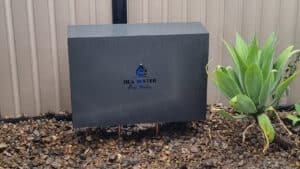
Jila Water premium whole home water filtration system installed at a Brisbane home

Premium Jila Water whole home filtration system installed for a Brisbane homeowner.

Whole Home Water Filtration, Explained Simply

Jila Water helps Brisbane and South East Queensland homeowners understand what is really
coming through their taps and how a professionally installed whole home water filtration system can improve water throughout the kitchen, bathrooms, showers, laundry, and outdoor taps.

This category brings together practical guides on water filtration systems, filter replacement,
chlorine reduction, sediment protection, water quality testing, system sizing and what to look
for when choosing a complete home water filtration system in Queensland.

  • The Top Benefits of Using a Good Water Filter System

    The Top Benefits of Using a Good Water Filter System

    The Top Benefits of Using a Good Water Filter System

    Top Benefits to Using a Good Water Filter

    Most of us prefer bottled or filtered water for its taste and cleanliness. But over time, buying or continuously refilling your bottled water services becomes more expensive. You might even run out of bottled water at night, and there isn’t a 24/7 bottled water service anywhere—unless you have excellent and capable water filter systems at home. It’s the most sustainable source of clean and pleasant drinking water.

    Instead of constantly refilling with filtered water companies or buying bottled water,  your next best option is to get a filtered water system at your home. You get to save on money and effort and enjoy safe, adequately filtered, and good-tasting water. Here’s some more information about the advantages of having your filtered water system.

    What Can a Water Filter Do?

    A filtered water system eliminates bacteria, micro sediments, and other unhealthy elements that regular water filter jugs or direct filters can’t. These harmful elements can include chlorine, chloramine, lead, excessive fluoride, minerals, and other after-processing contaminants that can randomly appear in regular water, making it unhealthy to drink.

    A water filtering system improves and enhances the taste of regular water. Before, your ordinary tap water may taste metallic or unclean. Still, clean water from filtered water systems gives you water that is free from impurities, tastes better, and is much cleaner and safer too.

    The same benefits apply to washing food and produce with this water and using it for different drinks. Many people have sensitive stomachs and may react differently to regular water or even the regular filtered water you use. Properly filtered water should be the best drinking and even washing option with its added convenience and money-saving properties.

    Advantages of a Water Filter System at Home

    One of the main benefits of water filtering systems is improved water quality and taste. Tap water often contains an unpleasant taste due to its chemical composition and may even have bacteria or other contaminants. By installing a water filter system, you can rid the water of these impurities, resulting in clean and great-tasting water that can help boost your family’s health. Water filter systems are becoming increasingly popular for a good reason. They provide a reliable and affordable way to dramatically reduce levels of impurities in water, resulting in water free of chlorine, heavy metals, sediment, and other sources of water contamination.

    Aside from drinking the best possible water quality for your health, you also save money in the long run. Bottled water can be expensive if you always buy it or get your water dispenser bottles refilled weekly. You can drink filtered water made at home with water filter systems instead and save money and effort trying to restock your supply.  

    Additionally, water filtering systems help preserve home plumbing and appliances from the damage imposed by sediment-filled water. From improved health benefits to reducing appliance repair bills due to sediment build-up, a good water filter system offers significant benefits for any home.

    Another remarkable fact about water filter systems at home is lessening your carbon footprint, believe it or not. Creating a litre of bottled water takes about three litres of untreated water that goes through processes that contribute to carbon dioxide release into the environment. Plastic water bottles also result after each use, which adds to recycling efforts. It contributes to more nonbiodegradable materials in the rubbish bins.

    Investing in a water filter system is a smart choice for any family. Filtered water systems also provide a level of convenience; there’s no more need to schlep heavy water jugs every few weeks. 

    Water filtering systems can help conserve water resources, as older water-filtration methods like boiling can unnecessarily waste water. 

    In short, investing in a good water filter system provides several clear benefits that make it an ideal choice for those looking for dependable, clean drinking water.

    Is It Worth the Effort To Maintain a Water Filter System?

    When it comes to water filter systems, the effort required to maintain them can often be the deciding factor between installing a filtered water system and not. Although water filtering systems require maintenance and upkeep, they can provide higher water quality than going without one. 

    Investing in water filter systems can be hugely beneficial to both your health and your budget. With the cost of water rising, water filter systems have become increasingly popular for households looking for an economical solution to cleaner water. 

    These filtered water systems take out contaminants like chlorine, bacteria, and traces of metals to create healthier water. Moreover, water filtering systems are easy to maintain; by simply replacing filters periodically, these systems can protect against anything from scale build-up in pipes to rust particles in the water—protecting your water from potential contaminants whilst saving you money on bottled water. It is thus clear that investing in a water filter system is not only worth the effort but a very wise decision too.

    Investing in a water filter system also brings peace of mind knowing that you are protecting yourself and your family from water-borne illnesses due to drinking water with contaminants. Checkups on water filtering systems should be done routinely based on your filtered water system model to ensure that it is operating properly and reducing the pollutants in your water supply. 

    The only inconvenience that could arise is that many filtered water systems require periodic filter changes or maintenance, such as descaling or backwashing, in order to function correctly. Still, such tasks are relatively straightforward so that a homeowner can perform them with minimal cost. Ultimately, the rewards of having clean water for personal use or for an entire family far outweigh any negatives related to having to maintain a water filter system. Ultimately, is it worth the effort to maintain a water filter system? Yes—water filtration systems are worth short-term investments for long-term safety and the protection of valuable resources.

    Home filtered water systems are easy to use, cost-effective, and don’t require heavy-duty maintenance. These systems are primarily error-free and last long with the correct usage. Once you’ve done a water test with us, our staff will install the system in your primary water source, it’s good to go. You’ll only need to replace the water filter cartridges anywhere from every six months to a year to replace the main filter.

    Conclusion

    Bottled or filtered water is often considered the best water drinking option available, with the growing risks of unhealthy tap water. But bottled water can be expensive and add inconvenience to daily life. There is a constant need to buy or refill them and spend extra money. You can do away with these inconveniences and always have a steady supply of fresh and properly filtered water at home anytime. Installing water filtration systems in the home is an investment in the health and safety of yourself and your family.

    Jila Water provides home water filters in Brisbane so you can have the best drinking water in the comfort of your home. Give us a ring and start enjoying the benefits of your own water filter system at home today!

    Share this post
  • Why You Should Buy a Whole House Water Filter

    Why You Should Buy a Whole House Water Filter

    Why You Should Buy a Whole House Water Filter

    Why You Should Buy a Whole House Water Filter

    A happy household depends on having access to safe, clean water. It is in our everyday life, and whether we like it or not, we use water for many purposes, such as cooking, drinking, cleaning, showering, and taking baths.

    Using a water filter will allow us to have better-tasting water, help us soften hard water, and make our appliances operate more efficiently, reducing the cost to own them in the long run.

    The whole home water filter, also known as a point of entry (POE) filtration system, cleans the water before it is channelled into our taps and showers. Typical water filters are meant to filter out contaminants like chemicals before we shower, bathe, or drink them.

    Typically more durable than a standard water filter, removing more pollutants, but not as easy to install or remove. However, remember that no filter can remove all impurities from tap water, so deciding which filter to buy and how it will fit in your house is critical.

    Take in mind that installation expenses may not be included in the filtration unit’s pricing. If you don’t know how to install it, estimate how much it would cost to have a plumber come to your house. To help you decide, we’ve created this quick and easy guide for you:

    Benefits of a Whole House Water Filter

    Removes Toxic Substances

    Using a water filter removes chlorine and other pollutants. This means better-tasting water for you and your family. It also helps remove chemical odours from treated water. Toxic chemicals including chlorine, fluoride, lead, and aluminum are easily eliminated.

    Protects the Environment

    Any water filtering system will certainly pay for itself over time. It reduces the need for single-use plastic bottles, which reduces trash in our oceans, and extends the life of your dishwasher, washing machine, and other water-using products/appliances.

    Promotes a Healthier Lifestyle

    Remember the physical advantages like smoother skin and hair, greater nutrition absorption, and better digestion. It’s incredible how simple things may help encourage a better lifestyle!

    Ensures Fewer Maintenance Costs

    Since you aren’t utilising a water filtration tap filter or any general purification solution, you won’t need to bother about refilling containers, replacing filters, or repairing hoses. A single system can clean the whole house’s water supply, with filters generally updated every couple of years.

    Offers Extensive Product Selections

    There are several alternatives for homeowners looking to purchase a home water filtering system. Depending on the device, a variety of replacement filters are available. Also, remember to update filters and maintain your whole-house water filter system. Keeping the water filter clean maximizes its effectiveness and keeps it functioning smoothly.

    Conclusion

    Choosing a whole house water filter is a significant investment. A drinking well owner should invest in a device that can adequately remove corrosion, pollutants, and heavy metals from the water. There are several sorts of water filters, from pitchers and refrigerator filters to faucet-mounted and under-sink filters.

    If none of the above techniques works for you, you may aim to explore whole-house water filter treatment. So, do your research before making any significant purchases. In the end, however, the investment will be well worth it!

    There is no shortage of material to assist you in learning more and aiding your decision-making process. Buying and installing a whole home water filter may be expensive, so do your research by reading reviews, looking at product papers, and watching YouTube videos. If you would like to know more, JilaWater is here to help you. We offer cost-effective whole house water filter systems. We are proud to provide filtered water to homes here in QLD. Call us today!

    Why You Should Buy a Whole House Water Filter 

    Share this post
  • Facts About Filtered Water You Should Be Aware Of

    Facts About Filtered Water You Should Be Aware Of

    Facts About Filtered Water You Should Be Aware Of

    Whole House Water Filters

    To say that we need water is an understatement. Everything that has life depends on water. Just think about what you feel after a hot day, and you see a pitcher filled with cold water. You know you need it to replenish your body. 

    Water is indeed the biological medium on the planet, but now, because of the pollution, even water gets contaminated, and at times it even becomes unsafe to drink. For that reason, it is essential for your family’s health and safety that you ensure that you are drinking filtered water at all times. 

    In this post, Jila Water shares some interesting facts on filtered water that you might not know about:

    What You Can Find in Filtered Water Is as Important as What’s Removed From It

    No one can deny that your tap water contains a plethora of “nasties” that you simply don’t want anyone in the family to ingest. That said, tap water also has calcium, fluoride, magnesium, and sodium – all of which are necessary for your health. So, even if your water filtration can effectively remove those germs and other contaminants, it’s as crucial that the water filter still allows the good stuff to remain in your water. 

    Filtered Water Actually Tastes Better Than Tap Water

    That weird taste in your tap water is due to the presence of chlorine. Many do not know that it is chlorine that plays a significant role in ensuring that the water supply is clean. However, it’s also not good for your health – it also tastes awful! The best home water filter systems can effectively remove chlorine, so your drinking water tastes a whole lot better. 

    It’s Good for the Environment

    Are you still drinking bottled water? Can you imagine how many plastic bottles your family uses up in a year? That’s a huge contribution to the landfills and even the waterways that potentially harm precious marine life. 

    When you choose to use a water filter and swap your disposable plastic bottles for reusable ones, you are helping the environment recover from the damage that humans also caused. 

    They’re Good for Your Plants, Too

    You might not know it, but filtered water is not only good for drinking. Your plants can benefit from it, too. If you notice a thin, whitish crust on the soil’s surface, it may be caused by the harmful salts and minerals in your tap water. It could be the chlorine that is keeping your plants from growing properly. You can use filtered water to help your plants grow healthier. 

    Filtered Water and Purified Water Are Two Different Things

    Many people use the terms’ filtered water’ and ‘purified water’ interchangeably when they are, in fact, different. Purified water is stripped of all the salts and minerals found in water, including the good stuff that the body needs. 

    On the other hand, filtered water only removes harmful impurities and keeps all the stuff that is essential to your health. 

    Conclusion

    These are just some of the things that you might not know about filtered water. As you can see, there are indeed benefits to using home water filters. Not only will it remove contaminants from your water and improve its taste, but it will also ensure that the minerals you need from your drinking water remain. On top of that, it can help improve your plants’ health and ensure that you’re doing your part in helping the environment. 

    If you are considering getting home water filters in Brisbane for you and your family, Jila Water offers you a cost-effective solution. As an industry leader in home water filtration, Jila Water can ensure that your family has access to clean water that’s good for your health!

    Share this post
  • Why You Should Filter Your Water

    Why You Should Filter Your Water

    Why You Should Filter Your Water

    Woman drinking filtered water outdoors under blue sky, promoting water filtration benefits.

    You have personal experience with this dependence each time you seek water fluids to quench your thirst and replenish your body’s water content.

    The cells inside your body are surrounded by a fluid that is mostly water and your cells themselves range from 70% to 80% in water content.

    When information is passed from tissue to tissue, it is water that delivers this information.

    Water performs not one but many particular tasks, all life-supporting or life-saving.

    In a living body, if the circulation of water slows down too much, life ceases.

    Equally important to both lower and higher organisms, water is the vital generator of life and its supporting force.

    Every day you make an assumption about the safety of the water you drink.

    Our natural water resources are under a great deal of stress, as we battle with an ever-changing climate, pollution, and the needs of a rapidly growing population.

    Our government has a duty to provide us with water that is safe to drink, however, the water quality at the point of consumption may not always be complimentary for our short or long-term health.

    Contaminants including heavy metals, chemicals such as chlorine, pesticides, bacteria, and organic & inorganic compounds all can be present in our drinking water.

    Ten Reasons To Filter Your Tap Water Water filtration can provide better-tasting and better-smelling drinking water by removing chlorine, chemicals, pesticides, heavy metals, and bacterial contaminants.

    A Jila Water filtration system’s water filters remove lead from drinking water immediately prior to consumption, thus preventing this harmful substance from entering the body.

    The Jila Water filtration system greatly reduces the risk of certain cancers including rectal cancer, colon cancer, and bladder cancer by removing chlorine and chlorine by-products such as Trihalomethanes (THMs) from drinking water.

    The carbon water filter is the Jila Water filtration system that can selectively remove dangerous contaminants from drinking water while retaining healthy mineral deposits that balance the pH of drinking water.

    Drinking clean, filtered water using the Jila Water filtration system protects your body from disease and leads to overall greater health and energy.

    A water filter provides clean, healthy water for cooking, as well as drinking, at the convenience of tap water.

    Jila Water filtration system provides the healthiest water for children’s developing immune systems.

    Jila Water filtration system offers the last line of defences between the body and the over 2100 known toxins that may be present in drinking water.

    So what is stopping you from better water in your home, contact Jila Water today for your no-obligation water test.

    Call 1300 30 10 37

    Share this post
  • WHY WATER TREATMENT IS A GROWING TREND & THE BIGGEST REASONS WHY

    WHY WATER TREATMENT IS A GROWING TREND & THE BIGGEST REASONS WHY

    Why whole home water filtration systems are a growing trend & Why more Brisbane homeowners switching to whole-house water filtration

    Modern water treatment technology with bubbles and droplets for clean water solutions.

    As new trends emerge in health, wellness, and even fashion, the ‘best’ water treatment methods and practices can also shift to align with emerging science and preferences.

    As more councils struggle to keep pace with water demands for their communities, more and more people are looking for independent solutions to make sure they’re getting high-quality drinking water that’s safe and tastes great.

    Water Treatment Basics The term water treatment can encompass a variety of methods for removing undesirable components from water.

    Whether it’s iron or other more concerning metal contaminants like lead, water treatment can relate to removing those contaminants.

    Water Treatment Trends Trends in water treatment often vary regionally, and for good reason.

    As a result, whole home water filtration and softening systems form the basis of water treatment trends for Brisbane and southeast Queensland home owners. 

    In communities where council water is heavily treated with chemicals like chlorine, water treatment trends may shift toward drinking water solutions like reverse osmosis filtration or other point-of-use water treatment methods that can effectively remove those kinds of aesthetic water problems.

    Brine-restricted areas face different issues with water treatment, as water softeners are often heavily regulated or not allowed at all in these locales.

    Demand is also increasing for ultraviolet water disinfection as a water treatment solution as concerns about the Coronavirus has topped our collective minds.

    Effective at removing viruses and bacteria from water, UV water treatment provides a great alternative for people who want to stay away from treatment chemicals like chlorine and salt.

    So while it’s clear that certain types of water treatment pique collective interest from time to time, and vary by region, the timelessness of high-quality, great-tasting water remains constant.

    Whether you have hard water that’s causing headaches all around your home, odors or tastes from your water that make it unappealing to drink, or any combination in between, your local Jila Water Man can help you find the right solution.

    So click on jilawater.com.au/free-home-water-testing or give us a call on 1300 30 10 37 to see how we can give you and your family great tasting fresh water for your whole home by fitting a complete home filtration system. Give you a total home filtration solution for every tap in your Brisbane home. 

    Share this post
  • WHY DOES MY TAP WATER TASTE LIKE DIRT, METAL, CHLORINE?

    WHY DOES MY TAP WATER TASTE LIKE DIRT, METAL, CHLORINE?

    Brisbane & SEQ water taste guide

    Why does my tap water taste like dirt, metal or chlorine?

    If your tap water tastes earthy, metallic, chemical, salty or just “off”, the first job is not to panic. The smart move is to work out whether it is a temporary supply issue, a plumbing issue, a hot-water issue, or a whole-home water-quality concern.

    Direct answer

    In Brisbane and South East Queensland, a dirt or earthy taste is often linked to natural taste-and-odour compounds such as geosmin or MIB, a metallic taste can point to metals, corrosion, sediment or household plumbing, and a pool-like chlorine taste usually relates to disinfectant residuals used to keep treated water safe through the network. If the change is sudden, strong, coloured, gritty, or only happening from one tap, investigate it before assuming a filter is the answer.

    Installed across Brisbane & SEQ Premium whole-home systems Assessment first, no guesswork
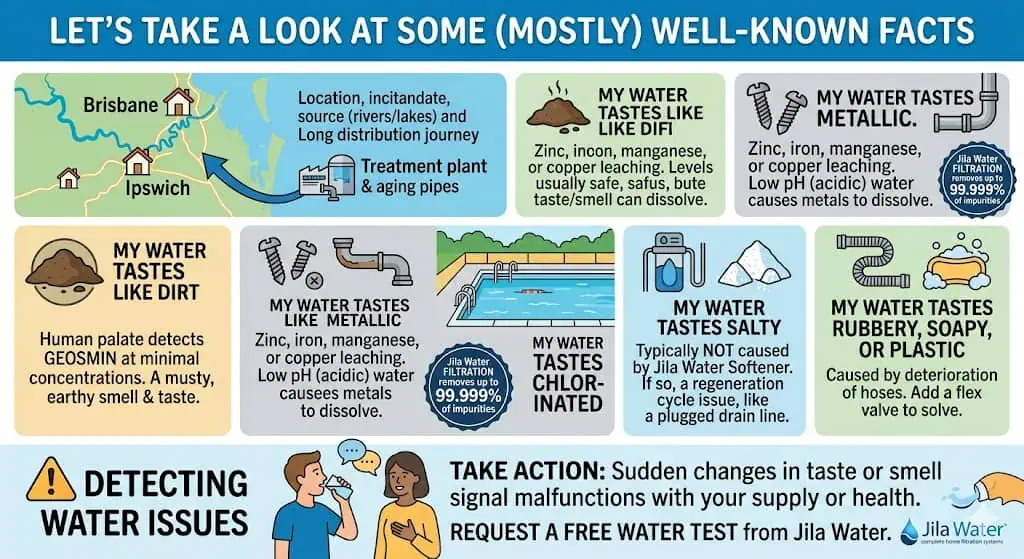
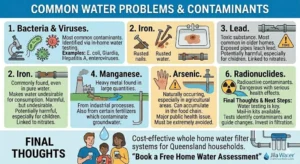
    Infographic explaining why Brisbane tap water can taste like dirt, metal, chlorine, salty or rubbery
    Common taste clues can help you work out whether the issue is likely from the water supply, household plumbing, hot water, or a whole-home filtration concern.
    Quick diagnosis

    What the taste usually means.

    Taste is not a perfect water test, but it is a useful clue. Use this table to narrow down what may be going on before you decide whether you need your water provider, a plumber, or a filtration assessment.

    Taste or smell
    Likely cause
    What to check first
    Filtration angle
    Dirt, earthy, grassy or musty
    Natural compounds such as geosmin or MIB, often more noticeable after warm weather, rain and algae activity in raw water sources.
    Ask neighbours, check local water authority updates, chill a glass of water and compare several taps.
    Correctly specified carbon filtration can help improve taste and odour, especially across the whole home.
    Metallic, bitter or coppery
    Iron, manganese, copper, zinc, older pipework, hot-water systems, corrosion, or sediment disturbed in the network.
    Compare hot and cold water, test more than one tap, check for brown water or particles, and note whether it started suddenly.
    Sediment and conditioning stages may help, but strong or sudden metallic taste should be investigated first.
    Chlorine, chemical or pool-like
    Residual disinfectant such as chlorine or chloramine, which is used to keep treated water protected through the network.
    Check whether it is stronger in hot water or showers and whether the smell is present across multiple outlets.
    A properly sized carbon stage is commonly used to reduce chlorine or chloramine taste and odour.
    Salty or brackish
    Source-water minerals, softened water issues, regeneration faults, or local source variation depending on property type.
    Check whether you have a softener, bore water, tank water, or a system with a brine/regeneration cycle.
    This needs source-specific advice. Do not assume a standard carbon filter will solve it.
    Rubbery, plastic or soapy
    Flexible hoses, new plumbing, appliance lines, seals, fittings, or stagnant water in a fixture.
    Check if it is isolated to one tap, a fridge line, a mixer, a bathroom basin or a recently changed fitting.
    Often a plumbing or fixture issue first, not a whole-home filtration issue.
    Brown, gritty or dirty-looking
    Sediment, rust, mains works, old pipework, tank debris, or disturbed particles.
    Do not ignore visible particles. Check if multiple taps are affected and contact the relevant provider if sudden.
    Sediment pre-filtration is one of the strongest whole-home use cases when particles are ongoing.
    Local water context

    Brisbane water can be safe and still taste unpleasant.

    That is the honest position. Water can meet drinking-water requirements while still having a taste, smell or feel that homeowners do not love in the kitchen, shower, bathroom or laundry.

    Seqwater explains that earthy or grassy taste and odour can occur when naturally occurring compounds such as MIB increase after conditions like heavy rain and hot weather, while still stating the water is safe to drink. Urban Utilities also points to geosmin and MIB as common causes of earthy taste and odour. The Australian Drinking Water Guidelines note that taste and odour are major factors in how people judge water quality and acceptability.

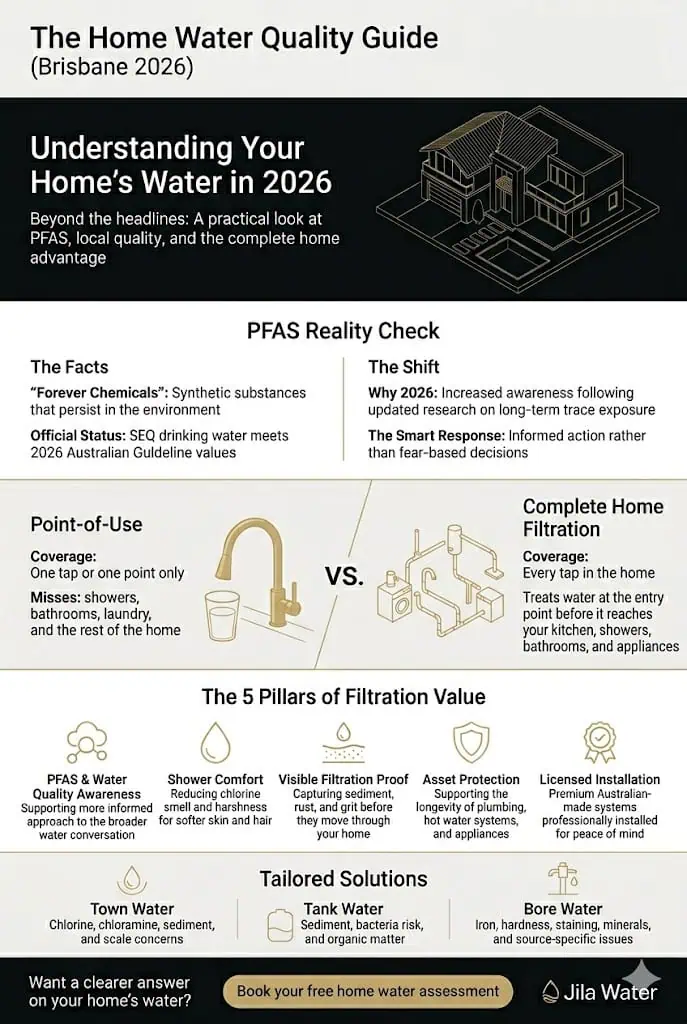
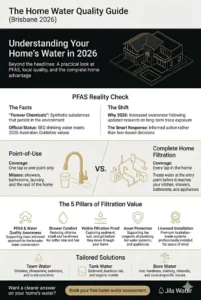
    Jila Water Brisbane home water quality guide explaining complete home filtration and water quality concerns
    A simple visual way to explain why many homeowners move from one tap filters to complete home filtration.
    When to take action

    Do not ignore sudden changes.

    Ongoing taste and odour issues are often aesthetic. Sudden, severe or isolated changes need a different mindset.

    Contact your water provider or a licensed plumber if:
    • The taste or smell changes suddenly and strongly.
    • The water is brown, cloudy, gritty or has visible particles.
    • Only one tap is affected, especially after plumbing work or a fixture change.
    • Hot water smells or tastes different from cold water.
    • Anyone feels unwell and suspects the water could be involved.
    Good first checks

    Before you spend money, compare the pattern.

    • Test the kitchen, bathroom, laundry and outdoor tap.
    • Compare hot water and cold water separately.
    • Ask a nearby neighbour whether they notice the same issue.
    • Check local authority updates for taste, odour, mains work or outages.
    • Take a clear photo if you see particles, staining or discolouration.

    This article is general water-quality education for Australian homeowners. It is not medical advice and it should not be used to diagnose illness. For public supply issues, contact your water provider. For private tank or bore water concerns, testing and source-specific treatment advice matter.

    The main tastes explained

    Why each taste happens.

    Most homeowners start with a single question: “Why does my water taste bad?” The answer depends on which taste you are noticing and where in the home it appears.

    Earthy or dirt taste

    Usually a taste-and-odour compound issue.

    Earthy or grassy water is commonly associated with natural compounds such as geosmin or MIB. These can become more noticeable after heat, rain and algae activity in raw water sources. It can be unpleasant, but it does not automatically mean the water is unsafe.

    Metallic taste

    Often plumbing, metals or disturbed sediment.

    Metallic water can be linked to iron, manganese, copper, zinc, older pipes, corrosion, hot-water systems or disturbed sediment. If the taste is new, strong or comes with colour, do not treat it as a normal taste issue until it has been checked.

    Chlorine or chemical taste

    Often disinfectant residuals.

    Chlorine and chloramine help protect treated water as it moves through the network. The downside is that sensitive noses can pick up a chemical note, especially in hot showers. This is one of the most common reasons families ask about whole-home filtration.

    Salty taste

    Not always caused by a softener.

    Salty or brackish water can come from minerals, source-water conditions, bore water, softener regeneration problems or system faults. It needs a source-specific conversation rather than a one-size-fits-all filter.

    Plastic, rubber or soapy taste

    Often fixture or appliance related.

    This can come from new flexible hoses, fridge lines, seals, mixers, appliance connections or stagnant water in a fitting. If only one outlet has the problem, start with that outlet before looking at the whole home.

    Sediment, rust or dirty water

    Visible proof should be taken seriously.

    If you can see particles, brown water or gritty residue, take note of where and when it happens. Sediment filtration can be highly useful, but sudden dirty water should be reported or checked before being treated as a normal filtration problem.

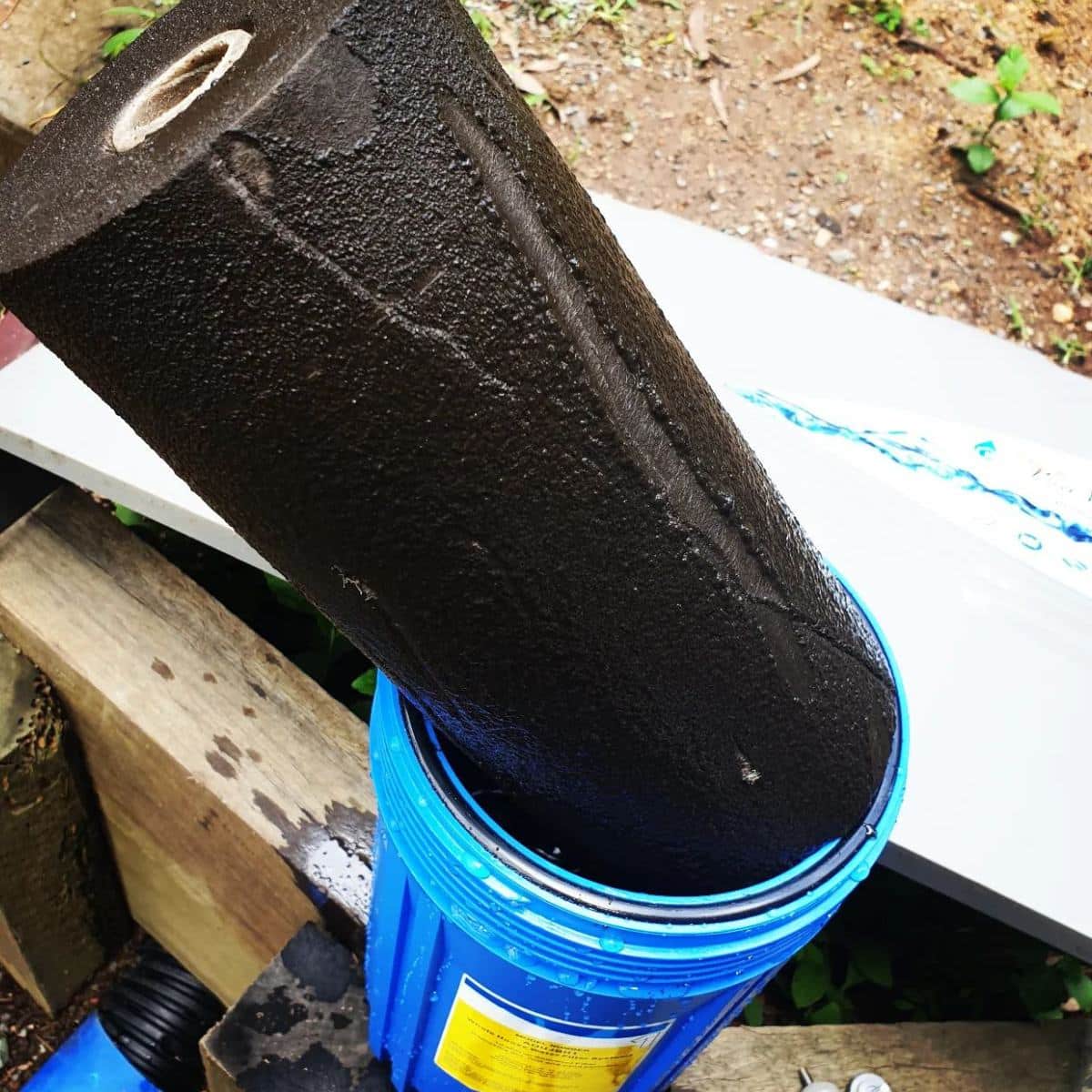
    Used water filter cartridge showing heavy sediment and buildup caught before moving through the home
    Real filter proof is powerful because it turns a hidden water issue into something homeowners can actually see.
    Whole-home logic

    If the problem is across the home, do not fix only one tap.

    A jug, fridge filter or under-sink system can be useful for drinking water at one outlet. But it will not change the water in your shower, bathroom, laundry, hot water system or other household taps.

    Single-tap filters

    Best when you only care about one drinking-water outlet and do not need shower, bathroom or laundry water improved.

    Complete home filtration

    Best when the concern is taste, odour, sediment, shower comfort or general water quality across the property.

    • A sediment stage helps catch dirt, rust and particles before they keep moving through the home.
    • A properly specified carbon stage can help reduce chlorine or chloramine taste and odour.
    • Conditioning media may help with scale-related concerns depending on the water and the system design.
    • Tank, bore and mains water should not be treated as the same problem.
    Homeowner checklist

    How to narrow it down in five minutes.

    These simple checks make your enquiry more useful and help separate supply, plumbing and whole-home filtration issues.

    Check more than one tap

    If the same taste appears in the kitchen, bathroom and laundry, it is more likely to be a whole-home or supply issue.

    Compare hot and cold water

    If only the hot water tastes or smells strange, the hot water system, pipework or appliance side may be involved.

    Look for colour or particles

    Brown, gritty or particle-heavy water should be taken more seriously, especially if it appears suddenly.

    Ask a nearby neighbour

    If neighbours notice the same taste, there may be a local network or supply event rather than a problem inside your home.

    Book a proper assessment

    If the issue is ongoing and you want a better daily water experience, an assessment can check the water and match the system properly.

    Best next step

    Get your water checked before you guess.

    Jila Water can help you understand what may be affecting your water and whether a premium whole-home filtration system makes sense for your home. No generic script. No pressure. Just clear advice for your water source, household and goals.

    1

    We listen to the issue

    Dirt taste, metallic taste, chlorine smell, shower comfort, sediment or a full-home upgrade.

    2

    We check the water and property

    Water source, plumbing layout, system location, home size and what you want improved.

    3

    We recommend the right fit

    A system matched to the home, not an undersized one-size-fits-all filter.

    FAQ

    Tap water taste questions.

    Clear answers for homeowners comparing taste, odour and whole-home filtration options.

    Why does my tap water taste like dirt?

    An earthy, grassy or dirt-like taste is often linked to naturally occurring taste and odour compounds such as geosmin or MIB. In South East Queensland these can become more noticeable after hot weather and rain, even when the water is still considered safe to drink by the water authority.

    Why does my tap water taste metallic?

    A metallic taste can come from iron, manganese, copper, zinc, older plumbing, corrosion, hot water systems, or sediment disturbed in the network or household pipes. If it appears suddenly, is strong, or comes with brown water or particles, contact your water provider or a licensed plumber.

    Why does my tap water taste like chlorine?

    A pool-like, chemical or chlorine taste usually relates to disinfectant residuals used to keep treated water safe through the network. Some people are more sensitive to chlorine or chloramine taste and odour than others, especially in hot water or showers.

    Is strange tasting tap water always unsafe?

    No. Taste and odour issues can be aesthetic, and public water can still meet drinking-water guidelines. However, sudden changes, strong discolouration, visible particles, illness, or one-tap-only issues should be investigated.

    Will a jug filter or under-sink filter fix water that tastes bad across the whole home?

    A jug or under-sink filter only treats one point of use. If the taste, odour or chemical smell is noticeable in showers, bathrooms, laundry and multiple taps, a properly specified whole-home system is usually a better fit.

    Can whole-home filtration help with dirt, metal and chlorine taste?

    A properly designed whole-home system can help reduce sediment, chlorine or chloramine taste and odour, and broader water-quality issues depending on the water source and cartridge media selected. The right design should be matched to the home, flow demand and water conditions.

    What should I do first if my water tastes different?

    Check multiple taps, compare hot and cold water, ask neighbours if they notice the same issue, and look for colour or particles. For sudden or severe changes, contact your water provider. For ongoing taste, smell or shower comfort concerns, book a free Jila Water home water assessment.

    Water tastes off?
    Book a free assessment.
    Book now