Tag: Drinking Water

  • What Showering In Filtered Water Can Do For You & Your Skin

    What Showering In Filtered Water Can Do For You & Your Skin

    What Showering In Filtered Water Can Do For You & Your Skin

    What Showering In Filtered Water Can Do For You & Your Skin
    Most Brisbane and Australian homeowners already know the importance of drinking clean, fresh filtered water. The quality of the water you’re showering and bathing in can also harm your health as there are several things in your water you don’t know about. Unfiltered water can carry several contaminants, including Chlorine, chloramines, trihalomethanes, pesticides, chloramines, heavy metals, bacteria, minerals, and bacteria. Substances found in the water can make showering a less pleasant experience as your water will smell and taste terrible.
     
    With the water quality in Brisbane being hard and of relatively ok quality, you may even be exposed to contaminants that have a severe impact on your increased risk of chronic health disorders and your health.
     
    The solution is to remove all the contaminants by fitting a whole-house water filtration system to your Brisbane home from us here at Jila Water. Showering in water filtered through a Whole House Water Filtration System can dramatically remove the number of contaminants commonly found in your water, making showering a safe and more enjoyable experience.
    There are many Reasons Why You and ofter Brisbane residence need a whole-house water filtration solution in Brisbane and throughout Australia. When choosing whole-house water filtration, the most popular solution is our Jila Water whole-house water filtration system.
     
    Although Brisbane has high-quality water by international standards, it can still contain many natural and artificial contaminants, most commonly found being Chlorine. Most Australian water treatment companies in towns and cities add Chlorine to their water supply to kill bacteria, viruses, and protozoa. What is then found is that by adding Chlorine to the water, other elements can be formed like Chloramine, Chloramines and Trihalomethanes.
     
    Chloramines and Chloramine is a chemical compounds formed when Chlorine combines with ammonia which is also found in the water supply.
     
    Trihalomethanes are chemicals formulated when Chlorine interacts with rotting organic matter.
     
    Researchers and scientists believe these elements can increase the risk of things like bladder cancer, colorectal cancer, and even miscarriage in pregnant women. Cyst Parasites (Cryptosporidium and Giardia) and Bacteria can also be found in your home if using unchlorinated water from a tank, bore, tank, river, stream, or dam, it may contain parasitic cysts like cryptosporidium and giardia.
     
    This untreated water may also carry things like bacteria like Coliform. and Escherichia coli (e-coli).
     
    Heavy Metals Heavy metals like arsenic, lead, arsenic, copper, and cadmium can be transported into your water supply via many different natural factors (natural mineral deposits and erosion, ) or manmade circumstances (pollution, corroding pipes).
     
    The process of ingesting these heavy metals has been found to be very hazardous.
     
    Rust Although rust isn’t especially dangerous to consume in low doses, it can stain your clothing and then will discolour your drinking water. So let’s face it, it is better to have it removed rather than consumed.
     
    Scale-Producing Minerals Some parts of Brisbane and Australia have water that is called HARD and is also high in scale-forming minerals like magnesium and calcium.
     
    Do you find your showerhead to clog up, and there is staining throughout the shower, well this is commonly caused by these minerals found in unfiltered water.
     
    Chemical and pesticides the Brisbane water supply may contain and be contaminated by potentially dangerous chemical contaminants, including Perfluoroalkyl Substances (PFAs), Poly, nitrate/nitrites, and, Volatile Organic Compounds (VOCs) as well.
     
    Just another reason why showering in water that’s been through a Jila Water Whole House Water Filtration System will remove 99.9% of the contaminants listed above.
     
    The Jila Water Whole House Water Filtration system works using the following approach: Mechanical Filtration means The media or filter operates like a strainer, blocking more significant contaminants than the pours in the Water Whole House Water Filtration system media.
     
    This is a powerful and very effective way to remove the sediment, metal particles, algae, and dirt that are found in the local water supply. sponge
     
    Water Whole House Water Filtration filters can be made from a variety of materials, including food-grade metal mesh and polypropylene.
     
    The absorption Filtration This type of media can intercept and then absorbs elements and different contaminants as if it was a sponge.
     
    The most common material used in our Water Whole House Water Filtration during the absorption filtration part of the system is Granular Activated Carbon (GAC).
     
    These different methods are capable of first filtering and then absorbing other chemicals found in the water and removing them like the Chlorine we spoke of earlier.
     
    The Carbon part of the filtration system needs time in contact with the elements in the water to absorb and remove them from the water.
     
    Our system removes a wide range of contaminants from your home’s water at the point of entry, so the hot water still comes out as fast and flows with fresh filtered hot water, so you still have perfect shower pressure even after the system is installed.
     
    The whole house water filtration system also uses a KDF 55 filter element to dissolve the chlorine gas found in the water by changing it into water-soluble chloride ions (which are harmless to humans).
     
    It can also reduce the build-up of scale, heavy metals, algae, bacteria, and fungi.
     
    There are many additional benefits of using KDF55 as it has a bacteriostatic function, which means it can inhibit bacterial growth.
     
    It can convert free Chlorine and certainly combined Chlorine (including sodium hypochlorite most commonly found in swimming pools), into the harmless element chloride.
     
    By reducing, your Exposure To Chlorine, Brisbane and most towns and cities in Australia will treat their water with Chlorine to kill viruses, bacteria, and protozoa.
     
    Now, there are several downsides to showering in chlorinated water, including Dry, brittle, or discoloured hair. However, we also know that Chlorinated water can strip out your hair’s natural oils, which keeps your hair looking great.
     
    If you find you have dry skin, showering in water that has Chlorine will also strip advantageous bacteria and protective oils from your skin.
     
    If you spend any length of time in the shower, it will also cause extreme redness and a burning sensation if your body doesn’t react well to Chlorine.
     
    The harsh drying effects of Chlorine can also cause eczema or rosacea or flare-ups which can dramatically impact the condition of your skin.
    By adding a whole-house water filtration system, you will reduce your Exposure to Chloroform. When it comes to trihalomethanes are produced, this happens when chlorine contacts decaying organic matter in waterways.
     
    It is recommended you avoid Exposure to Heavy metals like mercury, lead, and arsenic that can enter the water supply from a number of, sources be they artificial or natural.
     
    It’s been found that in high doses, these elements and different metals can greatly increase the risk of many different health conditions, including congenital disabilities, cancer, cardiovascular disease, skin lesions, poor cognitive development, and diabetes.
     
    The combination of filters used in the Jila Water 4-stage Whole House Water filter system like the KDF filters can reduce the levels of water-soluble elements and the different heavy metals found in different water supplies throughout Brisbane and the rest of Australia, potentially helping you avoid some hazardous health problems.
     
    Enjoy Cleaner Water to shower in after you and your family fit a Jila Water 4-stage Whole House Water filter system and it’s removing those contaminants that cause health issues along with the staining and other problems already mentioned.
     
     
    The Jila Water 4-stage Whole House Water filter system works by changing magnesium particles and calcium by structure, reducing the number of particles that harden on your taps, bath, and shower screens.
     
    You will find the unit will also reduce the rotten egg smell that occurs when the water has high levels of hydrogen sulphide. suspect
     
    Our combination of filters fitted to your system will reduce Chlorine, chloramines, trihalomethanes, hydrogen sulphide (rotten egg smell), iron oxides, dirt, sediment, and odors from all the water that you drink, shower, wash and bathe in.
     
    It is a complete water filtration system that we fit as the water enters your home, thereby you have peace of mind knowing that your whole home’s water is freshly filtered.
     
    The recommended maximum service life of the cartridge is 12 months, depending on the water quality but our water techs will come out and inspect them every 12 months and give you recommendations when they service your unit.
     
    So after reading this far you can see there are many different reasons to have a whole house water filtration system fitted for removing contaminants from the shower and bath water entering your home.
     
    If you have any more you would like to know or just questions about Jila Water and what a Whole House Water Filtration system can do for you, contact us via the website, drop us an email, or call 1300 30 10 37.
     
    Share this post
  • 5 Reasons You Should Switch to Filtered Water in Your Cooking

    5 Reasons You Should Switch to Filtered Water in Your Cooking

    5 Reasons You Should Switch to Filtered Water in Your Cooking

    5 Reasons You Should Switch to Filtered Water in Your Cooking
    Using straight tap water in Brisbane for drinking and cooking is always a figure of uproar in various communities.
     
    While some say it’s okay for hydration, others counter it by saying it’s a dangerous way to refresh.
     
    Over the years, water companies have improved tap water by removing contaminants that may cause it to go wrong. However, leaks and spills in the pipelines are still a significant concern for most people. On top of that, the taste and smell of chlorine are off-putting for some.
     
    If you want to stay healthy without going dry, buying filtered water should be at top of your priorities on the shopping list. But aside from its health benefits, what does filtered water have to offer? Why should you switch to filtered water in cooking?
     

    1. Meals Taste Better

     
    Filtered water goes a long way towards improving the taste of everything—from cooking to beverages. As the water goes through multiple filtration steps, the process removes the unpleasant taste in tap water. The filtered water will taste nothing like metallic chlorine as the process releases its authentic taste.
     
    Using filtered water when cooking adds the fresh flavor of clean water to every meal you’re cooking. If your cooking tasted good before, it should taste best after switching.
     

    2. Meals Look Better

     
    Aside from food tasting better, filtered water can add that refreshing glow to meals. It produces more visually appealing meals which all family members can enjoy.
    Chlorine in tap water causes the colours in meat and vegetables to diminish, bleaching the food before you can eat it. Your meals can look more appetizing if you use water from which the chlorine has been removed.
     

    3. Bread Rises Better

     
    For people who bake instead of cook, filtered water also offers benefits. If you’re a keen bread baker, it’s time to take your baking skills to the next level by using filtered water. The effect of filtered water in baking is that it makes the dough rise higher and faster.
    Chlorine, once again, along with other impurities, affects how yeast rises the dough. They can lead to distorted gluten structures and half-risen loaves, especially in sourdough. However, the issue was found to have a simple solution using filtered water. Most restaurants insist on using filtered water in all yeast recipes.
     

    4. It’s a Healthy Source

     
    While it’s great to understand the benefits we get from filtered water in cooking, it’s also notable to state what drinking filtered water does to our bodies directly. Not all additions to tap water are bad. Drinking it still provides benefits like vitamins and minerals which we need for our health.
     
    Water treatments can diminish these benefits. The chemicals in water treatment can break down these vitamins and minerals until there is nothing left for our body to absorb. Meanwhile, filtering water does not include the use of harsh chemicals, which allows vitamins and minerals to remain.
     

    5. Say Goodbye to Unhealthy Cooking

     
    If your goal is to produce healthier meals, filtered water is the first step in achieving that goal. Filtered water provides vitamins and minerals that our bodies need without the harsh chemicals used to treat tap water. Try it out and notice the difference after a few weeks.
     

    Conclusion

     
    Switching to filtered water is not expensive. There are many filtration systems for people to use in their own homes. There is no need to get refills constantly as all you need is a whole house water filtering system that does all the work for you. Say goodbye to unhealthy living and hello to clean, safe drinking water.
     
    Are you planning to switch to filtered water? Would you like to find out more about Whole House Water Filtration Solutions? Then Jila Water can offer you an affordable water filter system for daily use throughout your entire home.
     
    Visit our website today and request us to come and test your Brisbane Homes Water at no charge. During this visit, we will also give you a number of recommendations and solutions for you and your Brisbane Home’s needs.
     
    Check out www.jilawater.com.au to find out more or leave a comment below 
    Share this post

    5 Reasons You Should Switch to Filtered Water in Your Cooking

  • Fluoride in water brings up a lot of debate. Is it good, or is it bad or just plain ugly?

    Fluoride in water brings up a lot of debate. Is it good, or is it bad or just plain ugly?

    Fluoride in water brings up a lot of debate. Is it good, or is it bad or just plain ugly?

    Fluoride in water brings up a lot of debate. Is it good, or is it bad or just plain ugly?
    Fluoride in water brings up a lot of debate in the Brisbane community. Is it good, or is it bad, or just plain ugly? We ask Dr. Joe Nemeth. who’s a periodontist, and we’re going to talk about fluoride today. The good, and the bad, Dr. Joe Nemeth is living in Michigan grand rapids, Michigan, which was the first city in the United States to have fluoridated water. So the CDC has said that community water fluoridation has been one of the best public health achievements of the 20th century. And certainly, it has done a lot of good for a lot of people.
     
    There are a lot fewer cavities around because when fluoride is incorporated into the tooth structure of developing. It makes the teeth more resistant, and more immune to developing cavities. Also, sometimes fluoride can be applied in the dental office and in the dental office in a concentrated form.
     
    It can even be a benefit to a doctor. And fluoridated toothpaste may be of sudden benefit to adults also in the fact that it’s concentrated and it’s there for a short period of time and may help to minimize decay and perhaps root sensitivity. So. We know that it’s good. As far as reducing cavities is concerned, that’s very important, but you know, what’s really interesting is recently the CDC, and this is recent so that 40% of young children who are using.
     
    Fluoridated toothpaste and most toothpaste they’re using are fluoridated using too much-fluoridated toothpaste. So what happens is when they use too much, these young children end up ingesting some of the toothpaste. So when they ingest the floor data toothpaste combined with fluoridated water, then it can actually cause problems with the teeth. They can get what’s called fluorosis.
     
    It can cause spots on the teeth. It can cause aesthetic problems with the teeth. If it’s severe, it can cause pitting and actual loss of the enamel. So now they recommending that very, very, very little toothpaste, just barely let, perhaps less than a drop is used for young children, because they’re going to end up ingesting some.
     
    And if they ingest it and the water for data, it can cause fluorosis or problems with the teeth. Now, fluoridated water doesn’t necessarily benefit adults. It only really is of significant benefit while the teeth are developing in young children. Once those teeth are fully developed and the fluoride is incorporated into the teeth, it’s not going to do much of anything for adults, which is why some communities have stopped fluoridating their water.
     
    This is also why we here in Brisbane at Jila Water find clients coming to us looking for a whole-house solution to remove the fluoride that’s found in their normal day-to-day drinking water.
     
    And when they did, the decay rate in children did go up. So. It does help prevent cavities. What other issues might be of concern with fluoride in the water, particularly excessive fluoride? Well, it’s absorbed by the pineal gland as much as it is by the bones. And can that have an effect on the pioneer gland?
     
    Possibly. It also can have an effect on the thyroid. So that if a lot of it is absorbed, it may inhibit the functioning of the thyroid gland to some extent. So overall, is it helpful for adults to have fluoride in drinking water? Well, I don’t know. I’m not really a fan of having the government introduce chemicals or other agents that they consider therapeutic into my drinking water unless it sterilizes, they will, our water like chlorinating the water, which is very important to do. But other than that, you know, it does help with cavities. But as an adult, I don’t know that I want to be drinking water that has fluoride added to it myself.
     
    See, what’s here’s, what’s interesting to see. The CDC said it was one of the greatest advances in public health measures in the 20th century. But now, in the 21st century, they’re finding that the kids are using it to an excessive degree and are getting fluorosis of the teeth, which they did never mention before.
     
    So it’s like, okay here, they’re saying it’s great. Now they’re saying it can be a problem. If the kids are using fluoride-based toothpaste, it can be good. We know that it can help prevent cavities. The bad is if it’s overdone, it can cause fluorosis of the teeth. The ugly is sometimes those teeth that have fluorosis can actually be pretty ugly, which is probably why a number of people are very conscious of their teeth.
     
    What they’re consuming is now drinking bottled water that may not have any fluoride in it at any rate. That’s my take on fluoride. The important thing is to keep a healthy mouth. You will have a healthier body, so check out our blog from time to time. We’ll try to keep you updated on everything that’s going on, and have a great day to restore your smile and your health.
     
    So like all things, we recommend you do your own research, and if you would like to have a Whole House Water Filtration System Fitted to your Brisbane home, we would be happy to help.
     
    One of our local Brisbane water techs can come out and test your Brisbane home’s water and give you advice on if our Jila Water Whole House Water Filter System is suitable or if our under-sink Reverse Osmosis could help.
     
    Check out our website at www.jilawater.com.au or call our Brisbane office on 1300 30 10 37 and we would be happy to help out.
    Share this post
  • Is Tap Water in Australia Safe to Drink?

    Is Tap Water in Australia Safe to Drink?

    We answer the question Is Tap Water in Australia Safe to Drink?

    Is Tap Water in Australia Safe to Drink?
    Perhaps many people have asked this question at least once in their lives: is tap water in Australia safe to drink?
     
    Are there risks and issues to it? And if there are, what are they? Is it better to drink bottled water instead? What is the best filter for tap water in Brisbane and Australia?
     
    This article will explore the facts behind tap water in Australia, how it’s monitored, and whether it’s safe to drink. But first, where does tap water in Australia come from?
     

    Where Is Australian Tap Water Sourced?

     
    Australia is known for its dry, arid soil. It’s the driest continent and country and one of the highest consumers of water in the world. Australia ranked fourth in the ranking of water use per capita in 2019.
     
    In most parts of the country, the primary source of municipal water supply is the surface water stored in reservoirs, making water supply vulnerable to droughts. Only a tiny percentage of it comes from groundwater.
     
    The Australian government said climate change would raise acute, long-term water shortages with less rainfall, causing rivers to dry up and water levels to fall. So, in consequence, Australia will need to use non-conventional water sources such as seawater desalination to supply its water. Brisbane, Gold Coast, Perth, Sydney, Melbourne, and Adelaide have built recent seawater desalination plants for preparation.
     
    Moreover, the non-potable reuse of treated wastewater is increasing in the irrigation of green spaces, crops, golf courses, and industrial uses.
     

    How Is Tap Water Treated and Monitored?

     
    According to experts, water is considered safe to drink when the supply does not surpass pre-defined levels of specific pollutants, making it safe for human consumption. These controlled pollutants include nitrates, pathogens, and heavy metals. All drinking water supplies must pass quality assurance tests routinely to be certified safe for drinking.
     
    Governments of different levels, including local, territorial, and state governments, must provide service provision in Western Australia, South Australia, and the Northern Territory through water utilities owned by either government. The standard for water treatment is generally high due to regulations and frequent testing.
     

    Is Tap Water in Australia Safe to Drink?

     
    Tap water in Australia is safe to drink–but to an extent. Most professionals would say that public tap water is perfectly safe for consumption, but perfect is an all-encompassing term.
     
    Australians always took great pride in their safe drinking water until 1998, when Sydney Water sent out an alert warning informing the public that its most extensive treatment plant contained dangerous parasites and was unsafe for consumption. While the issue was immediately addressed, the contamination’s source was never located, and the incident caused a public mistrust of tap water for drinking.
     
    In addition, tap water in Brisbane and Australia is only monitored for 70 chemicals instead of the more than 300 known chemicals that may go undetected or unregulated in our tap water. For instance, microplastics are commonly found in tap water but are rarely regulated. Also, the maximum allowed limits of chemicals like lead, nitrates, chlorine, and THMs are set based on adults and children, but not infants and small children.
     
    Testing is also carried out directly after water treatment, which means that buildings and neighborhoods with old and damaged pipes are unidentified. Plastics, copper, iron, lead, and biofilm could be in your lines without your knowledge.
     

    To Sum Up

     
    Tap water is safe for consumption, but other factors aside from treatment and monitoring need to be considered. It can be safe, too, for adults, but not for infants and young children.
     
    For added protection, it’s best to have a filter installed in your water systems to prevent unregulated chemicals from getting into your tap water.
     
    Jila Water is an industry-leading provider of Home Water Filters and Whole House Water Filter Systems that give clean filtered water to Australian homes. We provide affordable water filter
    systems with free home water testing in Brisbane and Queensland.
     
    Get a free water test with
    Brisbane’s top water filter company today!
    Share this post
  • What’s the Micron Level of your whole house water filter system

    What’s the Micron Level of your whole house water filter system

    What’s the Micron Level of your whole house water filter system

    What's the Micron Level of your whole house water filter system
    Hey everybody, James again from Jila Water, we’re talking about microns.
     
    We get a lot of questions from Brisbane homeowners that refer to microns. What is and why is it so crucial in water filtration systems? So today, we’re going to dive into that a little bit to help you understand what a micron is firstly and then explain what we mean by a unit of measure. So when we’re looking at getting rid of particulate in a water supply, for example, We go through a series of filter cartridges; these are sediment cartridges, typically that we’re doing dealing with particulate can have a specific size to it.
     
    And depending upon the load of particulate in the water that you’re filtering, we might want to use a specific micron-rated filter so that we capture that stuff before it goes downstream. A sediment filter is kind of like your screen door at home. We want to get the airflow, but we don’t want the flies.
     
    So we have a mesh that stops the flies but allows the air to flow through. Well, a sediment filter works the same way except for the debris, and the particulate that we’re trying to get out is a lot smaller. So when we get below a level of 35 microns, that’s when we’re not going to be able to see it without a microscope to help us.
     
    So a filter that is rated to remove debris three at 25 or 20 or 10 microns, as you can imagine, that’s getting pretty small, and these filters are almost. Silent, except, they have a specific poor structure that allows the water to flow through but captures that particulate at that particular site. So the question is, what’s the best filter or what’s the best micron size filter for me?
     
    What, should I use? Well, that’s going to depend on your water supply. For example, suppose I’m treating well water. Typically, I’m going to expect some dirt and debris to come out of that. Well, water. Usually, we would start with maybe a 20 micron there, but the thing to always keep in mind with this type of filtration is every water supply every well is going to be doing.
     
    It’s going to be different, even on an invisible supply. Brisbane is a great example where that dirt and debris are super fine. Well, in Brisbane, we’re going to want to filter. That might even be down to one micron, like what’s found in the Jila Water whole house water filter systems, to capture all of that fine particulate. So there’s a little bit, it’s going to vary from place to place.
     
    Another consideration for a micron-rated filter will be, are you what you’re trying to get out of them? A lot of times, we’re, uh, protecting our household from cysts. Cysts are parasitic bacteria that can wreak havoc with you and make you very, very sick. Most local councils and water suppliers worked very hard to keep that out of your water supply.
     
    Cysts can get into the city’s water supply. So it’s good to have a whole house water filter system from the point of view. That is rated for cyst reduction and typically has a micron rating of one or less, but the filter should also be tested and certified for that SIS reduction. So a question comes up a lot about pressure drop. The pressure drop refers to what pressure is going into the filter versus how much pressure is coming out.
     
    The filter. And the difference is pressure drop. So anytime you’re going to flow water through some media, like, this blown metal filter or, or a resin bonded filter, as you can imagine, there’s going to be a level of restriction. So the water is going to have a little bit of restriction going through the filtration media.
     
    Now from a sediment filter standpoint, that pressure drop is how we determine it’s when it’s time to change the filter because it’s collected enough to breathe. So that pressure drop has increased out of the box. Typically there’s not a lot of pressure drop through these when that pressure drop gets bigger.
     
    That’s a good indication that we’ve collected enough dirt on the filter that it’s now becoming more and more restricted. And we’re losing pressure. Another thing to look for in terms of micron rating is the terms nominal and absolute. Most filters are going to be nominal, but you can buy them. The difference is nominal would be associated with the word about, so a nominally rated filter, uh, will have a plus or minus factor.
     
    It will allow a certain percentage of, let’s say it’s a five-micron filter. It’ll allow a portion of five-micron debris through an absolute filter that is over 95% efficient, which means it’s not going to let hardly any of that micron rating through. So very simply nominal is about and, the absolute is what it is when it comes to filtering ratings.
     
    So if you have an instance where you have to get a certain level of debris out of the water, you might want to look at an absolute filter over a nominally rated filter. Well, that’s all I’ve got on micron-rated filters fitted to all of our Jila Water Whole House Water Filtration Systems.
     
    So remember when fitting a whole house water filter system to your home ask the experts and get the right system and micron for your family’s needs.
    Share this post
  • Carbon Filters 101 Found In Whole House Water Filtration Systems

    Carbon Filters 101 Found In Whole House Water Filtration Systems

    Carbon Filters 101 Found In Whole House Water Filtration Systems?

    Carbon Filters 101 Found In Whole House Water Filtration Systems
    Have you ever wondered? What’s in the minor pitcher that makes your water tastes better? Have you ever wondered what’s in your shower filter to make the water feel better and smell better? Have you ever wondered what’s in the filter under the kitchen sink that gives that water, that wonderful clean taste?
     
    Well, it’s probably carbon. Carbon is the stuff that’s been around a long, long time that makes your water tastes perfect back in ancient Egyptian times. They figured out that carbon made the water tastes better. So there are places in the history books that talk about how they used it.
     
    Well, today, we use carbon in a variety of spaces, not just for water. It’s used to clean up the air. They put in your insoles to make your shoes smell better. And I’m, I’ve heard that some companies actually put it in your underwear to make well, you know, carbon is used everywhere because the advantage and the function of carbon are incredible for taking out tastes and odors from water, from the air, and many local councils use it in their treatment process.
     
    So how does carbon work? Carbon functions through a process called adsorption. That’s not what a sponge does. A sponge works through a process called absorption with a B. If I put the sponge in water, the water runs up into the pores of the sponge. But when I squeezed the spot. Well, water runs right back out.
     
    Well, that’s different from what carbon does. Carbon works, through a process called adsorption. And that is kind of like adhesive or it’s like Velcro. So when organics bond with the surface area of carbon, it sticks. I can squeeze it. I can twist it. It’s not coming off. And that’s how carbon is so good at getting rid of the things that cause taste and odor.
     
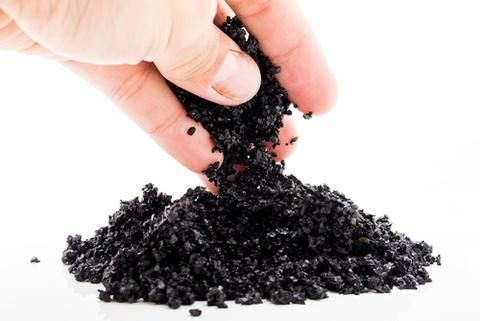
    So, where does carbon come from, I hear most of our clients ask. Carbon is derived from a variety of sources in the water filtration business primarily from coconut shells, wood, or from two minutes coal. We don’t use by two minutes coal quite as much these days because there have been arsenic trace elements of arsenic found in the mining process of bitumen coal.
     
    Coconut shell is, is widely used for a couple of reasons. It is a very renewable resource, and two, it lends itself very well to water filtration, and wood products. They’re used, but not quite as much in our business carbon filters come in various forms. They come in a granular form, which gives us the advantage of flow rate.
     
    A granular carbon filter has just like, it sounds granular carbon inside. The beauty of that is water can flow through that without a lot of resistance. What is a carbon block? And this one has a little more capacity than the granular because we’ve ground it down to a fine natural green of carbon, but because it’s in a block form, the water flow has some resistance.
     
    So the water flow is a little bit restricted as opposed to a granular one. But we gain a lot more surface area. So the capacity of a block is quite a bit higher than a granular filter in the same configuration. From there, we go to a radio flow carbon, which is kind of a mix between the two, typically a granular filter.
     
    The water has to flow all the way to the bottom and up through the media, inside the cartridge. And it flows out the top where a carbon block is. But water flows through the media all the way down. This is called radial flow. We’ll imagine if we can create a filter that combines the granular capacity and floor rate benefits of granular with the radio flow of a block.
     
    This gives us a lot more capacity than a typical granular, and it gives us a four-rate benefit. Now, this is only available in a Whole House Water Filtration System, but it has so many advantages over the standard configurations. So carbon one is the first ground that has a certain amount of surfaces.
     
    And then, we go through an activation process by using heat or steam that opens up the pores of that carbon granule. One gram of activated carbon actually has 500 to a thousand square feet of surface area. That’s enormous. And the finer you grind the carbon, the more surface area is created.
     
    Particular capacity would be like the parking lot down at the mall, but it’s only got one floor. Now we’re going to add in the grind. Even finer, and we’re going to compress it into a block, we’ve just added about four floors to that parking structure and expanded the capacity. The interesting thing about carbon capacity, however, is it has only so many parking spots.
     
    So if like at Christmas time, when you go to the mall, and you drive around and around and around and never find a place to park, will you pull back out on the street and go on about your business? The same thing happens with cars. If, if all of the surface areas are exhausted, and there’s a car parked in every one of those spaces, the stuff you’re hoping to filter out will travel right on through.
     
    So it’s imperative with carbon capacity that you make sure you change the filters in your Jila Water Whole House Water Filtration System, or you change the media before it runs full of material. So, what is it that carbon can remove from water? Well, it’s a pretty big list. Carbon takes care of things that are organic in nature are things like volatile, organic compounds.
     
    The biggest one is chlorine. Carbon is used more widely for Cory reduction than anything else. Now, a lot of local councils have started to go to Cora mean for disinfection. Well, it takes a little bit more contact time with the carbon. Chloramines out of the core mean there is a chlorine ammonia compound. And it takes a long time with carbon to separate that so that they can get each independent element out.
     
    So we use a product called catalytic carbon and this carbon. Like a coating on it, that enhances the adsorption function. And it’s really good for getting out chloramines, but the list goes on for carbon filtration, volatile, organic compounds, a lot of chemical things that get put in the water from pesticides or herbicides fall into those lists.
     
    That carbon is a Filter media to get rid of those things. Now there are some things that carbon on its own will not get out. For example, Wed, it takes a little bit of a blended material blended in with the carbon to reduce, let, and will. As long as that formula is in there, they can be quite good at getting led out of the water.
    Uh, things like arsenic, not so much dissolved inorganic minerals. Not so much, those things saw a sail right through the carbon without any reduction whatsoever, but carbon on its own can do so much. It does a lot, but to get out certain other elements that fall into the mineral category, it needs a little help.
     
    And that comes in a, in a manner of a blend that goes in with the carbon. A carbon filter typically does not make a good sediment filter and sediment. It doesn’t have anything to do with taste Notre reduction. So if you have a sediment problem, you will also find our Whole House Water Filtration Systems uses a sediment filter to protect your carbon so that the carbon capacity can get used up the way it’s supposed to.
     
    Granular filters don’t act as good sediment filters either. Um, a whole house carbon up-flow carbon or a backwash and carbon is going to have about a mesh of 25 microns. It’ll capture some dirt and debris, but that’s not a good purpose. That’s not the best application for carbon. So, where do I use carb?
     
    It’s all over the place. Carbon is used in every reverse osmosis system we sell and also, of course, our Whole House Water Filtration System. Residential that is carbon is used in Whole House Water Filtration System. Carbon is used standalone in some of our client’s homes. There are a variety of places to use the carbon filter, uh, the refrigerator door or the refrigerator filter.
     
    So all over the place, we’re using carbon to filter drinking water., the little filter in the cheap pitcher you buy from Bunnings will also have carbon. When used in a system like reverse osmosis, or a Whole House Water Filtration System, it’s doing multiple things is getting rid of chemicals. It’s getting rid of chlorine to protect downstream like reverse osmosis is protected that.
     
    If the membrane sees chlorine, it’ll get destroyed. So the carbon plays a big, big role in that type of a system in a USF system, or Whole House Water Filtration System the carbon is doing a couple of things. It’s helping get rid of chlorine to protect the membrane. It’s also where lead gets reduced. As some of these systems are rated for led reduction.
     
    That carbon is doing that with the blend that, that additive. And then the ultrafiltration membrane, which is typically a tiny little hole of fiber, kind of like a microscopic noodle, that’s going to mechanically filter all of the dirt and debris that gets down to 0.02, five microns. So carbon is used with a conjunction in all kinds of different systems, almost across the board in Waterfield.
     
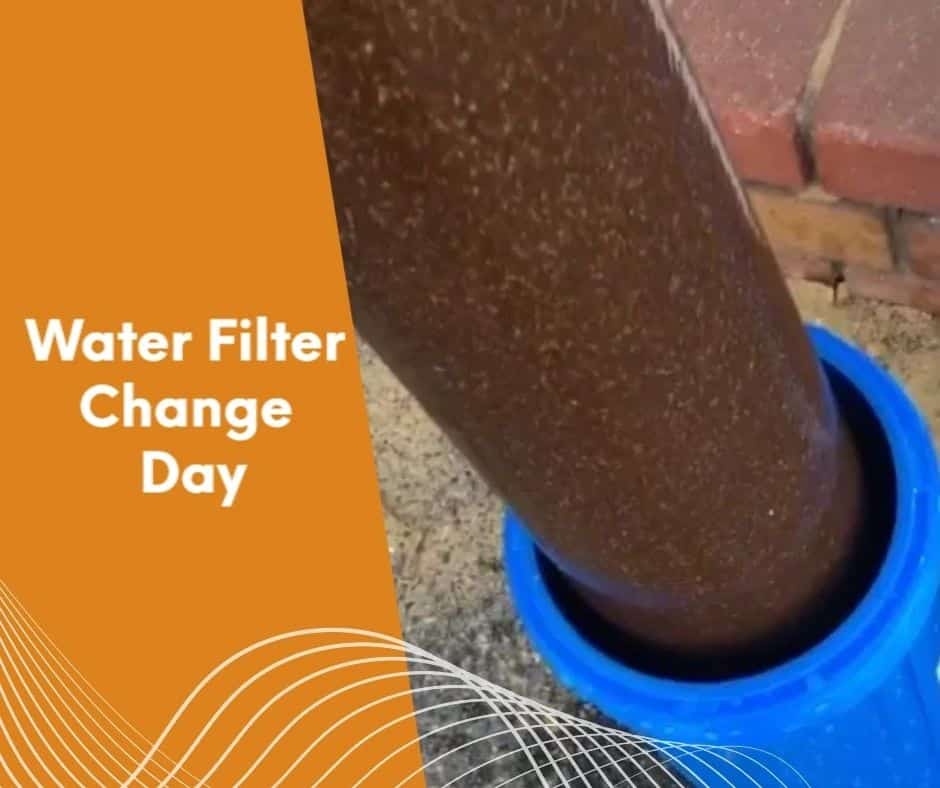
    The Carbon filters in our Whole House Water Filtration System are incredibly effective at the taste and odor reduction with additives. They can get involved with some other materials, some other minerals, or chemicals. But the question is, how often do I replace them? How long do they last? You should always replace them at least once a year. And here’s why the carbon with all of its parking places are collecting these organics.
     
    And over time as those parking places, Once they get occupied. There’s going to be a time when there’s no more place for an organic to set down, and it could possibly start to break pieces off that had been parked there for quite some time. And the end result of that is that you have water coming out of that filter.
    That’s actually worse than the water going. So it’s very important that carbon filters get replaced on an adequate basis and that an adequate basis is going to be based on several variables so please speak to our water techs about your Brisbane home needs.
     
    And that’s really the pro and con look at carbon filtration that’s found in our Whole House Water Filtration System. The pro is it does enormous, wonderful things to reduce tastes and odors. The con is if you don’t replace it adequately enough about every 12 months. So each application can present its own calculation on how long a filter should last.
     
    As always should you have any other questions or would like to have us come and test your home’s water, please book a free water test today from our website
    Share this post