Tag: Drinking Water

  • Debunking 6 of the Most Common Drinking Water Myths

    Debunking 6 of the Most Common Drinking Water Myths

    Why Use a whole home water filter system

    Debunking 6 of the Most Common Drinking Water Myths

    Myth #1: Distilled Water Is Pure

    Some may wonder, “how much water should I drink?” or “how many litres of water should you drink a day?”. But really, the more important question is, “Is the drinking water available in your home safe?”. How can you drink more water if the one readily available is unhealthy?

    Let’s go back to the basics and break down the truth about your drinking water.

    Water is the key to human survival. Humans can live for a month or two without food. But without water, a human’s lifespan dwindles to three days.

    Since water is essential, different types of water and at-home water filtration systems have sprouted in the market. As the number of these products rises, the water myths also increase are some filtered water myths you probably believed at some point.

    Myth #1: Distilled Water Is Pure

    The Truth: Yes, distilled water is pure water. But it’s also water without any minerals.

    Drinking water that is distilled has loads of benefits. Distilling involves boiling the water, which separates the water from the contaminants. The water vapour passes through a cooling coil, condensing into liquid form. This process occurs multiple times until most of the impurities are removed.

    The science behind the distillation process is outstanding. But what it’s left with is only water, no minerals.

    Myth #2: Bottled Water Is Cleaner, Healthier, and Safer Than Tap Water

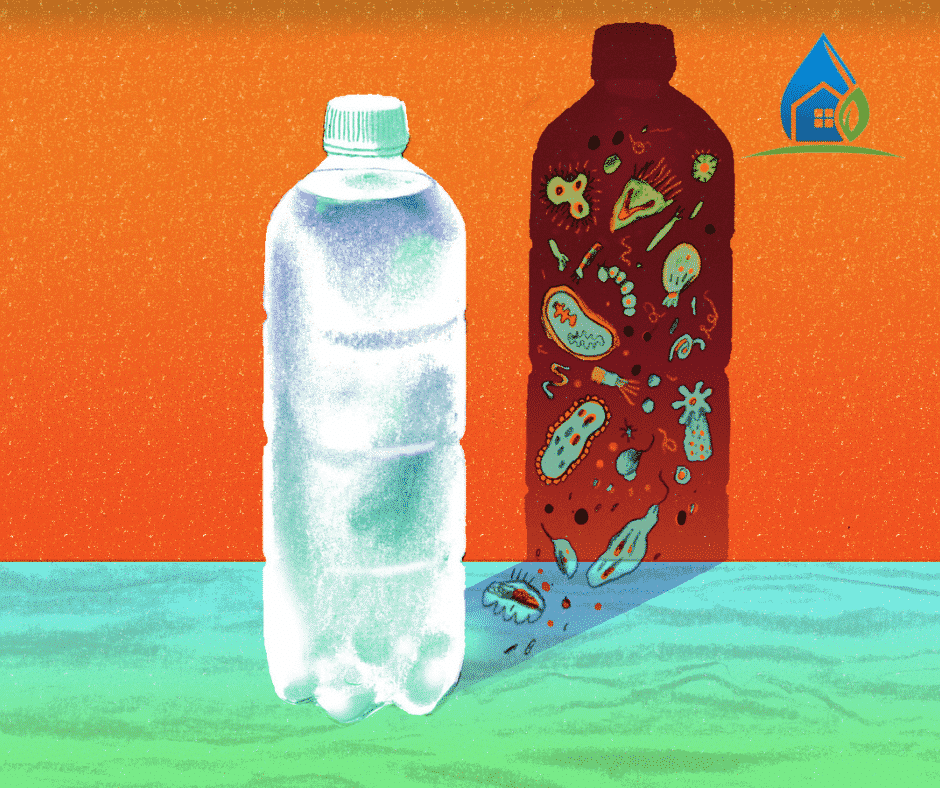
    The Truth: Bottled water companies proudly display their water’s purity, stating that they are free of chemicals, pesticides, viruses, and bacteria. But it has been proven that bottled water and tap water are comparable

    The Department of Health monitors Australia’s tap water quality. On the other hand, the Australian Beverage Council oversees bottled water quality and distribution. Both agencies use a similar water quality standard. Therefore, you may not be better off with the cap than the tap.

    Why Filtered Water is Better than bottled water
    All Water Is Safe to Drink or is it?

    Myth #3: Reverse Osmosis Water Is as Healthy as Distilled Water.

    The Truth: Reverse osmosis is a type of water filtration process. It involves putting water through a semipermeable membrane that selectively stops large and small molecules. The bigger molecules stay on one side, while the smaller ones pass on to the other.

    It has been proven to remove most contaminants from your drinking water, but the water loses essential minerals. However, the minerals can be added back to the water.

    Myth #4: All Water Is Safe to Drink

    The Truth: According to the World Health Organisation, most water sources are polluted. That is why the water that goes into people’s taps is treated and heavily regulated to ensure that it’s safe to drink.

    Freshwater treatment, for example, is a four-step process. It involves water screening, the chemical removal of fine particles (flocculation), the mechanical removal of larger particles (filtration), and disinfection with chlorine. It’s important to note that tap water also goes through fluoridation to help improve Australians’ dental health. However, too much fluoride also has health consequences.

    To ensure your drinking water is safe, your home needs to install water filters that effectively remove contaminants.

    Myth #5: Pitcher Filters Remove the Fluoride from Tap Water.

    The Truth: It’s possible to reduce fluoride in tap water significantly. However, you need to have the right filter for the job.

    Some of the most prominent pitcher filters use activated carbon to absorb contaminants in the water. It can remove trace metals, chlorine, pesticides, and other organic compounds. But to remove fluoride, it must undergo a reverse osmosis system—something that pitcher filters don’t have.

    Myth #6: Home Water Filter Systems Are Not Important.

    The Truth: You can live without a water filter at home, but having a filter system can significantly improve your quality of life. Aside from its many health benefits, a water filter system can give you peace of mind knowing that you are drinking perfectly safe water.

    Yes, you can use a pitcher filter to filter your water. But only a home filtration system can remove the fluoride from the water. Drinking out of a tap that supplies filtered water is more convenient.

    There are many myths surrounding water types, treatments, and filtration systems. You should equip yourself with the proper knowledge to steer clear of misinformation. Drinking clean and safe water is essential to life, and knowing how to discern truth from fiction can help you do that.

    Jila Water is a company that supplies some of the best home water filter systems in Brisbane. Our multi-stage filtration system removes contaminants and fluoride to give you and your family pure drinking water every time. Call us today to learn more!

    Need a simple solution to your home’s water needs? Book your free water test today.

    Share:

    Facebook
    Twitter
    Pinterest
    LinkedIn
    On Key

    Related Posts

    The Importance of Water Testing & Identifying Contaminants

    Water testing helps Brisbane and SEQ homeowners understand what may be affecting their tap, tank or bore water before choosing a filtration system. This guide explains common contaminants, water quality warning signs, and when to book a free Jila Water home water assessment.

  • What Are the 5 Common Contaminants in Unfiltered Brisbane Water?

    What Are the 5 Common Contaminants in Unfiltered Brisbane Water?

    Brisbane & SEQ Water Filtration Guide

    What Are the 5 Common Contaminants in Unfiltered Brisbane Water?

    Brisbane and South East Queensland tap water is treated and monitored, but many homeowners still want to reduce the things that can affect taste, smell, shower comfort, plumbing, appliances and everyday water quality once water travels through the network and into the home.

    The five biggest water concerns Brisbane homeowners ask us about are disinfectant taste and smell, disinfection by-products, sediment and pipe particles, hardness minerals and scale, plus emerging trace contaminants such as PFAS.

    Brisbane BasedLocal SEQ water knowledge
    Licensed InstallProfessional plumbing pathway
    Every TapKitchen, showers, bathrooms & laundry
    Premium FinishBuilt to look worthy of the home
    The Real Problem

    Most homeowners do not start with contaminants. They start with how the water feels.

    Your water might be treated, but it can still taste chemical, smell stronger in the shower, leave residue, or carry sediment from the network and household plumbing.

    Common signs Brisbane homeowners notice

    • Chlorine or chemical smell from taps and showers
    • Water that affects the taste of tea, coffee and cooking
    • Dry-feeling skin or hair after showering
    • Scale or residue around taps, glass and fixtures
    • Cloudy, discoloured or gritty water after pipeworks
    • Concerns about older plumbing and what is travelling through the home

    This is where Complete Home Filtration is different. Instead of treating water at only one outlet, a whole home system is installed before water reaches the key areas of your property.

    Balanced & Evidence-Based

    Is Brisbane tap water treated?

    Yes. Brisbane and South East Queensland water is treated and monitored before it is supplied to homes. Public water treatment is important because it helps protect water as it travels through dams, treatment plants, mains infrastructure and local pipe networks.

    But treated water and filtered water are not the same thing.

    Treated water is designed to meet public health requirements across a large supply network. A home filtration system is designed to improve the water experience inside your own property — including taste, smell, sediment reduction, shower comfort and broader household water use.

    That is why many Brisbane homeowners are now looking beyond basic tap filters and exploring complete home filtration systems that filter the water they actually live in every day.

    Helpful authority sources

    For transparency, Jila Water recommends homeowners look at official water quality resources alongside any home filtration advice.

    The 5 Main Concerns

    5 common contaminants and water quality concerns in unfiltered Brisbane water

    This is not about fear. It is about understanding what can affect the water you drink, shower in, cook with, clean with and run through your home every day.

    1

    Chlorine and chloramine disinfectants

    Disinfectants such as chlorine and chloramine are used in treated water systems to help control microorganisms and maintain water quality through the network. The issue for many homeowners is the remaining taste, smell or chemical feel once that water reaches the home.

    You may notice a chlorine-like smell from showers, a chemical taste in drinking water, or water that affects tea, coffee and cooking. A single tap filter may help at one outlet, but it does not address the water used in bathrooms, laundry or showers.

    TasteSmellShowersEveryday use
    2

    Disinfection by-products

    Disinfection by-products can form when disinfectants interact with natural organic matter in source water. Common examples include trihalomethanes, often called THMs, and haloacetic acids, often called HAAs.

    Disinfection is essential for public water safety. The more practical question for homeowners is whether they want to reduce residual disinfectants and associated by-products at the point where water enters the property.

    THMsHAAsWater chemistryHome entry filtration
    3

    Sediment, rust and pipe particles

    Even treated water can pick up particles as it travels through mains infrastructure, local pipe networks and household plumbing. Sediment may also appear after water main works, plumbing repairs, pressure changes or disturbances in the network.

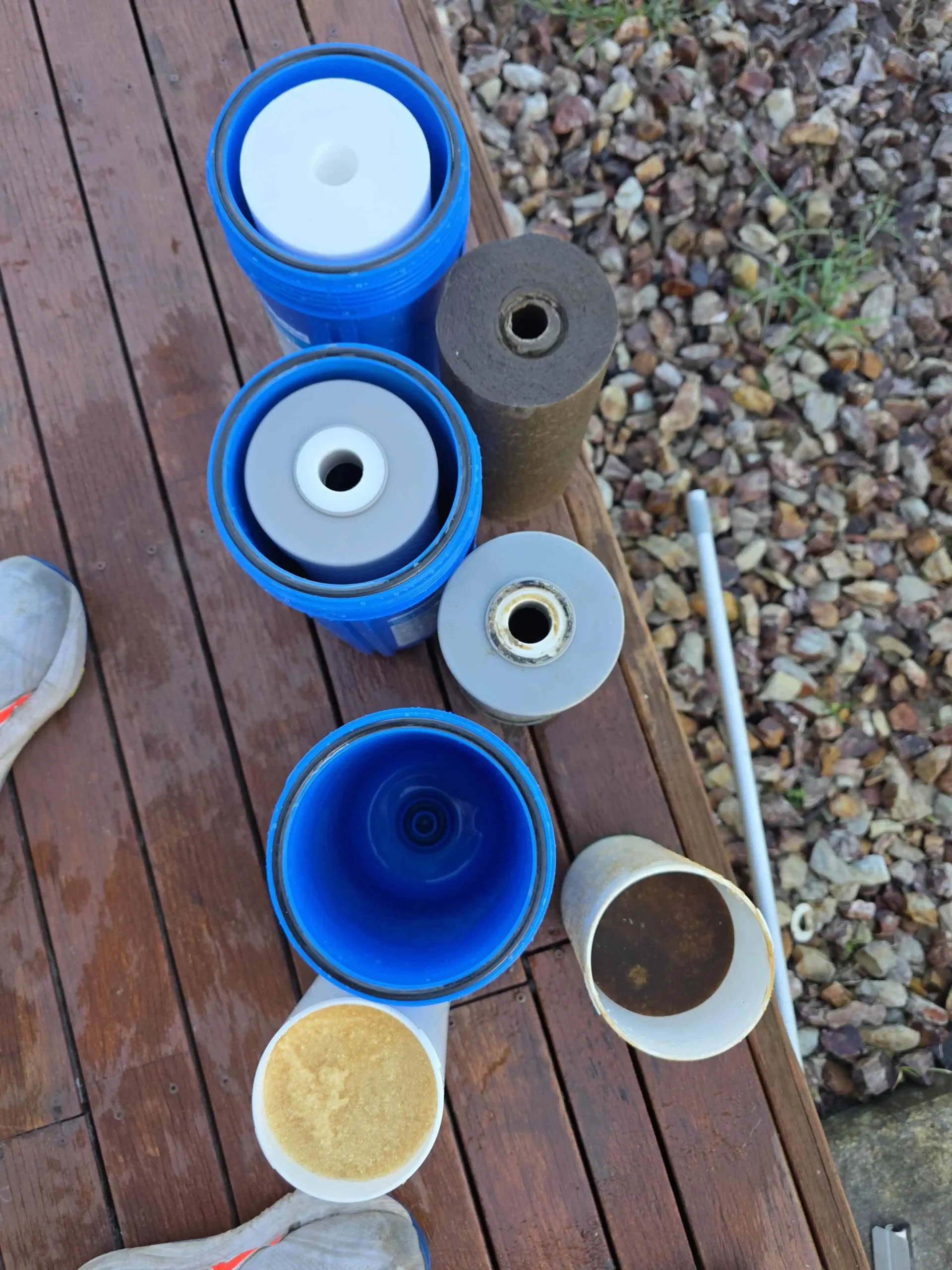
    Homeowners may notice cloudy water, grit in tap aerators, staining around fixtures, or dirty pre-filters during replacement. Sediment is one of the most visible reasons homeowners choose a whole home water filtration system.

    SedimentRustPipe particlesFilter proof
    4

    Hardness minerals, scale and residue

    Water hardness and dissolved minerals can contribute to scale, residue and build-up around household fixtures and appliances. In Brisbane and SEQ homes, this may show up as white marks on shower glass, build-up around taps, reduced soap lather or residue in kettles and appliances.

    Jila Water systems can include a water conditioning stage designed to support better water feel and reduce scale-related issues throughout the home. This is especially useful for homeowners who want more than just drinking water filtration.

    ScaleResidueAppliancesWater feel
    5

    PFAS and emerging trace contaminants

    PFAS are often called “forever chemicals” because they are persistent in the environment. They have been used in a wide range of industrial and consumer products and are now part of broader public discussion around water quality in Australia.

    Unlike chlorine taste, sediment or scale, PFAS cannot be seen, tasted or smelt. That is why homeowners concerned about PFAS and other emerging contaminants need to look carefully at system design, filtration media, flow rate and testing context.

    PFASEmerging contaminantsMedia selectionAssessment first
    Not Just One Tap

    Why whole home filtration is different from tap, fridge or shower filters

    A small filter can help one outlet. A complete home filtration system is designed to improve water across the property.

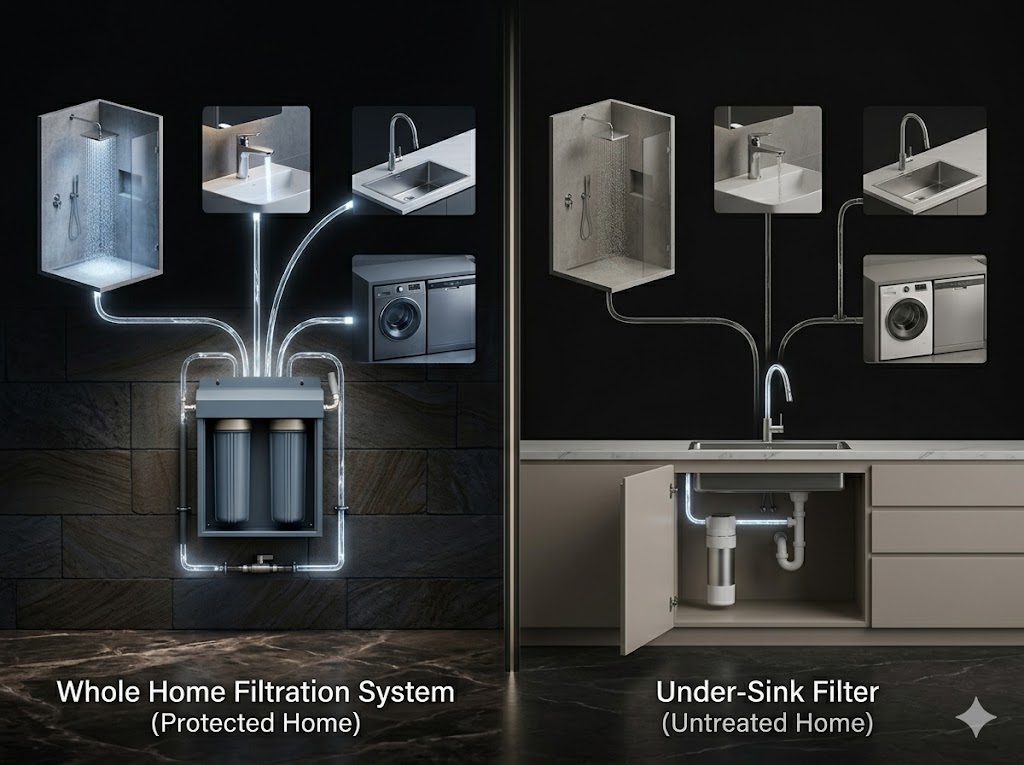
    Many homeowners start with a small filter because it feels simple. A benchtop filter, fridge filter or under-sink filter can help with one outlet, but it does not treat the water used throughout the rest of the home.

    That means unfiltered water may still be used in showers, bathroom taps, baths, laundry, cleaning, connected appliances and outdoor taps where applicable.

    Under-sink filter

    Can improve water at one kitchen tap, but does not filter shower water, bathroom water, laundry water or other outlets.

    Shower filter

    Can help one shower, but does not address drinking water, bathroom taps, laundry, kitchen use or whole-home sediment concerns.

    Fridge filter

    Useful for fridge water and ice, but limited to one appliance and usually not designed for whole-home flow rates or broader household use.

    Bottled water

    May help with drinking water convenience, but it does nothing for showers, cooking, laundry, appliances or plumbing — and it adds ongoing cost and plastic waste.

    Real Home Benefits

    Benefits for Brisbane and SEQ homes

    Complete home filtration is about more than drinking water. It is about improving the water experience across the whole property.

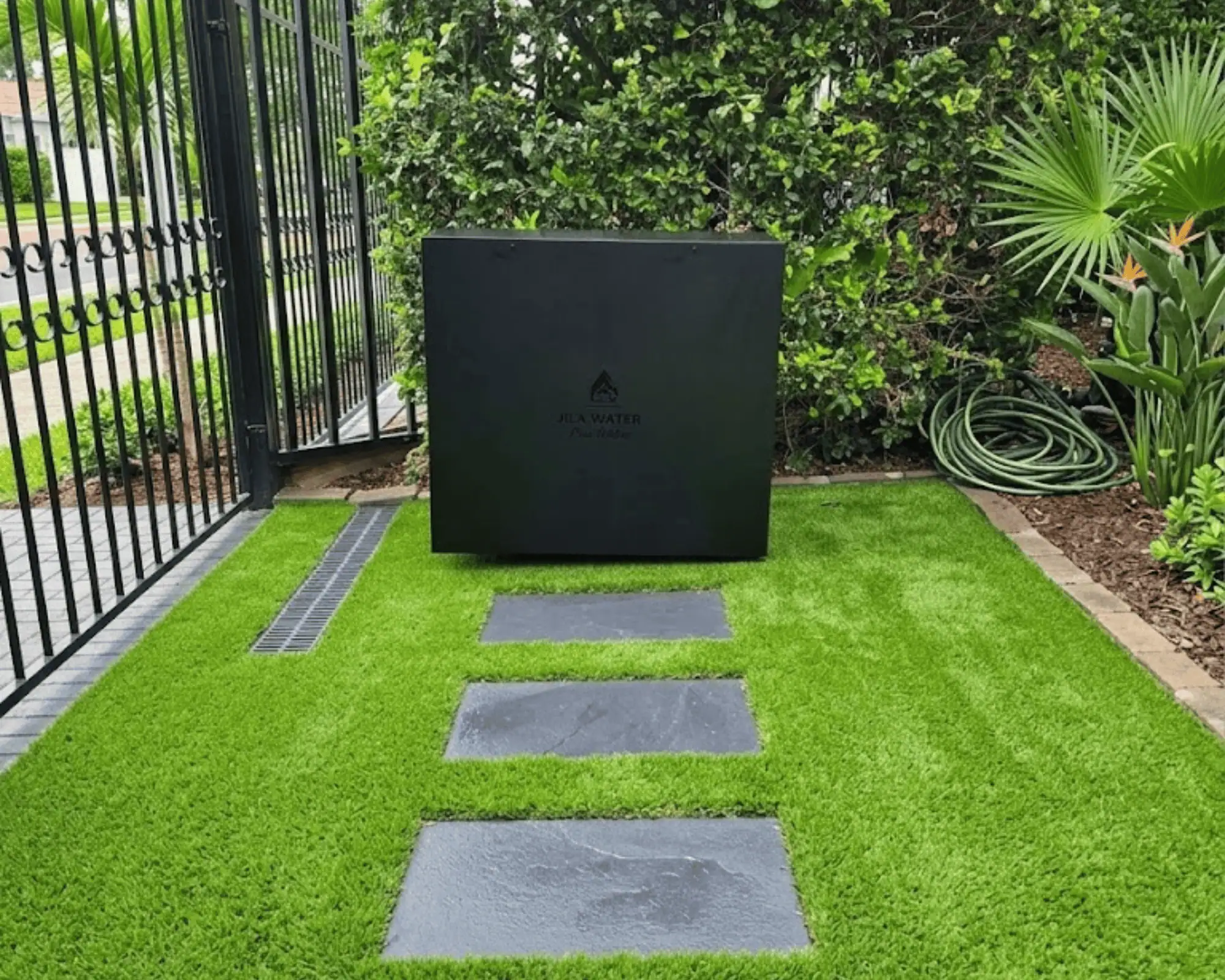
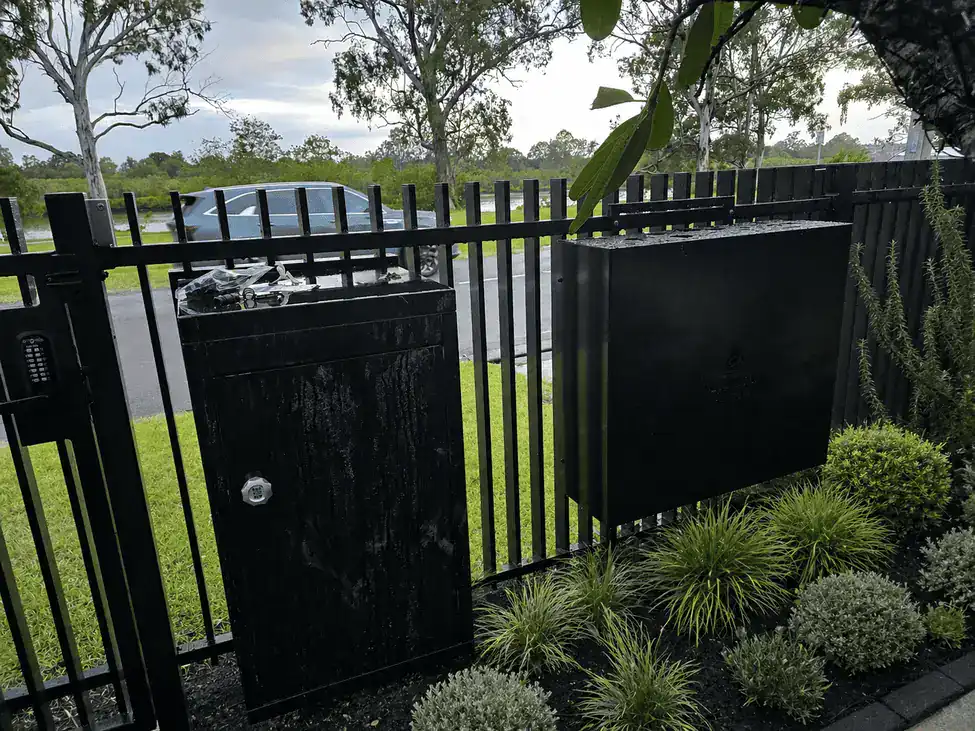
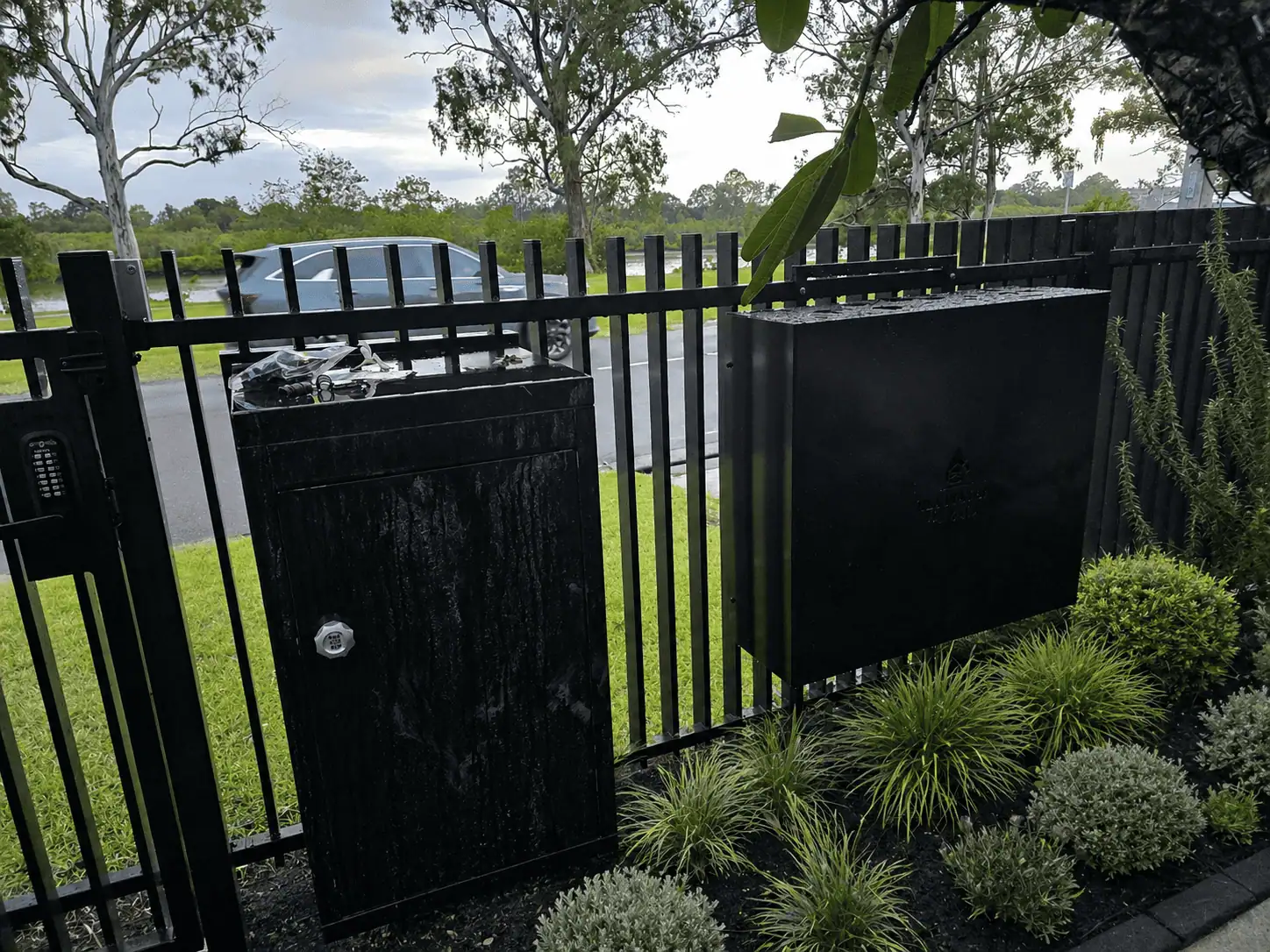
    Black Jila Water complete home filtration system installed for a Brisbane home
    Premium installed finishA complete home system should look intentional, not like an afterthought bolted to the side of the house.
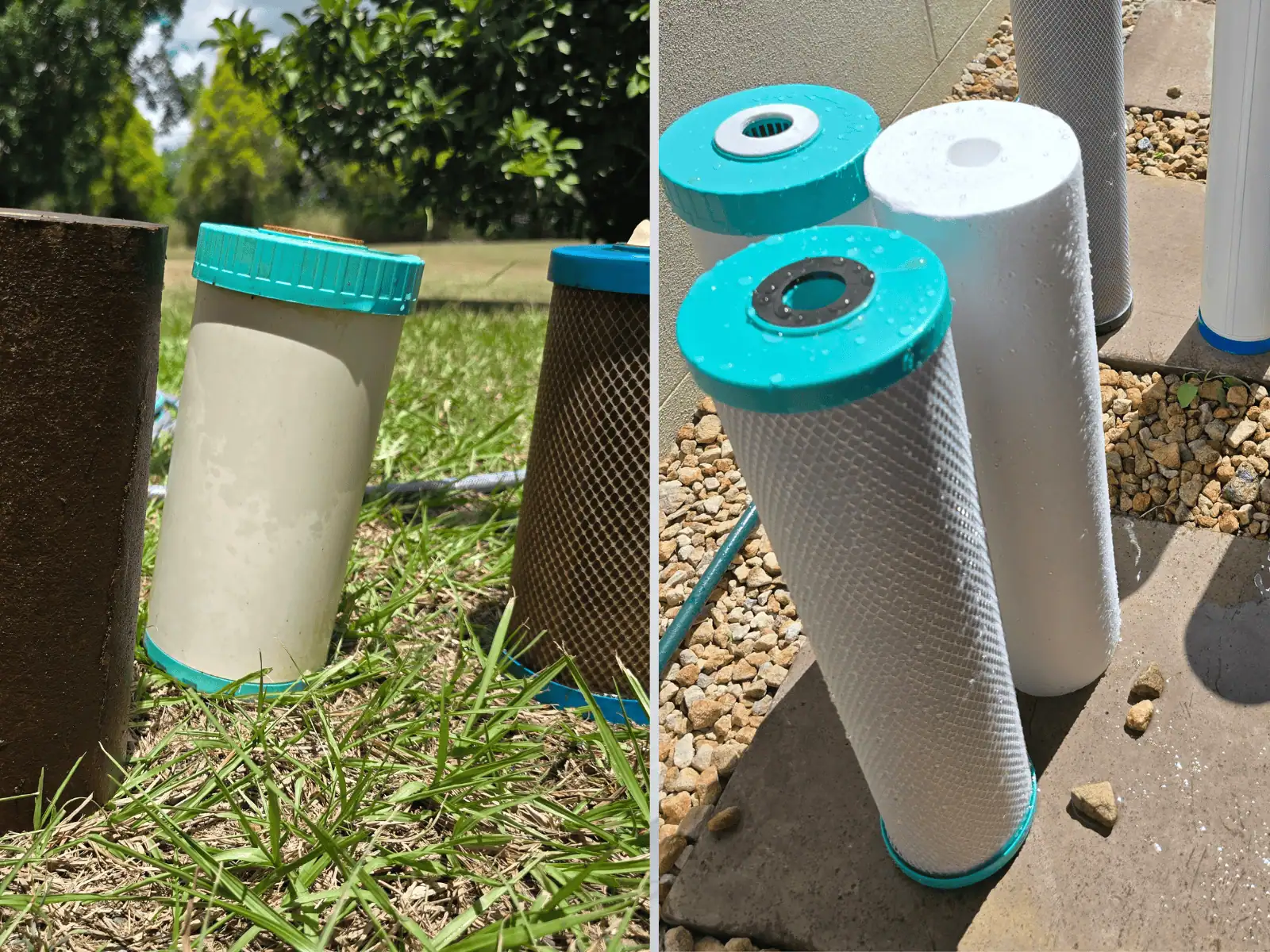
    Used whole home water filter showing sediment captured from Brisbane household water
    Visible filter proofFiltration can help capture particles and build-up before they continue through taps, showers and appliances.
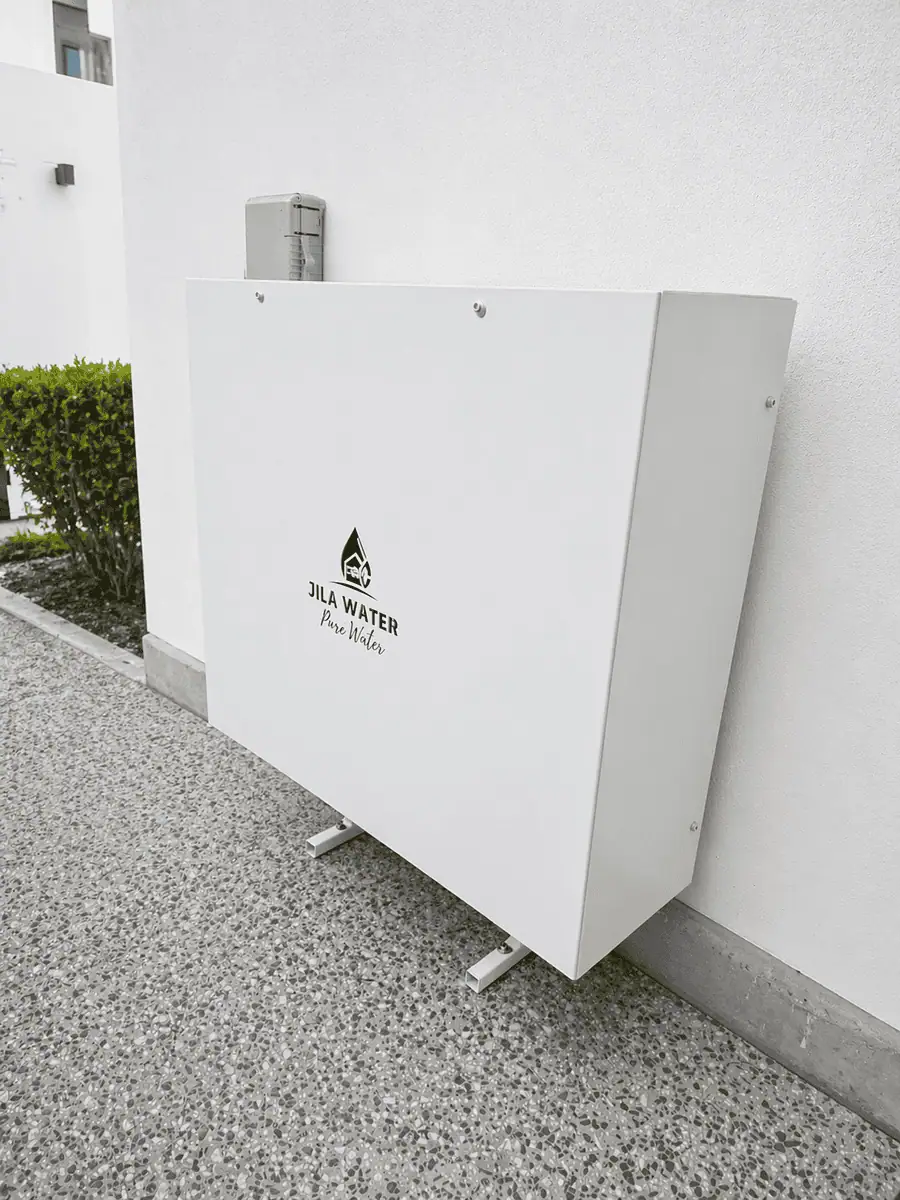
    Jila Water premium colour matched complete home filtration housing for Brisbane homes
    Colour-matched optionsBecause premium filtration should suit the home visually as well as technically.

    What homeowners often want to improve

    • Better tasting water from the taps they already use
    • Reduced chlorine or chemical smell in showers and bathrooms
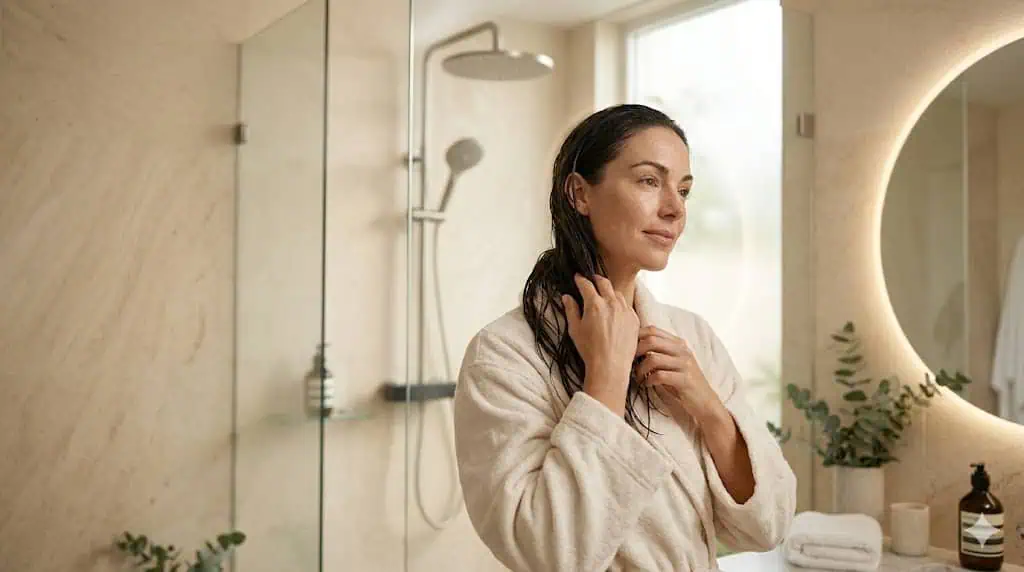
    • More comfortable showering for skin and hair feel
    • Reduced sediment and particles before water moves through the home
    • Support for plumbing fixtures and connected appliances
    • A cleaner, more premium ownership experience than small add-on filters
    Why Jila Water

    Premium complete home filtration, installed by a local Brisbane specialist.

    Jila Water is not just an online water filter seller. We are a Brisbane-based whole home water filtration specialist supplying and installing complete home filtration systems across Brisbane and South East Queensland.

    We design filtration around real homes, real water concerns and practical installation requirements — not generic online filter kits.

    • Premium whole home filtration system design
    • Local Brisbane and SEQ water knowledge
    • Professional installation by licensed plumbers
    • Filtration before water reaches the whole home
    • Premium system housing and installation finish
    • Free Home Water Assessment
    • Replacement filter support
    • After-sales support from a local team
    Jila Water complete home filtration system for Brisbane homes
    Designed for the way your home actually uses water.Kitchen, bathrooms, showers, laundry and outdoor taps where applicable.
    Simple Next Step

    Our simple 4-step process

    You are not booking a hard sell. You are booking clarity on what is coming through your taps and what system actually suits your home.

    1

    Book your Free Home Water Assessment

    Tell us what you are noticing with your water and what you want to improve.

    2

    We assess your home and concerns

    We look at water use, plumbing layout, access, installation location and priorities.

    3

    We recommend the right system

    You get clear advice matched to your home, not a generic one-size-fits-all pitch.

    4

    Licensed installation and support

    Your system is professionally installed, with filter replacement and ownership support.

    FAQ

    Frequently asked questions about unfiltered Brisbane water

    Is unfiltered Brisbane water unsafe?

    Brisbane and SEQ tap water is treated and monitored. However, many homeowners still choose filtration to improve taste, smell, sediment reduction, shower comfort and overall household water quality.

    What are the most common water concerns in Brisbane homes?

    Common concerns include chlorine taste or smell, sediment, pipe particles, scale, hardness minerals, disinfection by-products and emerging contaminants such as PFAS.

    Does a whole home water filter work for every tap?

    A complete home filtration system is installed at the entry point of the home so it can filter water before it reaches key areas such as the kitchen, bathrooms, showers, laundry and outdoor taps where applicable.

    Is whole home filtration better than an under-sink filter?

    It depends on your goal. An under-sink filter can help one kitchen tap. Whole home filtration is designed to improve water throughout the property, including showers, bathrooms, laundry and other outlets.

    Can whole home filtration help with chlorine smell?

    Yes, the right filtration media can help reduce common chlorine taste and odour concerns. A whole home system addresses water before it reaches showers and taps throughout the home.

    How often do filters need replacing?

    Filter replacement depends on system size, household water use and local water conditions. Jila Water can recommend the right replacement schedule during your Free Home Water Assessment.

    How much does a complete home filtration system cost in Brisbane?

    Cost depends on your home, system size, installation location and water concerns. The best starting point is a Free Home Water Assessment so Jila Water can recommend the right system for your property.

    How do I book a Free Home Water Assessment?

    You can book directly with Jila Water online. We will assess your water concerns, home layout and installation options, then recommend the most suitable complete home filtration system.

    Book Your Free Home Water Assessment

    Find out what is really coming through your taps.

    If you are concerned about unfiltered Brisbane water, chlorine smell, sediment, scale, dry-feeling showers or what may be coming through your plumbing, Jila Water can help you understand your options.

    Local Brisbane specialist. Premium complete home filtration. Licensed installation. Better water from every tap.

    On Key

    Related Posts

    The Importance of Water Testing & Identifying Contaminants

    Water testing helps Brisbane and SEQ homeowners understand what may be affecting their tap, tank or bore water before choosing a filtration system. This guide explains common contaminants, water quality warning signs, and when to book a free Jila Water home water assessment.

  • Filter vs Tap Is Drinking Filtered Water Safe for Children

    Filter vs Tap Is Drinking Filtered Water Safe for Children

    Filter vs Tap Is Drinking Filtered Water Safe for Children

    A regular person cannot live for longer than five days without water. A person cannot maintain body temperature without water, which may result in dehydration. While it may be manageable for adults, children can be prone to more severe consequences.
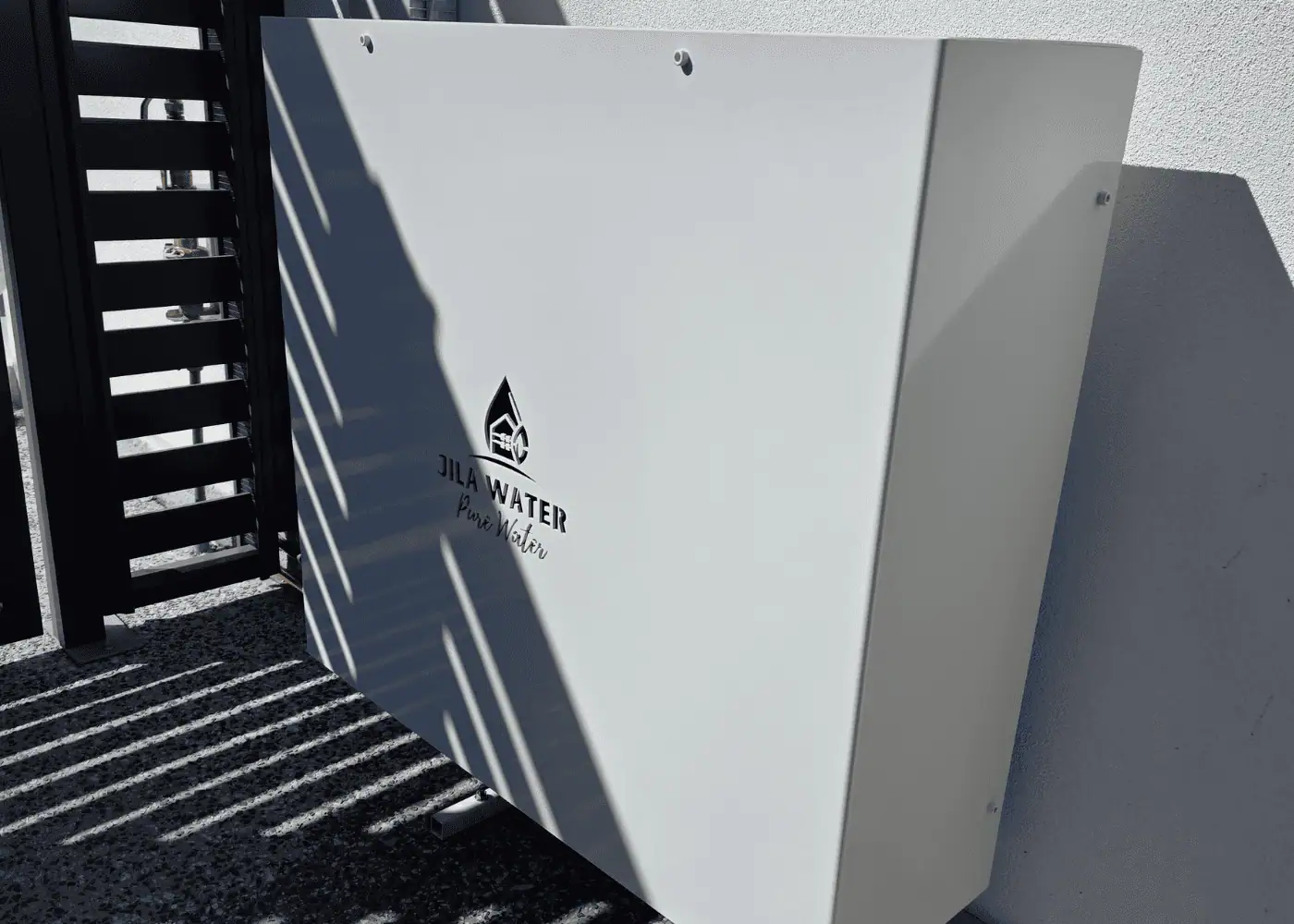
    Although tap water is safe for children, filtered tap water is much preferable. Part of it is due to the water source’s location. For this reason, where it’s found has a significant impact on the quality of accessible drinking water.
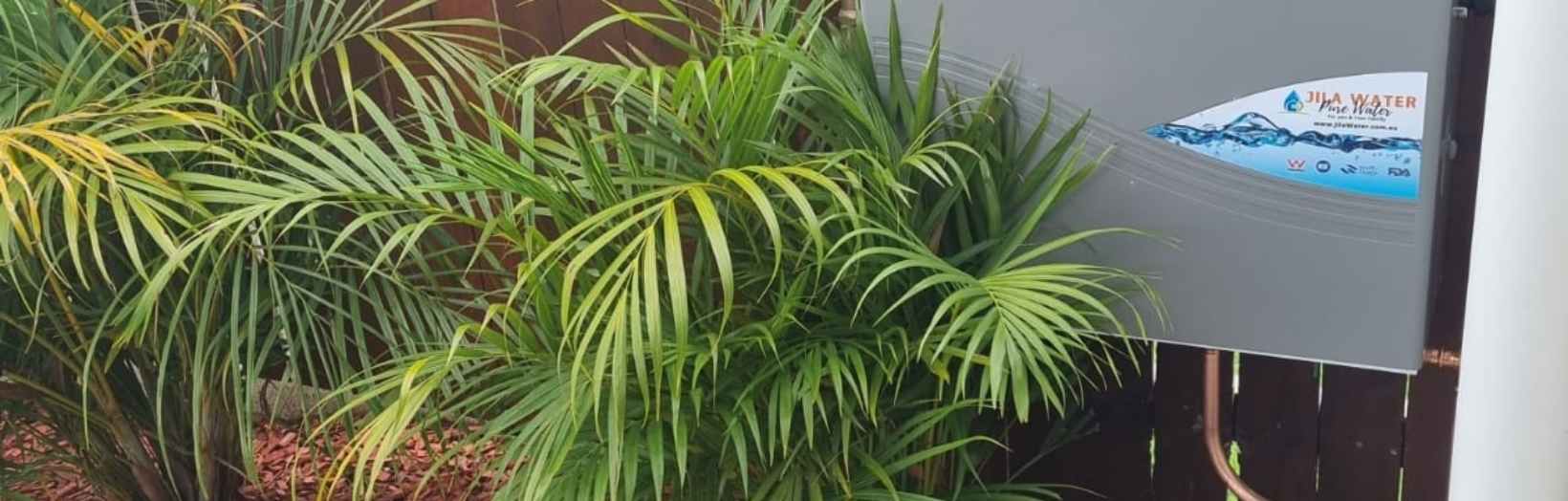
    What’s the Danger with Tap Water?

    You have to be cautious about your water intake since there is a recent discovery that showed tap water contains microplastics. As such, drinking from tap water directly is not recommended for babies less than six months.

    Depending on the environment, many procedures and treatments may be employed to treat water. For example, boiling minimises the likelihood of sickness caused by contaminated water.

    For this reason, it’s necessary to bring the water to a boil when making milk formula. This procedure simply eliminates bacteria from the water. However, boiling doesn’t remove other pollutants in the water. This is why installing water filters is an excellent way to remove impurities, including chemicals, germs, radioactive particles, etc.

    Untitled-design-21-opt

    Why Does Water Need Filtering?

    UV Light Treatment, Reverse Osmosis Filtration, and Filtration Process are standard procedures used in in-house filtration systems. Sedimentation, disinfection, flocculation, and other filtering procedures are used to cleanse water.

    Water purification using filters may eliminate pollutants and impurities that might be dangerous to children. It also alters the flavour of water, which might be unpleasant due to chemicals or organic materials. Various filter systems, such as iron water filters or reverse osmosis systems, may be installed in-house to purify tap water further.

    Don’t take any risks with your kids’ health! They have the potential to be more susceptible than adults. Provide them with safe, filtered drinking water to reduce the chance of infection. However, make sure you obey the requirements and keep the water filtration system in working order.

    Why Should Every Family Use Only Filtered Water?

    Children should consume a diet rich in fruits and vegetables, low-fat meals, and regular exercise to ensure their health. To maintain good health, children must have access to safe drinking water that doesn’t contain any toxins that might hurt them. It’s hard to think of anything more essential than protecting the health of our children and grandchildren.

    Filtered drinking water has several benefits for your family. This includes the following:

    Removal of Lead Content through Filtration

    When taken in large amounts, lead has been shown to have harmful effects on human health. Thankfully, a filtration system gives an additional degree of protection to guarantee the removal of dangerous lead particles from the public water supply.

    Big Improvement in Taste

    An effective water filtration system removes many toxins in your water that treatment facilities may have overlooked. Those who like water that tastes cleaner and purer are more likely to drink it. They will prefer drinking water instead of sugary soda if your kids like its taste.

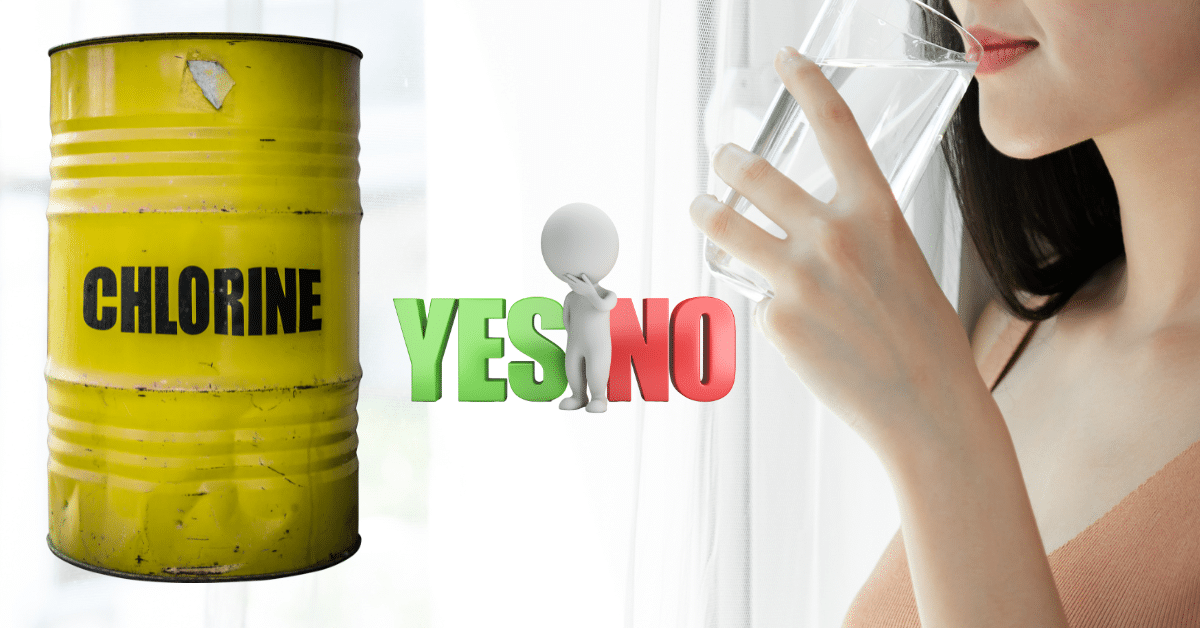
    Chlorine is also removed from drinking water using water filters. Chlorine is the most common cause of a bad taste in municipal water. The water tastes better, and the kids are more willing to drink it once it has been treated to eliminate the chlorine.

    Children’s Safety and Wellbeing Is Safeguarded

    Babies and young children are susceptible to the infections and disorders that waterborne contaminants may transmit. With a proper water filter, most harmful toxins are eliminated, ensuring the safety of your family’s youngsters.

    Conclusion


    A high-quality water filtration system has probably been independently tested for your tap water. It would reduce danger and improve long-term health. Because removing all risk is impossible, safety is about reducing risk to a tolerable level. With a water filtration system, you get to invest in a simple and cost-effective way to improve your water and your family’s health.


    You can always discover a filtration system that is simple to set up in your house. However, if you are unsure how to accomplish this, you can always locate specialists to assist you in ensuring that you have better water at home.


    Jila Water is one of the home water filter industry leaders. We can help you install the best water filtration system in QLD, so you can have a sense of peace that you and your family are safe from water contamination. Contact us as soon as possible so that we can organize a free home water testing. 

    Facebook
    Twitter
    LinkedIn
    Pinterest

    The Importance of Water Testing & Identifying Contaminants

    Water testing helps Brisbane and SEQ homeowners understand what may be affecting their tap, tank or bore water before choosing a filtration system. This guide explains common contaminants, water quality warning signs, and when to book a free Jila Water home water assessment.

    On Trend

    Most Popular Stories

    The Importance of Water Testing & Identifying Contaminants

    Water testing helps Brisbane and SEQ homeowners understand what may be affecting their tap, tank or bore water before choosing a filtration system. This guide explains common contaminants, water quality warning signs, and when to book a free Jila Water home water assessment.

  • Is It Possible for COVID-19 to Be Transmitted through Water

    Is It Possible for COVID-19 to Be Transmitted through Water

    Picture of Jila Water

    Jila Water

    Is It Possible for COVID-19 to Be Transmitted through Water

    Facebook
    Twitter
    LinkedIn

    COVID-19 is a potentially fatal disease caused by a virus. Since we are still in the middle of a pandemic, it is understandable that many people are concerned about their well-being. After all, the virus can spread easily without proper precautions. It is of utmost importance to keep yourself and your family safe from potential infection and transmission by observing the best hygiene practices.


    Since COVID-19 is spread virally, some people are concerned about getting infected through publicly-available methods of obtaining water. In this article, we will discuss the possibilities of the coronavirus spreading through different sources of water in Queensland and Brisbane.

    Whole Home Water Filters and COVID 19

    Lakes, Rivers, or Seas


    Currently, no studies have been conducted regarding the coronavirus’s ability to infect people through lakes, oceans, seas, rivers, and other bodies of water. Pools and hot tubs are regularly checked and maintained. With their existing regulated pH levels and chlorine levels, it is improbable for the virus to survive there.


    Natural bodies of water are not treated, unlike public pools and hot tubs. However, their vastness can make it very difficult for the virus to spread. So if there is possible contamination, the effect of the virus will be reduced significantly and make it unlikely for anyone to be infected.


    If you ever decide to swim in a public pool, lake, or beach, make sure to follow health protocols. This includes sanitising your hands and maintaining a safe distance from the people around you, even in the water.


    Bottled Water vs a filtered water. Whats better

    Bottled Water


    Australian households often prefer bottled water to tap water because it is safer to drink and it tastes better. It is also easier for them to source it too. It is highly unlikely that the coronavirus can be present in bottled water because the water itself comes from an approved source. 


    A manufacturer can only be a water supplier after they meet the applicable central and state quality standards. The water is also placed and sealed in sanitary containers, so the chances of contamination are improbable.


    Tap Water


    If you prefer drinking tap water but are afraid of catching the coronavirus, don’t fret. There is no evidence that suggests the virus can survive in tap water. The water treatment plants responsible for filtering and disinfecting consumable water do their jobs well, so it is improbable for the virus to survive throughout the process. At present, one of the only confirmed methods of transmission is close contact with an infected person.

     

    If you want assurance that the tap water you are consuming is clean and safe during this pandemic, you should consider installing affordable water filter systems. By drinking filtered water, you can put any uneasiness at rest.

    What water filters should be used in COVID times

    Conclusion


    Recent studies show that the coronavirus has not been found in treated drinking water supplies, but the chances of it being transmitted through these are also low. But if you still want to be sure that what you are consuming is safe to drink, you should consider drinking filtered water that has gone through a trusted filtration system.


    The Jila Water System is an all-in-one whole house filtration system specifically designed for Queensland and Brisbane residences. Our affordable water filter systems can meet the unique water needs of all locals. Our current technology helps get rid of chlorine-rich hard water that could potentially cause you any trouble along the way. For inquiries about our products, contact us today.

    Picture of Jila Water

    Jila Water

    Is It Possible for COVID-19 to Be Transmitted through Water

    Facebook
    Twitter
    LinkedIn

    COVID-19 is a potentially fatal disease caused by a virus. Since we are still in the middle of a pandemic, it is understandable that many people are concerned about their well-being. After all, the virus can spread easily without proper precautions. It is of utmost importance to keep yourself and your family safe from potential infection and transmission by observing the best hygiene practices.


    Since COVID-19 is spread virally, some people are concerned about getting infected through publicly-available methods of obtaining water. In this article, we will discuss the possibilities of the coronavirus spreading through different sources of water in Queensland and Brisbane.

    Whole Home Water Filters and COVID 19

    Lakes, Rivers, or Seas


    Currently, no studies have been conducted regarding the coronavirus’s ability to infect people through lakes, oceans, seas, rivers, and other bodies of water. Pools and hot tubs are regularly checked and maintained. With their existing regulated pH levels and chlorine levels, it is improbable for the virus to survive there.


    Natural bodies of water are not treated, unlike public pools and hot tubs. However, their vastness can make it very difficult for the virus to spread. So if there is possible contamination, the effect of the virus will be reduced significantly and make it unlikely for anyone to be infected.


    If you ever decide to swim in a public pool, lake, or beach, make sure to follow health protocols. This includes sanitising your hands and maintaining a safe distance from the people around you, even in the water.


    Bottled Water vs a filtered water. Whats better

    Bottled Water


    Australian households often prefer bottled water to tap water because it is safer to drink and it tastes better. It is also easier for them to source it too. It is highly unlikely that the coronavirus can be present in bottled water because the water itself comes from an approved source. 


    A manufacturer can only be a water supplier after they meet the applicable central and state quality standards. The water is also placed and sealed in sanitary containers, so the chances of contamination are improbable.


    Tap Water


    If you prefer drinking tap water but are afraid of catching the coronavirus, don’t fret. There is no evidence that suggests the virus can survive in tap water. The water treatment plants responsible for filtering and disinfecting consumable water do their jobs well, so it is improbable for the virus to survive throughout the process. At present, one of the only confirmed methods of transmission is close contact with an infected person.
     

    If you want assurance that the tap water you are consuming is clean and safe during this pandemic, you should consider installing affordable water filter systems. By drinking filtered water, you can put any uneasiness at rest.

    What water filters should be used in COVID times

    Conclusion


    Recent studies show that the coronavirus has not been found in treated drinking water supplies, but the chances of it being transmitted through these are also low. But if you still want to be sure that what you are consuming is safe to drink, you should consider drinking filtered water that has gone through a trusted filtration system.


    The Jila Water System is an all-in-one whole house filtration system specifically designed for Queensland and Brisbane residences. Our affordable water filter systems can meet the unique water needs of all locals. Our current technology helps get rid of chlorine-rich hard water that could potentially cause you any trouble along the way. For inquiries about our products, contact us today.

    More to explorer

    The Importance of Water Testing & Identifying Contaminants

    Water testing helps Brisbane and SEQ homeowners understand what may be affecting their tap, tank or bore water before choosing a filtration system. This guide explains common contaminants, water quality warning signs, and when to book a free Jila Water home water assessment.

    More to explorer

    The Importance of Water Testing & Identifying Contaminants

    Water testing helps Brisbane and SEQ homeowners understand what may be affecting their tap, tank or bore water before choosing a filtration system. This guide explains common contaminants, water quality warning signs, and when to book a free Jila Water home water assessment.

  • 3 Reasons Why You Should Cook Food Using Filtered Water

    3 Reasons Why You Should Cook Food Using Filtered Water

    Why You Should Cook Food Using Filtered Water

    3 Reasons Why You Should Cook Food Using Filtered Water

    From washing rice, fruits and vegetables to cooking soup and washing our plates, we are always using water. But with this in mind, did you know that the water you are using can prevent you from serving a healthy and delicious meal?


    Hard water coming directly from your tap can sometimes change the colour, taste and even smell of the food you are trying to prepare. To avoid this, you can use filtered water to make sure that the taste of the drinks and food will not be altered. To help you understand more, here are three reasons why you should cook your food using only filtered water.

    Contaminants Are Present in Hard Water

    You may not know it, but tap water may contain contaminants that can cause the quality of your food to change. Some common pollutants include:

    • Chlorine – Chlorine tastes and smells terrible. It can also dry out your skin and hair. This chemical is usually used to disinfect or treat swimming pools and municipal water supplies. When using chlorine as treatment, water is needed to be filtered out before use to eliminate the pungent smell.
    • Magnesium – Magnesium is what causes tap water into hard water. This is not necessarily hazardous to our health but with great amounts, it may be. Also, this causes buildup in pipes and shortens the lifespan of appliances.
    • Lead – Lead can seep into water supplies from fixtures, solder and lead pipes. When lead is consumed at high levels, it can result in anemia, weakness in the brain and kidney damage.
    • Sulphur – Hydrogen sulphide is a colourless and smelly gas usually found in groundwater and produced by sulphur. When mixed with water, it can have a laxative effect that can lead to excessive diarrhea and dehydration, especially in small children and infants. 

    Your water suppliers may not be able to remove the contaminants in tap water so it’s always best to filter water out to remove impurities that may not be safe for human consumption, especially when taken in high amounts. Plumbing can also cause contamination of your water supply.

    It Has a Purified and Clean Taste

    Some impurities and chlorine can mix into your tap water which is why it has a foul smell and tastes awful. But when you filter your water, the smell and taste can be eliminated, leaving you a cleaner and purified taste.

    Imagine preparing your food and drinks and you use water that contains chlorine. The food you prepare can have the same bad taste and smell. Now if you’re using purified water when cooking rice or pasta, you will notice a creamier texture to your food. Your food will definitely taste better.

    It Retains the Colour and Brightness of Food

    When you use regular tap water contaminated with impurities, you’ll notice that your food, especially the fruits and vegetables lose their bright colours. The reason could be the chlorine present in your water.

    Because remember, chlorine, like bleach can also strip out the natural colours away from whatever food it comes in contact with. And this is especially true for your fruits and vegetables if there are high levels of chlorine present in your water source.

    Conclusion

    Whatever you’re preparing, you may want to consider using filtered water because tap water affects the quality of cooked food. You can always find a filtering system that you can easily install in your home. However, if you are having second thoughts as to how you can do this, you can always find experts to help you make sure that you have healthier water at home.

    Jila Water is one of the industry leaders when it comes to home water filters. We can help you install the best water filtration system in Brisbane, so you can have a sense of peace that you and your family are safe from water contamination. Contact us today so we can schedule a free home water testing.

    Share:

    Facebook
    Twitter
    Pinterest
    LinkedIn
    On Key

    Related Posts

    The Importance of Water Testing & Identifying Contaminants

    Water testing helps Brisbane and SEQ homeowners understand what may be affecting their tap, tank or bore water before choosing a filtration system. This guide explains common contaminants, water quality warning signs, and when to book a free Jila Water home water assessment.

  • 3 Benefits Whole House Water Filter Systems Provide

    3 Benefits Whole House Water Filter Systems Provide

    3 Benefits Whole House Water Filter Systems Provide

    A whole house filter system essentially filters all the water that will be coming into your house. It doesn’t matter whether it’s water you’ll be drinking or water for the toilet. Whatever purpose the water will be used for, the whole house filtration system will remove any debris or contaminants before they can get to you.

    However, some homeowners may still be hesitant to get whole house water filter systems for their homes. The main concern seems to be the potential to reduce the water pressure. However, any significant reduction can be avoided through proper installation. Plus, you will find that the benefits certainly outweigh the cons.

    Environmentally Friendly Whole house water filtration

    Environmentally Friendly

    One of the primary benefits of a whole house water filtration system is its environmental impact. With filtered water running in your home, you can significantly reduce your personal plastic usage. This is because you will no longer need to purchase water bottles. This may not seem that much, but through time the number of water bottles you purchase will add up. And without realizing it, you’ve disposed of many plastic bottles to get clean drinking water. However, with this simple switch to filtered water, you can do your part in saving the environment.

    Cost-Effective

    Whole house water filter systems can also lead to monetary savings. You see, these systems can slow down the wear and tear your plumbing system experiences. This means less damage and, more importantly, fewer repair expenses. Your whole house water filter system can also lengthen the life of some of your appliances that are attached to the plumbing system. And as mentioned above, a whole house water filter also means fewer water bottles to spend on.

    Healthier

    With a whole house water filter, you’ll no longer need to worry about drinking contaminated water. Since the filter system makes sure to remove any contaminants, you’ll have easy access to safe drinking water.

    But aside from the water you drink, you also have to consider the water you use to bathe or shower in. People think that it’s okay to shower or bathe in any type of water as long as it looks clean. However, that is not always the case.

    You see, your skin will still be affected by the water you use to wash your body with. And if this water contains harmful contaminants, your skin will be absorbing it. For example, if the water has even small traces of chlorine, it could lead to dry and irritated skin. So the water from your whole house water filtration system can actually be healthier for your skin and body.

    Healthier skin and hair with whole home water filtration

    In Summary

    Whole house water filter systems can provide many benefits for your home. Primarily, it ensures whatever water is coming into your home is free from contaminants and debris. This means you not only get safe drinking water but also water that is safe for your skin during bath time. Whole house filtration systems can also be more environmentally friendly and provide you with greater monetary savings. It can prolong the life of some of your appliances and slow down the wear and tear of your plumbing system.

    Get filtered water throughout your home with the help of Jila Water. We provide cost-effective whole house water filter systems in Australia. Thanks to Jila Water, you can have clean, fresh water throughout the house for the same price to maintain a standard fridge filter. Book a free water assessment today!

    Jila Water Pure Water For You & Your Family

    Like this article?

    Share on Facebook
    Share on Twitter
    Share on Linkdin
    Share on Pinterest

    Leave a comment

    Like To Know What Are You Drinking