Chlorine in Brisbane Water: Skin & Hair Effects | Jila Water
Brisbane shower water • skin & hair comfort • complete home filtration
How chlorine in Brisbane water affects your skin and hair and why complete home filtration fixes it.
If you step out of the shower feeling tight, itchy, dry or stripped or your hair feels rougher, duller and harder to manage it may not be “just your skin” or “just the weather.” For many Brisbane and SEQ homeowners, daily exposure to chlorinated shower water is a big part of the problem. Jila Water offers free home water testing so the reading comes from your own tap rather than an average.
Jila Water helps fix that at the source with premium whole-home filtration designed to reduce chlorine, chloramines, sediment and the everyday harshness many families notice in showers, bathrooms, kitchen taps and laundry water.
Every tapNot just one shower or one under-sink outlet.
Premium finishBuilt to look intentional on quality Australian homes.
Assessment firstStart with a free home water test and tailored recommendation.
⭐ 4.9 / 5 average ratingInstalled across Brisbane & SEQLicensed plumbersAustralian-made premium systems
What people usually notice first
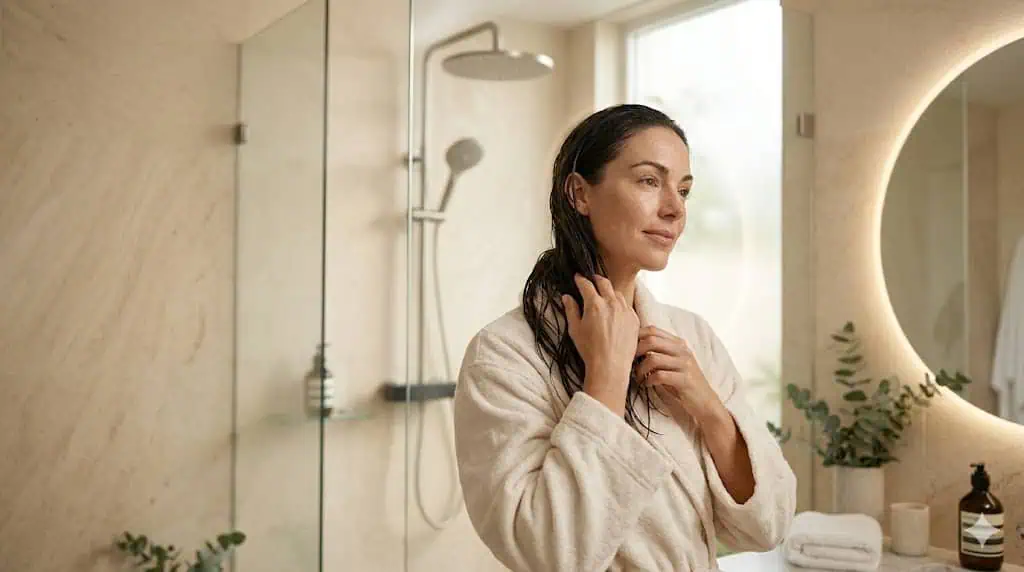
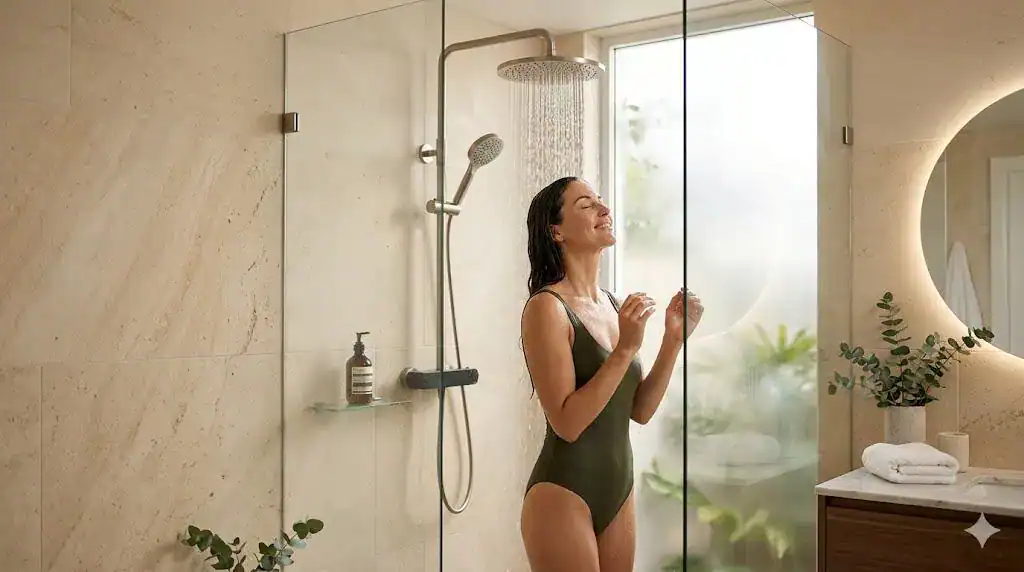
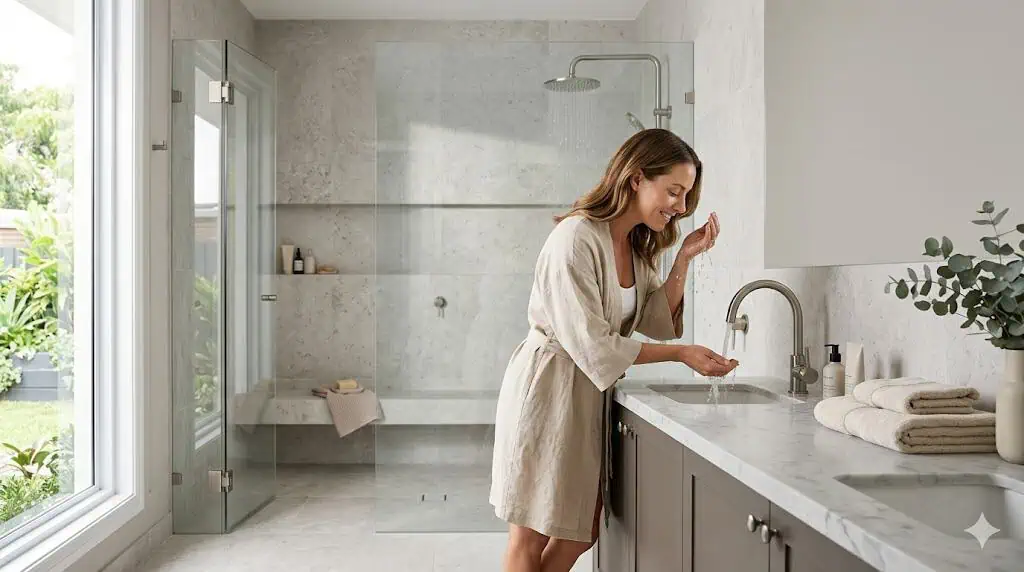
It often starts with the shower, not the kitchen tap.
That pool-like chlorine smell when hot water hits
Skin feeling dry, tight or irritated after showering
Hair feeling brittle, flat, rough or harder to style
Bathrooms, basins and taps constantly showing residue
Premium shower comfort starts where the water enters the home not after the damage is already happening.
Why it happens
Brisbane water can be safe to drink and still feel harsh on skin and hair.
Disinfectants such as chlorine and chloramines are used in municipal water treatment for a good reason. But once that water reaches your home, those same chemicals can keep showing up in your showers, baths and daily routines.
The daily reality
Safe for public supply does not automatically mean ideal for shower comfort.
Seqwater treats South East Queensland water supplies with disinfectants to protect public health. You can review the latest Seqwater water quality reports, which explain how treated water is monitored against Australian drinking water standards.
That does not mean the same water feels pleasant in the shower. The Australian Drinking Water Guidelines taste and odour guidance notes that free chlorine and monochloramine can be noticeable by taste or odour at levels below the maximum health-based limits.
Chlorine smell
Hot showers can make chemical odours feel stronger and harder to ignore.
Moisture barrier stress
Daily exposure can leave skin feeling less comfortable, especially in homes where people already notice dryness or sensitivity.
Hair feel
Water quality can influence how soft, smooth, shiny or manageable hair feels after washing.
Skin
What chlorine can do to skin
Chlorine is an oxidiser. Over time, regular contact can strip away natural oils that help the skin feel balanced and comfortable.
Dry, tight feeling after showering
Itchiness or general irritation
More obvious discomfort in sensitive skin
Dull-looking, less comfortable skin overall
Hair
What chlorine can do to hair
When hair is exposed day after day, it can start to feel rougher, more brittle and less polished than it should.
Dry, frizzy or brittle strands
Less natural shine
Colour fading faster for dyed hair
Dry scalp or rough-feeling residue
Bathrooms
It is not only about beauty
Water quality also affects how your home feels and how hard your fittings, taps and wet areas are to keep looking clean.
Whole home impact
One issue can show up in multiple places
Shower comfort, skin feel, hair feel, chlorine odour, taps, basins and laundry water often point back to the same whole-home water issue.
Why single-point filters fall short
A shower filter or under-sink filter can help one outlet. It does not fix the rest of the home.
If the problem is showing up across showers, bathrooms, laundry and general household water, treating a single point of use is usually only a partial answer.
Feature
Shower Filter
Under-Sink Filter
Complete Home System
Improves shower water
Limited
—
✓ Yes
Improves kitchen drinking water
—
✓ Yes
✓ Yes
Filters every bathroom and tap
—
—
✓ Yes
Helps reduce chlorine smell across the property
Somewhat
At one outlet only
✓ Whole-home coverage
Protects fittings, fixtures and appliances
—
—
✓ Yes
The Jila Water solution
Complete home filtration changes the water you live in not just one tap.
A properly sized system installed where water enters the property helps reduce chlorine, chloramines, sediment and the everyday harshness that can affect your showers, skin, hair and general home water experience.
Compact premium protection
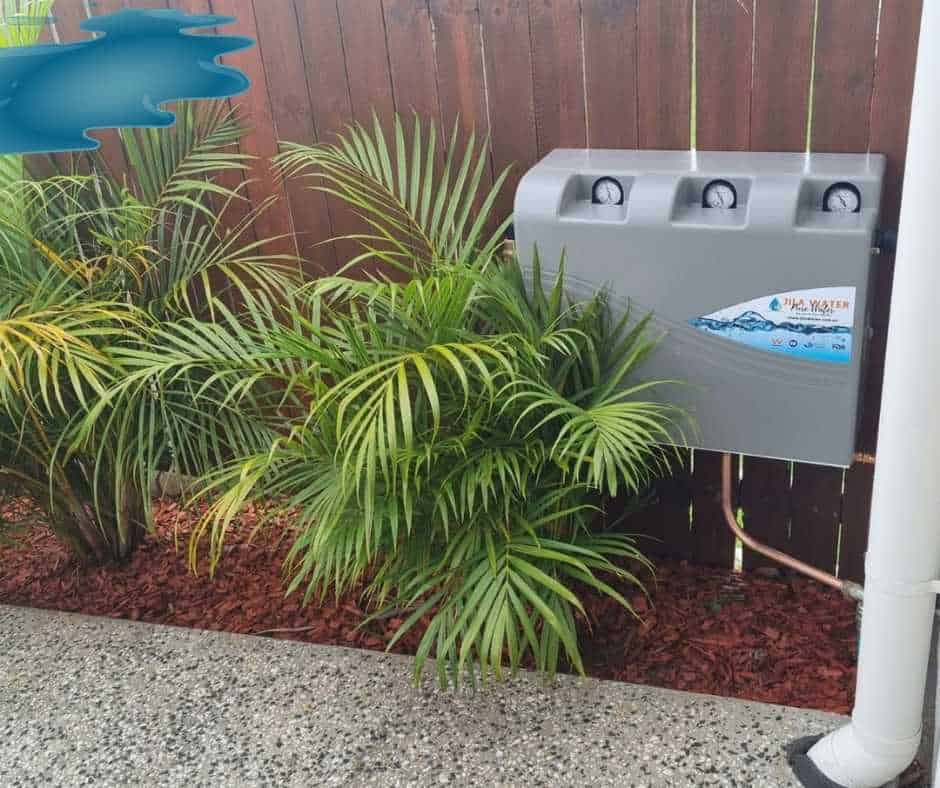
Jila Residence 10
Best for 1–2 bathrooms
Ideal for smaller homes or lower-demand households that still want properly filtered water across the whole property.
10" triple-stage whole-home setup
Targets chlorine, sediment and general shower comfort
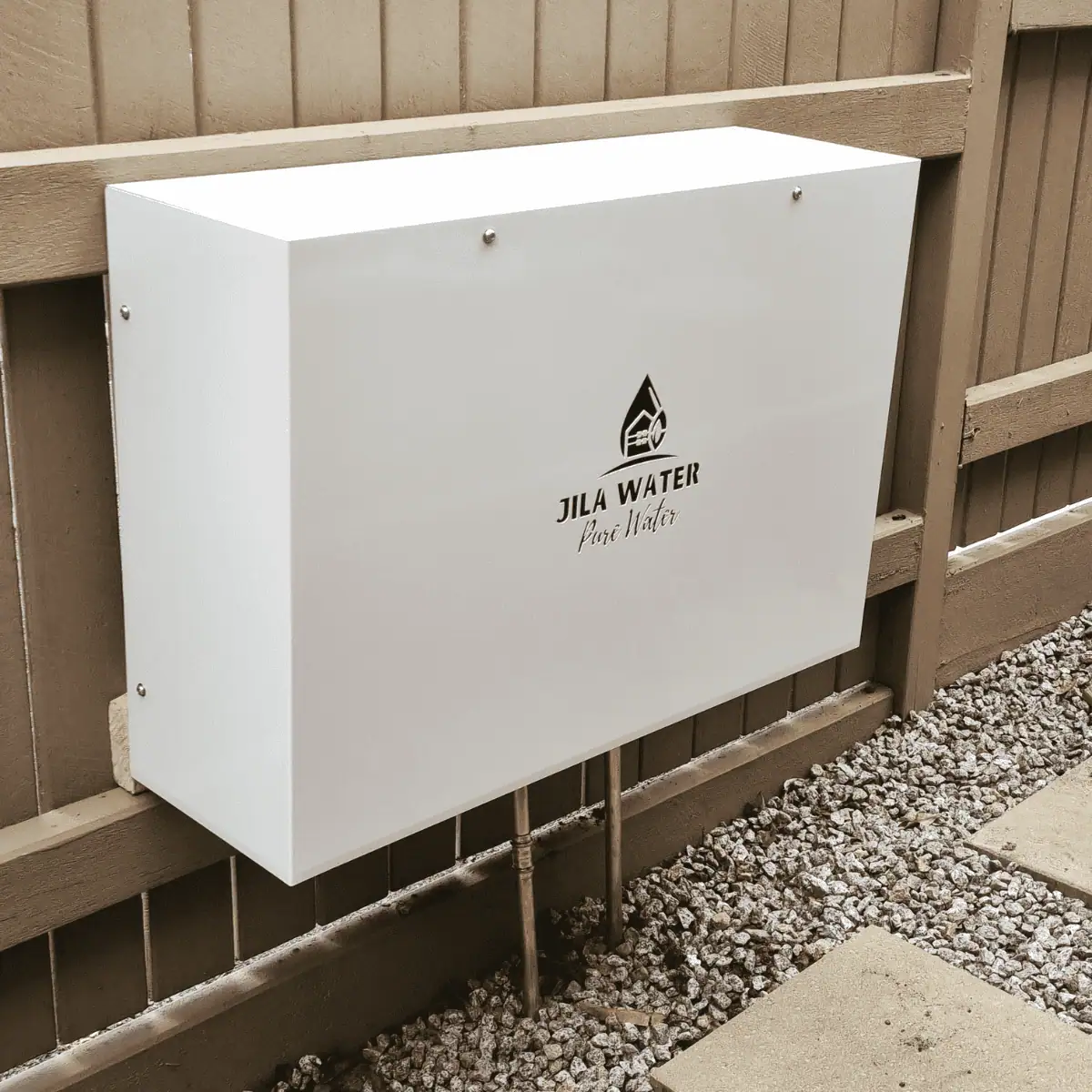
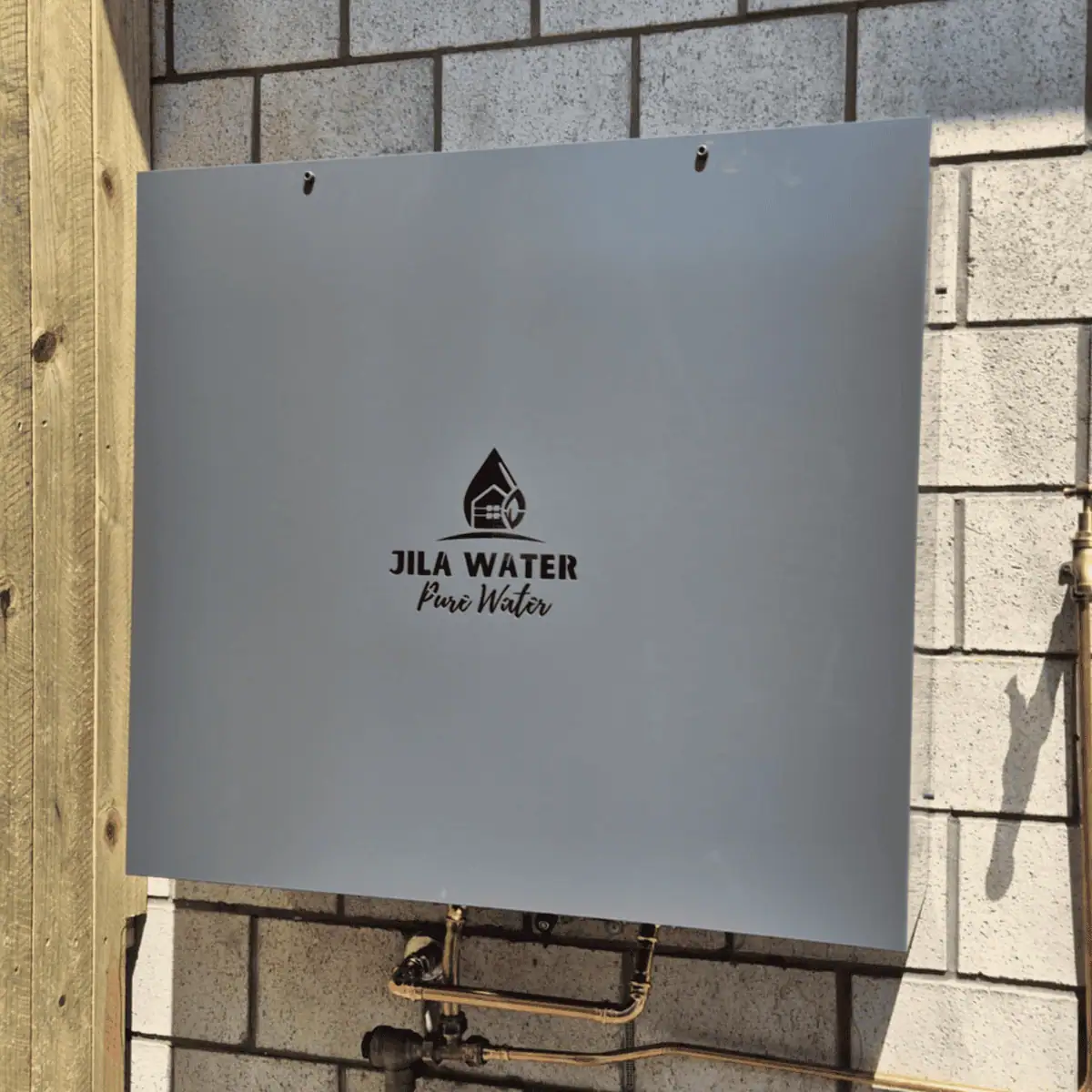
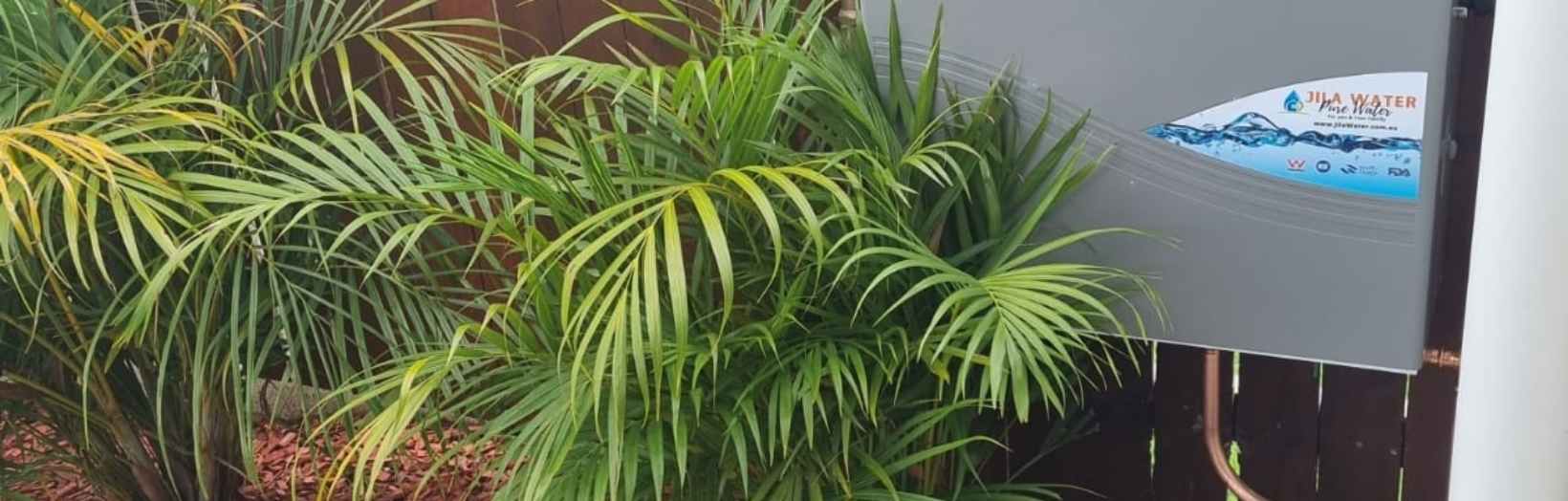
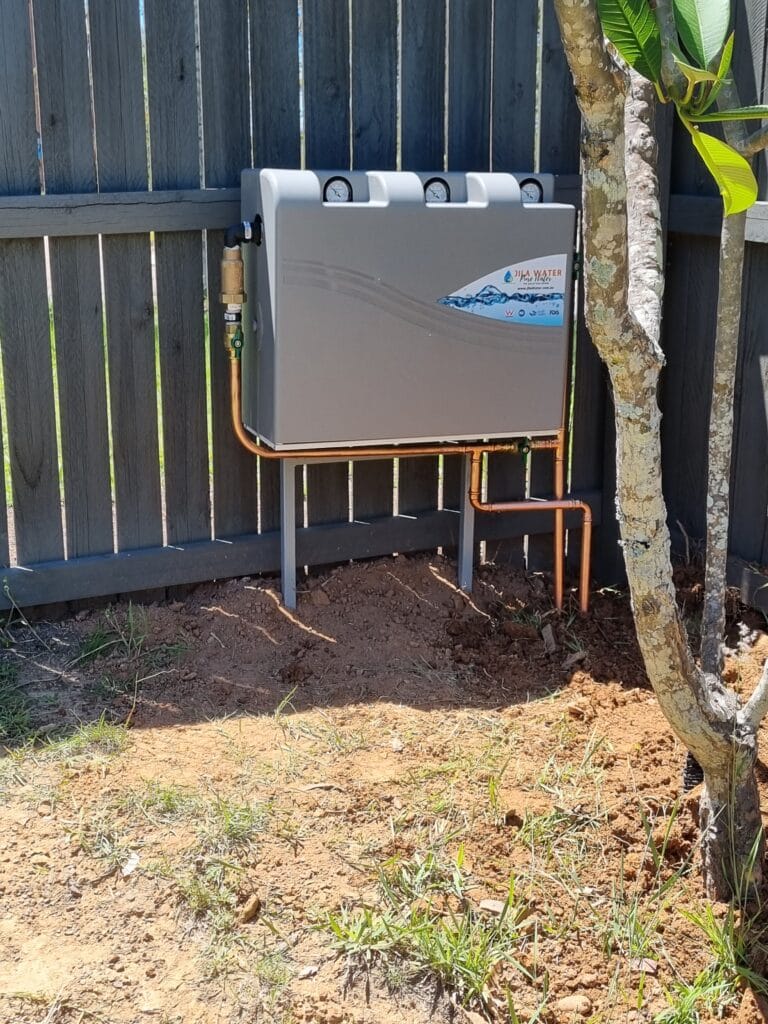
Premium build with cleaner presentation on the wall
For many families, the real value shows up in daily living fast.
The goal is not just to own a filter. It is to improve how your home feels every day, from the bathroom to the kitchen to the laundry.
Cleaner living
Better water tends to feel obvious in the places people use most.
Once chlorine-heavy shower water is reduced at the entry point, the change can show up in skin comfort, hair feel, day-to-day odour and the overall feel of water around the home.
Showers feel less harsh and less chemical-smelling
Skin often feels softer and less stripped after washing
Hair can feel smoother, shinier and easier to manage
Bathrooms and wet areas are easier to keep feeling premium
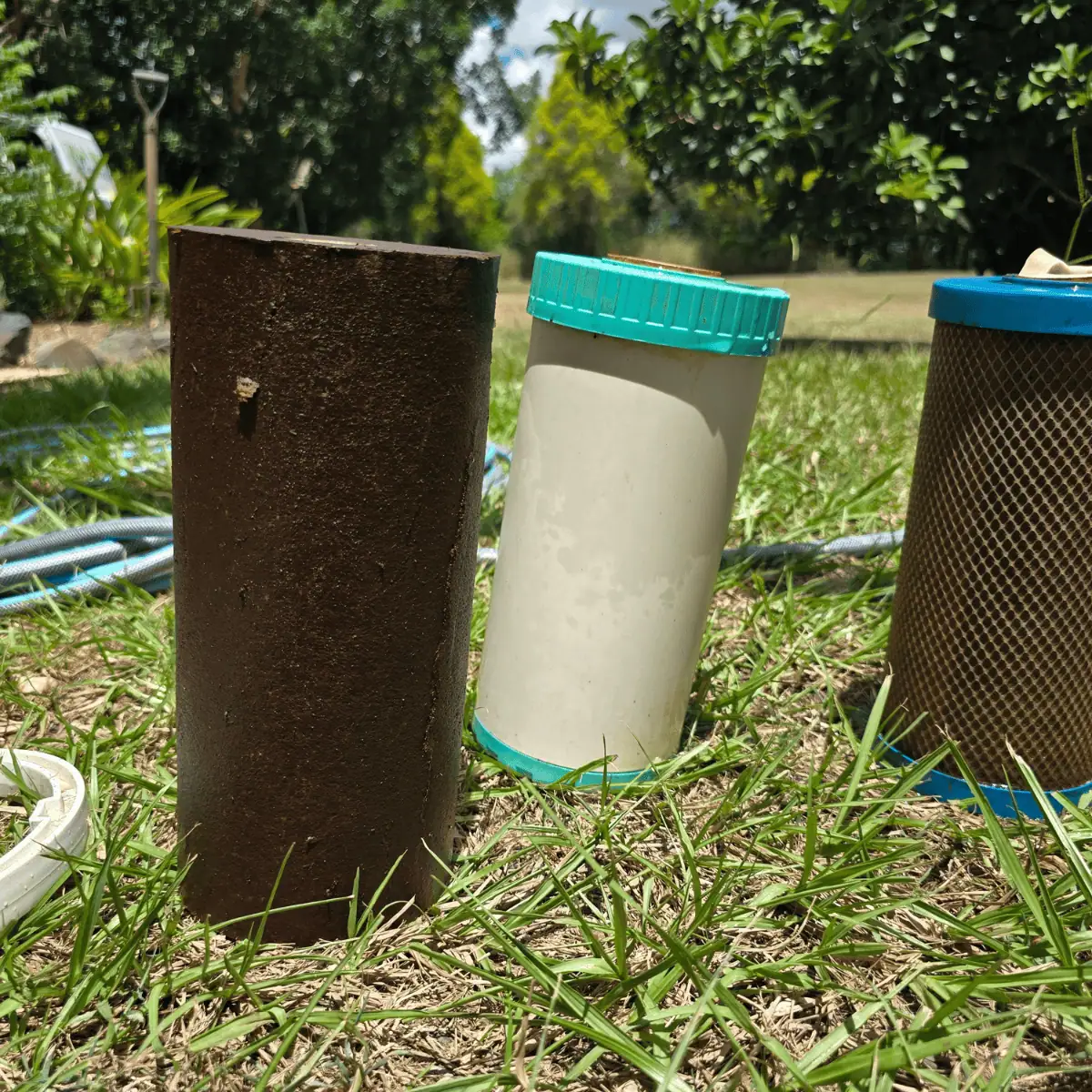
Sometimes the fastest way to understand your water is to see what your filters catch.
This is one of the reasons Jila Water leans so heavily on real install photos and dirty filter proof — homeowners can see there is a real whole-home water story behind the sales pitch.
Why this matters
Proof converts better when people can picture the problem in their own home.
Readers who arrive through search often need one moment that makes the problem tangible. A real dirty filter image does that. It bridges the gap between “interesting article” and “I should probably get my water checked.”
What Brisbane homeowners often get told — and what actually matters.
Myth 01
“If the water is safe, there is no problem.”
Safe to drink does not mean it feels ideal in showers every day. Queensland Health guidance on chlorine residuals notes that people may notice chlorine odour at around 0.6 mg/L even though the maximum drinking water guideline value is much higher.
Myth 02
“A moisturiser or hair treatment should fix it.”
Topical products can help, but they do not change the water hitting your skin and hair every single day.
Myth 03
“Any cheap filter online will do the same job.”
Whole-home performance depends on proper sizing, staging, materials, flow and installation quality — not just whether a box says “filter.”
Can chlorine in Brisbane water dry out skin and hair?
Yes. Chlorine and chloramines can strip natural oils from skin and hair, which can make showers feel harsher and leave skin feeling dry or hair feeling rougher over time.
Is Brisbane tap water safe but still unpleasant for daily showering?
Yes. Public water can still be safe while not feeling ideal for daily skin, hair and shower comfort. Many families are simply looking for better water quality across the home.
Will a shower filter solve the whole problem?
Usually not. A shower filter only treats one outlet. If you want better water across multiple bathrooms, the kitchen, laundry and the rest of the home, a complete home system is a much stronger solution.
What kind of Jila Water system is best for Brisbane families?
That depends on the size of the home, water demand, bathroom count and the result you want. Smaller homes often suit the Jila Residence 10, while larger homes often lean toward the Jila Estate 20.
What is the best next step if my showers smell like chlorine?
Start with a free home water assessment. Jila Water can look at the property, your priorities and the best whole-home option for your setup.
Keep learning more
Suggested next-click sections from Jila Water
Core Information page
Complete home filtration
Most clients look into the main whole-home system page once they understand why shower water matters.
How to Choose the Right Water Filter for Your Home in Australia
Choosing a water filter for your home should not feel like guessing between a cheap kitchen gadget, a hard-sell system, and ten different opinions online. This guide breaks down how to choose a water filter for your home, what the different filter types actually do, and when a whole-home solution makes more sense than filtering one tap. If whole house filtration is on your shortlist, the whole home water filter system guide explains the stages, and the complete home filtration cost guide shows what an installed system involves.
Whole-home thinking • Brisbane and SEQ friendly • Mains water and tank water guidance
Choosing a water filter is really about matching the system to the problem
Most people do not start by searching for “point-of-entry water filter” or “mixed-bed ion exchange resin”. They start with a frustration. The water smells like chlorine. The shower leaves skin feeling dry. The glassware spots easily. The tank supply feels uncertain. Or the family simply wants more confidence in what they drink, cook with and bathe in every day.
That is why the best way to think about choosing a whole house water filter or any other home water filter is not to ask, “What is the fanciest unit online?” The better question is: What exactly am I trying to improve?
“I speak to homeowners every week who are close to buying the wrong system because they are comparing products before they are clear on the actual water issue. The right move is to start with the problem, the water source, and the daily experience you want.”
James Grady · Jila Water
For some homes, a simple under-sink drinking-water filter is enough. For others, that only solves one small part of the story. If your concern includes shower water, chlorine smell, sediment, tank-water reliability, scale, appliance protection or the overall feel of water through the house, you are no longer choosing a drinking-water-only solution. You are choosing between point-of-use and whole-home treatment.
That distinction matters. A small filter under the kitchen sink can be a great option for one tap. But it will not do anything for the shower you stand in every morning, the water running through your hot-water system, or the bathroom taps your family uses all day.
If you are comparing filter options online, it helps to group them into categories based on where they treat the water and what they are built to solve. This is where most confusion disappears.
Filter Type
What It Usually Does Best
Best For
What It Does Not Solve Well
Faucet or jug filterSimple, low-cost drinking-water improvement.
Refrigerator filterConvenient cold drinking water through the fridge.
Improves taste for chilled drinking water and ice.
Homes already using a filtered fridge system.
The rest of the house and most water-quality frustrations outside the kitchen.
Shower filterA point-of-use shower add-on.
Can help with selected shower-water issues depending on the media used.
People only focused on one shower outlet.
Kitchen, bathroom taps, hot-water system, laundry and full-home consistency.
Under-sink filterA point-of-use kitchen solution.
Filtered water for drinking and food preparation at one sink.
Homeowners wanting better kitchen water only.
Whole-home filtration, shower comfort, appliance protection and incoming sediment across the property.
Whole house / point-of-entry filterTreats water as it enters the home.
Broad improvement across taps, showers, kitchen, bathrooms and laundry.
Families wanting better water at every tap.
Very specific needs that require extra specialised stages if not designed correctly.
Tank-water filtration with UVBuilt for untreated or variable source water.
Can address sediment, taste, odour and microbial risk reduction where properly specified.
Rainwater and tank-water homes.
Guesswork. Tank water should never be treated like ordinary town-water selection.
The biggest insight here is simple: the more your concern affects the whole home, the more likely a whole-home system is the right category. If the issue is only what you drink at the kitchen sink, an under-sink solution may be enough. If the issue follows you into the shower, laundry, bathrooms or appliances, it is time to think bigger.
Image placement: comparison visual showing the difference between single-point filtration and complete home filtration.
Why source water matters
Brisbane and SEQ homes should choose differently depending on whether the water is mains, tank or both
One of the biggest mistakes people make when comparing water filters is assuming every home needs the same thing. It does not. Your water source changes the selection process immediately.
Mains Water
Queensland’s drinking water is regulated, monitored and disinfected. The Queensland Government notes that chlorine may be detectable because it is added to most drinking water to kill harmful germs, and a small residual remains as water travels through the network. That often means the water is safe, but not necessarily pleasant in taste, smell or everyday feel for every homeowner.
For mains-water homes, the most common drivers are chlorine taste and odour, shower comfort, sediment, plumbing protection, and wanting cleaner water across the property rather than only at one tap.
Tank Water
Tank water is a different conversation entirely. Queensland Health states that the owner is responsible for ensuring tank water is appropriate for its intended use, and its rainwater guidance notes that tanks can be contaminated by animal faeces, microorganisms and chemicals depending on the environment and collection system.
That is why tank water filtration system design should be more deliberate and can include staged sediment treatment, carbon, and often UV sterilisation depending on the setup and intended use.
Trusted guidance behind smart water decisions
Jila Water guides homeowners using real-world installation experience, but it also matters that the advice lines up with credible health guidance. Australia’s Australian Drinking Water Guidelines are maintained by NHMRC and undergo rolling revision, including significant June 2025 updates around PFAS, lead and other chemical guidance. That is why broad claims and generic one-size-fits-all product promises should always be treated carefully.
Signs you may need more than a basic drinking-water filter
Here is where homeowners usually realise a one-tap filter will not fully solve the problem. If several of these sound familiar, you are likely dealing with a broader water-experience issue rather than a simple drinking-water-only concern.
1. The shower tells you something is off
Your skin feels tight, your hair feels dry, or the bathroom smells stronger than you would like when the water is running.
2. The kitchen is not the only frustration
You are thinking about drinking water, but also noticing residue, taste, smell, or a general lack of confidence through the rest of the house.
3. Sediment or visible buildup keeps appearing
That could mean the home needs stronger upstream filtration rather than expecting a small point-of-use filter to carry the whole job.
4. You are on tank water
Tank water can require staged treatment and often deserves a more considered design than a generic online kit.
5. You want plumbing and appliance protection
That is naturally a whole-home conversation because the goal is not only taste at the sink.
6. You are renovating or upgrading the home
If you are already spending on the property, whole-home filtration often feels more like a proper long-term upgrade than an afterthought.
Image placement: whole-home system visual supporting the shift from one-tap thinking to full-home filtration.
Whole house water filter vs under sink filter: which one actually fits your goal?
This is one of the highest-intent decisions homeowners make, and the answer gets much easier once you stop comparing products and start comparing outcomes.
Under Sink Filter
Best for: people who only want filtered drinking and cooking water at one kitchen tap.
Great if your main goal is better-tasting kitchen water.
Usually more affordable than a full-home solution.
Useful when the rest of the home water experience is not a concern.
Limit: it does nothing for the water in your shower, bathrooms, laundry, hot-water system or incoming plumbing.
Whole House / Point-of-Entry Filter
Best for: families who want better water through the entire property.
Filters water as it enters the home.
Supports a cleaner experience across showers, bathrooms, kitchen, laundry and appliances.
Often the better fit for chlorine taste and odour issues, sediment concerns, whole-home comfort and broader daily use.
Limit: it needs the right design, proper installation and a realistic match to the source water and household needs.
The simplest rule: if you only care about one drinking tap, under-sink might be enough. If you care about what comes out of every tap, a point-of-entry water filter is the stronger direction.
That is also why more homeowners who begin by searching for an under-sink unit end up moving toward a premium complete home water filtration system once they realise the real problem is larger than the kitchen.
The practical buying framework
How to choose the right water filter for your home without wasting money
If you want a cleaner decision, use this sequence. It is the same one we use when helping homeowners narrow things down properly.
Step 1
Define the real issue. Is it drinking water only? Shower feel? Chlorine smell? Sediment? Tank-water uncertainty? Multiple issues at once?
Step 2
Identify the water source. Town water, tank water, or a combination changes the treatment path immediately.
Step 3
Match the treatment location. One-tap problem equals point-of-use. Whole-home problem equals point-of-entry.
Step 4
Choose for daily life, not brochure language. Think about showers, laundry, appliances, maintenance access and how the system will actually live with the home.
For mains-water homes
You are normally deciding between a small kitchen-only solution and a broader whole-home setup. If taste and odour at the sink is the only problem, under-sink can be enough. If you want cleaner water throughout the property, whole-home is usually the better fit.
For tank-water homes
Do not buy a generic “whole house” kit and assume it is enough. Tank water often needs a staged approach tailored to sediment load, storage condition, flow requirements and whether UV should be included.
This is also where a premium provider earns their place. A good provider does not just sell a cartridge count. They help you decide what the home actually needs and what it does not.
Image placement: visual illustrating the difference between limited one-point filtration and a complete home solution.
Low-pressure next step
Not sure whether you need under-sink, whole-home, or tank-water treatment?
Start with a free home water assessment. Jila Water helps homeowners work out whether the issue is mostly taste and odour, broader whole-home water quality, hard-water symptoms, tank-water risk, or a mix of all four.
No obligation. Just expert advice, a clearer recommendation, and a more confident next step.
Installation and upkeep
Installation, maintenance and what a premium setup should feel like
A big part of choosing the right water filter is not just filtration media. It is what ownership feels like after installation. The strongest systems feel integrated with the home, not like a cheap bolt-on compromise.
Professional sizing matters
Flow rate, connection size, source water, cartridge sizing and access for filter changes all matter. A premium system should be selected around the home, not just whatever is popular online.
Maintenance should be simple
You want clear replacement schedules, genuine filter kits and an easy path for ongoing service. Maintenance should feel predictable, not confusing.
Design still matters
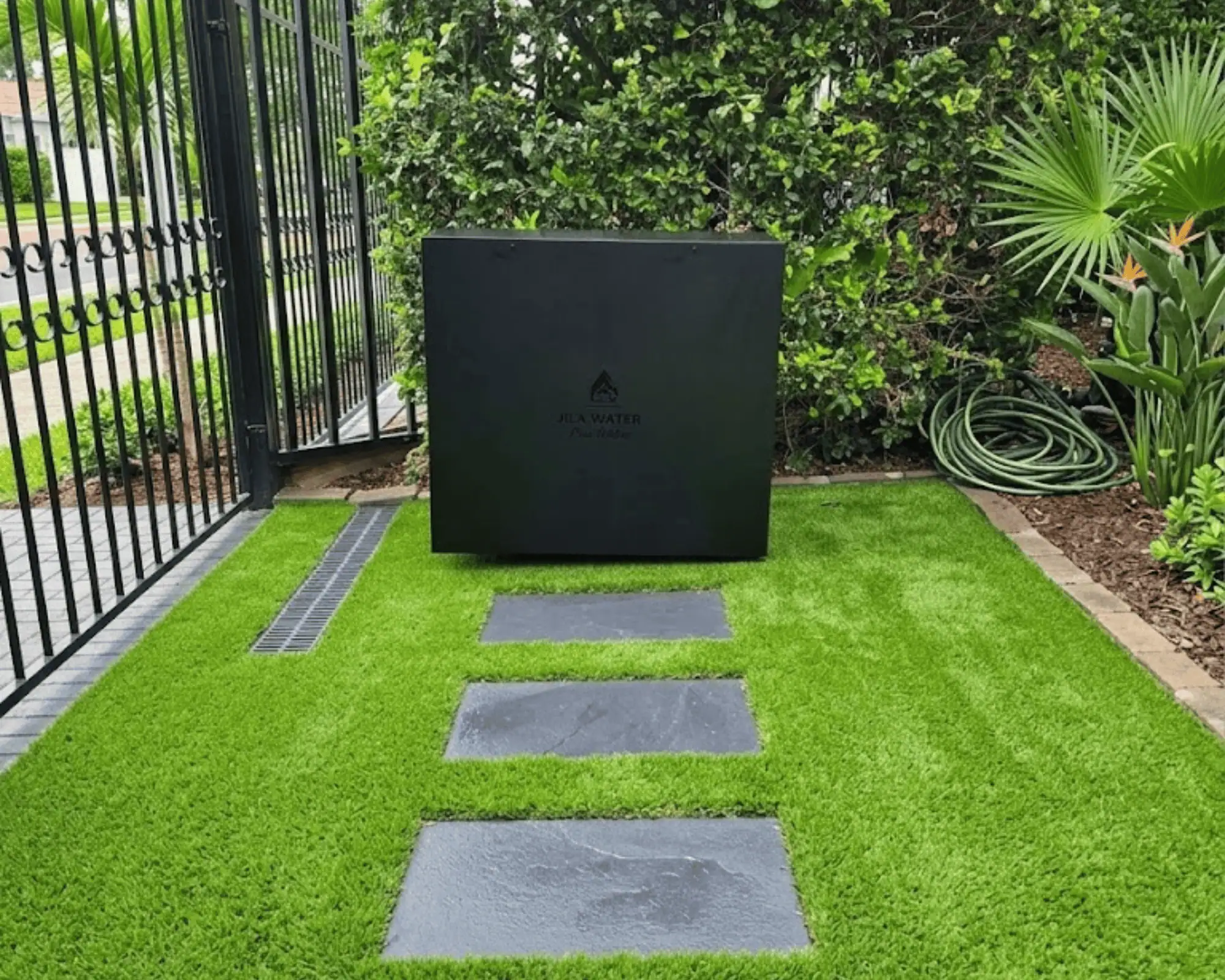
If the unit is visible on the side of the home, finish quality, enclosure quality and installation neatness all become part of the buying decision.
For tank-water systems, the installation conversation is even more important. Pre-filtration, pump conditions, UV placement, service access and protection from the elements all need to be considered properly.
And if you are comparing offers, ask practical questions: Who installs it? What does replacement look like? What exactly is covered? Is the system designed for Australian homes, or is it just a generic import with nicer wording around it?
Why homeowners upgrade
The benefits of choosing the right filter go well beyond a nicer glass of water
The strongest water-filtering decisions are not based on fear. They are based on lifestyle improvement, comfort and confidence. When the system is matched properly to the home, the value usually shows up in multiple parts of daily life.
Daily comfort
Cleaner-tasting kitchen water
Better-smelling water where chlorine odour is a concern
A more pleasant shower experience
Less “why does the water feel like this?” frustration day to day
Whole-home confidence
Filtration begins before water moves through the property
Support for bathrooms, laundry and appliances, not just one sink
A more complete upgrade for families planning to stay in the home
Better alignment between the system and how water is actually used
That is why terms like whole home water filter benefits or complete home filtration matter so much more than simply asking whether a system “filters water”. The real question is: what part of home life do you want improved?
Image placement: homeowner-focused visual reinforcing that water-filter choice should start with the real problem being solved.
Avoid expensive guesswork
Common myths and mistakes people make when choosing a water filter
Myth: more stages automatically means better
A system is only as good as the job it is designed to do. Extra stages can sound impressive but do not guarantee the right result for your home.
Myth: one filter suits every house
Mains water, tank water, shower concerns, sediment and whole-home comfort are not all the same problem. The right system depends on the context.
Mistake: buying for the kitchen when the real issue is everywhere else
This is why homeowners often buy under-sink first, then later realise the bigger frustration was shower water or the whole-house experience.
Mistake: treating tank water like town water
Tank water should be assessed more carefully and can require a different filtration and sterilisation path.
Mistake: focusing only on product price
Low upfront price can hide poor fit, poor install quality, awkward maintenance and the need to replace the system sooner than expected.
Mistake: skipping expert advice entirely
The strongest buying decision is usually not the fastest one. A short conversation with the right provider can save a lot of money and frustration.
The best-performing systems are not always the most aggressively marketed ones. They are the ones that solve the actual problem cleanly, suit the home, and still feel like the right decision one, two and five years later.
Homeowners usually get the most value from whole-home filtration when they are trying to fix more than one thing at once. If that is you, a small point-of-use filter often feels like only a partial answer.
Families wanting better water at every tap
Not just for drinking, but for cooking, showering, washing and daily comfort throughout the home.
Homes with strong taste, smell or sediment concerns
If the issue is noticeable in more than one room, treating water at entry point usually makes more sense.
Tank-water properties
These homes often need a more serious system design and benefit from a provider familiar with rainwater and UV treatment pathways.
Homeowners upgrading the property properly
For many people, whole-home filtration feels like a considered home improvement rather than a temporary add-on.
People tired of piecemeal fixes
If you have already tried jugs, fridge filters or shower add-ons, whole-home treatment can be the cleaner long-term solution.
Homeowners who want expert guidance
The more variables involved, the more valuable a tailored recommendation becomes.
Frequently asked questions
Frequently asked questions about choosing a water filter for your home
What is the best type of water filter for a home?
The best type depends on the problem you are trying to solve. If you only want filtered drinking water at one kitchen tap, an under-sink system may be enough. If you want better water through showers, bathrooms, laundry and kitchen, a whole-house or point-of-entry system is usually the stronger fit.
How do I know if I need a whole house water filter or an under-sink filter?
Ask whether your concern is limited to one tap or affects the wider home. If the issue includes shower water, smell, sediment, plumbing or whole-home comfort, under-sink usually will not solve enough of the problem.
Is Brisbane mains water safe to drink?
Queensland drinking water is regulated and monitored, and mains water is disinfected. Many homeowners are not reacting to “unsafe water” claims so much as trying to improve taste, smell, shower feel and overall confidence in the water experience at home.
Does tank water need a different filter setup?
Yes. Tank water should not be treated like a basic mains-water selection. Depending on the home and system design, it may require sediment stages, carbon filtration and UV sterilisation to create a safer and more reliable supply.
What does “point-of-entry” mean?
Point-of-entry means the system treats water as it enters the property, before it reaches your taps and showers. It is another way of describing whole-house or whole-home filtration.
Can a whole-home filter help with chlorine taste and smell?
It can, depending on the system design and media used. This is one reason many homeowners move beyond one-tap filters and look at complete home filtration instead.
Do I still need an under-sink filter if I install whole-home filtration?
Not always. Some homeowners are happy with whole-home treatment alone. Others still prefer a dedicated kitchen stage for specific drinking-water preferences. It depends on the result you want.
How often do home water filters need servicing?
That depends on the system size, source water, cartridge type and household use. A good provider should give you a clear service pathway, not vague promises.
What is the best next step before buying?
Start with a proper home water assessment. That is the easiest way to understand whether the home needs an under-sink filter, a whole-home solution, tank-water treatment, or a more tailored combination.
Take the next step
Want help choosing the right water filter for your home?
The best decision starts with clarity, not pressure. Jila Water helps Australian homeowners look at the bigger picture — not just a random product list, but what the water is doing across showers, appliances, fixtures, plumbing and everyday life.
If you want help comparing a whole house water filter vs under sink filter, understanding your tank-water options, or working out whether a premium complete home filtration system is the right fit, start with a free assessment.
Free home water assessment with no obligation
Advice matched to your home, your water source and your priorities
Clear next steps into a premium whole-home solution where it makes sense
Ask about current offers, including installation promotions and bonus filter inclusions where available
No obligation. No pressure. Just a clearer path to better water at every tap.
Keep reading
Related Jila Water reading for homeowners who want better water at every tap
Use these next pages to move from broad research into a more confident whole-home decision.
Complete Home Water Filtration System
See how Jila Water approaches cleaner water at every tap, what the system is designed to solve, and why more Brisbane homeowners are moving beyond sink-only filtration.
If scale, mineral residue or hard-water symptoms are part of the story, this guide helps you understand where softening fits into the bigger whole-home picture.
Discover the dangers of drinking tap water with fluoride and why a complete home water filtration system is crucial. Learn how to safeguard your health and remove fluoride from your drinking water
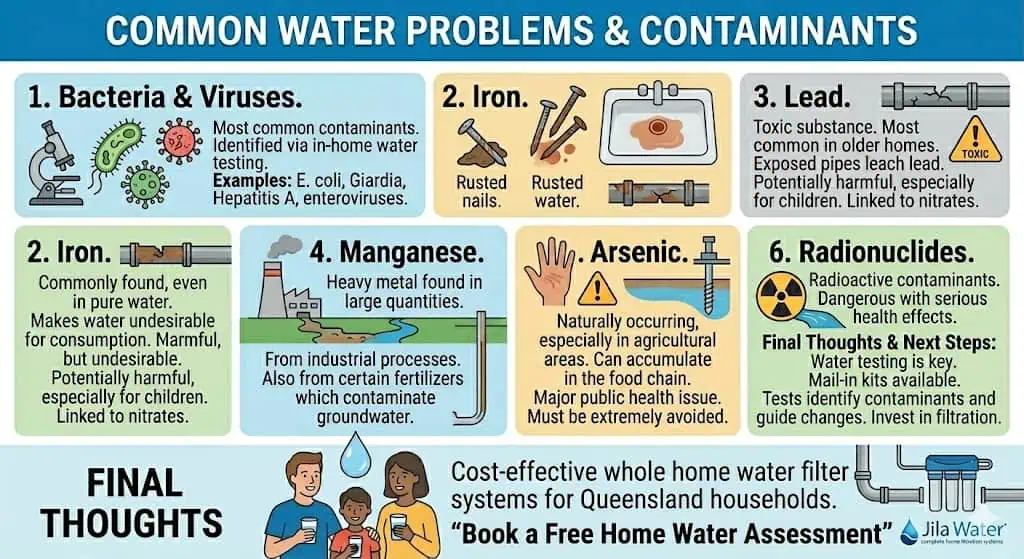
Water testing helps Brisbane and SEQ homeowners understand what may be affecting their tap, tank or bore water before choosing a filtration system. This guide explains common contaminants, water quality warning signs, and when to book a free Jila Water home water assessment.
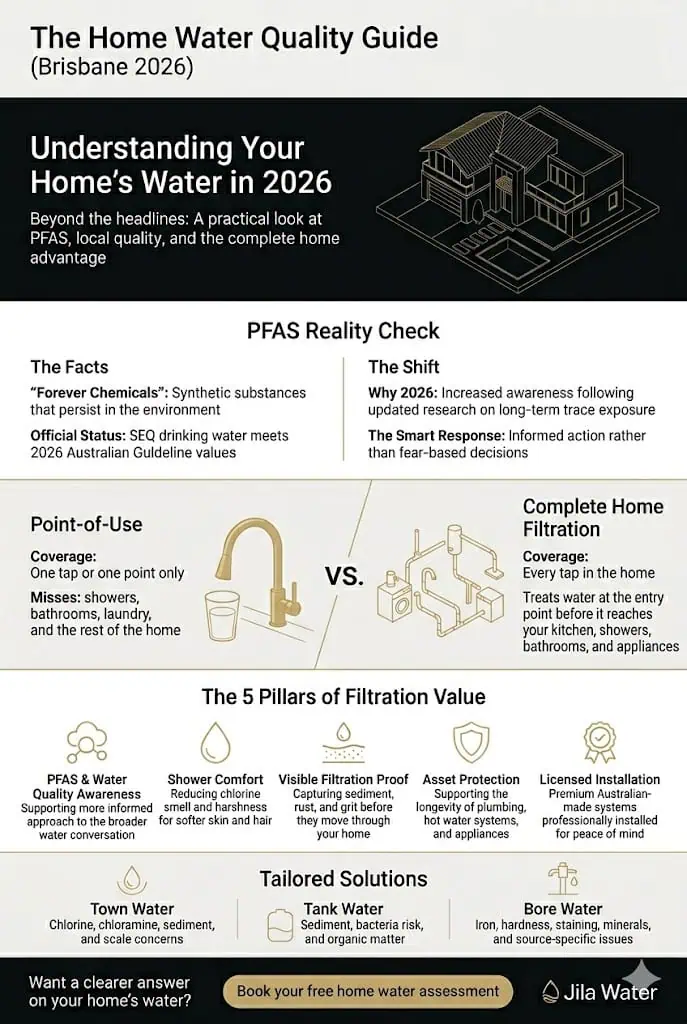
Concerned about PFAS in Brisbane water? This practical 2026 guide explains what homeowners need to know, what current Australian advice means, and where complete home filtration fits.
Should You Be Concerned About Fluoride In Tap Water
Of all the questions you commonly hear about tap water, the most common is probably this: Should fluoride be removed from tap water, or should it remain in it? After all, we’re told that all sorts of chemicals, metals, and more exist in the world that can hurt us. One of these things is fluoride, which some may claim to be dangerous. However, many others are supportive of including fluoride in water, such as dentists and the like, stating the health benefits it has to offer.
So, should fluoride be included in tap water? Let’s talk about that:
What Is Fluoride?
Fluoride is a mineral that occurs naturally in the environment, including in groundwater and the ocean, but can also be added to drinking water. It helps prevent tooth decay, and it is also generally recognised as safe (GRAS) by the FDA.
There are a few different forms of fluoride: calcium, sodium, hydroxy or silicofluoride, depending on the source of the fluoride. There are also organic forms of fluoride, and they occur naturally, while the inorganic forms are added to tap water.
What’s So Good and Bad About Fluoride?
Fluoride is generally good for teeth. It helps to protect the enamel and prevent tooth decay, which is why dentists recommend that you regularly use fluoride toothpaste (as long as you don’t have a sensitivity to it). Additionally, research shows that fluoride helps to prevent cavities in kids.
However, there are a few issues that have been found when it comes to fluoride. Studies have shown that fluoride can damage certain types of gut bacteria and decrease fertility. Additionally, some research shows that it can be toxic in high amounts, especially for kids.
However, the biggest con to fluoride is that even though it is effective at preventing cavities, you can easily get fluoride from other sources. For instance, if you use fluoride toothpaste regularly, you’ll be getting it from that, as well as from some foods.
Is Fluoride In Water Safe?
Fluoride is generally considered safe to consume, as it is generally at safe levels. However, it’s important to know that the amount of fluoride you get from tap water varies based on where you live.
This is because the amount of fluoride in tap water is often dictated by the local water company or the state in which you live. For instance, the Centers for Disease Control and Prevention (CDC) notes that the Environmental Protection Agency (EPA) and the Department of Health and Human Services recommend that fluoridation of community water supplies be between 0.7 and 1.2 mg of fluoride per litre, depending on the age group.
Conclusion
So, should you be concerned about the fluoride in your tap water? It’s hard to say. It may have some health benefits, and it can also be toxic in large amounts. Furthermore, there are other sources of fluoride that you may or may not be aware of. If you are truly concerned about fluoride levels in your tap water, be sure to invest in good water-treatment solutions. That way, you can enjoy pure, clean water every time you turn on the tap!
Jila Water offers cost-effective whole-house water filter systems, giving homes access to clean, filtered water. If you are looking for affordable water filter systems in Queensland, check out our products!
Discover the dangers of drinking tap water with fluoride and why a complete home water filtration system is crucial. Learn how to safeguard your health and remove fluoride from your drinking water
Water testing helps Brisbane and SEQ homeowners understand what may be affecting their tap, tank or bore water before choosing a filtration system. This guide explains common contaminants, water quality warning signs, and when to book a free Jila Water home water assessment.
Concerned about PFAS in Brisbane water? This practical 2026 guide explains what homeowners need to know, what current Australian advice means, and where complete home filtration fits.
Cost-Effective Home Upgrades to Increase a Property’s Value
Remodelling and renovation can bring a new, refreshing energy to your home. Done correctly, these changes can even increase your property’s value to new heights. Unfortunately, not all home improvement projects can have a positive impact on your property.
Cost-effective Home Upgrades to Increase Your Property’s Value
Aspiring real estate investors should equip themselves with important information that can help them maximise their profits. Since you’re here, know that you’ve come to the right place. We’ve prepared a list of simple home improvement ideas sure to catch buyers’ eyes.
Landscaping Upgrades
Creating a welcoming front door starts with the exterior of your home, particularly landscaping. Adding landscaping accents, like potted plants or a colourful garden, can significantly improve your home’s appearance and make it more inviting. However, landscaping is a long-term investment. You’ll want to make sure that your colour, design, and layout complement each other even before seeing the final outcome.
Accessibility Improvements
Home accessibility improvements like ramps and handrails can greatly help increase your home’s livability and usability. These improvements can also significantly improve its resale value, especially to people with disabilities or the elderly. These accessibility improvements can be made by the homeowner or under the supervision of a professional.
Lighting Upgrades
A good lighting upgrade can help create a comfortable space and an attractive home. It can make a massive difference in any room’s atmosphere. This is an easy do-it-yourself project that can make a significant improvement to your home’s interior design.
Water Filtration
Water filtration systems are simple and inexpensive upgrades to virtually any existing plumbing system, from a basic faucet filter to a full-scale filtration system. A water filtration system ensures that the water you drink, cook with, and bathe with is tasteless and odourless with no impurities or unpleasant residual tastes, a sought-after luxury that’s delightful to any buyer.
Programmable Thermostats
A programmable thermostat is one of the simplest and least expensive ways to make your home more energy-efficient. It allows homeowners to adjust temperatures based on their individual schedules and lower the temperature during inactivity. This prevents energy from being unnecessarily expended and reduces utility costs, another attractive luxury for buyers.
New Paint
Painting brings a fresh new look to your home. If the walls are a little drab, a fresh coat of paint can do wonders. Bright, cheery colours have been proven to increase energy and raise spirits. If you have time, consider repainting all of your rooms, or just choose one or two to spice up your home.
Exterior Door Upgrades
New exterior doors will give your home a new look and provide a solid layer of security. It’s also one of the first things buyers see when looking at your home. Doing this right will increase your home’s curb appeal.
Conclusion
When deciding on what to remodel in your home, it’s vital that you first consider the effect it will have on its value. Home remodelling projects can include just about anything like exterior building, interior design, landscaping, electrical work, and more. If you’re planning your first home renovation, be sure to seek help from experienced professionals who can help guide you through the process. Do your research and choose a reliable company to select the best products for your home.
Give your home a proper upgrade with whole home water filtration systems. We at Jila Water can help you increase your home’s value with industry-leading filters and systems, letting you make good on your investment. If you want to improve the water quality of your home in Brisbane, contact us today!
Discover the dangers of drinking tap water with fluoride and why a complete home water filtration system is crucial. Learn how to safeguard your health and remove fluoride from your drinking water
Water testing helps Brisbane and SEQ homeowners understand what may be affecting their tap, tank or bore water before choosing a filtration system. This guide explains common contaminants, water quality warning signs, and when to book a free Jila Water home water assessment.
Concerned about PFAS in Brisbane water? This practical 2026 guide explains what homeowners need to know, what current Australian advice means, and where complete home filtration fits.
A Guide to Hard Water and Drinking Water In Your Home
We’re always reminded to drink eight glasses of water a day, but there are a couple of specifics that you need to know about before you get hydrated. Every household may receive a mix of hard water and soft water, and it can be hard to determine which is which.
Tap water may be hard or soft or even a mix of both. The hardness of water is quite important to learn about and determine, as you may want to find a way of getting filtered drinking water for a cleaner taste and better health. To dive more into this, continue reading.
Is Hard Water Safe For Drinking?
Generally, both hard water and soft water are safe to drink. However, any type of water with a higher hardness level than others typically contains more minerals like calcium and magnesium. It also appears to be much cloudier, linked to several health reactions and concerns.
Research has shown that drinking hard water can result in a higher risk of cardiovascular diseases, certain cancers, and more. People may also experience aftereffects of drinking the hard water for a prolonged period of time on their reproductive and overall health condition.
What Are the Signs of Hard Water?
Many people would rather avoid hard water, but it can be a little tough to spot it without proper testing. If you look closely at a couple of telltale signs with the water flow and water pressure though, you may just get an inkling that there is hard water in your home’s plumbing system.
Other indicators of hard water are usually lingering spots and stains on dishes, clothes and your home’s surfaces. Hard water isn’t very good at reacting to soap either due to its calcium content, resulting in soap scum that’s tough to rinse off.
How to Test for Hard Water?
Whether you’ve seen visible signs of hard water or not, it is possible to request a proper water quality report from your provider. Residents should get an overview of the total mineral and contaminants found in the water supply dedicated to your area.
It’s not a totally black and white situation, though. As mentioned earlier, some water may be a mix of both hard water and soft water. Try to see everything within a spectrum instead and realise that hardness levels can vary depending on the content of minerals in it.
How to Get Safe Drinking Water?
When you want to ensure that your drinking water is safe, the best way to do so is to have an at-home filtration system. You may have limited to zero control over the mineral content of your water supply, but you can soften whatever you receive so you can drink easily via the tap.
With proper filtration, any anomalies or pollutants within the water from surrounding industrial plants or general piping of your home’s plumbing system should be cleansed. Just remember to provide your system with the proper maintenance it needs.
Conclusion
In summary, hard water can be dangerous if the content of harmful minerals in it is too much. Try to seek out a filtration system that can be installed in your home to ensure that whatever water you pour into a class will be clean and soft.
Looking for the best home water filter systems? Jila Water offers cost-effective whole house water filter systems to homes in Queensland. Get in touch with us today!
Discover the dangers of drinking tap water with fluoride and why a complete home water filtration system is crucial. Learn how to safeguard your health and remove fluoride from your drinking water
Water testing helps Brisbane and SEQ homeowners understand what may be affecting their tap, tank or bore water before choosing a filtration system. This guide explains common contaminants, water quality warning signs, and when to book a free Jila Water home water assessment.
Concerned about PFAS in Brisbane water? This practical 2026 guide explains what homeowners need to know, what current Australian advice means, and where complete home filtration fits.
Some may wonder, “how much water should I drink?” or “how many litres of water should you drink a day?”. But really, the more important question is, “Is the drinking water available in your home safe?”. How can you drink more water if the one readily available is unhealthy? Let’s go back to the basics and break down the truth about your drinking water.
Water is the key to human survival. Humans can live for a month or two without food. But without water, a human’s lifespan dwindles to three days.
Since water is essential, different types of water and at-home water filtration systems have sprouted in the market. As the number of these products rises, the water myths also increase are some filtered water myths you probably believed at some point.
Myth #1: Distilled Water Is Pure
The Truth: Yes, distilled water is pure water. But it’s also water without any minerals.
Drinking water that is distilled has loads of benefits. Distilling involves boiling the water, which separates the water from the contaminants. The water vapour passes through a cooling coil, condensing into liquid form. This process occurs multiple times until most of the impurities are removed.
The science behind the distillation process is outstanding. But what it’s left with is only water, no minerals.
Myth #2: Bottled Water Is Cleaner, Healthier, and Safer Than Tap Water
The Truth: Bottled water companies proudly display their water’s purity, stating that they are free of chemicals, pesticides, viruses, and bacteria. But it has been proven that bottled water and tap water are comparable.
The Department of Health monitors Australia’s tap water quality. On the other hand, the Australian Beverage Council oversees bottled water quality and distribution. Both agencies use a similar water quality standard. Therefore, you may not be better off with the cap than the tap.
Myth #3: Reverse Osmosis Water Is as Healthy as Distilled Water.
The Truth: Reverse osmosis is a type of water filtration process. It involves putting water through a semipermeable membrane that selectively stops large and small molecules. The bigger molecules stay on one side, while the smaller ones pass on to the other.
It has been proven to remove most contaminants from your drinking water, but the water loses essential minerals. However, the minerals can be added back to the water.
Myth #4: All Water Is Safe to Drink
The Truth: According to the World Health Organisation, most water sources are polluted. That is why the water that goes into people’s taps is treated and heavily regulated to ensure that it’s safe to drink.
Freshwater treatment, for example, is a four-step process. It involves water screening, the chemical removal of fine particles (flocculation), the mechanical removal of larger particles (filtration), and disinfection with chlorine. It’s important to note that tap water also goes through fluoridation to help improve Australians’ dental health. However, too much fluoride also has health consequences.
To ensure your drinking water is safe, your home needs to install water filters that effectively remove contaminants.
Myth #5: Pitcher Filters Remove the Fluoride from Tap Water.
The Truth: It’s possible to reduce fluoride in tap water significantly. However, you need to have the right filter for the job.
If you want a recommendation for your own property, the free home water assessment is the place to start.
Some of the most prominent pitcher filters use activated carbon to absorb contaminants in the water. It can remove trace metals, chlorine, pesticides, and other organic compounds. But to remove fluoride, it must undergo a reverse osmosis system—something that pitcher filters don’t have.
Myth #6: Home Water Filter Systems Are Not Important.
The Truth: You can live without a water filter at home, but having a filter system can significantly improve your quality of life. Aside from its many health benefits, a water filter system can give you peace of mind knowing that you are drinking perfectly safe water.
Yes, you can use a pitcher filter to filter your water. But only a home filtration system can remove the fluoride from the water. Drinking out of a tap that supplies filtered water is more convenient.
There are many myths surrounding water types, treatments, and filtration systems. You should equip yourself with the proper knowledge to steer clear of misinformation. Drinking clean and safe water is essential to life, and knowing how to discern truth from fiction can help you do that.
Jila Water is a company that supplies some of the best home water filter systems in Brisbane. Our multi-stage filtration system removes contaminants and fluoride to give you and your family pure drinking water every time. Call us today to learn more!
Discover the dangers of drinking tap water with fluoride and why a complete home water filtration system is crucial. Learn how to safeguard your health and remove fluoride from your drinking water
Water testing helps Brisbane and SEQ homeowners understand what may be affecting their tap, tank or bore water before choosing a filtration system. This guide explains common contaminants, water quality warning signs, and when to book a free Jila Water home water assessment.
Concerned about PFAS in Brisbane water? This practical 2026 guide explains what homeowners need to know, what current Australian advice means, and where complete home filtration fits.