

Category: Complete Home Water Filtration

Jila Water Brisbane & South East Queensland

Complete Water Filtration for the Whole Home

Explore Jila Water articles, guides and insights covering whole home water filtration,
complete home water filtration systems, water filter installation, replacement filters,
Brisbane water quality, chlorine, sediment, scale, taste, odour and healthier water from every tap.

✓ Brisbane-based specialists
✓ Installed by licensed plumbers
✓ Premium whole-home systems

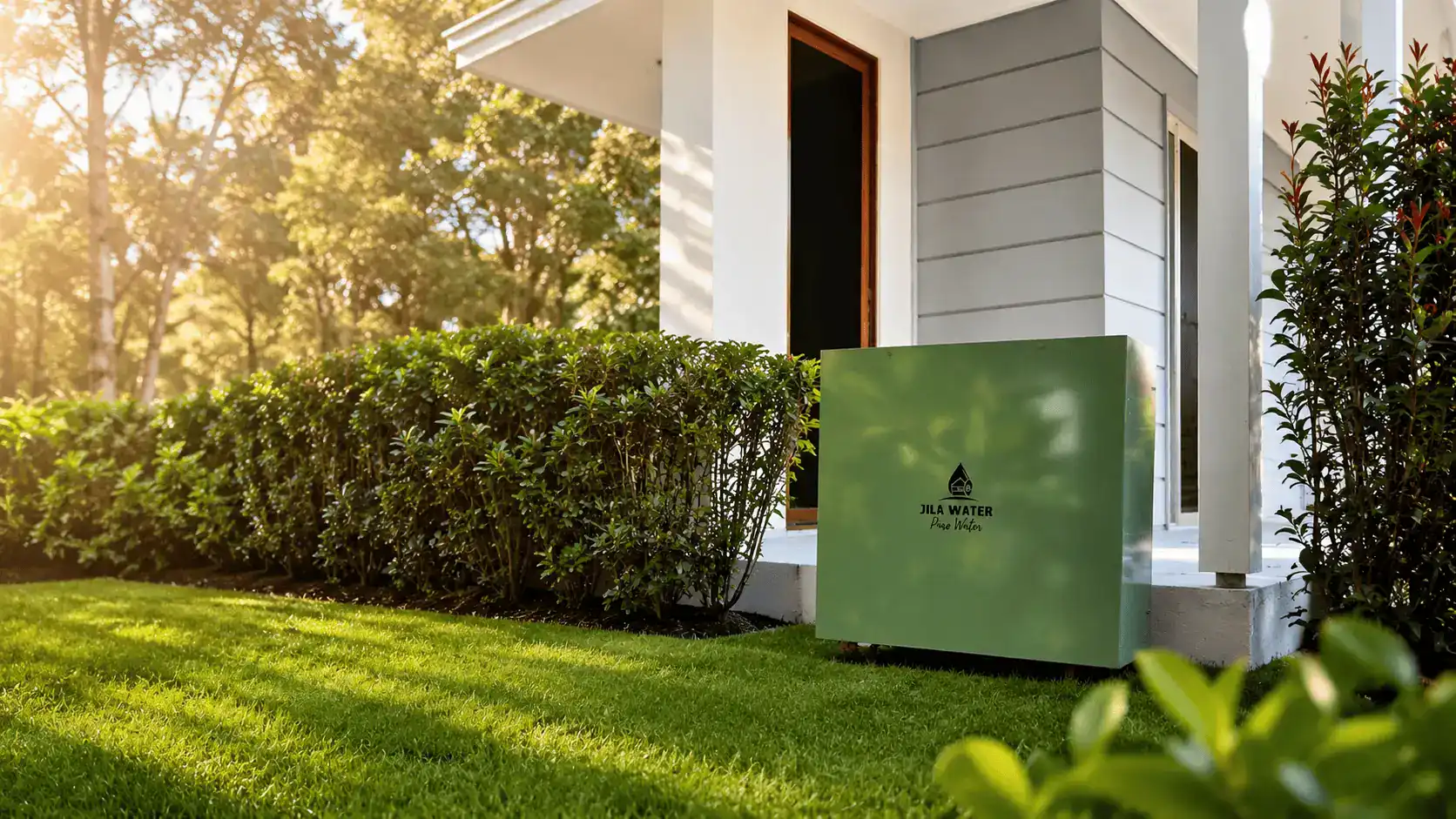
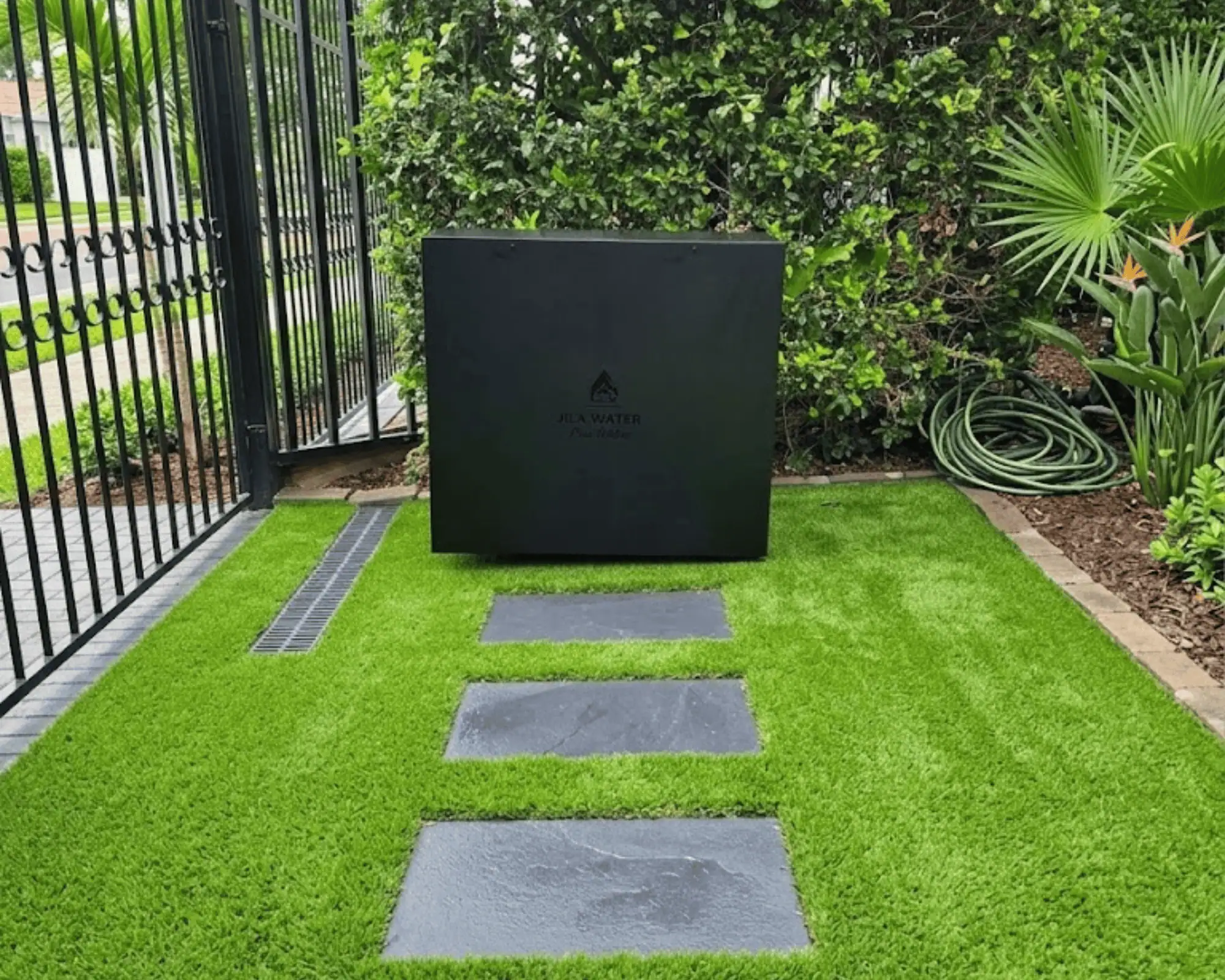
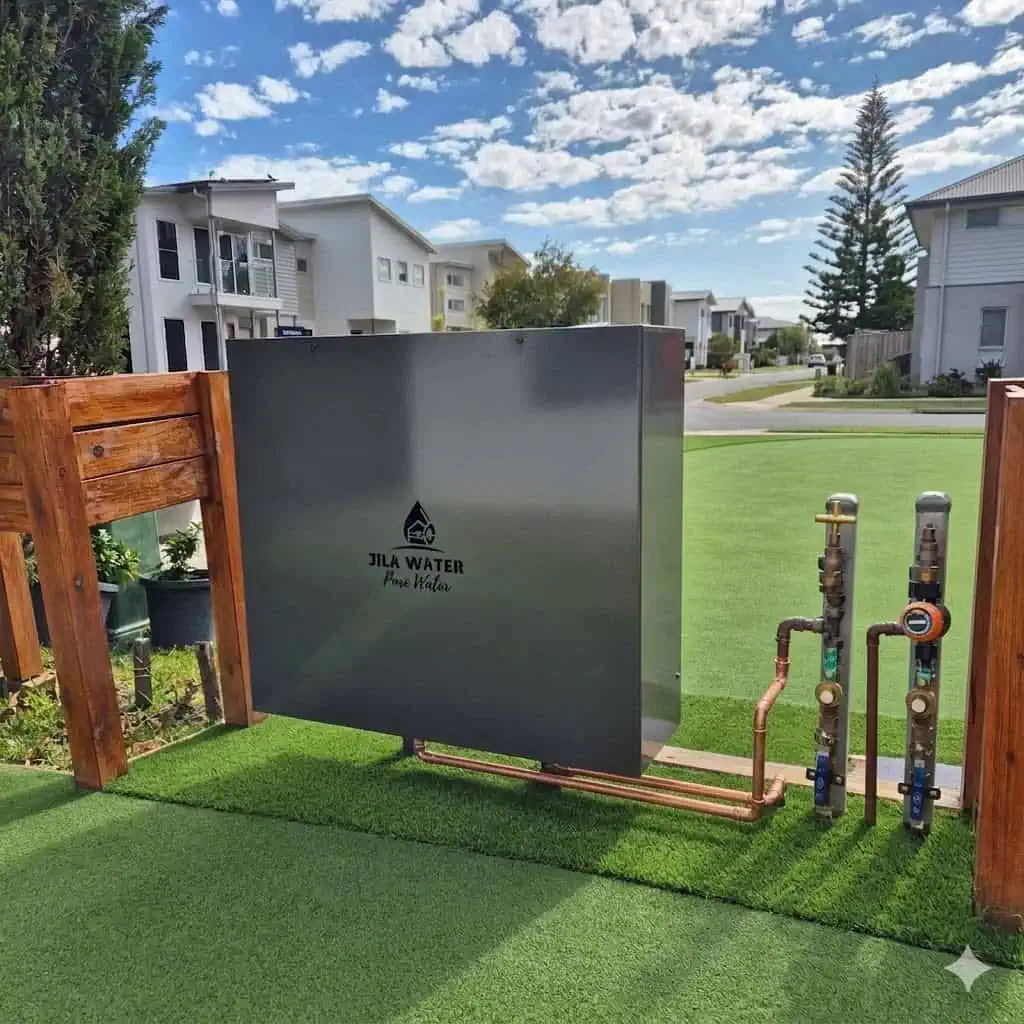
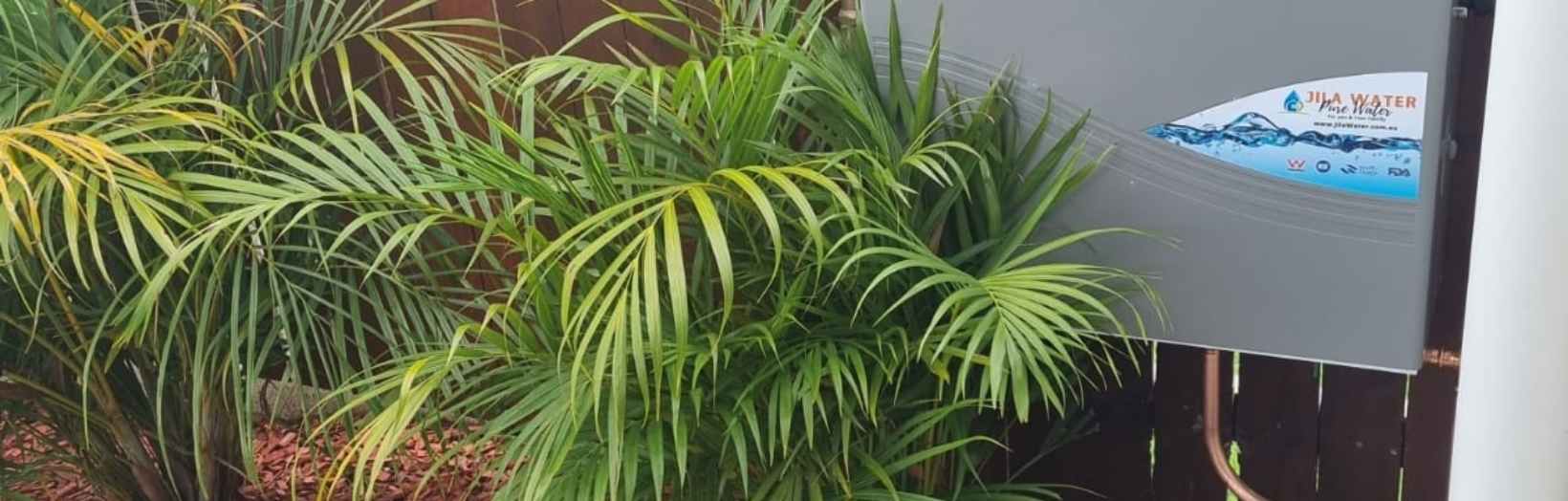
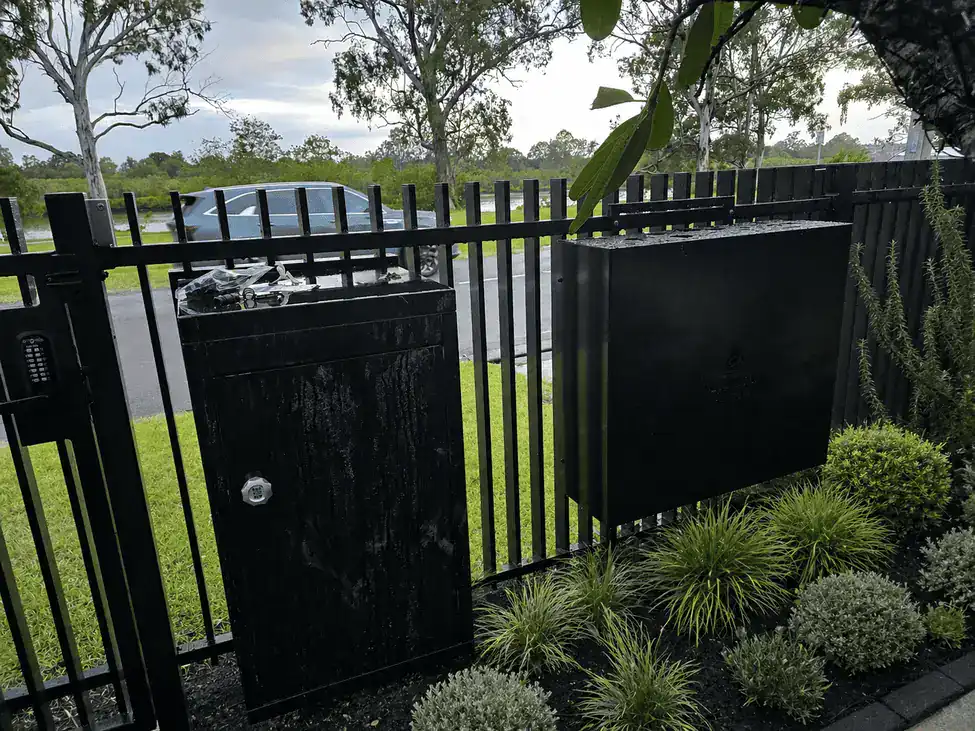
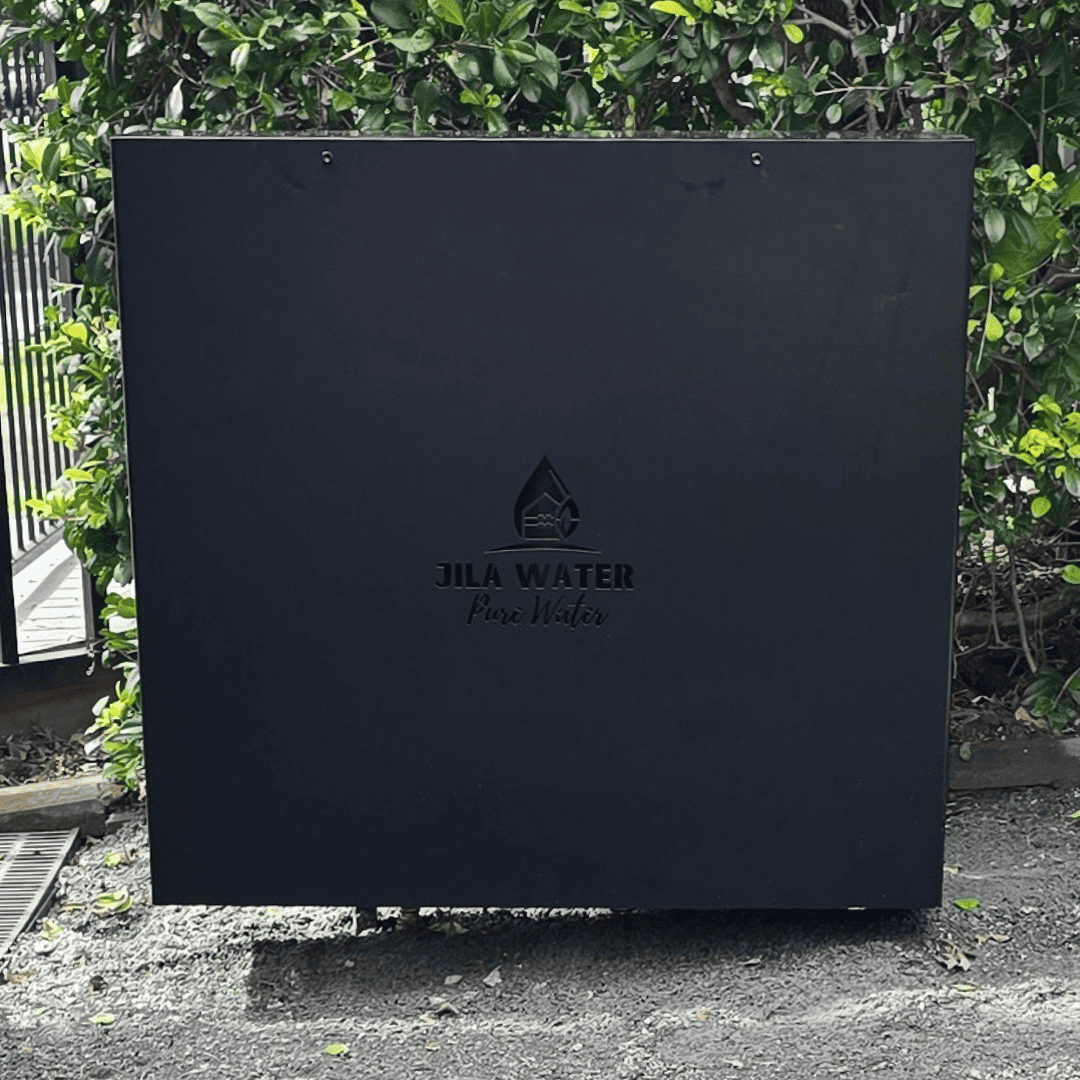
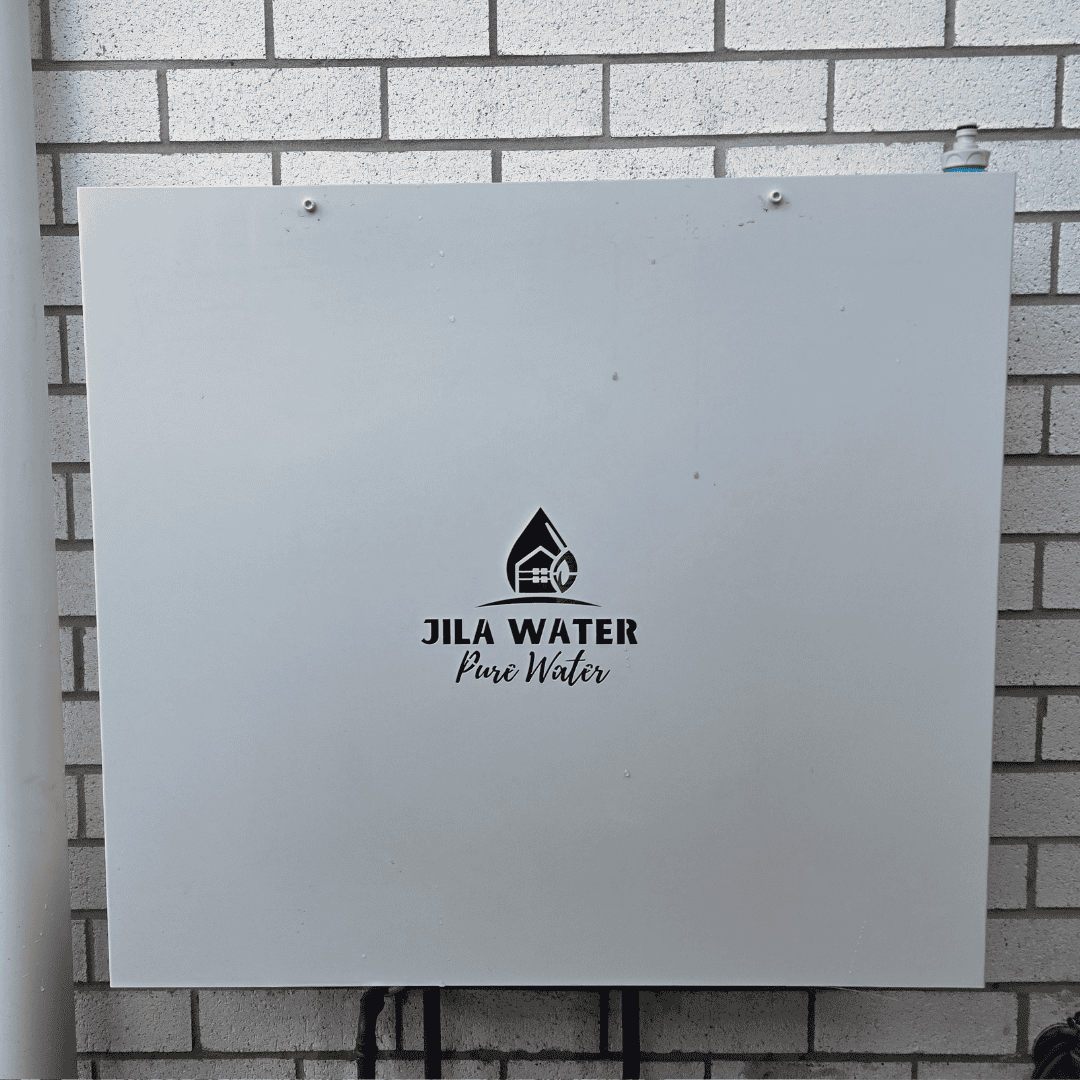
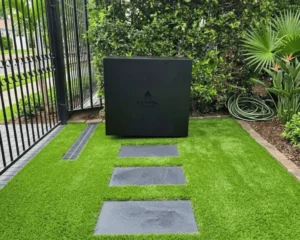
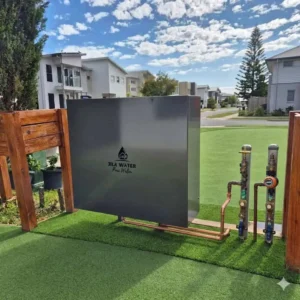
Jila Water premium whole home water filtration system installed at a Brisbane home

Premium Jila Water complete home filtration system installed for a Brisbane homeowner.

Complete Home Water Filtration, Explained Simply

Jila Water helps Brisbane and South East Queensland homeowners understand what is really
coming through their taps and how a professionally installed whole home water filtration system can improve water throughout the kitchen, bathrooms, showers, laundry, and outdoor taps.

This category brings together practical guides on water filtration systems, filter replacement,
chlorine reduction, sediment protection, water quality testing, system sizing and what to look
for when choosing a complete home water filtration system in Queensland.

  • Is It Possible for COVID-19 to Be Transmitted through Water

    Is It Possible for COVID-19 to Be Transmitted through Water

    Picture of Jila Water

    Jila Water

    Is It Possible for COVID-19 to Be Transmitted through Water

    Facebook
    Twitter
    LinkedIn

    COVID-19 is a potentially fatal disease caused by a virus. Since we are still in the middle of a pandemic, it is understandable that many people are concerned about their well-being. After all, the virus can spread easily without proper precautions. It is of utmost importance to keep yourself and your family safe from potential infection and transmission by observing the best hygiene practices.


    Since COVID-19 is spread virally, some people are concerned about getting infected through publicly-available methods of obtaining water. In this article, we will discuss the possibilities of the coronavirus spreading through different sources of water in Queensland and Brisbane.

    Whole Home Water Filters and COVID 19

    Lakes, Rivers, or Seas


    Currently, no studies have been conducted regarding the coronavirus’s ability to infect people through lakes, oceans, seas, rivers, and other bodies of water. Pools and hot tubs are regularly checked and maintained. With their existing regulated pH levels and chlorine levels, it is improbable for the virus to survive there.


    Natural bodies of water are not treated, unlike public pools and hot tubs. However, their vastness can make it very difficult for the virus to spread. So if there is possible contamination, the effect of the virus will be reduced significantly and make it unlikely for anyone to be infected.


    If you ever decide to swim in a public pool, lake, or beach, make sure to follow health protocols. This includes sanitising your hands and maintaining a safe distance from the people around you, even in the water.


    Bottled Water vs a filtered water. Whats better

    Bottled Water


    Australian households often prefer bottled water to tap water because it is safer to drink and it tastes better. It is also easier for them to source it too. It is highly unlikely that the coronavirus can be present in bottled water because the water itself comes from an approved source. 


    A manufacturer can only be a water supplier after they meet the applicable central and state quality standards. The water is also placed and sealed in sanitary containers, so the chances of contamination are improbable.


    Tap Water


    If you prefer drinking tap water but are afraid of catching the coronavirus, don’t fret. There is no evidence that suggests the virus can survive in tap water. The water treatment plants responsible for filtering and disinfecting consumable water do their jobs well, so it is improbable for the virus to survive throughout the process. At present, one of the only confirmed methods of transmission is close contact with an infected person.


    If you want assurance that the tap water you are consuming is clean and safe during this pandemic, you should consider installing affordable water filter systems. By drinking filtered water, you can put any uneasiness at rest.

    What water filters should be used in COVID times

    Conclusion


    Recent studies show that the coronavirus has not been found in treated drinking water supplies, but the chances of it being transmitted through these are also low. But if you still want to be sure that what you are consuming is safe to drink, you should consider drinking filtered water that has gone through a trusted filtration system.


    The Jila Water System is an all-in-one whole house filtration system specifically designed for Queensland and Brisbane residences. Our affordable water filter systems can meet the unique water needs of all locals. Our current technology helps get rid of chlorine-rich hard water that could potentially cause you any trouble along the way. For inquiries about our products, contact us today.

    Picture of Jila Water

    Jila Water

    Is It Possible for COVID-19 to Be Transmitted through Water

    Facebook
    Twitter
    LinkedIn

    COVID-19 is a potentially fatal disease caused by a virus. Since we are still in the middle of a pandemic, it is understandable that many people are concerned about their well-being. After all, the virus can spread easily without proper precautions. It is of utmost importance to keep yourself and your family safe from potential infection and transmission by observing the best hygiene practices.


    Since COVID-19 is spread virally, some people are concerned about getting infected through publicly-available methods of obtaining water. In this article, we will discuss the possibilities of the coronavirus spreading through different sources of water in Queensland and Brisbane.

    Whole Home Water Filters and COVID 19

    Lakes, Rivers, or Seas


    Currently, no studies have been conducted regarding the coronavirus’s ability to infect people through lakes, oceans, seas, rivers, and other bodies of water. Pools and hot tubs are regularly checked and maintained. With their existing regulated pH levels and chlorine levels, it is improbable for the virus to survive there.


    Natural bodies of water are not treated, unlike public pools and hot tubs. However, their vastness can make it very difficult for the virus to spread. So if there is possible contamination, the effect of the virus will be reduced significantly and make it unlikely for anyone to be infected.


    If you ever decide to swim in a public pool, lake, or beach, make sure to follow health protocols. This includes sanitising your hands and maintaining a safe distance from the people around you, even in the water.


    Bottled Water vs a filtered water. Whats better

    Bottled Water


    Australian households often prefer bottled water to tap water because it is safer to drink and it tastes better. It is also easier for them to source it too. It is highly unlikely that the coronavirus can be present in bottled water because the water itself comes from an approved source. 


    A manufacturer can only be a water supplier after they meet the applicable central and state quality standards. The water is also placed and sealed in sanitary containers, so the chances of contamination are improbable.


    Tap Water


    If you prefer drinking tap water but are afraid of catching the coronavirus, don’t fret. There is no evidence that suggests the virus can survive in tap water. The water treatment plants responsible for filtering and disinfecting consumable water do their jobs well, so it is improbable for the virus to survive throughout the process. At present, one of the only confirmed methods of transmission is close contact with an infected person.


    If you want assurance that the tap water you are consuming is clean and safe during this pandemic, you should consider installing affordable water filter systems. By drinking filtered water, you can put any uneasiness at rest.

    What water filters should be used in COVID times

    Conclusion


    Recent studies show that the coronavirus has not been found in treated drinking water supplies, but the chances of it being transmitted through these are also low. But if you still want to be sure that what you are consuming is safe to drink, you should consider drinking filtered water that has gone through a trusted filtration system.


    The Jila Water System is an all-in-one whole house filtration system specifically designed for Queensland and Brisbane residences. Our affordable water filter systems can meet the unique water needs of all locals. Our current technology helps get rid of chlorine-rich hard water that could potentially cause you any trouble along the way. For inquiries about our products, contact us today.

    More to explorer

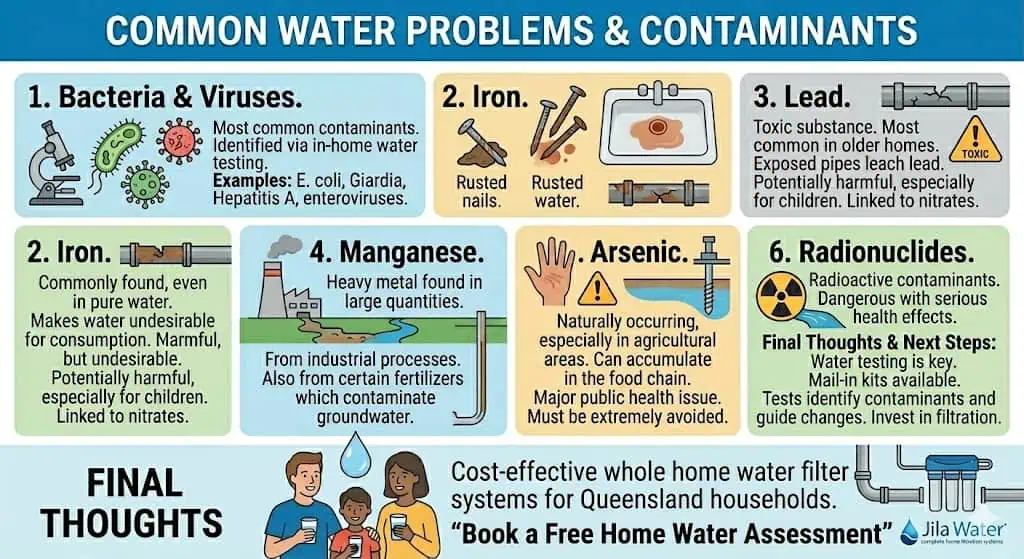
    The Importance of Water Testing & Identifying Contaminants

    Water testing helps Brisbane and SEQ homeowners understand what may be affecting their tap, tank or bore water before choosing a filtration system. This guide explains common contaminants, water quality warning signs, and when to book a free Jila Water home water assessment.
    More to explorer

    The Importance of Water Testing & Identifying Contaminants

    Water testing helps Brisbane and SEQ homeowners understand what may be affecting their tap, tank or bore water before choosing a filtration system. This guide explains common contaminants, water quality warning signs, and when to book a free Jila Water home water assessment.

  • 3 Reasons Why You Should Cook Food Using Filtered Water

    3 Reasons Why You Should Cook Food Using Filtered Water

    Why You Should Cook Food Using Filtered Water

    3 Reasons Why You Should Cook Food Using Filtered Water

    From washing rice, fruits and vegetables to cooking soup and washing our plates, we are always using water. But with this in mind, did you know that the water you are using can prevent you from serving a healthy and delicious meal?


    Hard water coming directly from your tap can sometimes change the colour, taste and even smell of the food you are trying to prepare. To avoid this, you can use filtered water to make sure that the taste of the drinks and food will not be altered. To help you understand more, here are three reasons why you should cook your food using only filtered water.

    Contaminants Are Present in Hard Water

    You may not know it, but tap water may contain contaminants that can cause the quality of your food to change. Some common pollutants include:

    • Chlorine – Chlorine tastes and smells terrible. It can also dry out your skin and hair. This chemical is usually used to disinfect or treat swimming pools and municipal water supplies. When using chlorine as treatment, water is needed to be filtered out before use to eliminate the pungent smell.
    • Magnesium – Magnesium is what causes tap water into hard water. This is not necessarily hazardous to our health but with great amounts, it may be. Also, this causes buildup in pipes and shortens the lifespan of appliances.
    • Lead – Lead can seep into water supplies from fixtures, solder and lead pipes. When lead is consumed at high levels, it can result in anemia, weakness in the brain and kidney damage.
    • Sulphur – Hydrogen sulphide is a colourless and smelly gas usually found in groundwater and produced by sulphur. When mixed with water, it can have a laxative effect that can lead to excessive diarrhea and dehydration, especially in small children and infants. 

    Your water suppliers may not be able to remove the contaminants in tap water so it’s always best to filter water out to remove impurities that may not be safe for human consumption, especially when taken in high amounts. Plumbing can also cause contamination of your water supply.

    It Has a Purified and Clean Taste

    Some impurities and chlorine can mix into your tap water which is why it has a foul smell and tastes awful. But when you filter your water, the smell and taste can be eliminated, leaving you a cleaner and purified taste.

    Imagine preparing your food and drinks and you use water that contains chlorine. The food you prepare can have the same bad taste and smell. Now if you’re using purified water when cooking rice or pasta, you will notice a creamier texture to your food. Your food will definitely taste better.

    It Retains the Colour and Brightness of Food

    When you use regular tap water contaminated with impurities, you’ll notice that your food, especially the fruits and vegetables lose their bright colours. The reason could be the chlorine present in your water.

    Because remember, chlorine, like bleach can also strip out the natural colours away from whatever food it comes in contact with. And this is especially true for your fruits and vegetables if there are high levels of chlorine present in your water source.

    Conclusion

    Whatever you’re preparing, you may want to consider using filtered water because tap water affects the quality of cooked food. You can always find a filtering system that you can easily install in your home. However, if you are having second thoughts as to how you can do this, you can always find experts to help you make sure that you have healthier water at home.

    Jila Water is one of the industry leaders when it comes to home water filters. We can help you install the best water filtration system in Brisbane, so you can have a sense of peace that you and your family are safe from water contamination. Contact us today so we can schedule a free home water testing.

    Share:

    Facebook
    Twitter
    Pinterest
    LinkedIn
    On Key

    Related Posts

    The Importance of Water Testing & Identifying Contaminants

    Water testing helps Brisbane and SEQ homeowners understand what may be affecting their tap, tank or bore water before choosing a filtration system. This guide explains common contaminants, water quality warning signs, and when to book a free Jila Water home water assessment.

  • The Benefits of Having a Shower or Bath Water Filter

    The Benefits of Having a Shower or Bath Water Filter

    Australians know the importance of drinking clean, filtered water. However, the need for filtered water in the bath may be of lesser importance to many. Still, unfiltered water may contain numerous contaminants like chlorine, chloramines, minerals, pesticides, trihalomethanes, heavy metals and bacteria that may affect your health.

    These chemicals, especially chlorine, can cause dry skin and hair and worsen skin conditions like eczema and rosacea in young children and babies. To prevent these from happening, a filtration system is essential in your shower or bath. 

    Here are other reasons why you need a water filter:


    • Chloroform Exposure

    In their many forms, Trihalomethanes are produced when chlorine comes in contact with decaying organic matter in waterways. One of the most dangerous forms is chloroform, which may vaporise for you to breathe in if you are on town water. That can lead to feelings of lethargy, dizziness and disorientation.

    Long-term exposure to chloroform can also lead to cancer, which the U.S. Department of Health and Human Services calls a reasonably anticipated human carcinogen. With that said, it’s not something you want in the water you bathe in or the air you breathe.


    • Chlorine Exposure

    Most Australian cities and towns treat their water with chlorine to eliminate bacteria, viruses and protozoa. While it’s a simple and effective way of treating water to be safe for drinking, there are downsides to showering with chlorine in the water. These include:

    • Dry Skin: Chlorine strips both harmful and beneficial bacteria and protective oils from your skin. This chemical can be harsh and may even lead to skin irritation. Moreover, exposure to hot chlorinated water can make your skin itchy and dry, with the drying effect a contributing factor to premature ageing.
    • Dry and Brittle Hair: Chlorinated water strips hair of natural oils, leaving you with dull and brittle hair that can be challenging to manage. High chlorine levels in your water can also lead to hair discolouration, giving it a green tinge. Many people also experience flaky or itching scalp due to the chlorinated water.
    • Red Eyes: Spending too much time in a pool with chlorinated water can irritate your eyes, and the same goes for showering. Taking too long to shower in chlorinated water can lead to redness and a burning sensation in the eyes.


    • Eczema and Rosacea Flare-Ups

    If you have a skin condition like eczema and rosacea, bathing in chlorinated water doesn’t help your skin because it can be extremely drying. That dryness can cause eczema or rosacea flare-ups, dramatically affecting your skin condition. If you do have these pre-existing skin conditions, it’s best to shower in filtered water, which can contribute to treating your skin.

    Conclusion

    When you shower in fresh, clean and filtered water, you can prevent coming in contact with harsh chemicals. You can avoid the negative effects of chlorinated water, such as skin conditions like eczema and health risks like inhaling chloroform. Having a water filtration system in your shower also guarantees you’ll feel better during every shower. 

    Jila Water is Queensland’s home water filtration specialist. We provide Australians with cost-effective whole house water filter systems that guarantee clean, fresh water throughout your house for the same price as maintaining a standard fridge filter. Our proprietary Jila Water System is a water filter for the whole home and utilises our patented four-stage filtration system that softens and removes the finest dirt, sediments and chemicals. Contact us today!

    Facebook
    Twitter
    LinkedIn
    Email
    On Top
    On Trend

    Popular Stories

    The Importance of Water Testing & Identifying Contaminants

    Water testing helps Brisbane and SEQ homeowners understand what may be affecting their tap, tank or bore water before choosing a filtration system. This guide explains common contaminants, water quality warning signs, and when to book a free Jila Water home water assessment.

    On Flight

    Are you Wanting Better Health?

    The Importance of Water Testing & Identifying Contaminants

    Water testing helps Brisbane and SEQ homeowners understand what may be affecting their tap, tank or bore water before choosing a filtration system. This guide explains common contaminants, water quality warning signs, and when to book a free Jila Water home water assessment.

    On Brand

    Beauty Tips and Tricks

    The Importance of Water Testing & Identifying Contaminants

    Water testing helps Brisbane and SEQ homeowners understand what may be affecting their tap, tank or bore water before choosing a filtration system. This guide explains common contaminants, water quality warning signs, and when to book a free Jila Water home water assessment.

    On Style

    Home Water Filtration

  • Do I Need Home Water Filtration Brisbane in 2026?

    Do I Need Home Water Filtration Brisbane in 2026?

    Brisbane & SEQ whole home water filtration

    Do I need a whole home water filtration system in Brisbane?

    If you are noticing chlorine smell, poor taste, dry-feeling showers, sediment, scale marks or you simply want better water from more than one tap, a whole home water filtration system is worth considering. A proper assessment helps you decide whether unfiltered Brisbane water is affecting your home, your comfort and the way your family uses water every day.

    Every tap Designed to filter water before it reaches kitchens, bathrooms, showers, laundry and outdoor taps where applicable.
    Local logic Built around Brisbane and South East Queensland homes, water concerns and installation requirements.
    Premium install A professionally installed system designed to look intentional, not like an afterthought.
    4.9★ rated locally Installed across Brisbane & SEQ Licensed plumber installation Premium colour-matched finish
    Brisbane & SEQ specialists Local advice based on real home water concerns.
    Whole home coverage Not just one tap, one fridge or one shower.
    Licensed installation Installed properly by licensed plumbers.
    Premium system design Built to suit quality Queensland homes.
    Free assessment Clear guidance before you choose a system.
    The problem

    Unfiltered Brisbane water can affect more than just taste.

    Brisbane and South East Queensland tap water is treated and managed to meet Australian drinking water standards. But “safe to drink” does not always mean it feels, smells or tastes the way you want it to throughout your home.

    Many homeowners start looking into whole home water filtration because of everyday signs they can actually notice: a chemical smell in the shower, tap water that tastes harsh, residue around fittings, visible sediment after works in the street, or hair and skin that feel stripped after washing.

    • Chlorine or chloramine smell from taps and showers.
    • Water that tastes flat, metallic or chemically treated.
    • Dry-feeling skin, rough-feeling hair or harsher showers.
    • Scale marks, residue or buildup around taps, screens and shower glass.
    • Sediment, discolouration or concern about ageing household plumbing.
    • A desire to reduce reliance on bottled water, fridge filters or small add-on filters.
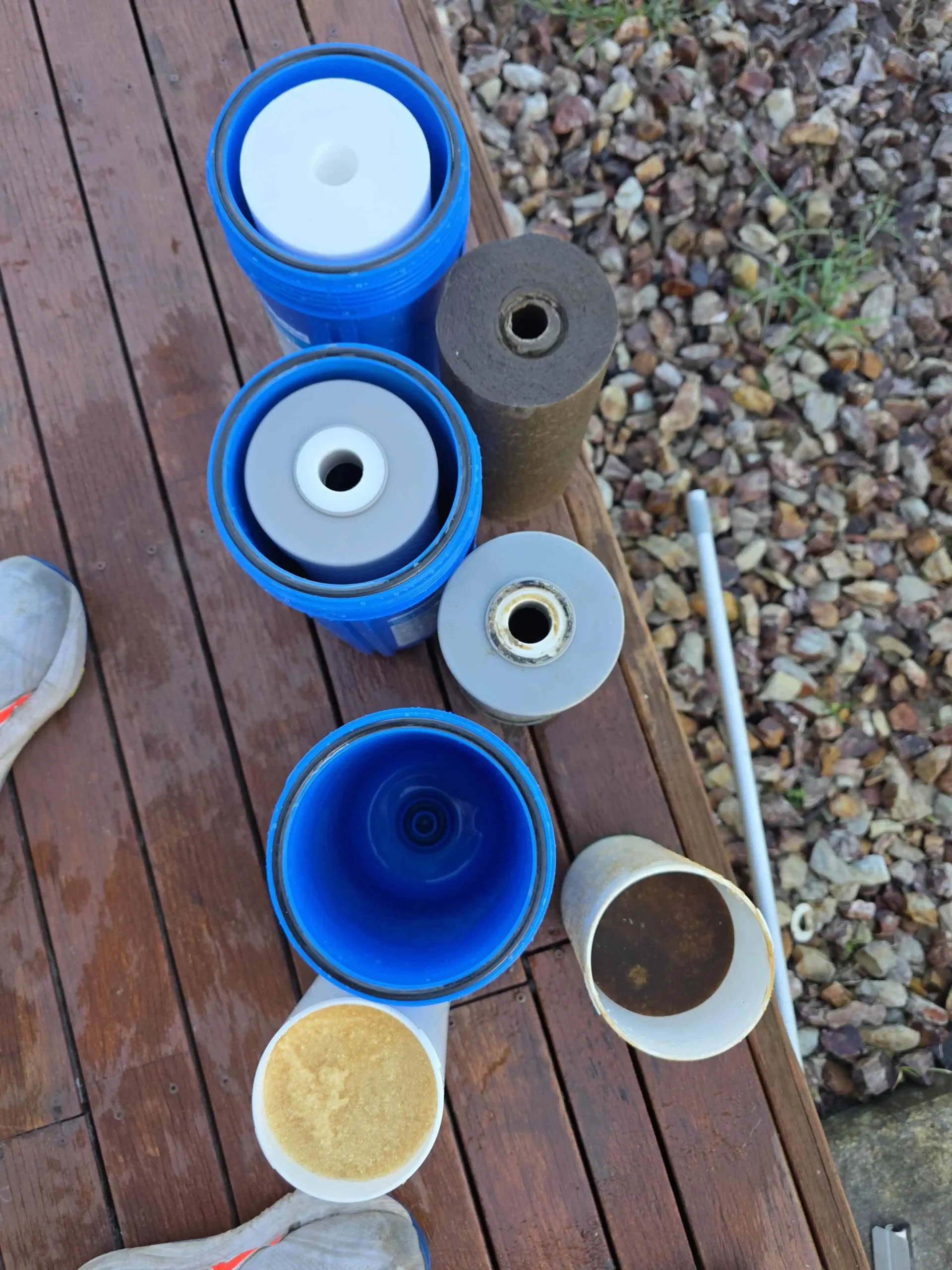
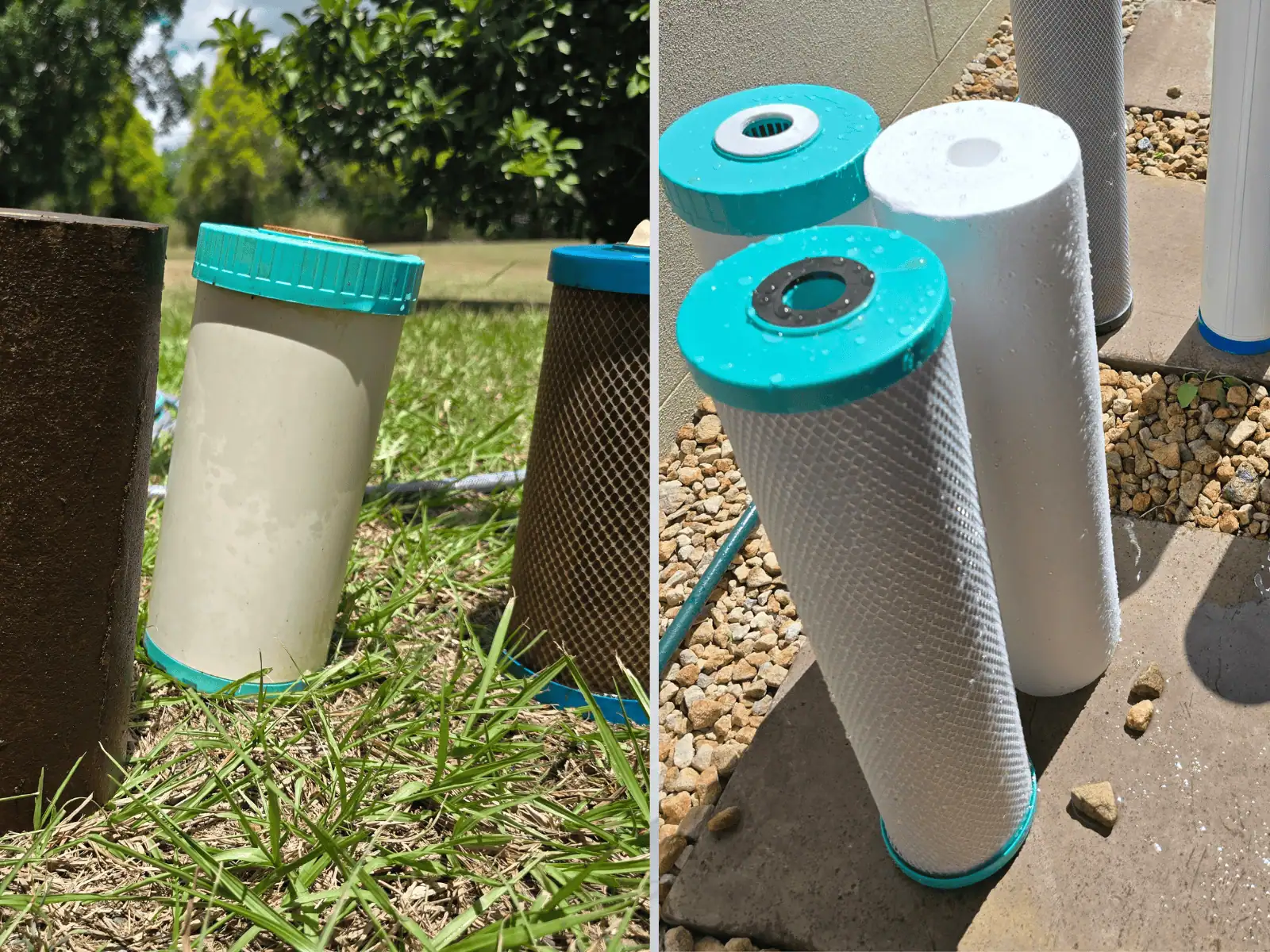
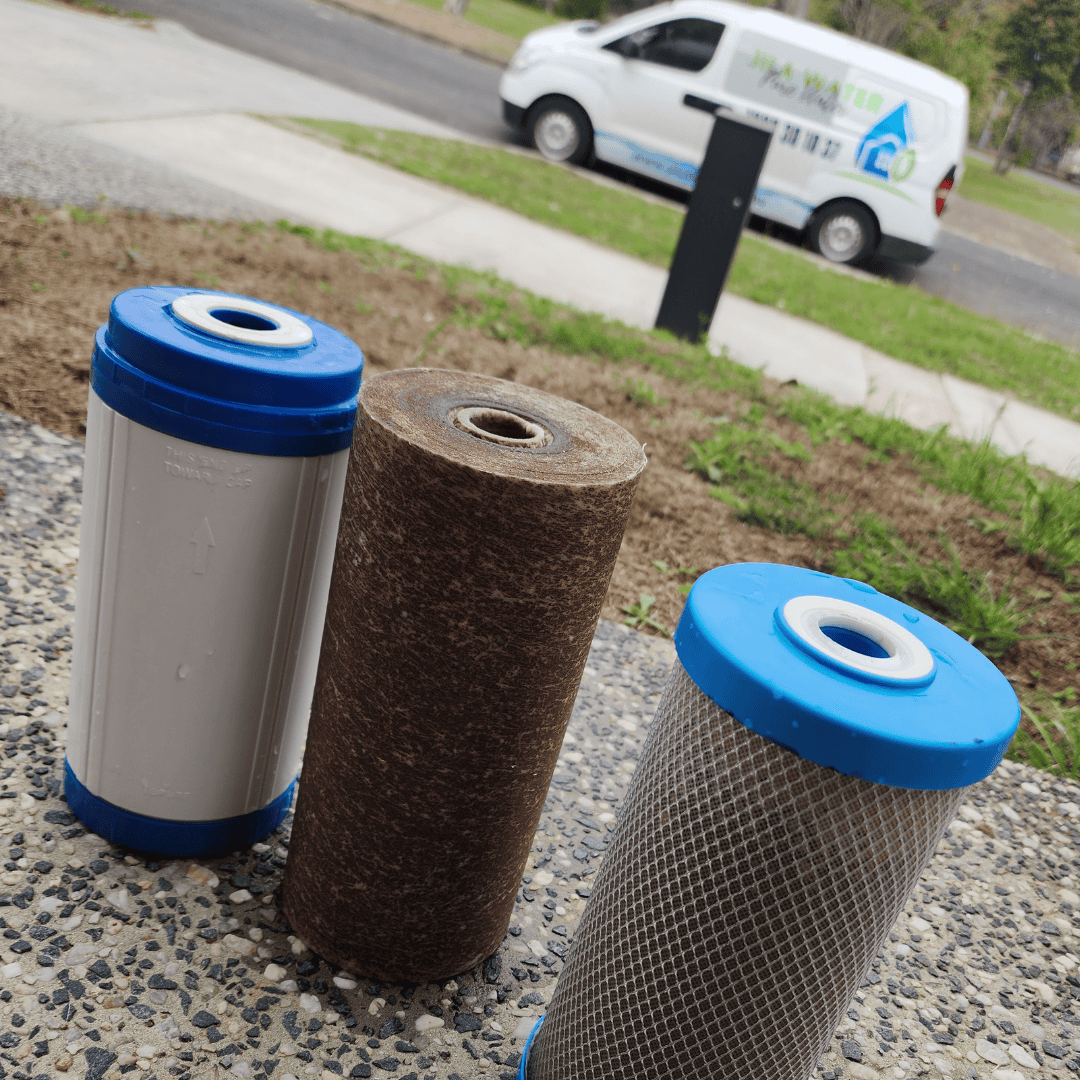
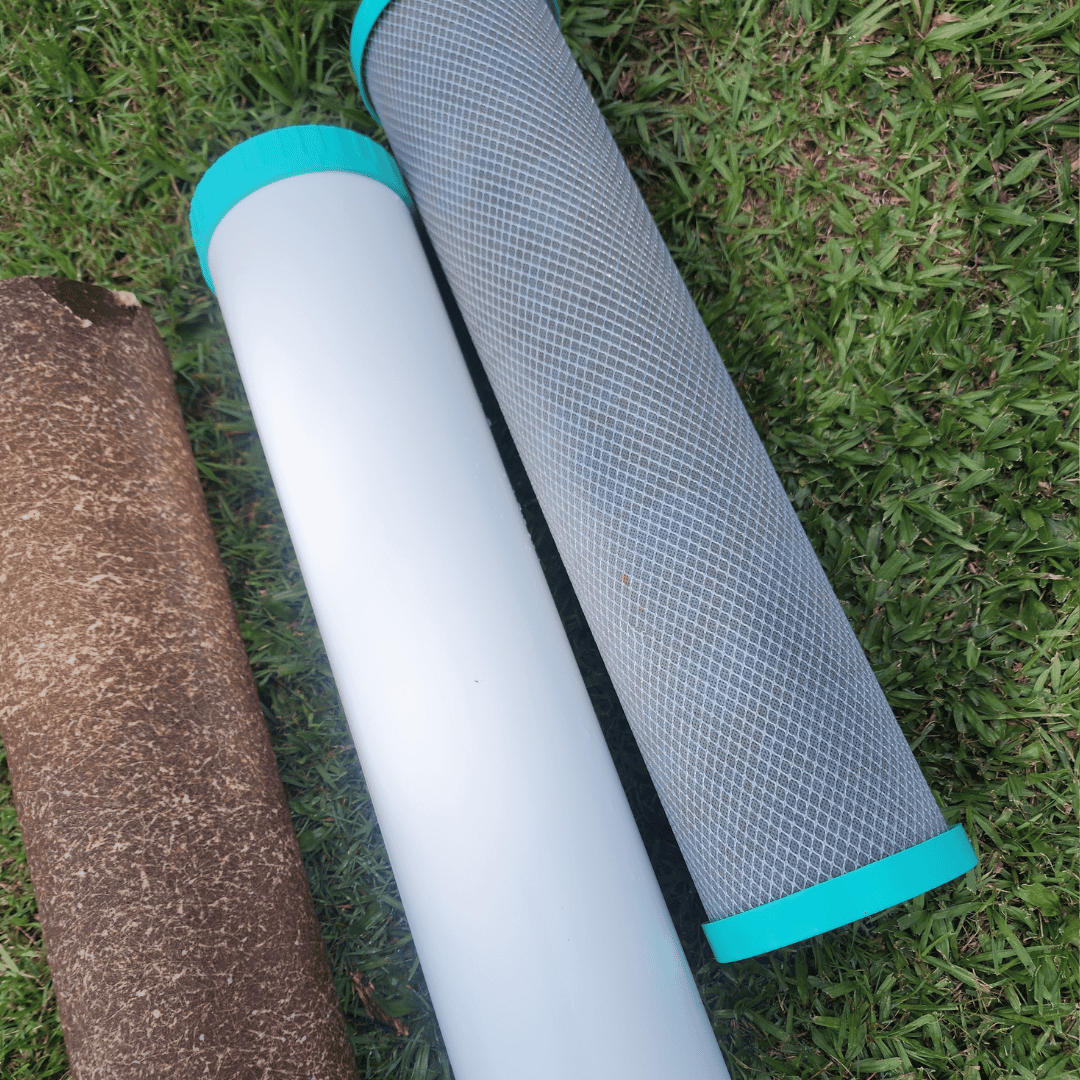
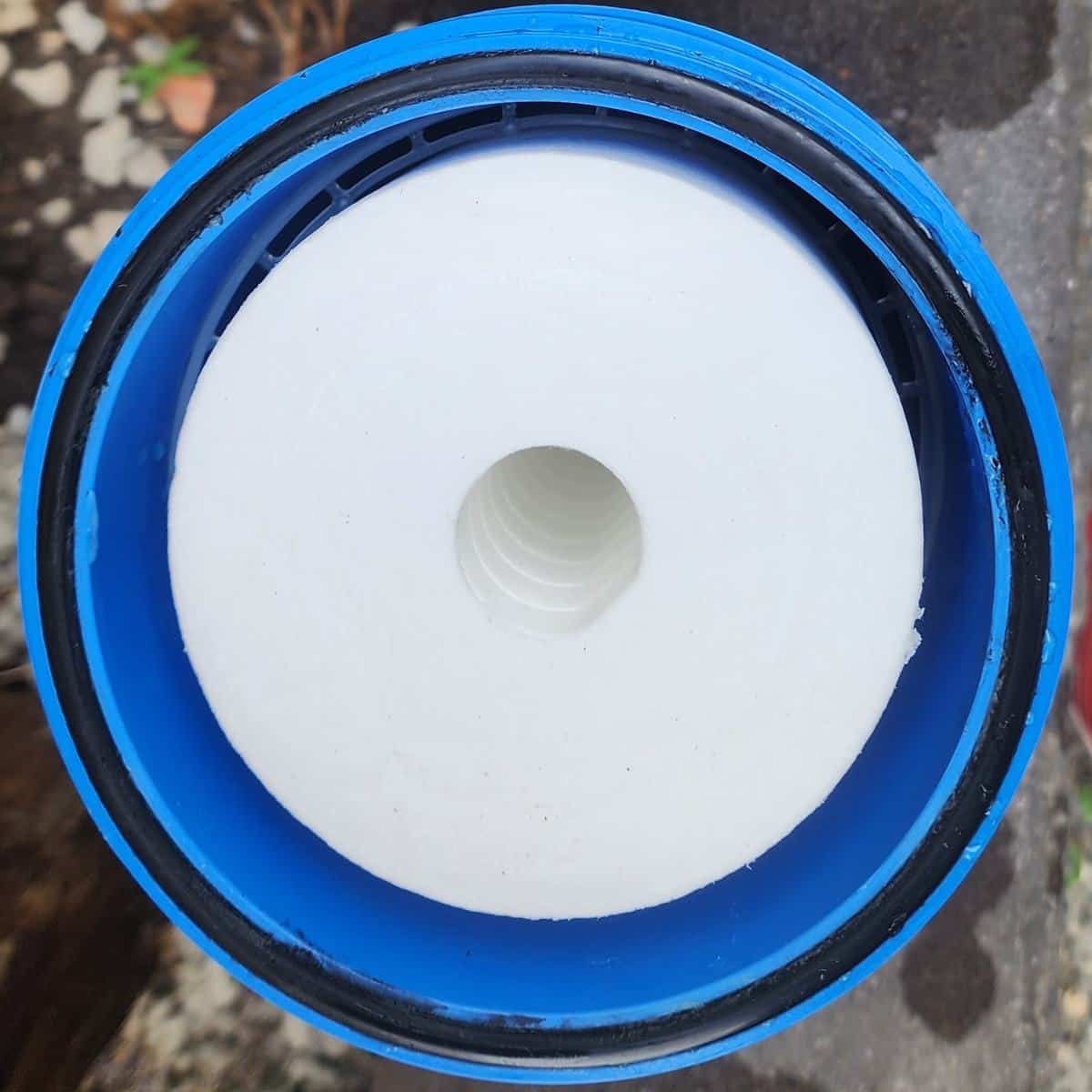
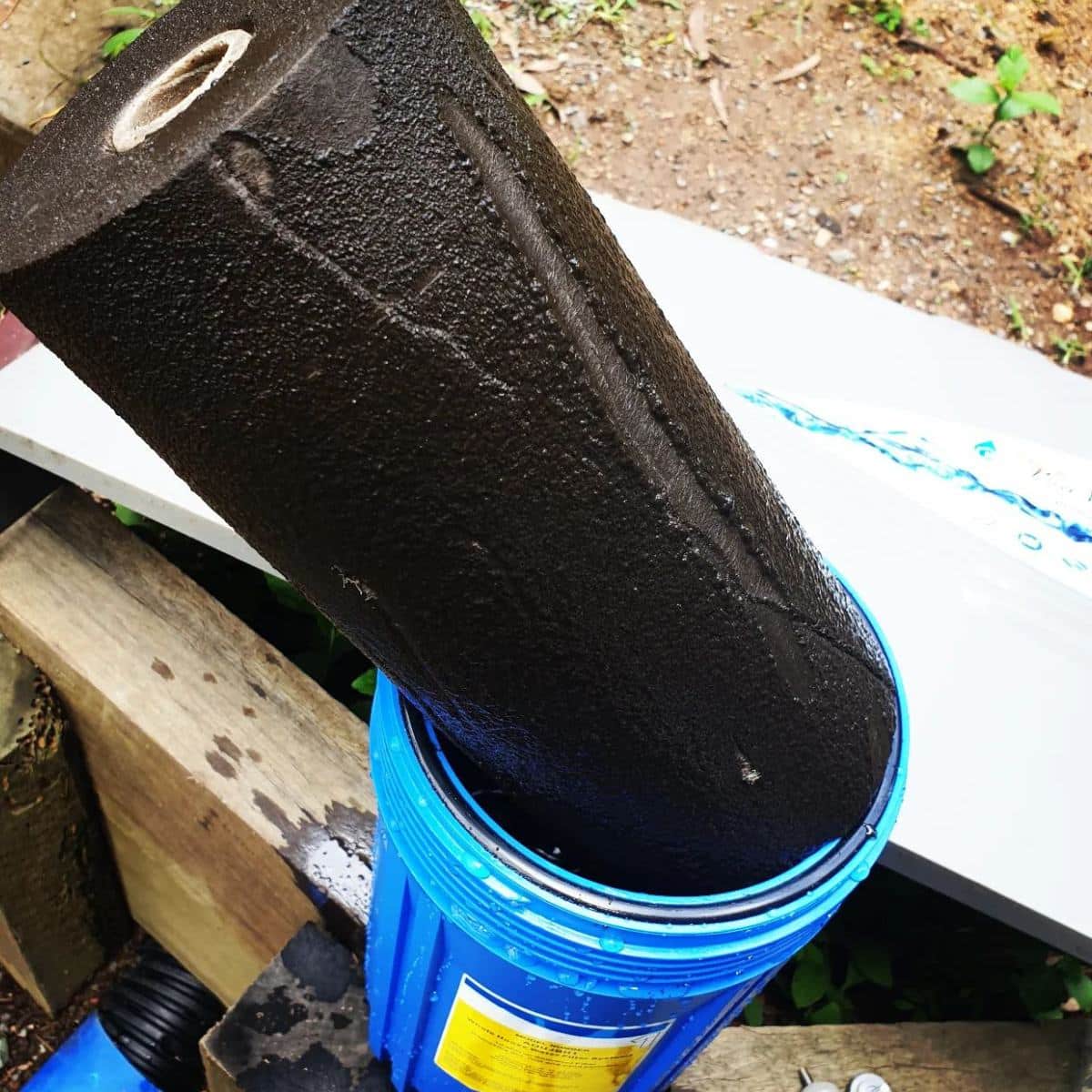
    Used and clean filter cartridges showing what unfiltered Brisbane water can leave behind
    Real filter proof Visual proof helps homeowners understand what a properly matched filtration system can help capture before it keeps moving through the home.
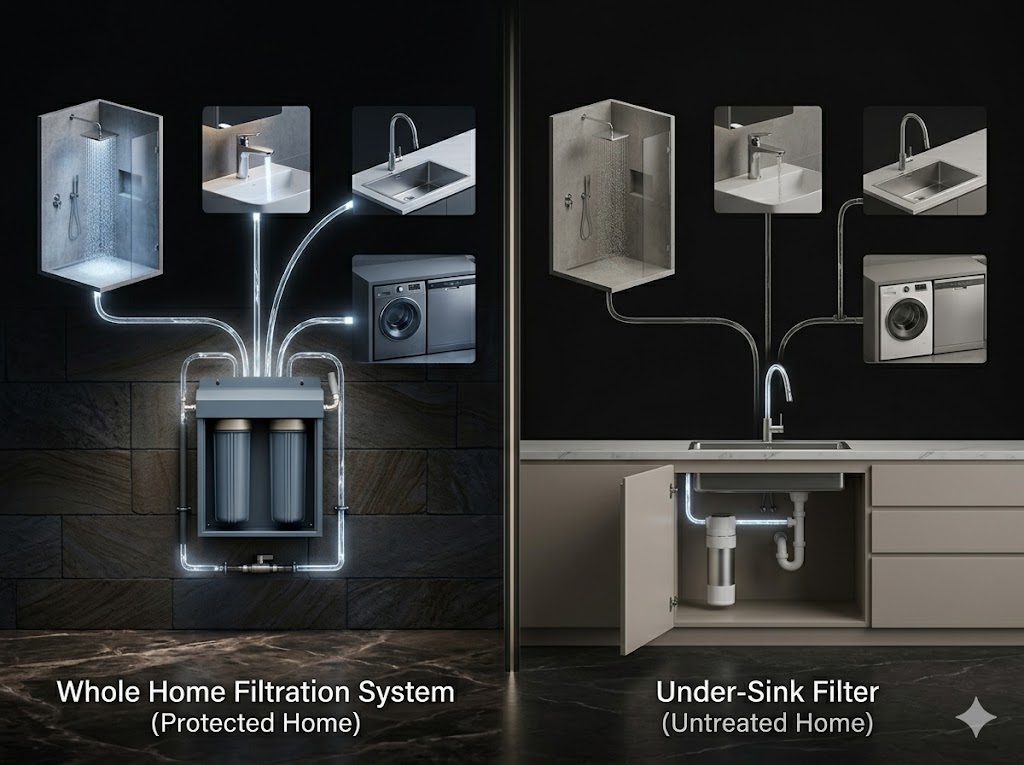
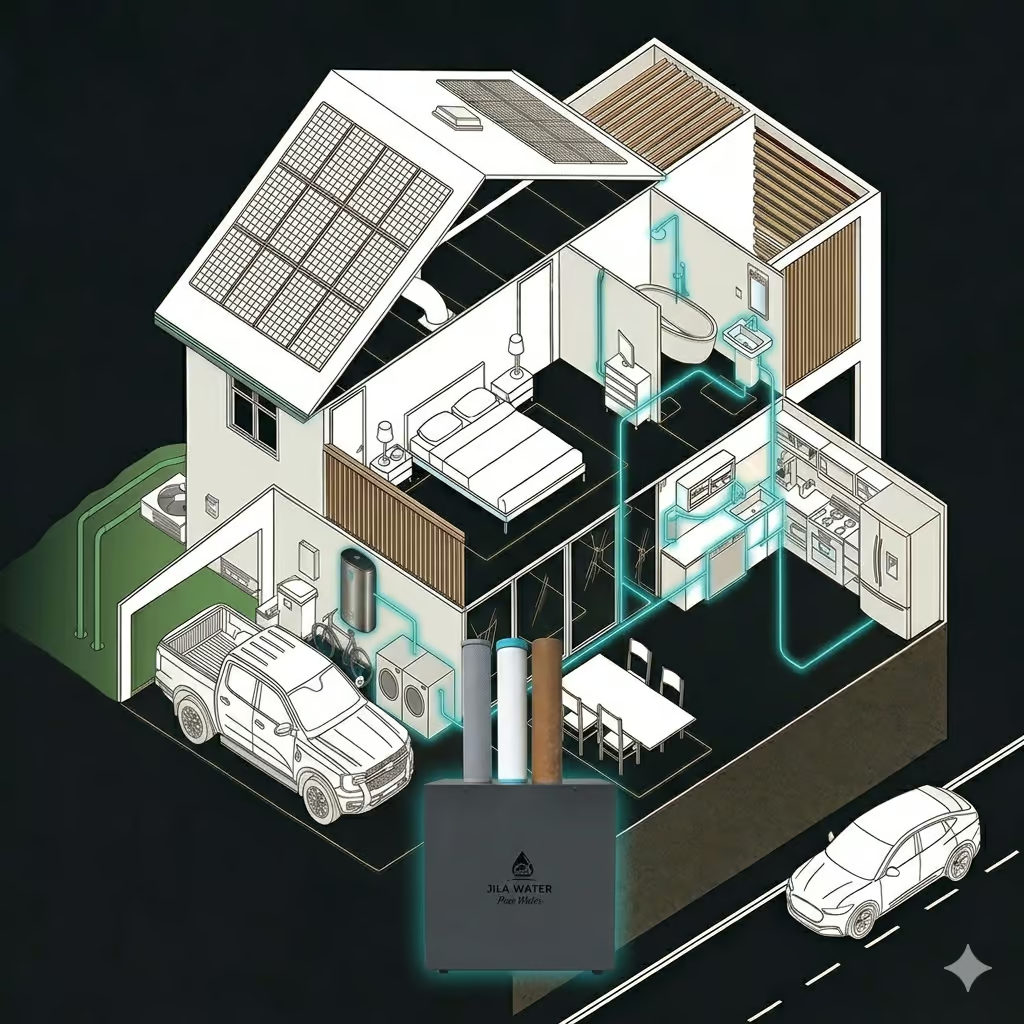
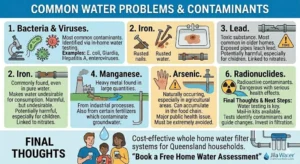
    Jila Water complete home water filtration system diagram showing water filtered before every tap
    Complete home filtration Water is treated before it reaches the outlets your family uses every day.
    The solution

    Filter the water before it reaches the home.

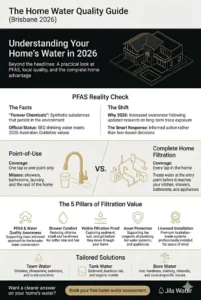
    A Jila Water complete home water filtration system is installed at the point where water enters the property, before it reaches the kitchen, bathrooms, showers, laundry and outdoor taps where applicable.

    That is the key difference. A benchtop filter, fridge filter or under-sink filter can improve one drinking point. A shower filter can help one shower. Whole home water filtration is designed for the water your family actually lives in every day.

    Simple way to think about it: if the problem is only one glass of drinking water, a single outlet filter may be enough. If the concern includes showers, skin and hair comfort, washing, fixtures, appliances and daily household use, the whole-home approach makes more practical sense.

    Everyday benefits

    Better water from the taps, showers and fixtures you already use.

    Most families do not buy filtration because they love technical media names. They buy it because they want their home to feel cleaner, calmer and more comfortable every day.

    1

    Better-tasting water

    Designed to reduce the taste and odour issues that make everyday tap water less enjoyable to drink, cook with or fill bottles from.

    2

    Better-smelling water

    Helps reduce that treated chemical smell many homeowners notice from taps and showers, especially in enclosed bathrooms.

    3

    More comfortable showers

    Many households choose complete home filtration because they want shower water that feels less harsh on skin and hair.

    4

    Reduced sediment

    Multi-stage filtration can help reduce fine particles, visible sediment and the buildup that can move through household plumbing.

    5

    Appliance and fixture support

    Cleaner incoming water can help support taps, mixers, screens, shower fittings, laundry equipment and water-using appliances.

    6

    Whole-home convenience

    No juggling bottled water, fridge cartridges and separate shower filters. One professionally installed system supports the home.

    System and technology

    A premium multi-stage system, matched to the home.

    The best system is not chosen from a generic online cart. It is matched to the property, water source, household demand, pressure, installation location and the outcome you want.

    01

    Sediment pre-filtration

    Designed to reduce dirt, rust, grit and suspended particles before the water continues through the system.

    02

    Jila Water AquaSoft™ stage

    A conditioning stage designed to support better household water feel and help manage scale-related concerns.

    03

    Activated carbon stage

    Selected to help reduce chlorine, chloramine-related taste and odour concerns, and chemical/disinfectant smell.

    04

    Premium installed finish

    High-flow design, premium housing options, clean plumbing work and colour-matched presentation where suitable.

    Why Jila Water

    Local advice, premium systems and proper installation.

    Jila Water is not just an online filter seller. We specialise in premium complete home water filtration systems for Brisbane and South East Queensland homes.

    We help homeowners understand what is happening with their water, what type of system makes sense, where it should be installed, and what ongoing filter support looks like after installation.

    • Brisbane-based whole home water filtration specialist.
    • Designed for Queensland homes, weather and installation conditions.
    • Installed by licensed plumbers with clean, professional presentation.
    • Premium housing and enclosure options designed to suit quality homes.
    • Free Home Water Assessment before you commit to a system.
    • Clear replacement filter options and after-sales support.
    Assessment first

    You are not booking a hard sell. You are booking clarity.

    Your Free Home Water Assessment helps identify your main concern, your water source, your installation location and the system logic that may suit your home. If a whole-home system makes sense, Jila Water can recommend the right setup. If it does not, you still get clearer answers.

    Brisbane and South East Queensland

    Built for the way SEQ homes actually use water.

    From inner Brisbane homes to Bayside, Ipswich, Logan, Moreton Bay, Redlands, the Gold Coast and the Sunshine Coast, homeowners often look into filtration for the same reason: they want better water throughout the house, not just one filtered tap.

    Whether your concern is unfiltered Brisbane water, chlorine smell, taste, older pipework, family shower comfort or a premium long-term upgrade, the right complete home filtration setup should be matched to your home before it is installed.

    Common local concerns

    • Taste and odour from treated town water.
    • Residue around taps, showers and glass.
    • Sediment after works or changes in the network.
    • Older homes with older internal plumbing.
    • Families wanting better water at every tap.
    Compare your options

    Whole home filtration versus tap, fridge, shower and bottled water.

    Smaller filters can still be useful. The question is whether they solve the full problem you are trying to fix.

    Option Coverage Best suited for Practical limitation
    Jila Water whole home filtration Kitchen, bathrooms, showers, laundry and household outlets where connected. Homeowners wanting a premium installed solution for everyday water use across the property. Higher upfront investment and requires professional installation.
    Under-sink filter Usually one kitchen drinking tap. Improving drinking and cooking water from one outlet. Does not improve shower, laundry, bathroom or broader household water.
    Shower filter One shower outlet. People focused only on one shower experience. Does not improve drinking water, kitchen taps, laundry or other showers.
    Fridge filter Fridge dispenser only. Cold drinking water from a fridge. Small cartridge, limited coverage and not a whole-home solution.
    Bottled water Drinking only. Short-term convenience. Ongoing cost, storage, plastic waste and no benefit for showers or appliances.
    Simple process

    How your Free Home Water Assessment works.

    Start with clarity, not guesswork. Jila Water helps you understand your water concerns, installation location and best system pathway before you make a decision.

    Book your assessment

    Choose the water concern that matters most and request your free home water assessment.

    We assess the home

    We look at your water concerns, source, plumbing access, installation area and household use.

    We recommend the setup

    You get a tailored recommendation instead of a generic one-size-fits-all filter pitch.

    Licensed installation

    If you move ahead, your system is installed cleanly with ongoing filter support.

    Current Jila Water offer

    Start with the free assessment.

    Before choosing a system, find out what makes sense for your home, your water and the result you actually want.

    Free Home Water Assessment for Brisbane and SEQ homeowners.
    20% OFF installation where the current promotion applies.
    FREE second filter set where the current promotion applies.
    Premium colour upgrade where suitable for the system and home.

    Best next step

    Book your Free Home Water Assessment with Jila Water and find out what is really coming through your taps.

    FAQs

    Questions Brisbane homeowners ask before installing whole home filtration.

    How much does a whole home water filtration system cost in Brisbane?

    Cost depends on system size, filtration stages, water source, installation location, plumbing access and finish options. A free Jila Water home assessment is the best way to get a proper recommendation rather than guessing from a generic online price.

    Is whole home water filtration worth it for Brisbane homes?

    It can be worth it if you want better water across more than one outlet. If your concerns include taste, chlorine smell, shower comfort, sediment, fixture buildup or daily household water use, whole home filtration is usually a stronger long-term option than only filtering one tap.

    Does a Jila Water system filter every tap?

    A complete home system is installed where water enters the property, so it can filter water before it reaches connected household outlets such as kitchen taps, bathroom taps, showers, laundry and outdoor taps where applicable. The exact coverage depends on the plumbing layout.

    What is the difference between whole home filtration and an under-sink filter?

    An under-sink filter usually improves one kitchen drinking point. Whole home water filtration is designed to improve water before it reaches the rest of the home, including showers, bathrooms, laundry and other connected outlets.

    Can whole home filtration help with chlorine taste and smell?

    Yes, a correctly selected carbon stage can be designed to reduce chlorine and chloramine-related taste and odour concerns. The system should be matched to the home, flow rate and water source for best performance.

    How often do the filters need replacing?

    Annual replacement is common for many homes, but the right interval depends on water source, sediment load, system size, household use and filter type. Jila Water can recommend a service pathway during your assessment.

    Is installation included?

    Jila Water supplies and installs premium whole home water filtration systems using licensed plumbers. The final installation scope depends on access, plumbing layout, system type and where the system is positioned.

    How do I book a Free Home Water Assessment?

    You can book online through the Jila Water Free Home Water Assessment page. It is designed to help you understand your water concerns, your property setup and whether a complete home filtration system is the right fit.

    Ready to check your water?

    Find out what is really coming through your taps.

    Book your Free Home Water Assessment with Jila Water and get clear, local advice on whether a premium complete home water filtration system is the right fit for your Brisbane or South East Queensland home.

    Brisbane-based • Installed by licensed plumbers • Premium whole-home filtration • No-pressure assessment

  • Can Your Dental Health Be Affected by the Type of Water You Use?

    Can Your Dental Health Be Affected by the Type of Water You Use?

    Can Your Dental Health Be Affected by the Type of Water You Use?

    Oral health is a complex thing. You need a strict dental care routine to ensure your teeth and gums stay strong. You need to eat the right food because what you eat can also impact your oral health. But did you know that it’s not just sugary drinks like soda or juice that could be harmful to your teeth? Yes, even the type of water that you drink matters because for all you know, it’s the unnoticed culprit behind the problem you’re having with your dental health. 


    If you want to know more about how different types of water affect your oral health, then you’re in the right place as Jila Water, your provider of the best home water filter systems, share all the basic information on the topic that you should know:


    Different Types of Water and How They Affect Your Teeth


    Tap Water


    You’d be surprised to learn that dentists do recommend drinking tap water due to the essential minerals like calcium and magnesium that come with it. Additionally, the authorities for local water supply in a lot of cities add some vitamins and minerals to their tap water to boost the health benefits of drinking straight from the tap. 


    The biggest benefit that comes from drinking tap water is that you get fluoride from it. It may be a controversial topic but fluoride has always been associated with cavity prevention. The problem is that tap water in some cities may also come with impurities so it’s absolutely necessary to run the water through a purifier first before drinking it. Even if there’s fluoride and other minerals in tap water and it might be good for your dental health, unfiltered tap water can still do more harm to your health than good. 

    Different Types of Water and How They Affect Your Teeth

    Filtered Water


    As mentioned above, tap water in many areas still contains contaminants and chemicals which can be harmful to your health. It is for this reason many homeowners choose to use a reliable filter system to remove these impurities from tap water on their own and make it suitable and safe for drinking. 


    The problem is that there are filter systems that get rid of all the impurities and all the minerals like fluoride, too. So you should be careful in choosing the filter you use and opt for the ones that are designed to filter only traces of fluoride while still doing a thorough job of removing harmful contaminants. 


    Bottled Water


    Despite the constant advisories to avoid bottled water, a lot of Aussies still prefer bottled water because of the convenience it offers. While this type of water is not particularly bad for your oral health, the fact is you will be missing out on the health benefits that come from fluoridated water coming from your tap. 

    Different Types of Water and How They Affect Your Teeth

    Distilled Water

    Considered to be the purest type of drinking water, distilled water doesn’t contain any contaminant or mineral. While it’s not harmful to your body or your dental health, the distillation process also removes all the essential minerals including fluoride so if you are concerned about the health of your teeth, this might not be the right choice for you as it does nothing to protect your teeth. 

    Conclusion

    As you can see, the dental health benefits you get from your drinking water depend on what type it is – tap, filtered, bottled, or distilled. Because the one with the most beneficial minerals for the teeth (tap water) also happens to be the one that poses danger to your overall health. If you have the best home water filter system, your best bet is filtered water because you can be sure of the safety of the water you drink while still keeping some of the fluorides from tap water that you need for your teeth. 

    Jila Water offers high quality yet affordable water filter systems for homes in QLD. Contact us today and learn more about our house water filter system options for you!

  • Removing problematic Fluoride from residential water? Good Or Bad

    Removing problematic Fluoride from residential water? Good Or Bad

    Removing problematic Fluoride from residential water? Good Or Bad

    Removing problematic Fluoride from residential water? Good Or Bad
    Welcome to a check into removing problematic Fluoride from residential homes and water supplies. The time you invest in it could protect your drinking water quality and your health.
     
    Naturally, occurring Fluoride is present in the environment. Water dissolves fluoride compounds when it passes over or through soil and rocks, resulting in small amounts in virtually all water sources,
     
    Humans use Fluoride in the structure of their bones and teeth. And it reduces the formation of cavities in children. Excessive ingestion of Fluoride can cause what’s called fluorosis. The discoloration of teeth and surface irregularities or, in severe cases, bone disease. The US EPA has set a maximum contaminant level of four milligrams per liter.
     
    Some people who drink water with Fluoride in excess of four milligrams per liter over many years could get dental and skeletal fluorosis. As per the WHO website.
     
    The USC PA has set a non-enforceable secondary standard of two milligrams per liter to protect against dental fluorosis in children. Under nine years of age should not drink water that has more than two milligrams leader of Fluoride; where are natural fluoride concentrations? The grade. In different parts of the country, elevated concentrations of Fluoride greater than 0.5 milligrams per liter occur naturally in a nationwide sampling. The Geological survey found that 85% of residential Wells tested below the CPA’s maximum contaminant level of four milligrams per day.
     
    How do I test for Fluoride in my water? First, use a certified drinking water testing laboratory for accurate results. Essential in getting appropriate water treatment technology. If necessary, your county health department can help you find a list of testing labs. Another way to obtain a list is to contact your state lab, or certification officer.
     
    The question of ingesting too much fluoride can cause fluorosis and adults and children resulting in discoloration and surface irregularities, and teeth.
     
    Children under the age of nine should not consume too much Fluoride in order to prevent fluorosis. The US EPA has set a standard of not more than two milligrams per liter of drinking water for children under the age of nine. However, It is important to note that some people, including adults who drink water with Fluoride in excess of four milligrams per liter over many years, could get a bone disease.
     

    Now Fluoride is in virtually all water sources. So everyone faces the same potential risk, true or false?

     
    The answer is false. Well, Fluoride is in virtually all water sources. Its concentration in groundwater can vary depending on the composition of local soil and geology. That means some homeowners may have a greater potential risk of health problems from Fluoride than others.
     
    How can I reduce Fluoride in my water to acceptable levels? Two possible options involve the well itself. Having a Jila Water Whole House Water Filtration system installed may be able to filter out the Fluoride within the water coming into your Brisbane Home.
     
    Other solutions involve water treatment, including reverse osmosis, ion exchange, and reverse distillation osmosis. Remove dissolved ions from water by forcing water through a semipermeable membrane retaining most ions while transmitting the water. Our road units typically are installed at the point of view, such as the kitchen sink, but can be installed where water entered your Brisbane home.
     
    Ion exchange typically involves a physical-chemical process in which water passes through a specialized resin-inducing, an exchange of ions to achieve. Ion exchange treatment systems usually treat all the water coming into the house.
     
    Installing a home water treatment system or a whole House Water Filtration System is the only way to ensure that drinking water from Wells is safe from excessive Fluoride, true or false.
     
    The answer is false. In some cases, a water filter system can be retrofitted to bypass zones, producing water with massively reduced levels of Fluoride.
     
    Our reverse osmosis, ion exchange, and distillation, which technology is best for you, can depend on the level of treatment. Cost or both use certified water treatment products, independent product testing labs certification, verifies that our product works to check the national sanitation foundation or the water quality, associates.
     
    For more information about fluoride removal and what a whole house water filter system can do for you and your home, visit jilawater.com.au to find out more, or book an in-home water test today to see what solutions we could have for you and your family.
    Share this post